
Tableau de Marine — History & Facts
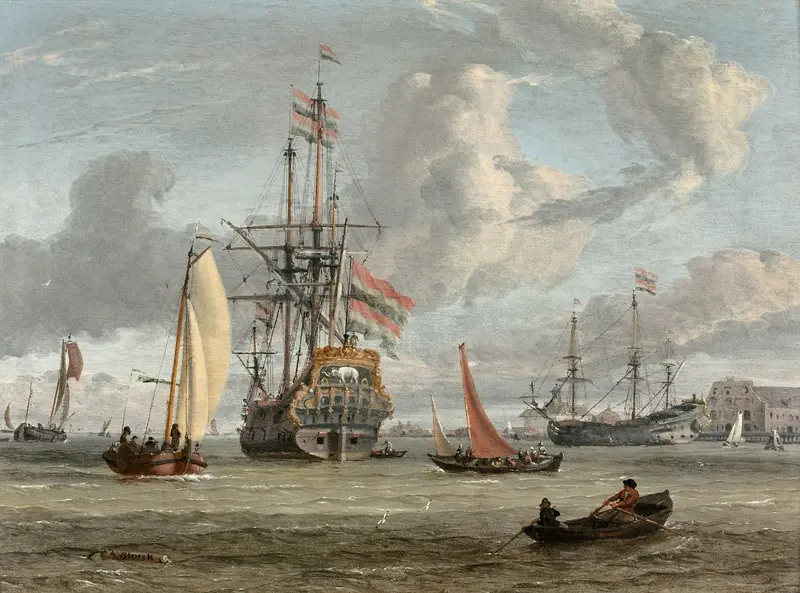
A flotilla of proud Dutch warships fills the horizon, their banners snapping in the wind and their ornate sterns catching the last golden light. The eye is drawn first to the bustle in the foreground: a small boat crowded with men in tricorn hats, perhaps officers or merchants, their gestures suggesting negotiation or command. The ships themselves are not merely vessels but floating fortresses, their carved prows and painted shields signaling both wealth and martial readiness.
Storck’s brushwork lingers over the play of light on the water, where the clouds above seem to echo the billowing sails and flags below, creating a sense of movement and anticipation. The low horizon grants the sky a commanding presence, while the careful placement of figures and ships invites the viewer to imagine the conversations and decisions shaping the scene. This is a world shaped by commerce, conflict, and ceremony—the Dutch Golden Age, when maritime power defined a nation’s fate. Marine paintings like this, especially in the late 17th century, were prized by wealthy merchants and naval officers eager to commemorate victories or display their role in the Republic’s fortunes.
Abraham Storck, active during this period, was celebrated for his ability to blend precise ship portraiture with lively narrative detail. Though little is recorded about this specific Tableau de Marine, its presence in a modern private collection reminds us how such works once adorned the walls of Amsterdam’s canal houses, testifying to the ambitions and anxieties of an age ruled by the sea. Let your gaze linger on the painted waves and distant sails—the world they conjure is never far from the present.
More Artworks by Abraham Storck

The Muscovite legation visiting Amsterdam, 29 August 1697
Abraham Storck
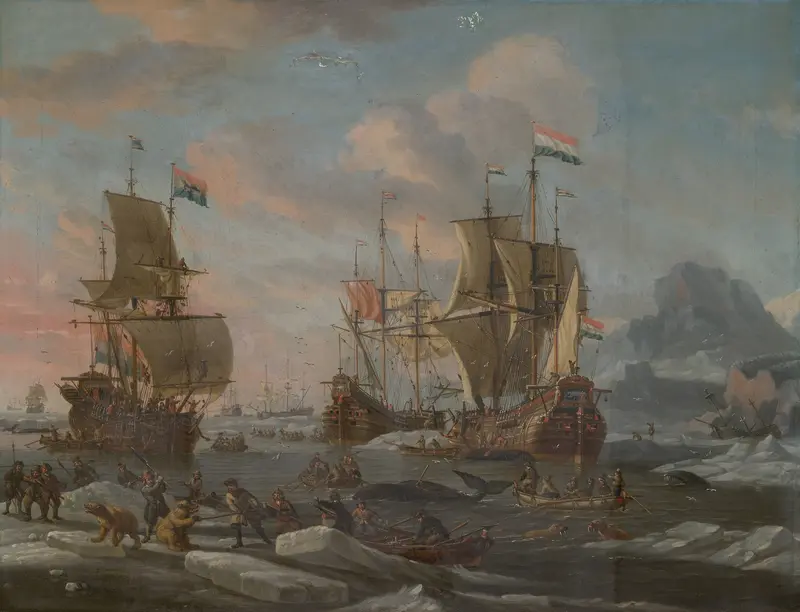
The Dutch Whaling Fleet
Abraham Storck
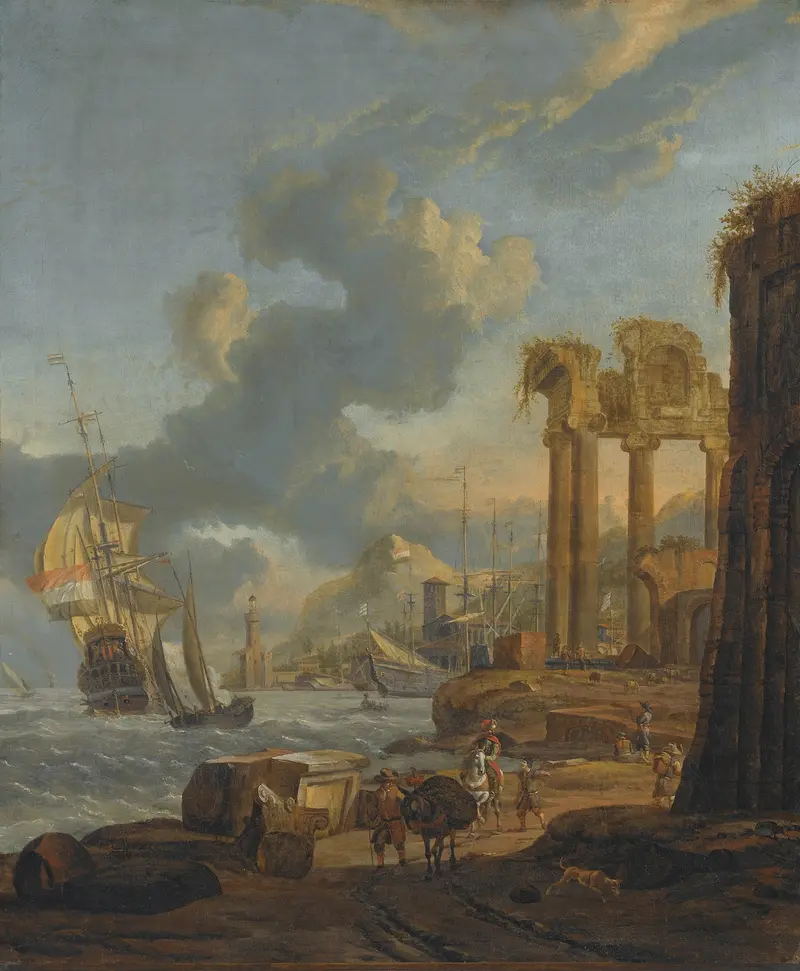
A Mediterranean Harbour Scene With Travellers On The Shore, A Dutch Man-Of-War On The Left
Abraham Storck
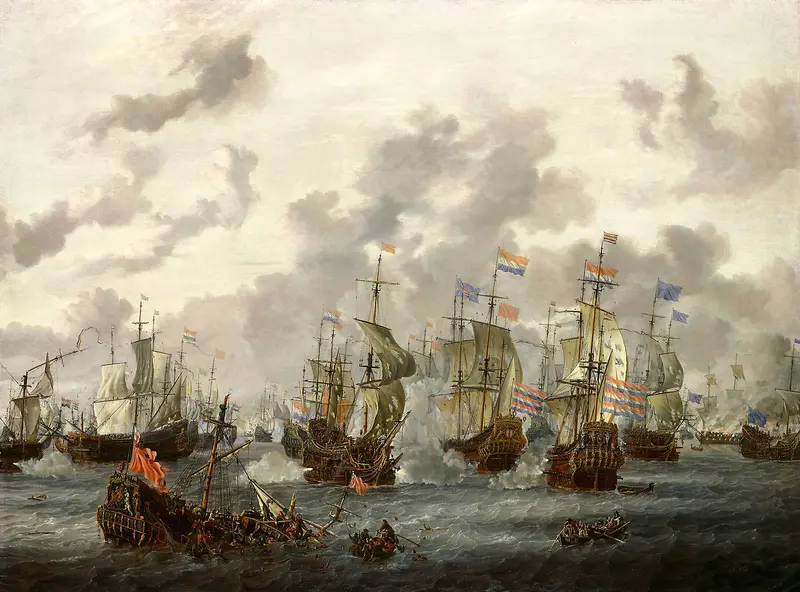
The Four Days’ Battle
Abraham Storck
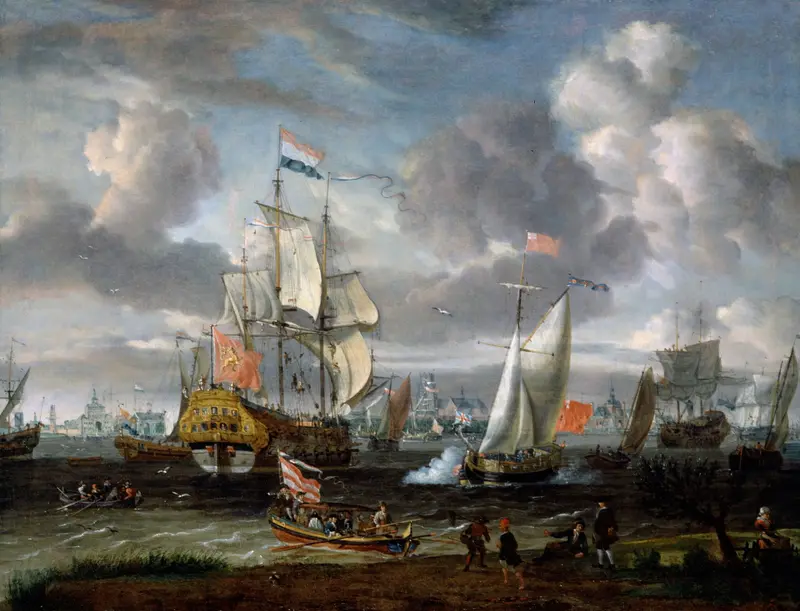
An English Yacht saluting a Dutch Man-of-War in the port of Rotterdam
Abraham Storck
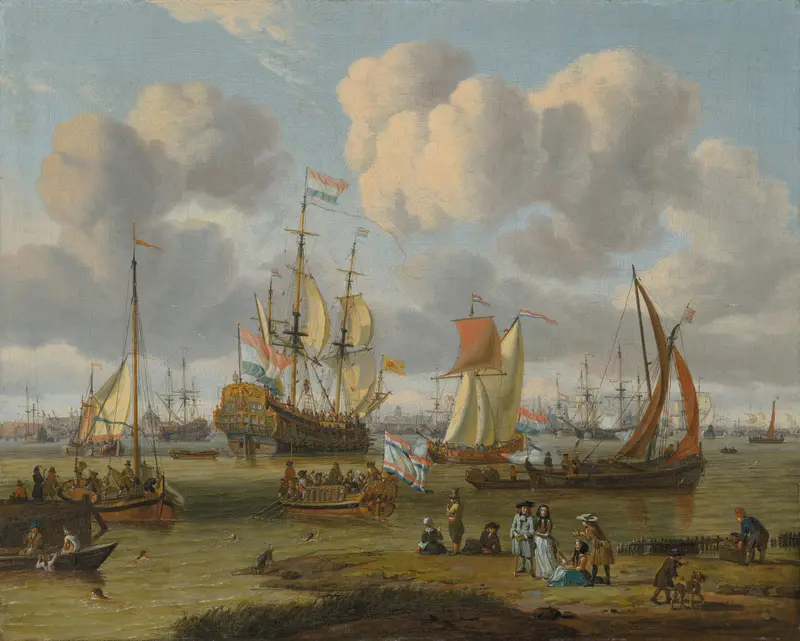
Shipping off Amsterdam with figures on a quay
Abraham Storck
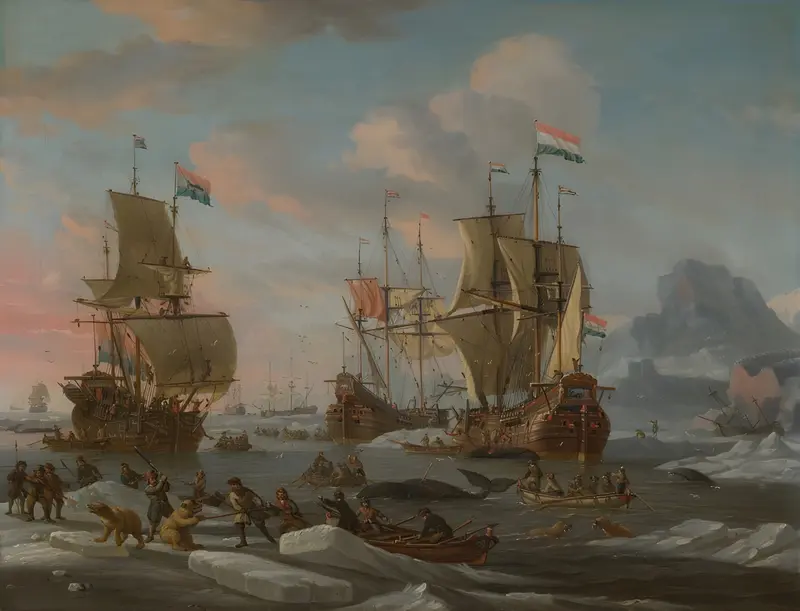
The Dutch Whaling Fleet
Abraham Storck
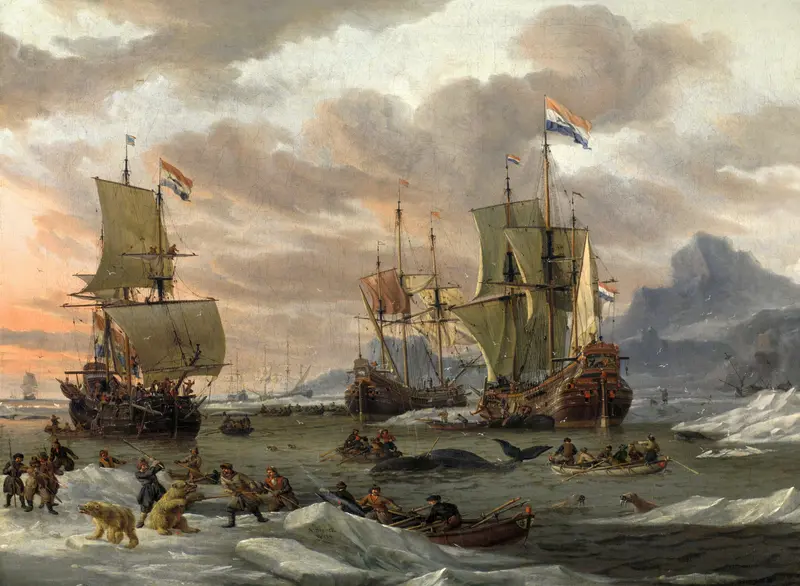
Whaling Grounds in the Arctic Ocean
Abraham Storck
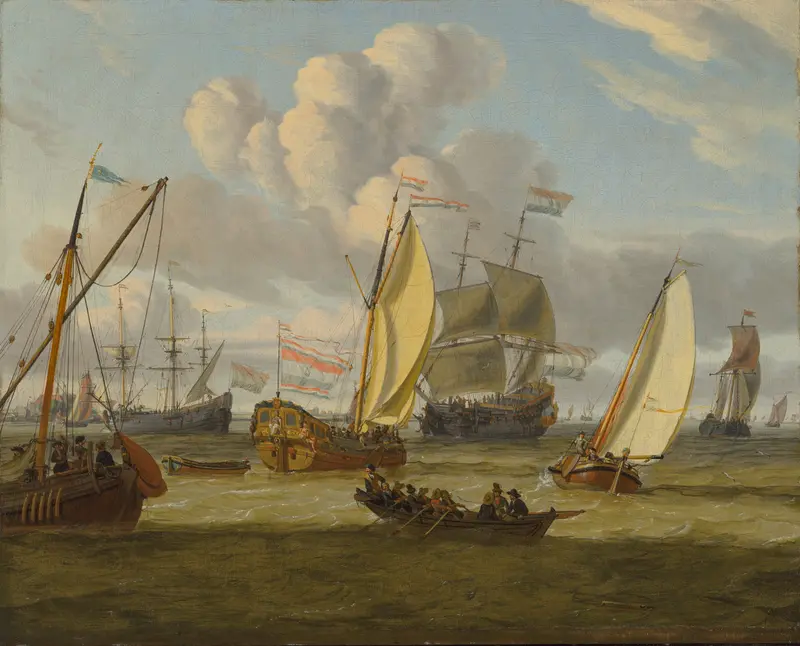
Shipping in an estuary
Abraham Storck
Grand navire de la couronne du Danemark près d’un littoral
Abraham Storck





