
Tangier Bay — History & Facts
What if beauty was never meant to be finished? In the world of Tangier Bay, the viewer is invited to wander through a landscape where illusion and reality intertwine seamlessly. Focus on the mesmerizing hues of blue that dominate the canvas, drawing the eye to the shimmering bay. Notice how the gentle brushstrokes create an almost ethereal quality, blurring the lines between sea and sky. The vibrant colors are layered with a sense of immediacy, reflecting the dance of light upon water, while the distant hills fade softly into a misty embrace, suggesting that the scene is both a moment captured and an invitation to dream. The contrasting elements reveal a deeper tension within the work.
The calm waters evoke tranquility, yet the even softer edges of the background introduce a hint of ambiguity and transience. What lies beneath the surface, the artist seems to ask. Are we seeing a paradise, or merely an illusion crafted by light? The warmth of the colors suggests a fleeting moment, evoking both joy and nostalgia, as if Lavery captured not just a place, but a feeling of elusive beauty. During the late 19th and early 20th centuries, Lavery was immersed in the vibrant artistic community of London, shaped by an influx of influences from Impressionism to a burgeoning fascination with the exotic.
Though the exact date of this piece remains uncertain, its creation reflects a period when artists sought to explore new techniques and ideas, inviting viewers to see beyond mere representation into the heart of perception itself.
More Artworks by Sir John Lavery
Browse all →
On The Sands
Sir John Lavery

The Beach, Tangier
Sir John Lavery

Evening, The Bay Of Tunis
Sir John Lavery

Tangier bay at night
Sir John Lavery
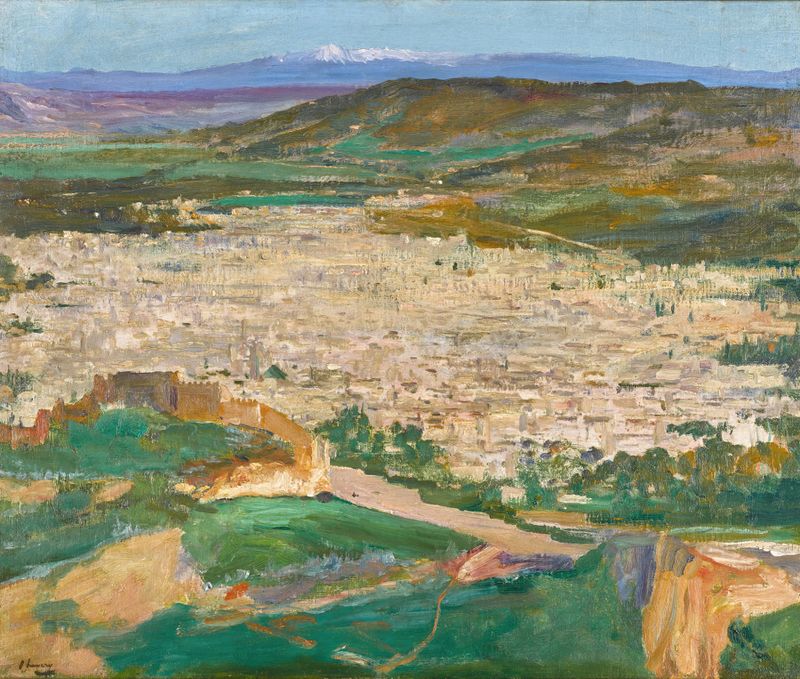
A View of Fez
Sir John Lavery
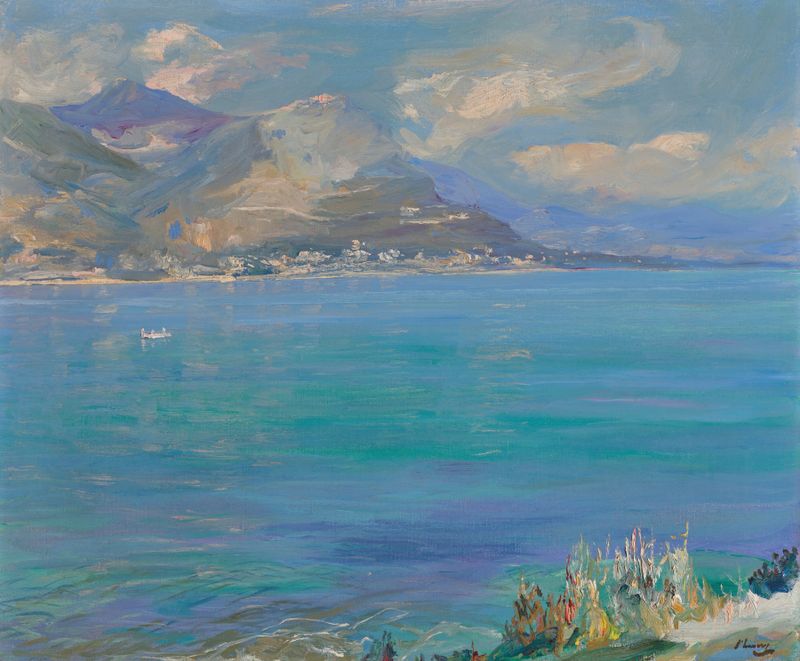
Beaulieu
Sir John Lavery
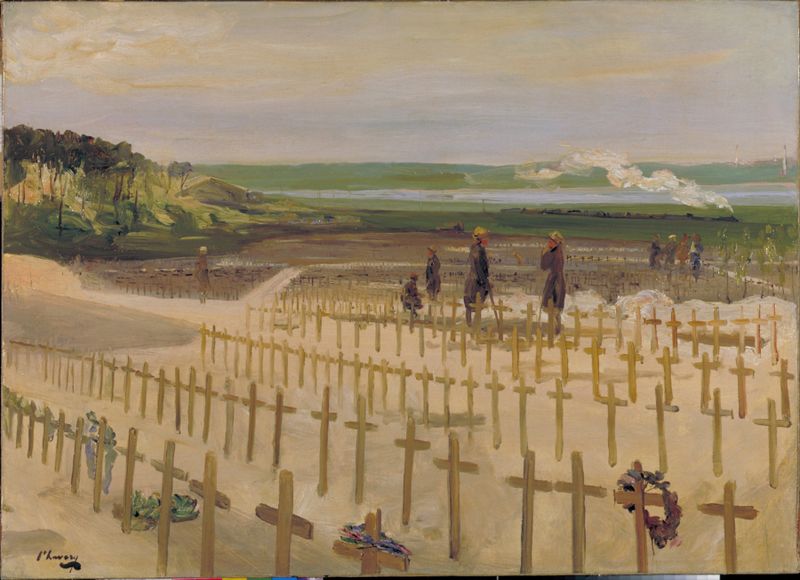
The Cemetery, Etaples, 1919
Sir John Lavery
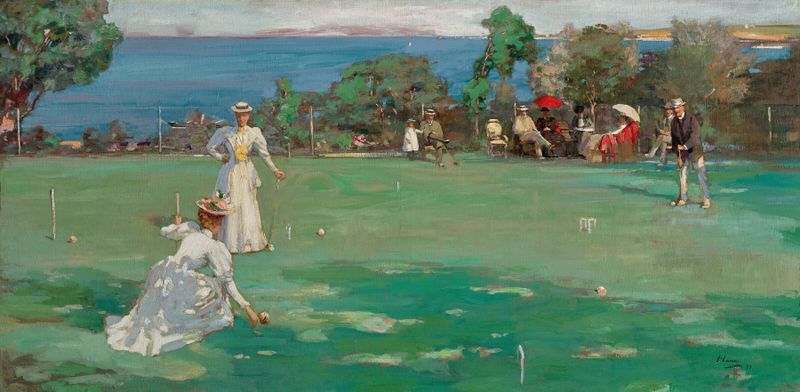
The Croquet Party
Sir John Lavery
Chiswick Baths
Sir John Lavery

Hounslow
Sir John Lavery





