
Tannenwald — History & Facts
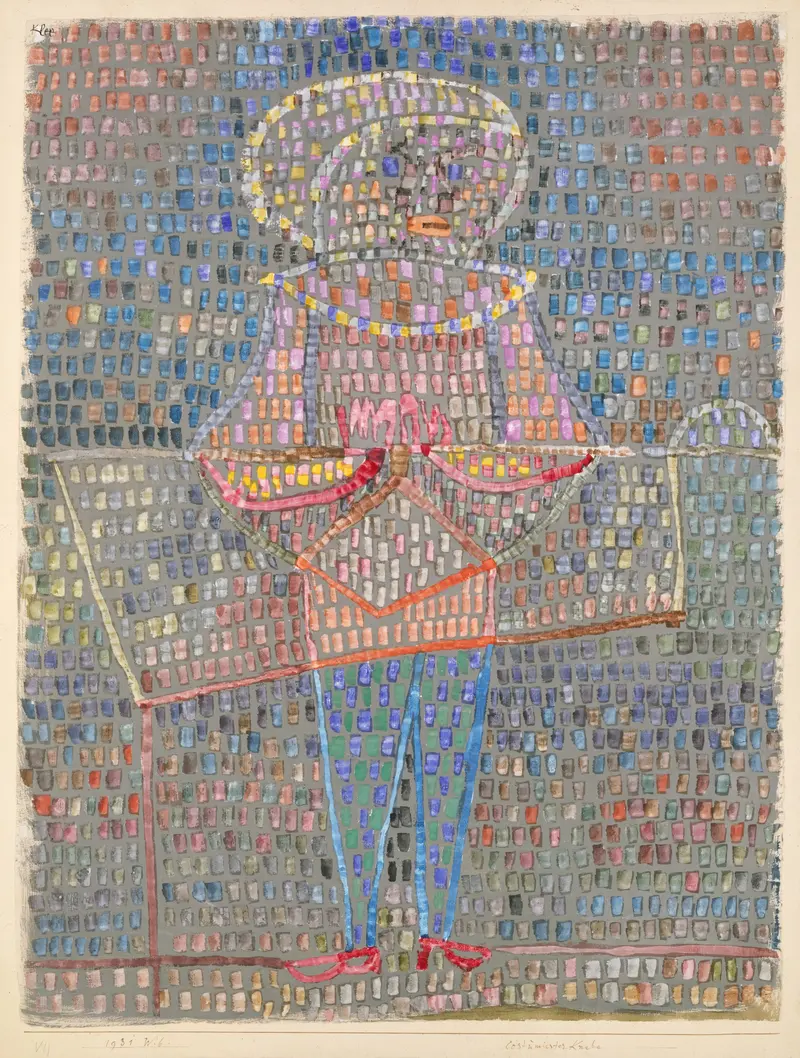
In Tannenwald, Paul Klee presents a whimsical forest scene filled with vibrant colors. The painting features abstract trees that twist and turn, creating a sense of movement. The palette includes rich greens, blues, and hints of warm colors, suggesting sunlight filtering through the foliage.
The overall composition feels playful and imaginative, characteristic of Klee's unique style. This work is painted in oil on canvas, showcasing Klee's signature use of color and form. The dimensions are approximately 60 x 80 cm, making it a medium-sized piece that draws the viewer's attention. Klee employs bold lines and simplified shapes, which are hallmarks of his expressionist approach.
The layering of colors adds depth and texture, inviting closer inspection. Paul Klee was a Swiss artist associated with the Expressionist movement, known for his innovative use of color and form. Tannenwald reflects Klee's fascination with nature and abstraction, blending the two in a playful manner. An interesting fact about this work is that it was created during a period when Klee was exploring the relationship between color and emotion.
This painting exemplifies his ability to convey feelings through abstract representation.
More Artworks by Paul Klee

More Landscape Art

The Starry Night
Vincent van Gogh

View of Delft
Johannes Vermeer

Water Lilies
Claude Monet

The Grand Canal, Venice, looking north-west from the Ca' Corner to the Ca' Contarini degli Scrigni, with the campanile of Santa Maria della Carità
Canaletto

Windsor Castle
Canaletto

The Grand Canal looking North-East from the Palazzo Dolfin-Manin to the Rialto Bridge
Canaletto