
Telephone Conversation (Telefonisches Gespräch) — History & Facts
What first catches the eye in Telephone Conversation (Telefonisches Gespräch) is the clever play with space and separation: two men, each isolated in their own sharply defined interior, lean toward the void at the center, joined only by the thin black line of a telephone wire. The artist, Moriz Jung, turns a moment of modern communication into a visual puzzle, the swirling border echoing the invisible signals that pass between the speakers. Each figure is caught mid-gesture—the man on the left bends forward, hand at his back, as if straining to catch a distant voice, while his counterpart on the right hunches over the receiver, eyebrows arched in concentration.
The blank central space is not absence, but the very medium of their exchange, a silent witness to the new magic of connection. Created in 1907, this print belongs to a world intoxicated by technological marvels and the promise of instant communication. The telephone was still a novelty, reshaping business, family life, and the very idea of distance. Prints like this—often playful, sometimes satirical—were part of a broader fascination with the modern city and its inventions, produced for a growing middle class eager to decorate their homes with images that reflected their new realities.
Moriz Jung was active in the vibrant circles of early twentieth-century Vienna, where artists experimented with bold lines and flattened forms to capture the spirit of their age. History has kept few traces of this particular work, now preserved thanks to the Metropolitan Museum of Art’s open access initiative, but its wit and energy still invite us to imagine the thrill of hearing a familiar voice across the wire for the very first time.
More Artworks by Moriz Jung
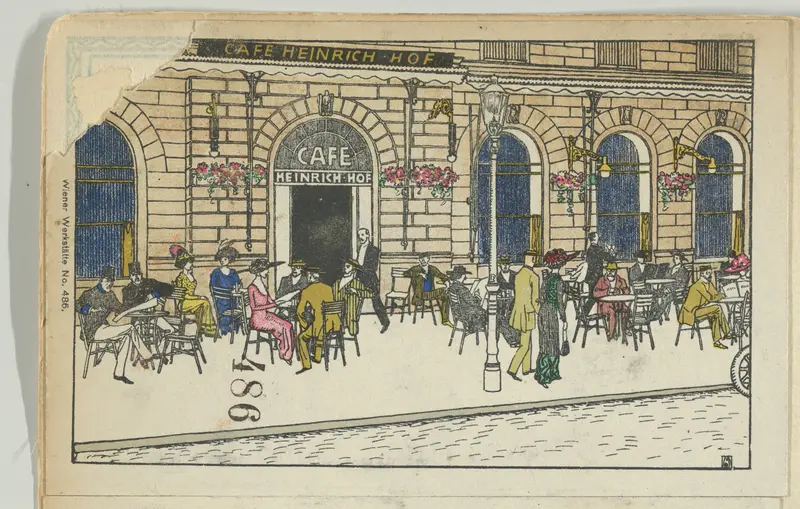
Café Heinrichhof
Moriz Jung

Moriz Jung Porträt
Moriz Jung
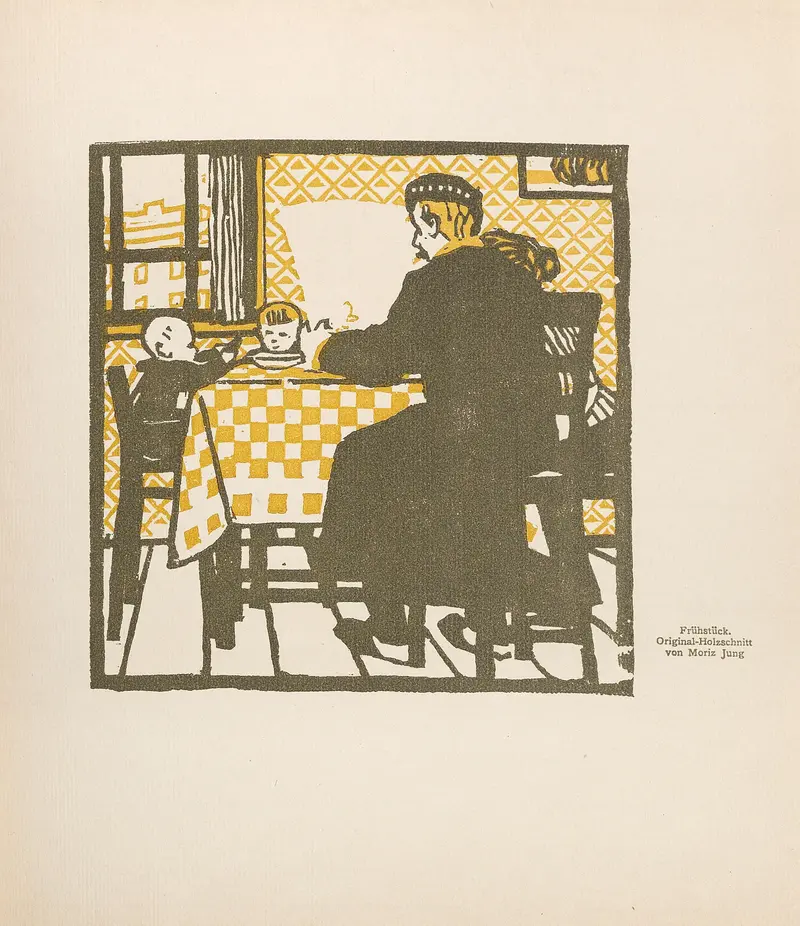
Moriz Jung Frühstück
Moriz Jung
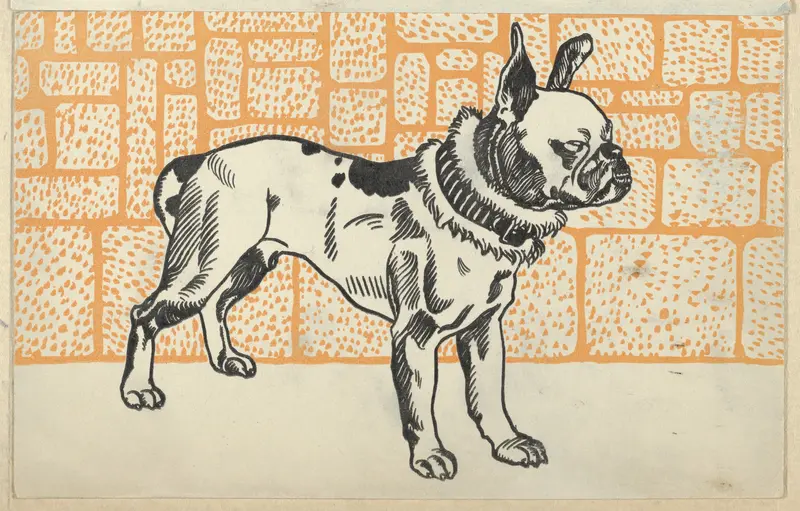
Pitbull Terrier
Moriz Jung
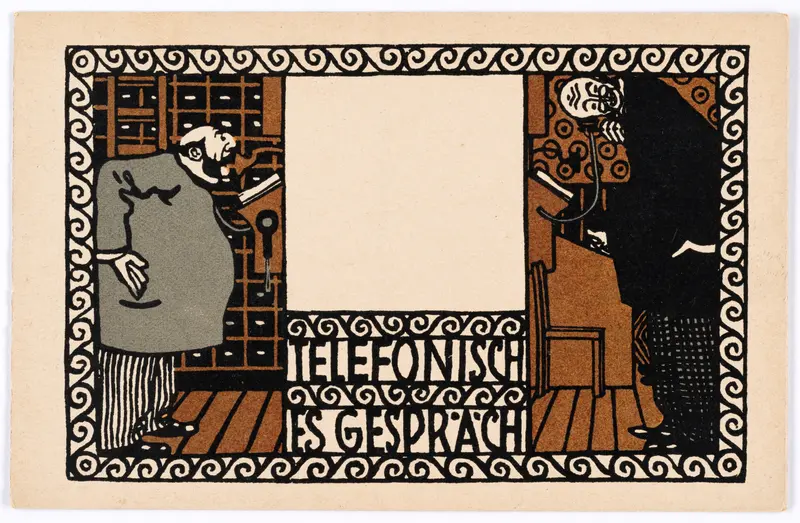
Postkarte der Wiener Werkstätte Nr. 58 - Telefonisches Gespräch
Moriz Jung
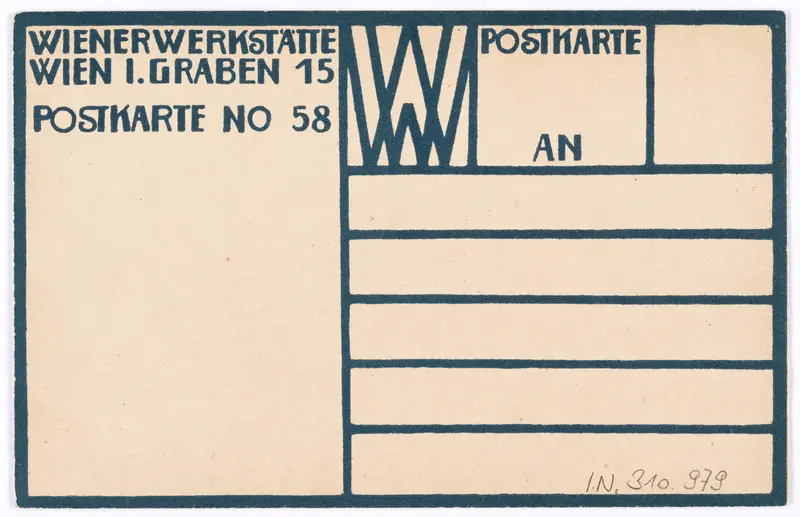
Postkarte der Wiener Werkstätte Nr. 58 - Telefonisches Gespräch - verso
Moriz Jung
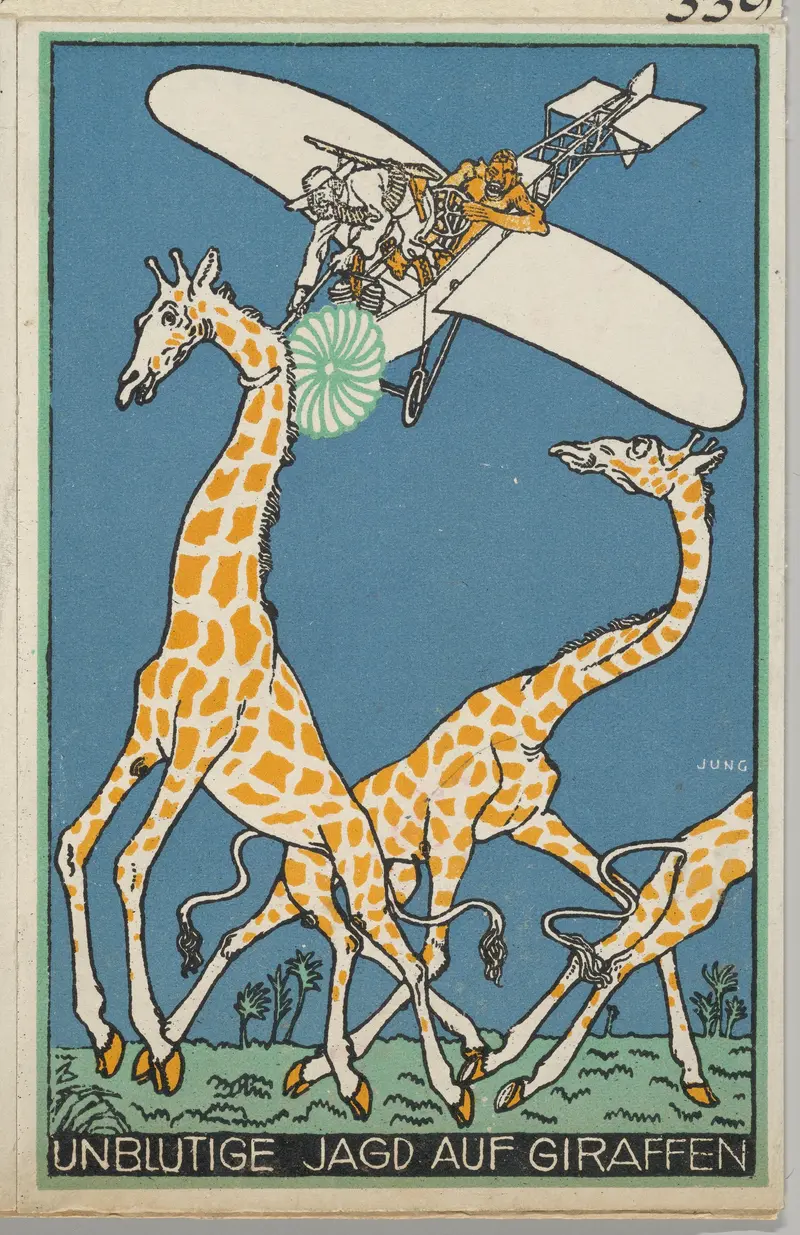
Bloodless Giraffe Hunt (Unblutige Jagd auf Giraffen)
Moriz Jung
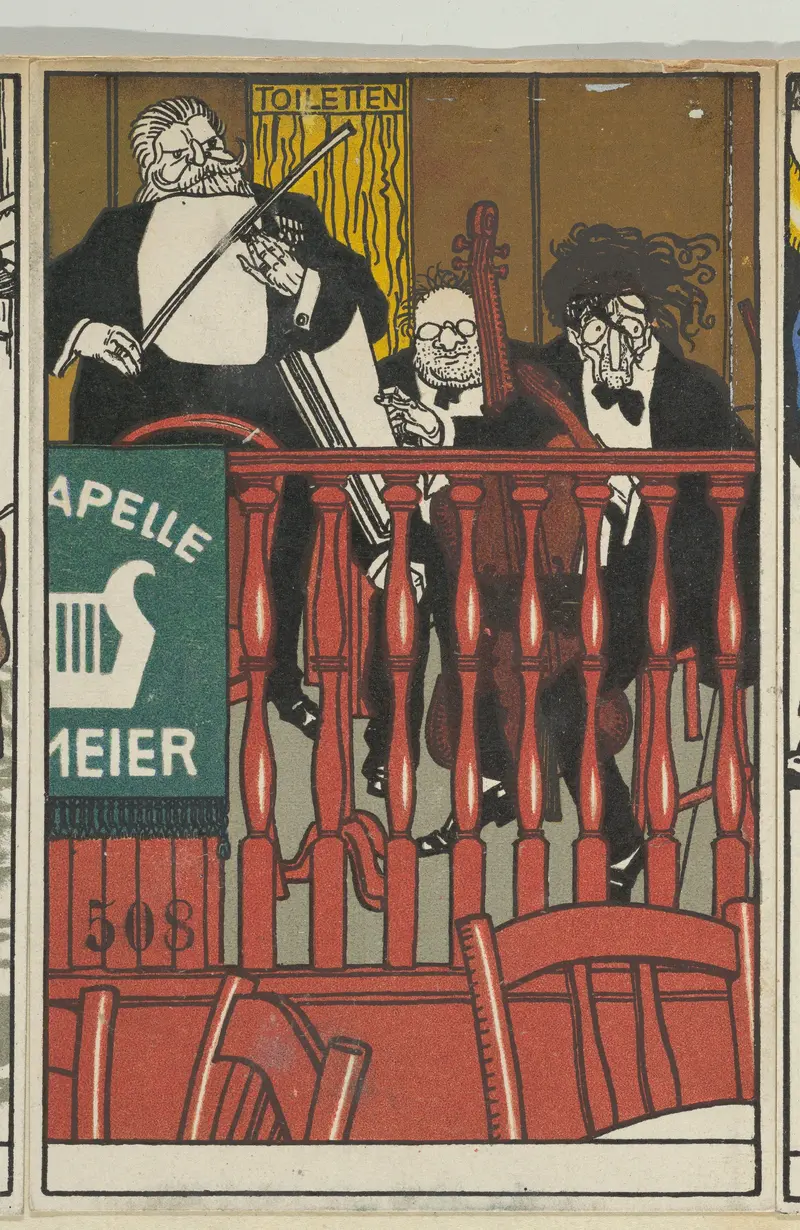
Salon Orchestra Meier
Moriz Jung
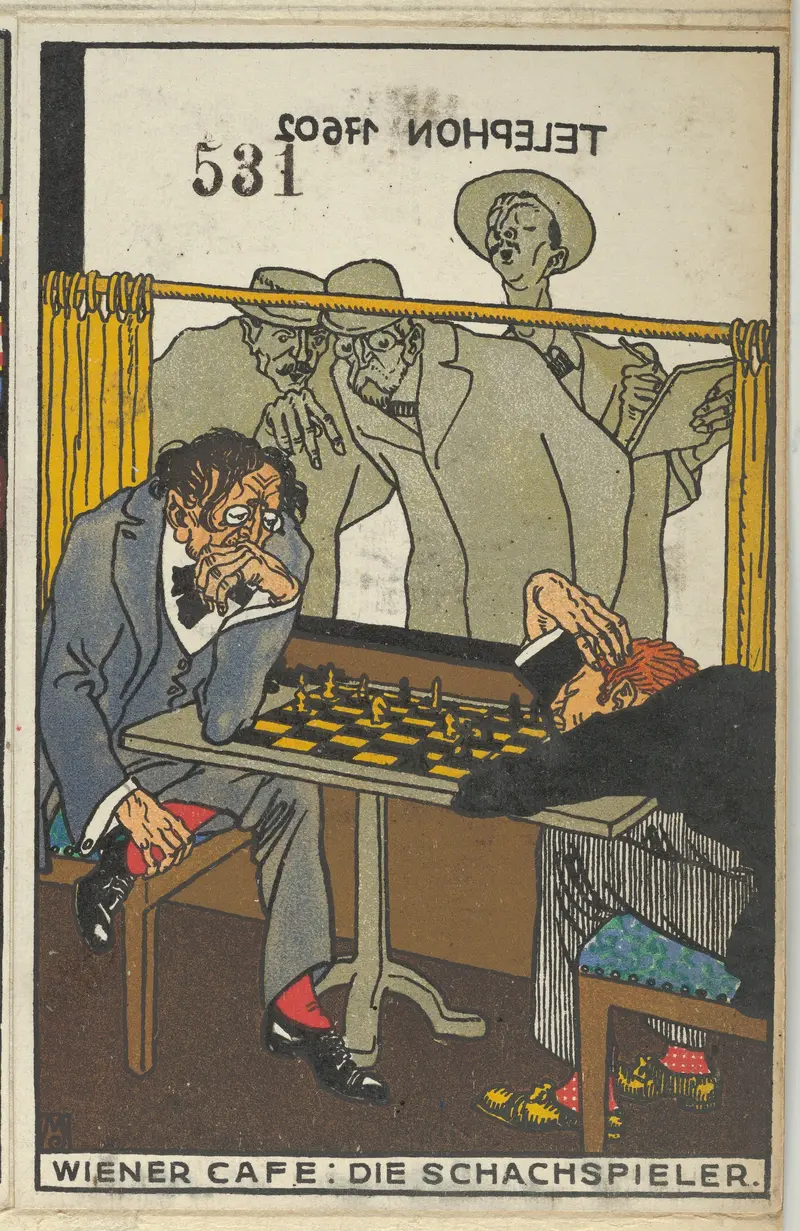
Wiener Café: Die Schachspieler
Moriz Jung
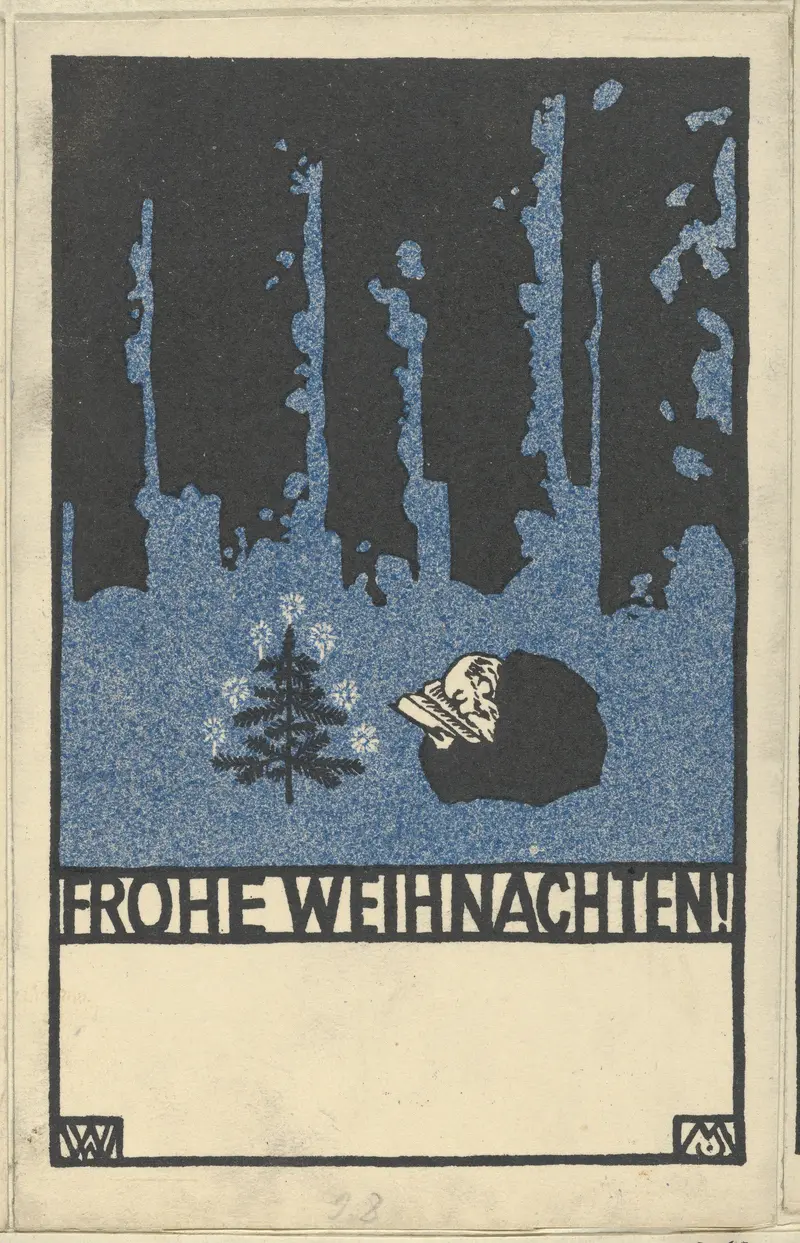
Merry Christmas! (Frohe Weihnachten!)
Moriz Jung
More Genre Scene Art

Banquet of the Officers of the St George Civic Guard
Frans Hals

Rembrandt and Saskia in the Scene of the Prodigal Son
Rembrandt van Rijn

Bal du moulin de la Galette
Pierre-Auguste Renoir

Quadrille at the Moulin Rouge
Henri de Toulouse-Lautrec

A Burial at Ornans
Gustave Courbet

When Will You Marry?
Paul Gauguin