
Temps de pluie — History & Facts
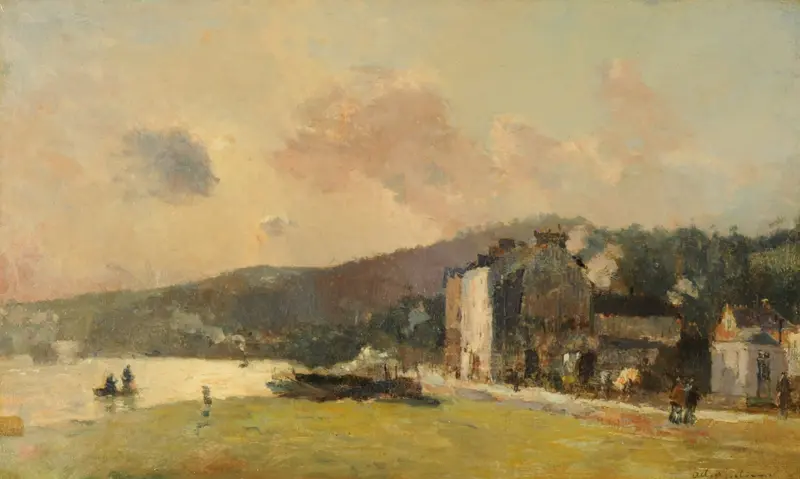
A pale, restless sky sweeps across the canvas, drawing the viewer into a world where atmosphere reigns over narrative. The eye drifts first to the gauzy, shifting clouds, their forms echoed in the shimmering reflections on the water below. The houses along the right edge lean quietly into the scene, their facades softened by the same moist air that blurs the distant hills.
Figures appear almost by accident—a woman in dark dress, a horse and rider, a solitary umbrella—each rendered with just enough detail to suggest movement and life, but always secondary to the enveloping weather. The palette is all cool blues and gentle greys, punctuated by the faintest hints of ochre, as if the world itself has been filtered through rain. Painted in 1901, Temps de pluie by Albert Charles Lebourg belongs to the Paris Musées collection, a reminder of a moment when artists were captivated by the fleeting moods of nature. The turn of the twentieth century saw painters across France—especially those touched by Impressionism—seeking not grand historical events, but the poetry of ordinary days and the drama of changing light.
Little is recorded about this specific work, yet its spirit is unmistakable: it stands as a testament to a period when the landscape became a stage for weather, memory, and sensation. Let your gaze linger in the mist, and the painting will continue to reveal new depths.
More Artworks by Albert Charles Lebourg

Le Jardin du Docteur Viau
Albert Charles Lebourg
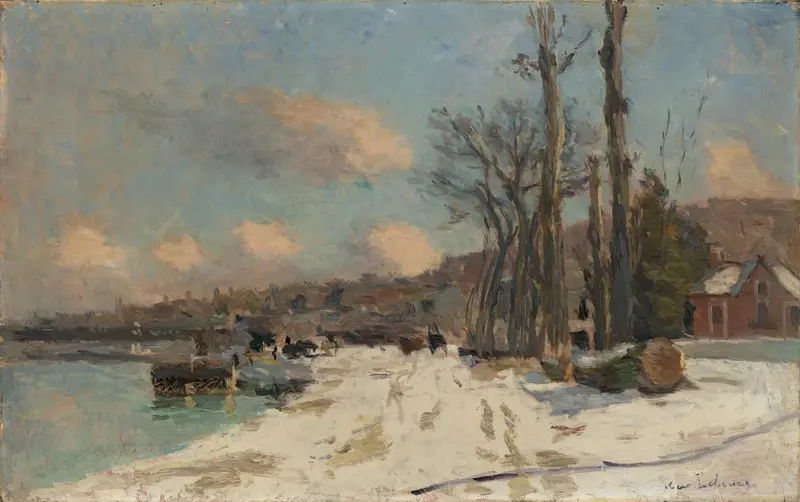
Snow Scene at Bougival
Albert Charles Lebourg
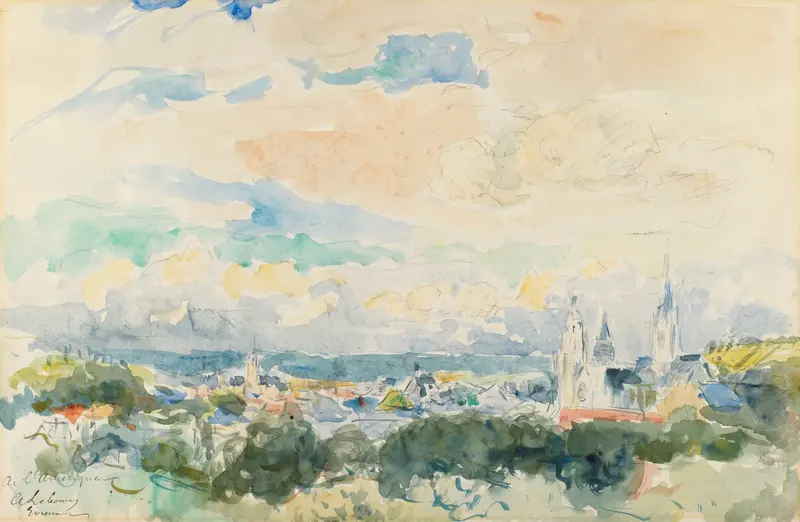
Sketch of a Village
Albert Charles Lebourg
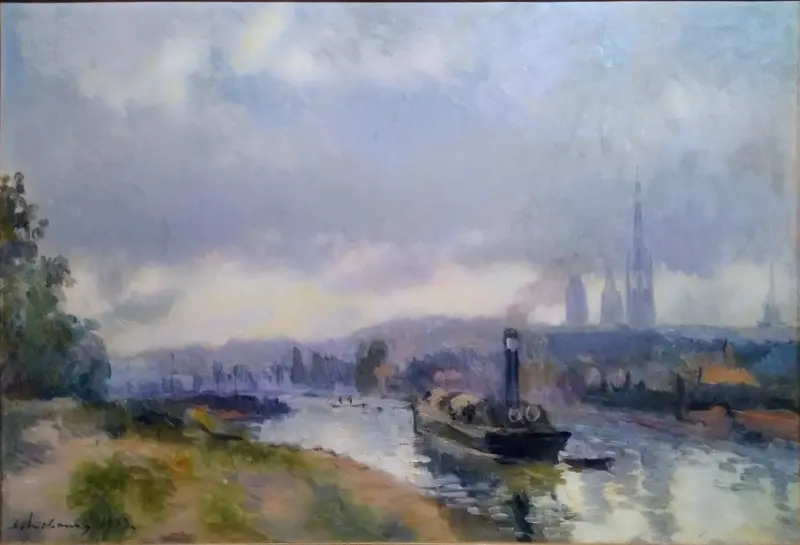
Remorqueurs à Rouen
Albert Charles Lebourg
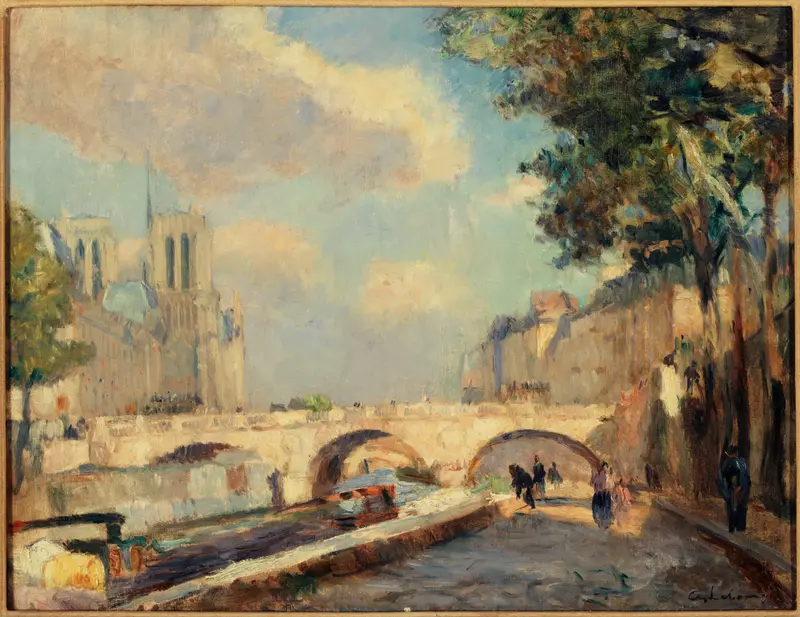
Le pont Saint Michel et Notre Dame, vus du quai des Grands Augustins P459 Musée Carnavalet
Albert Charles Lebourg
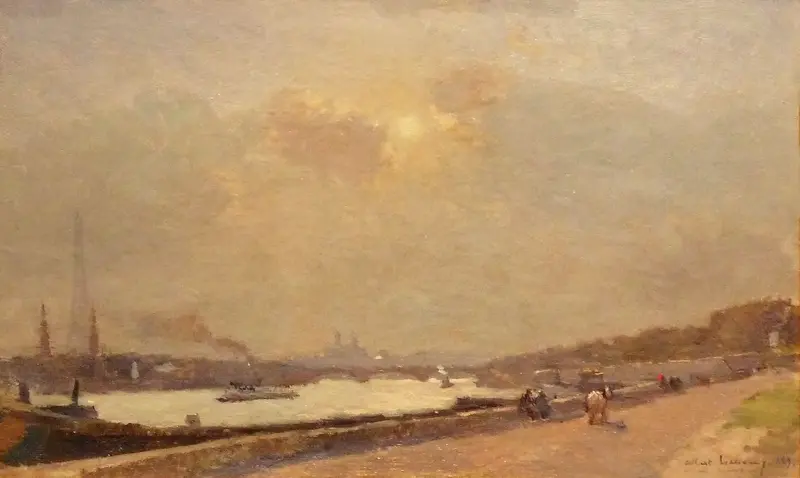
Banks of the Seine, Cours La Reine
Albert Charles Lebourg
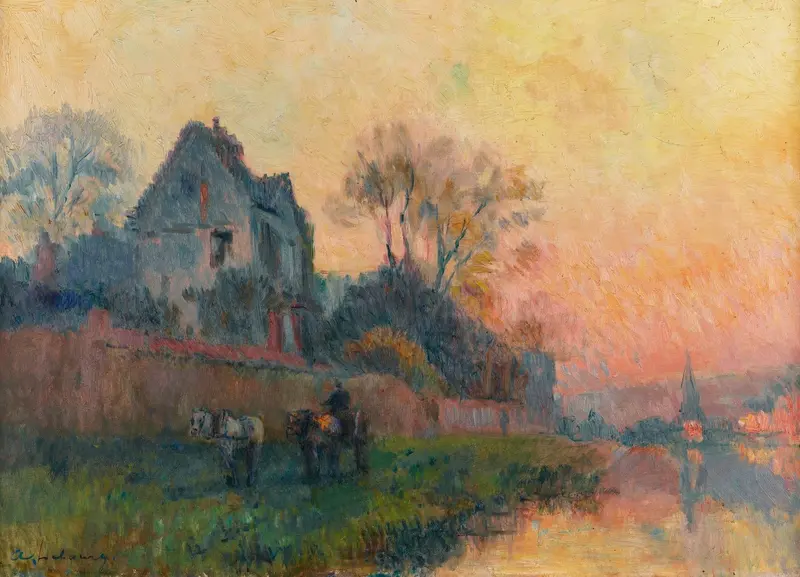
Bords de Seine à Chatou, oil on canvas, 46.4 by 65.1cm, 18.25 by 25.6 in
Albert Charles Lebourg
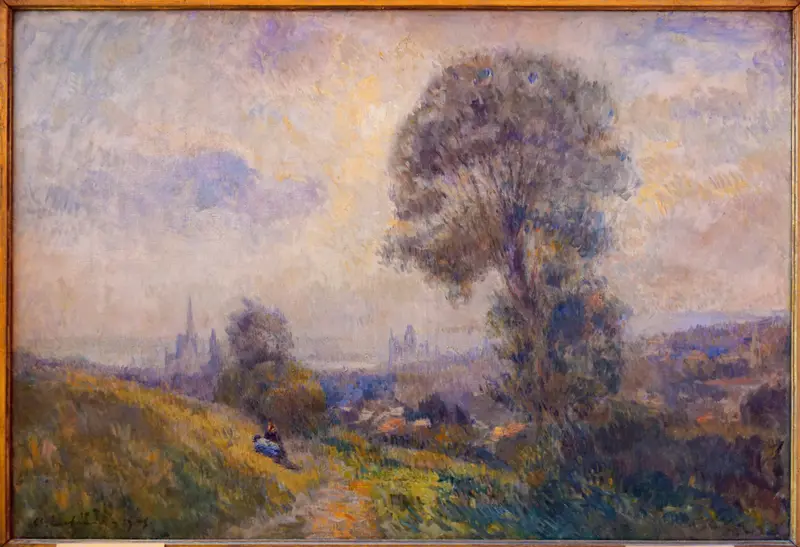
Camaret. The Harbor During a Thunderstorm
Albert Charles Lebourg
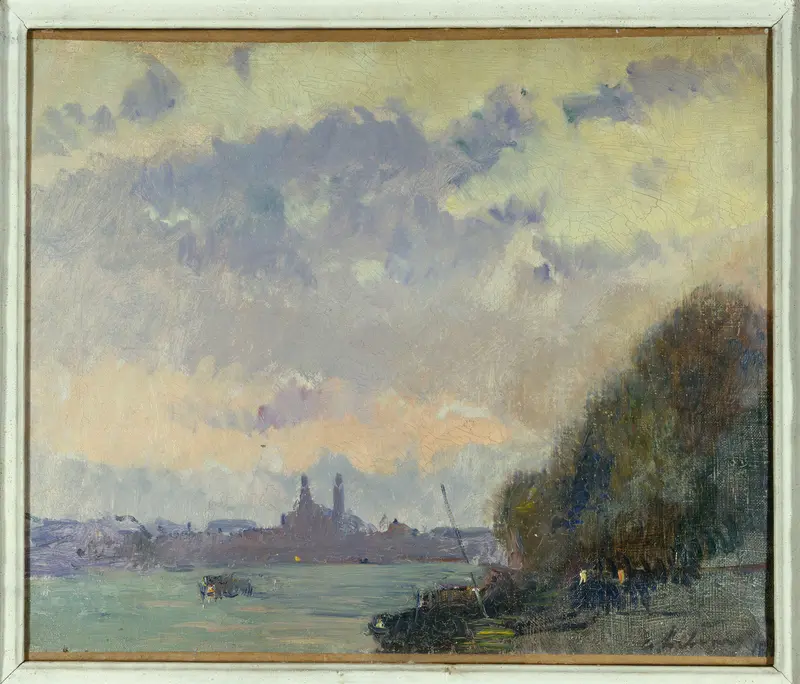
La Seine et l'ancien Trocadéro P2269 Musée Carnavalet
Albert Charles Lebourg
La Seine à Croisset, près de Rouen
Albert Charles Lebourg
More Landscape Art

The Starry Night
Vincent van Gogh

View of Delft
Johannes Vermeer

Water Lilies
Claude Monet

The Grand Canal, Venice, looking north-west from the Ca' Corner to the Ca' Contarini degli Scrigni, with the campanile of Santa Maria della Carità
Canaletto

Windsor Castle
Canaletto

The Grand Canal looking North-East from the Palazzo Dolfin-Manin to the Rialto Bridge
Canaletto