Terrace in the Garden near the Wannsee towards Northwest — History & Analysis
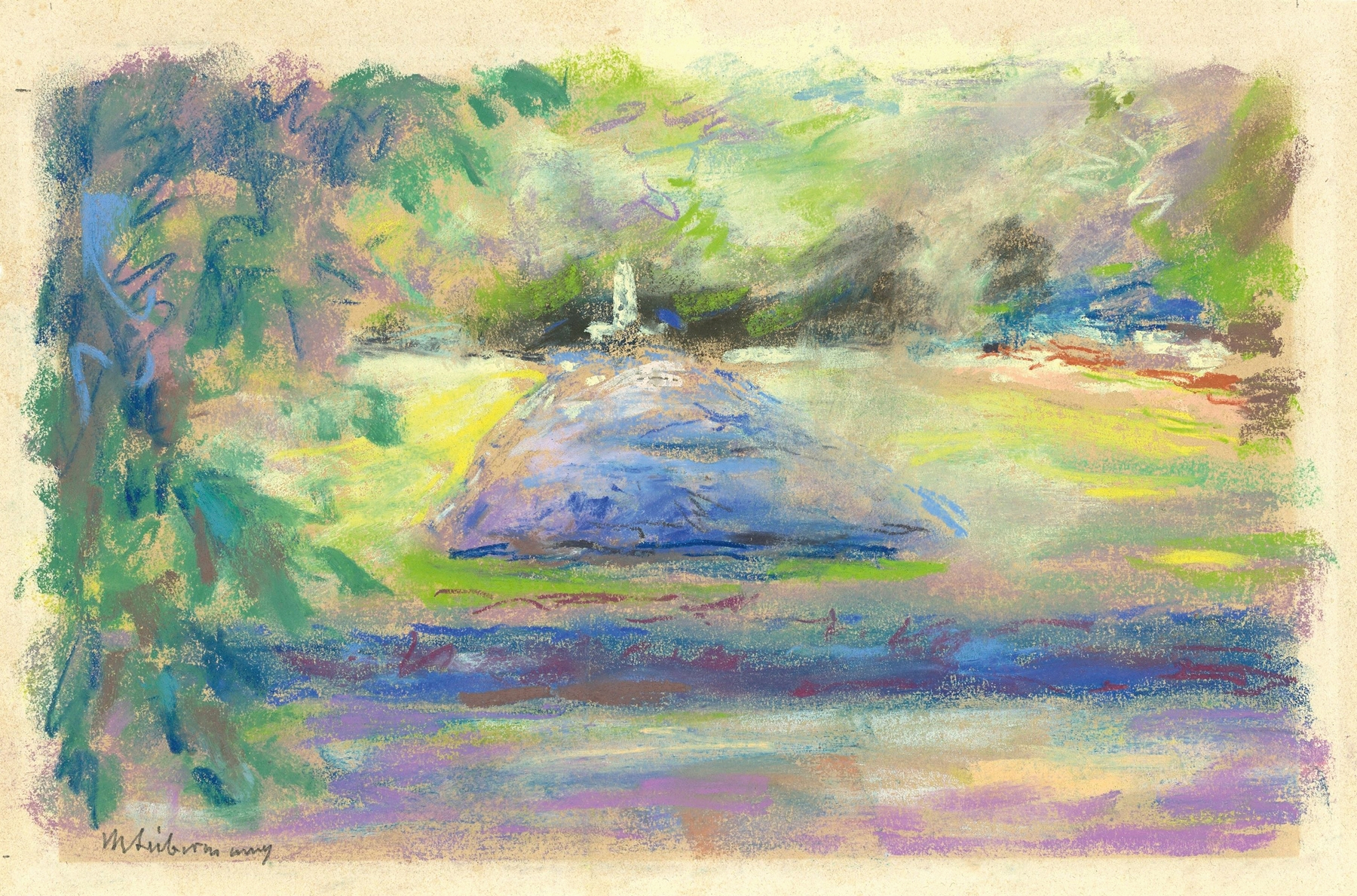
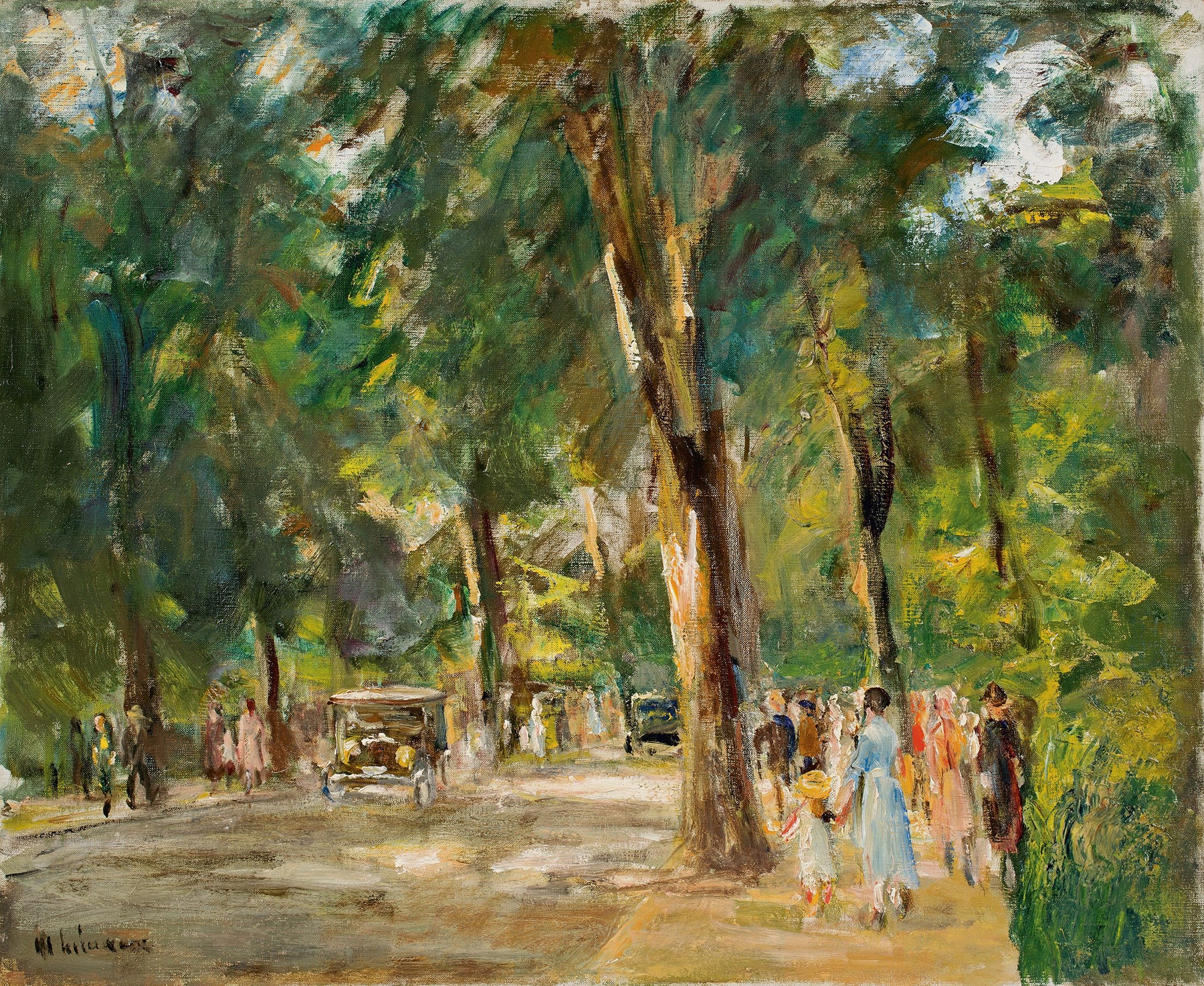
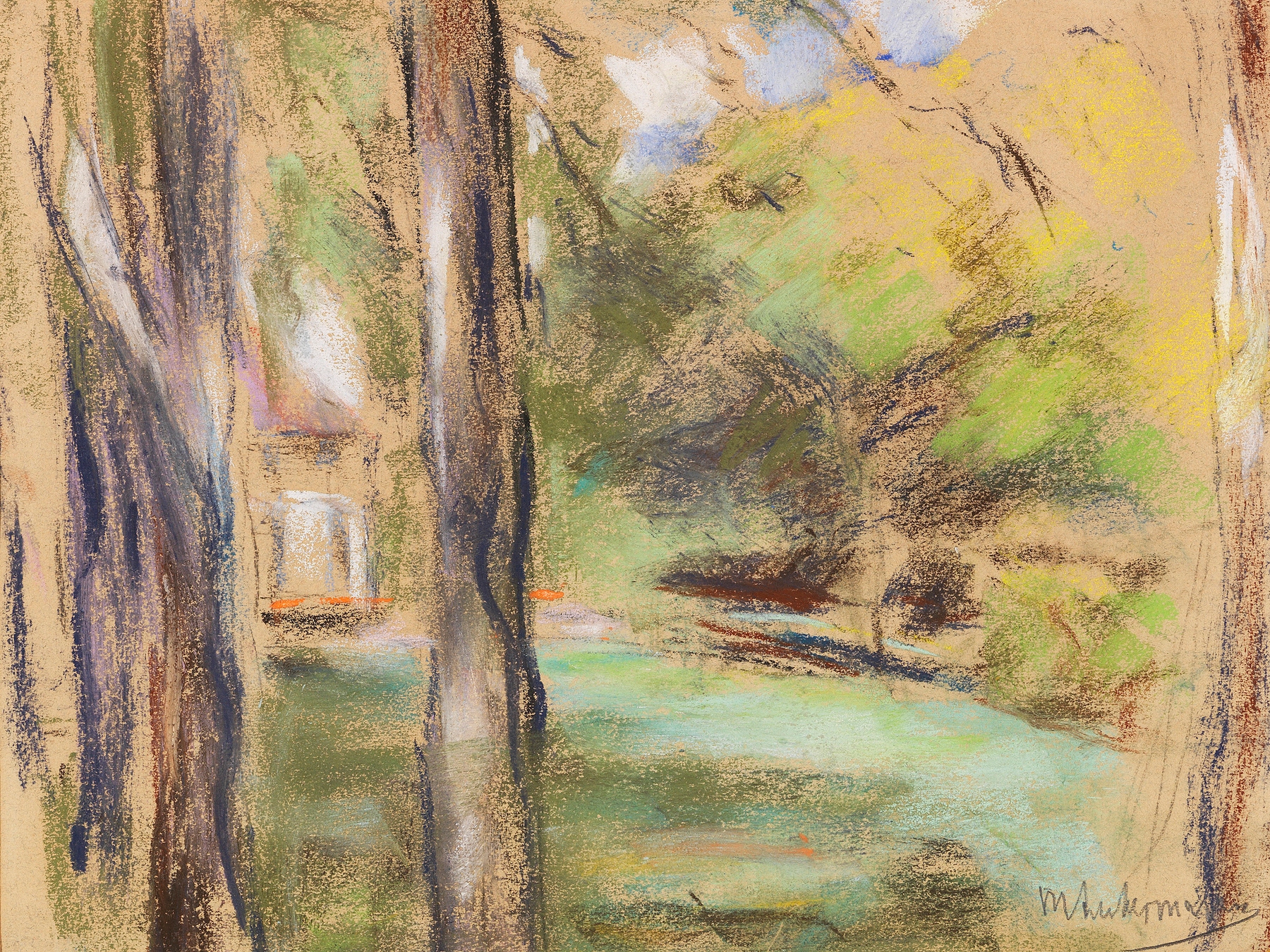
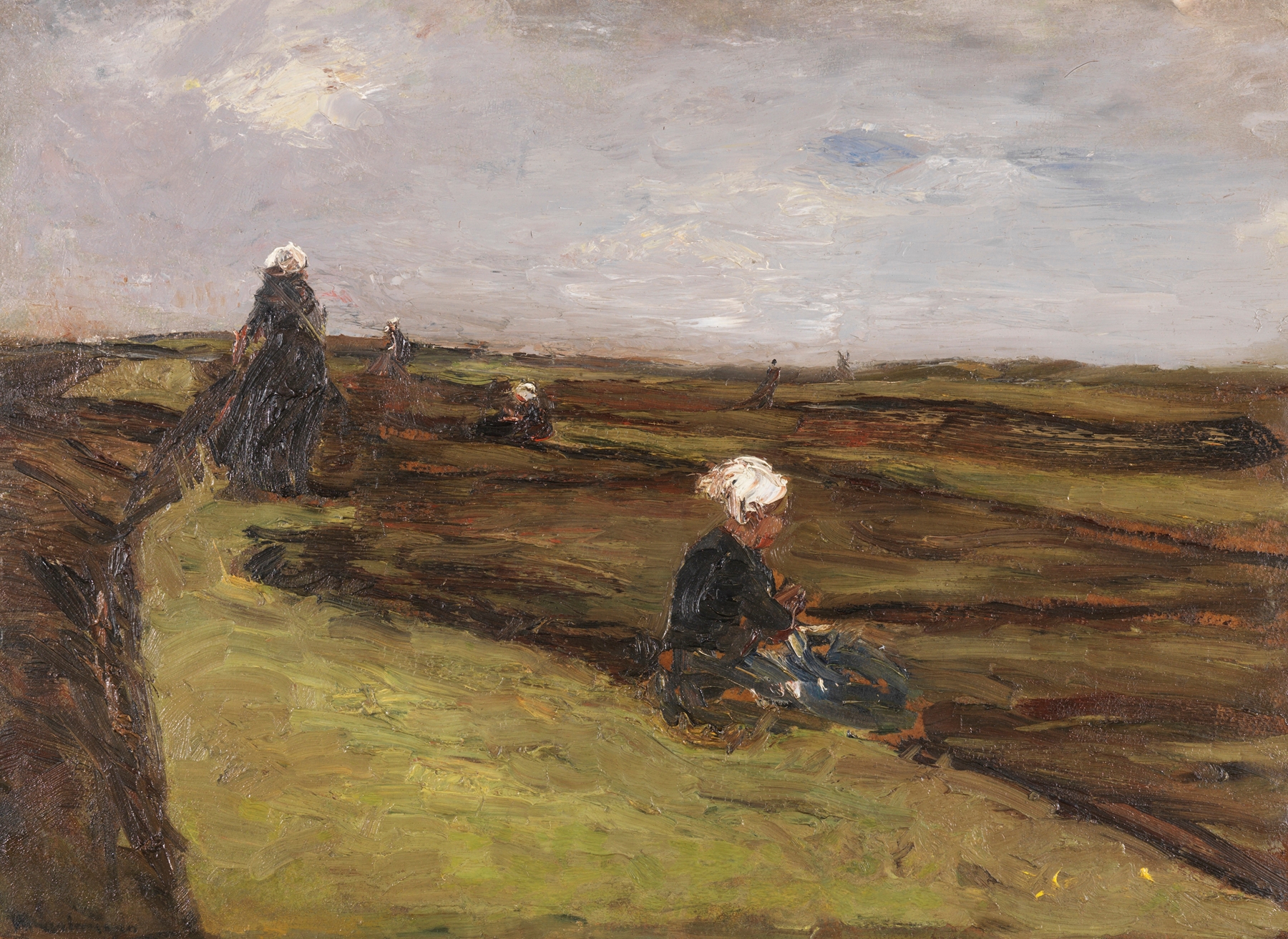
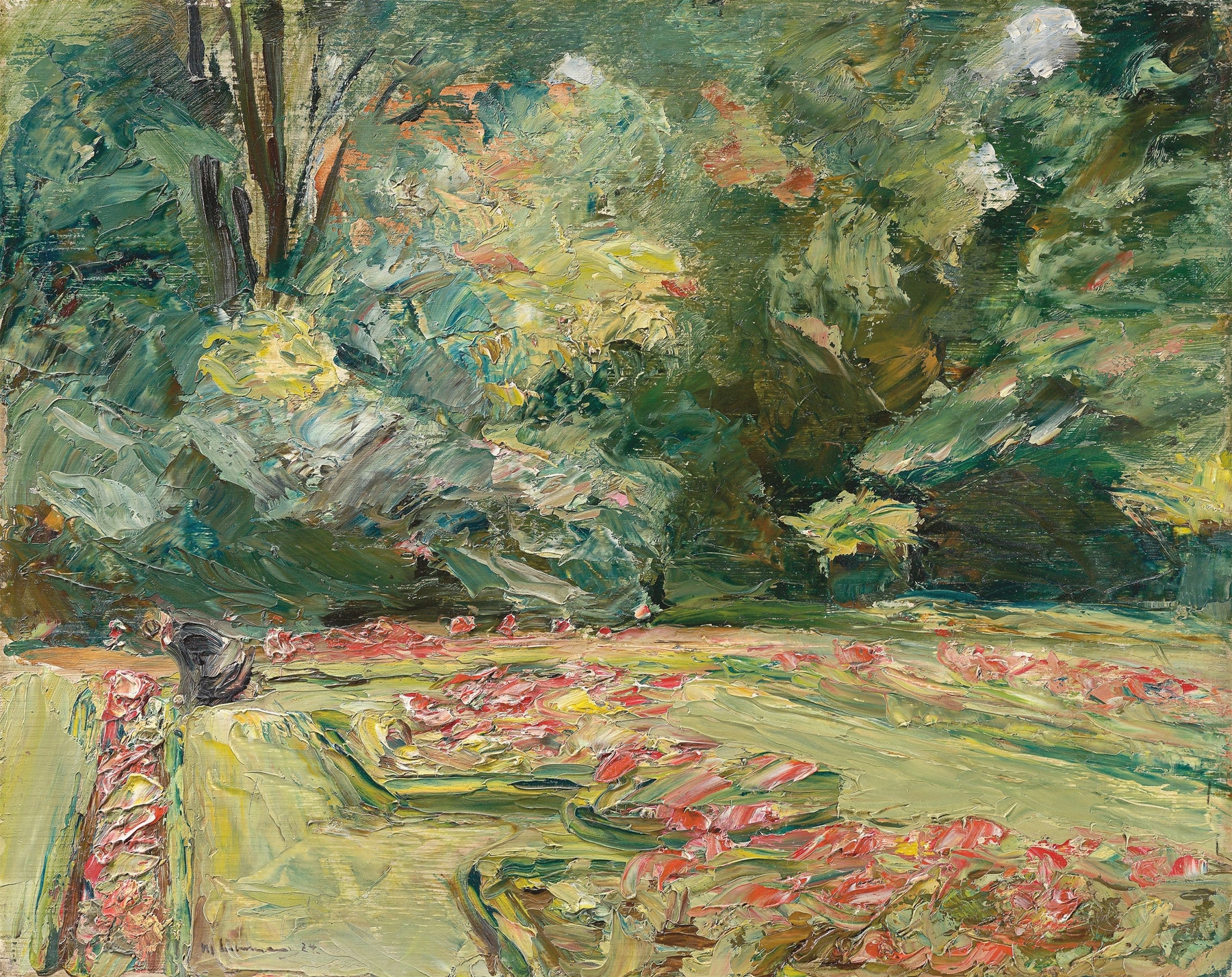
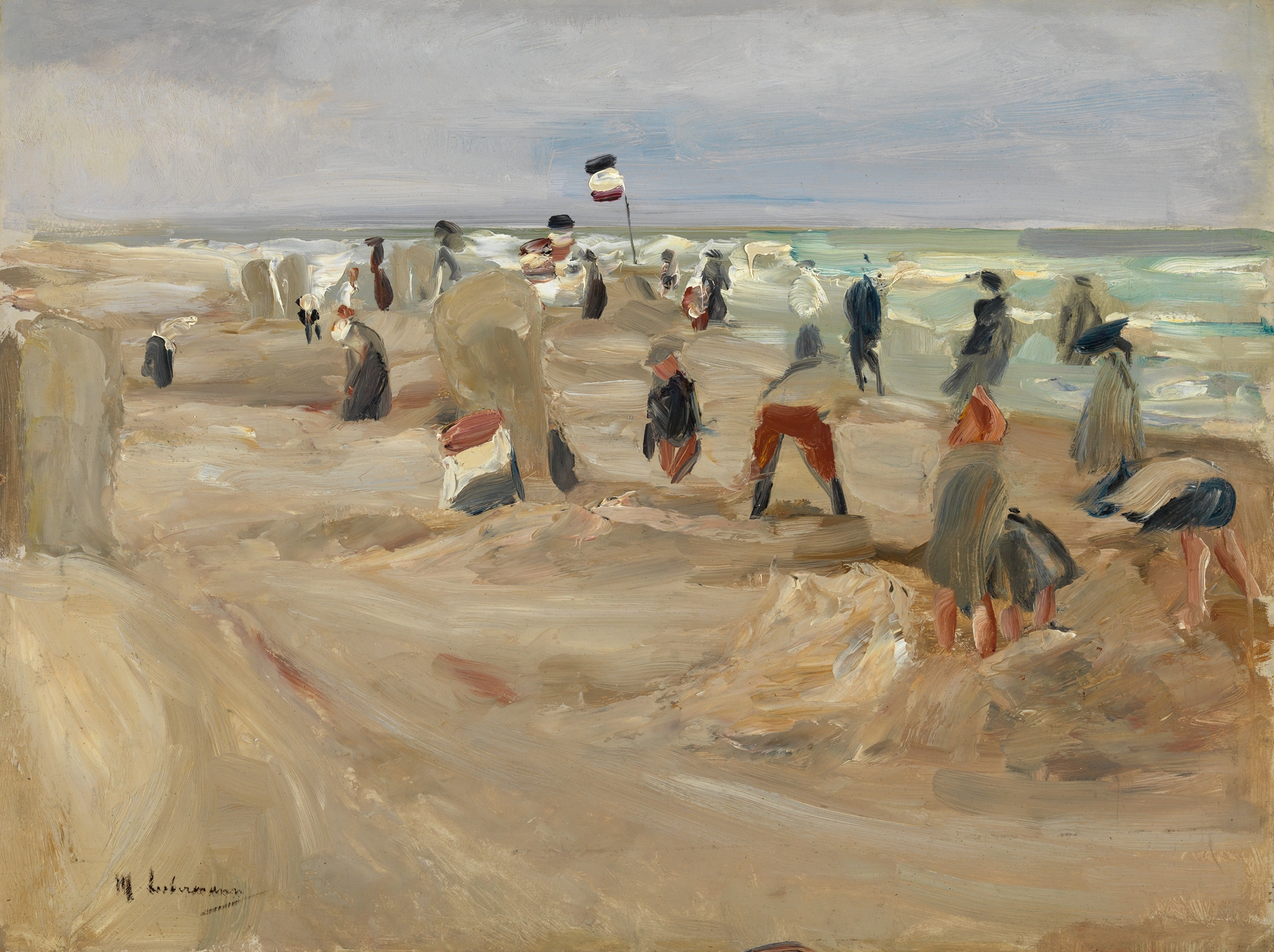
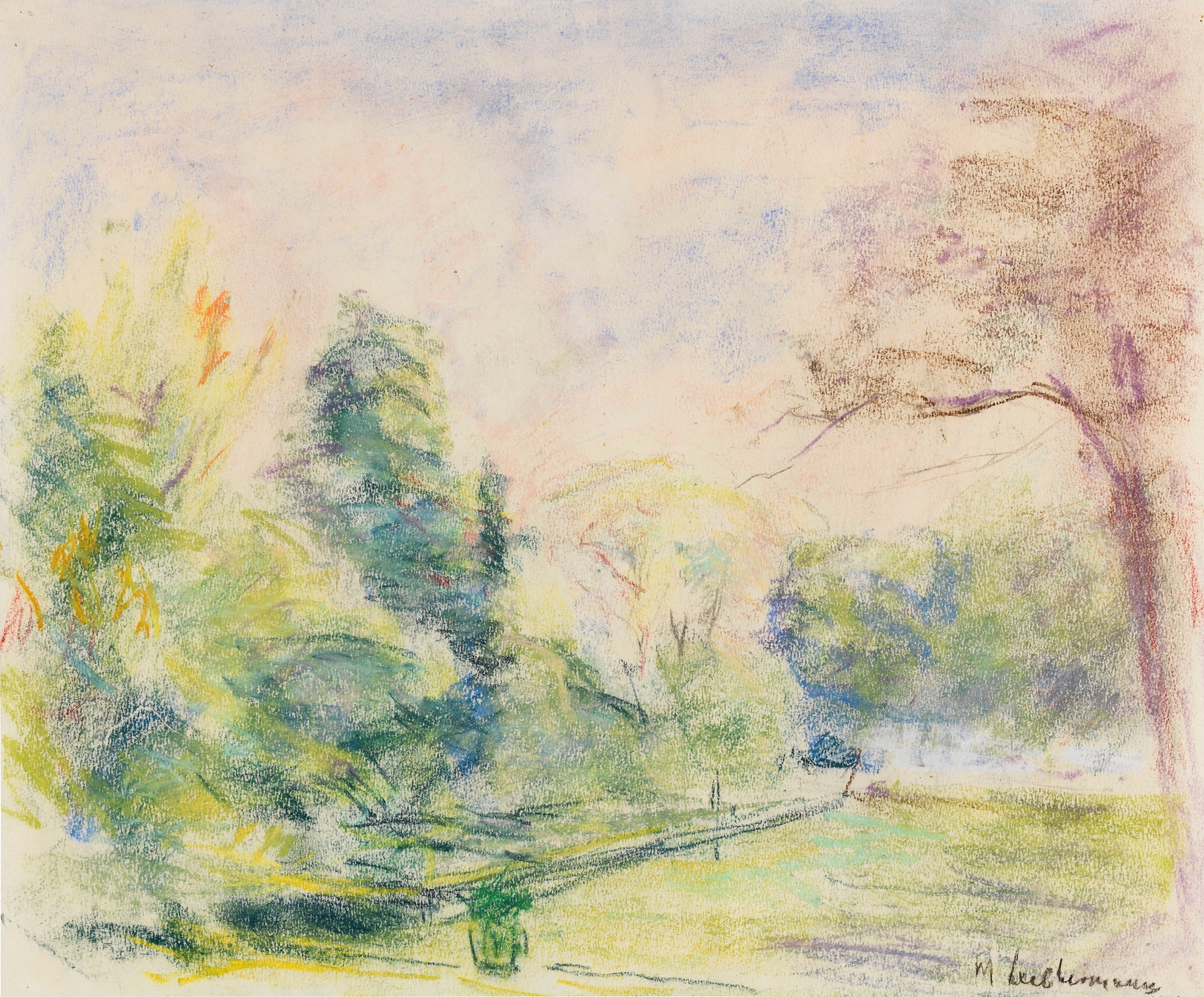
The sun slants low in the sky, casting golden hues across a serene garden. In the foreground, a lone figure sits pensively on a terrace, gazing out towards the glistening waters of the Wannsee. The air is thick with a somber silence, a stillness that wraps around the scene like a whisper of memories lost. Look to the left at the vibrant greens of the meticulously tended garden, where bursts of color from blooming flowers collide with the earthy tones of the path. The figure, draped in soft shadows, creates an inviting contrast against the vivid backdrop.
Notice how the light dances across the water’s surface, illuminating the tranquility while simultaneously hinting at deeper emotions beneath the calm facade. The composition draws you in, creating a sense of intimacy and longing. Amidst the beauty, a quiet tension simmers; the terrace symbolizes not only a refuge but also an escape from the turmoil of a world at war. The solitary figure reflects feelings of isolation and contemplation, which may resonate deeply with the artist's exploration of loss and absence.
The dichotomy between the lush garden and the figure's pensive demeanor underscores a poignant disconnect, evoking the complexities of memory and longing. Completed in 1916 while Germany was embroiled in World War I, Max Liebermann found solace in the serene landscapes of his homeland. This period marked personal and artistic challenges, as he grappled with the consequences of conflict on his creative vision. In painting this serene moment, Liebermann sought to capture both the solace of nature and the echoes of a world irrevocably changed.