
The Blessing of the wheat in Artois — History & Facts
In 1857, when The Blessing of the wheat in Artois was first exhibited at the Salon in Paris, it caused a sensation for its dignified portrayal of rural life—so much so that Emperor Napoleon III himself reportedly paused before it, struck by its gravity and scale. The painting marked a turning point in Jules Breton’s career, elevating him from a promising regional painter to a leading voice in the Realist movement. Critics marveled at its blend of grandeur and humility, with one contemporary reviewer noting, "Here, the peasant is not mocked, but ennobled." This was not a scene of myth or legend, but a real ritual from the fields of northern France, rendered with the seriousness usually reserved for history painting. At the heart of the canvas, villagers gather in a sunlit field as the priest, arm raised, blesses the wheat harvest.
Breton captures the moment of collective hope and gratitude: women bow their heads, children clutch their mothers, and men stand solemnly by, hats in hand. The golden wheat, rendered in meticulous detail, stretches toward the horizon, symbolizing both sustenance and community. The priest’s white vestments catch the light, drawing the viewer’s eye to the spiritual center of the scene, while the distant church anchors the ritual in the rhythms of rural faith.
Unlike Jean-François Millet’s The Angelus, which dwells on private prayer, Breton’s work is a public ceremony, emphasizing unity and the social fabric of the countryside. The original commission for The Blessing of the wheat in Artois is lost to history, but it is known that the painting was quickly acquired by the French state after its Salon debut, a testament to its resonance with the ideals of the Second Empire. It has since traveled through several public collections and today resides in the Musée d'Orsay in Paris, a centerpiece of their 19th-century galleries. For Jules Breton, this painting cemented his reputation as a chronicler of rural France, and he would return to similar themes throughout his career, blending realism with a quiet sense of ceremony.
The painting remains a touchstone for those seeking to understand how art can dignify everyday life without idealizing it.
More Artworks by Jules Breton

The Song of the Lark
Jules Breton
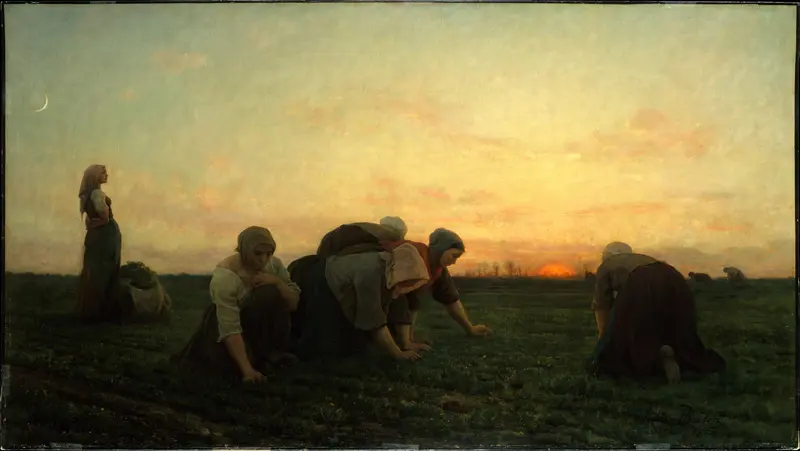
The Weeders
Jules Breton
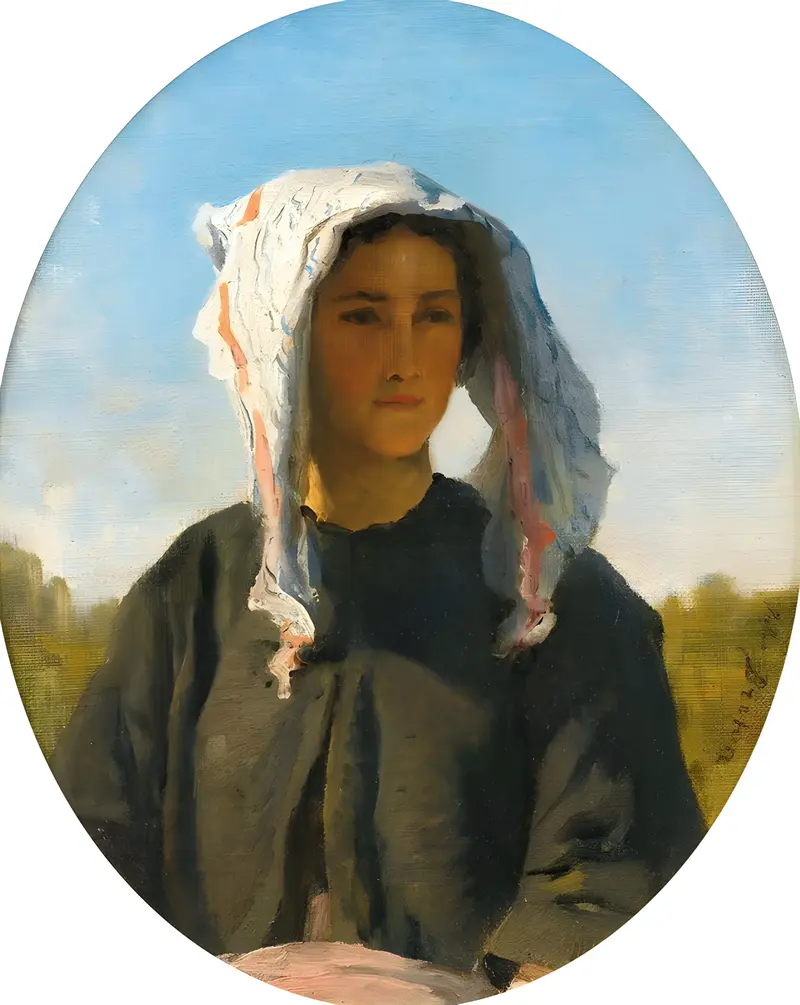
Portrait de jeune Paysanne Bordelaise
Jules Breton
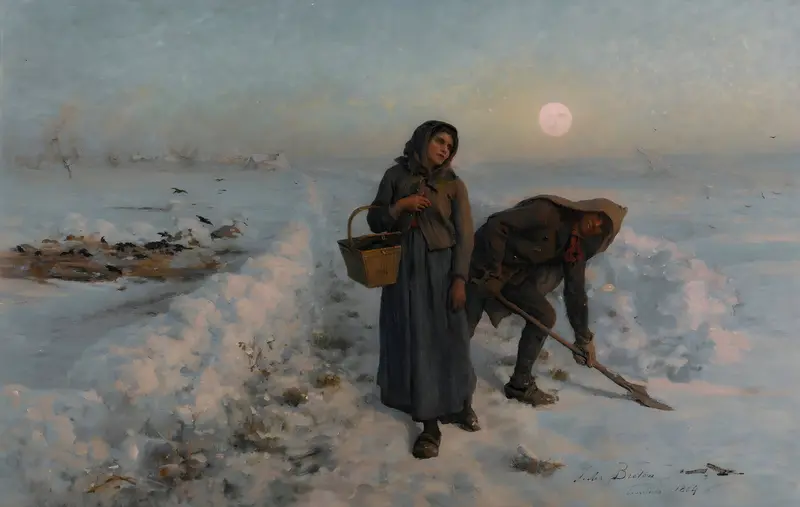
Sur la route en hiver; artois
Jules Breton
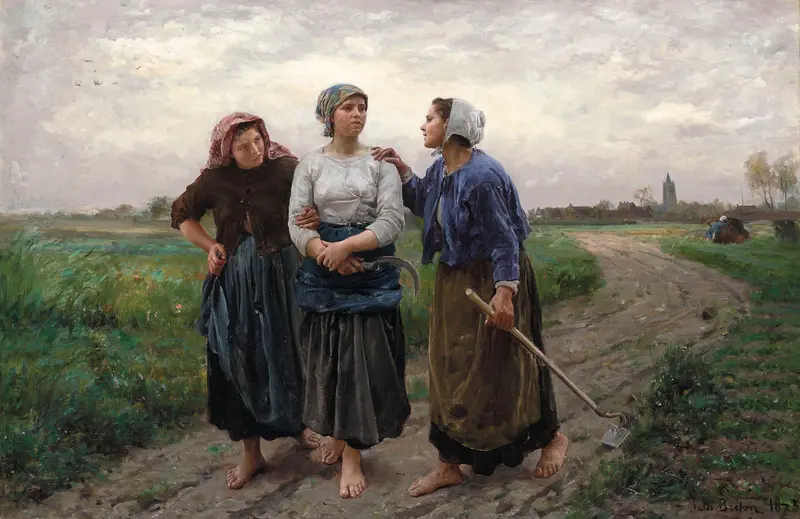
Les amies
Jules Breton
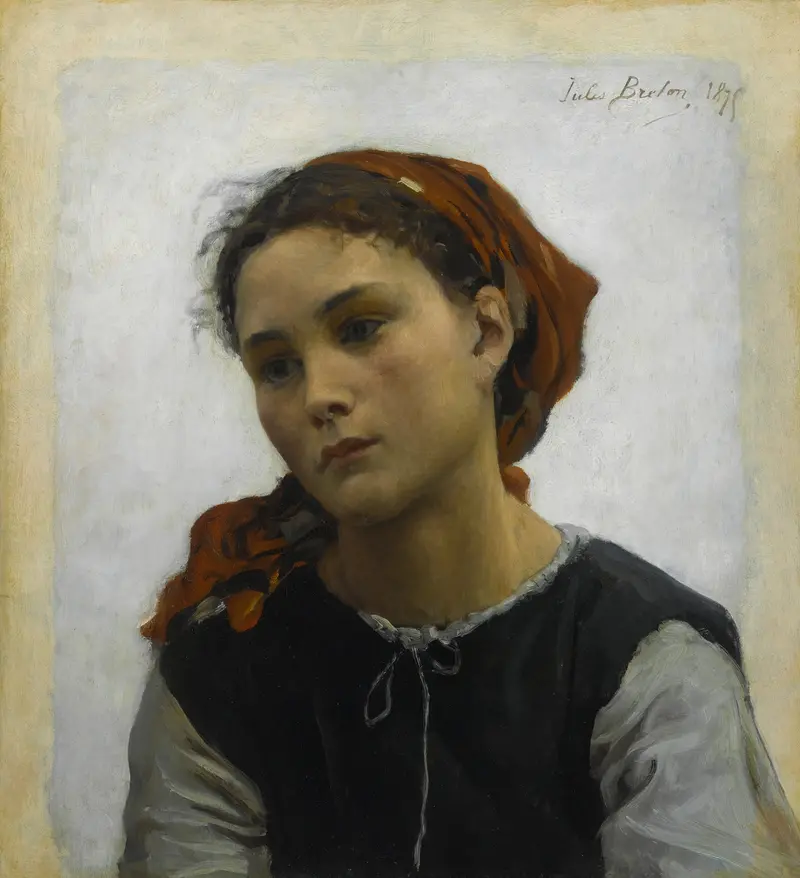
Innocente
Jules Breton
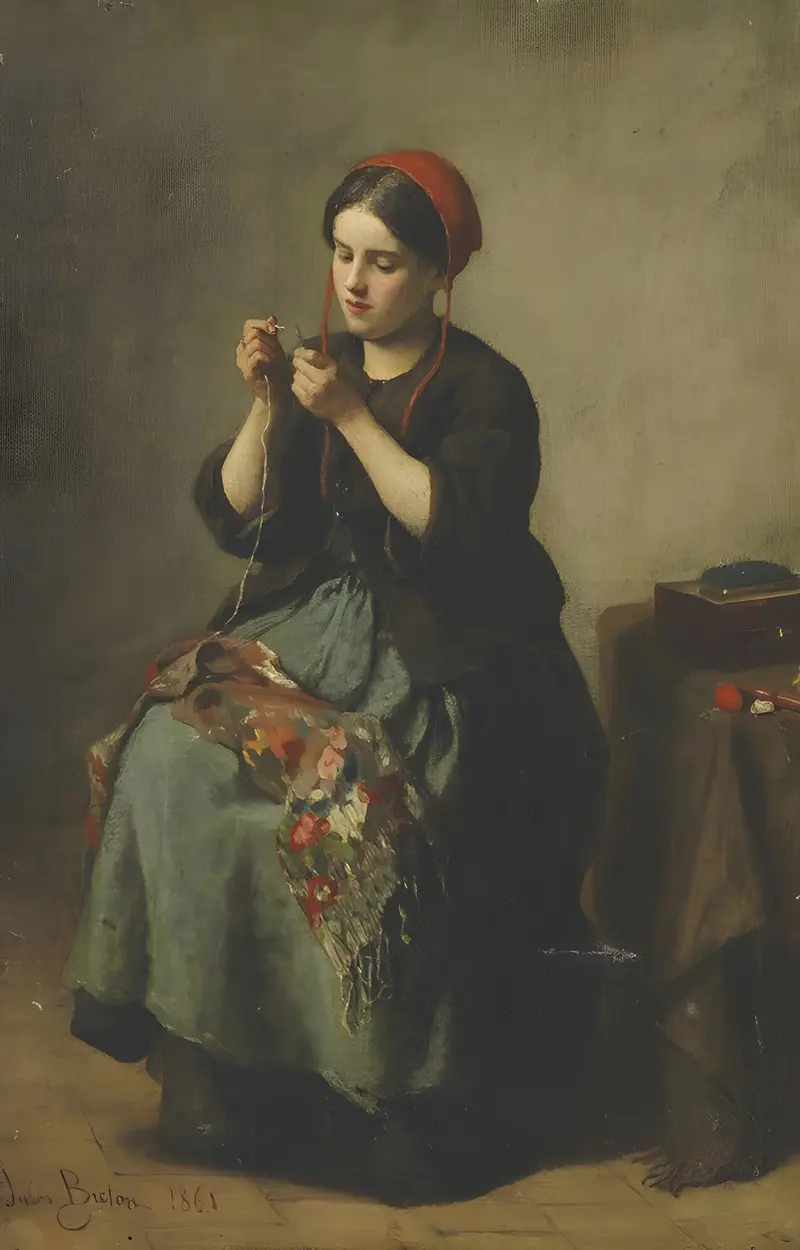
Peasant woman threading a needle
Jules Breton
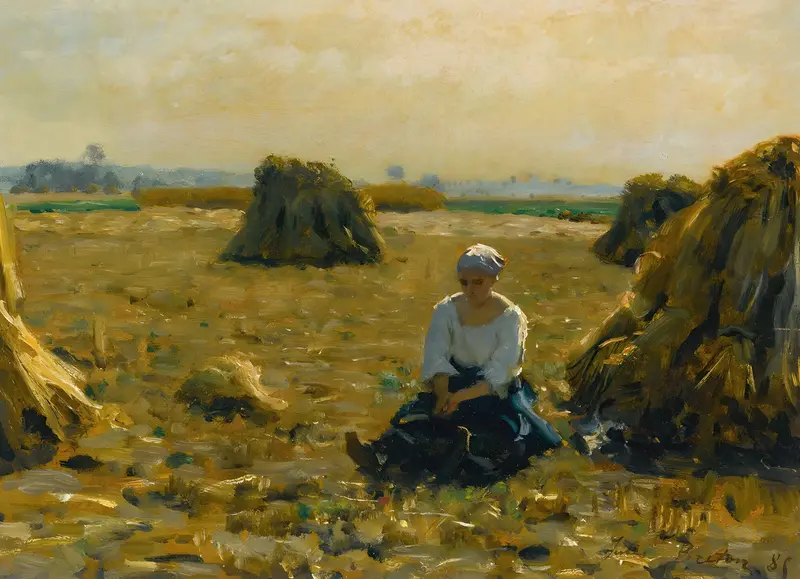
Jeune femme dans les champs
Jules Breton
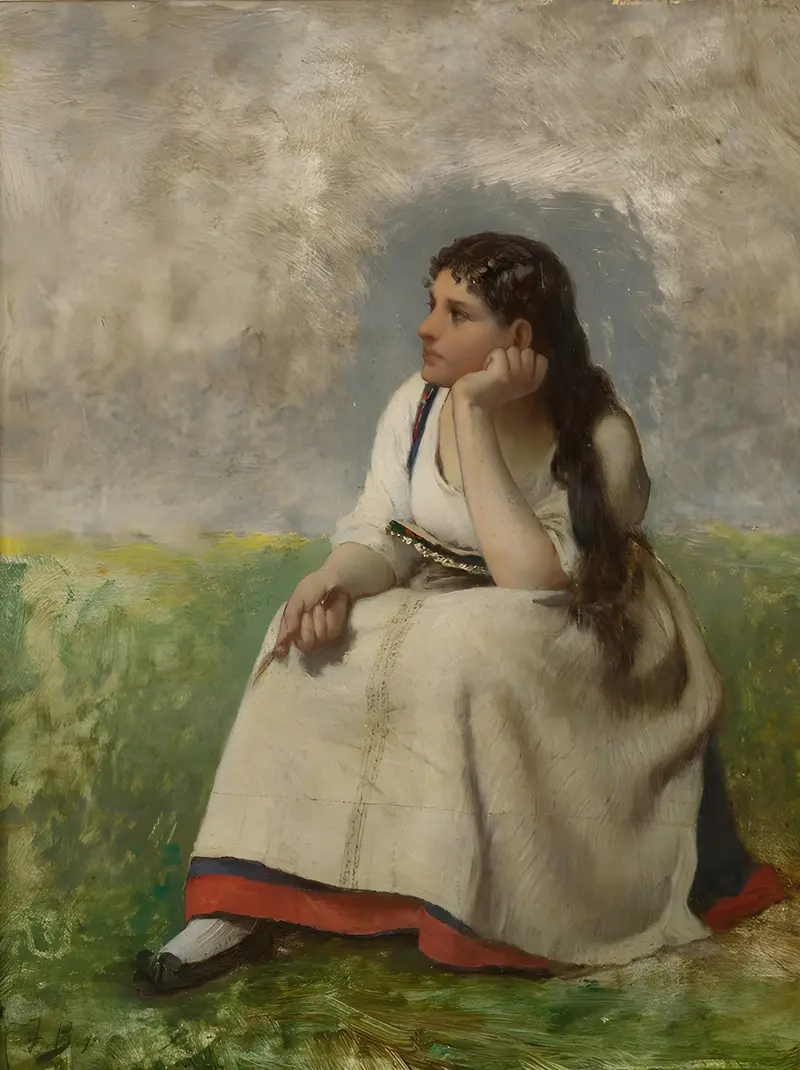
Jeune Fille Pensive
Jules Breton
Returning from the Fields
Jules Breton
More Genre Scene Art

Banquet of the Officers of the St George Civic Guard
Frans Hals

Rembrandt and Saskia in the Scene of the Prodigal Son
Rembrandt van Rijn

Bal du moulin de la Galette
Pierre-Auguste Renoir

Quadrille at the Moulin Rouge
Henri de Toulouse-Lautrec

A Burial at Ornans
Gustave Courbet

When Will You Marry?
Paul Gauguin