
The Blue Umbrella — History & Facts
A single blue umbrella, impossibly wide and sheltering, becomes the entire world for the small figure bracing against the rain. The child’s determined face is half-hidden by the umbrella’s rim, cheeks flushed with effort, as she leans forward on wooden geta sandals that lift her above the puddles. The rain falls in sharp, slanting lines, but the palette remains gentle—pale blues, muted violets, and a soft blush in her coat—so that even the storm feels intimate, almost playful.
The artist’s line is confident and stylized, outlining not just the figure but the mood: the umbrella’s curve echoes the child’s hunched posture, both shaped by the weather, both resilient. Created in 1914, The Blue Umbrella belongs to a world where Western artists were increasingly enchanted by Japanese aesthetics, and where prints like this—small in scale but rich in character—circulated as both art and keepsake. Helen Hyde was among those who traveled and studied in Japan, learning the woodblock technique and adapting its flat planes of color and decorative outlines to her own vision. Works of this kind were often made for collectors hungry for glimpses of daily life, and for moments that felt both foreign and familiar.
This print now resides in the Smithsonian American Art Museum, a quiet testament to the cross-cultural exchanges that shaped early twentieth-century art. Notice how the rain, the shoes, the umbrella—every detail—pulls you back to that single, stubborn moment of childhood in the storm.
More Artworks by Helen Hyde

Moonlight on the Viga Canal) - HH (monogram) LCCN0065
Helen Hyde
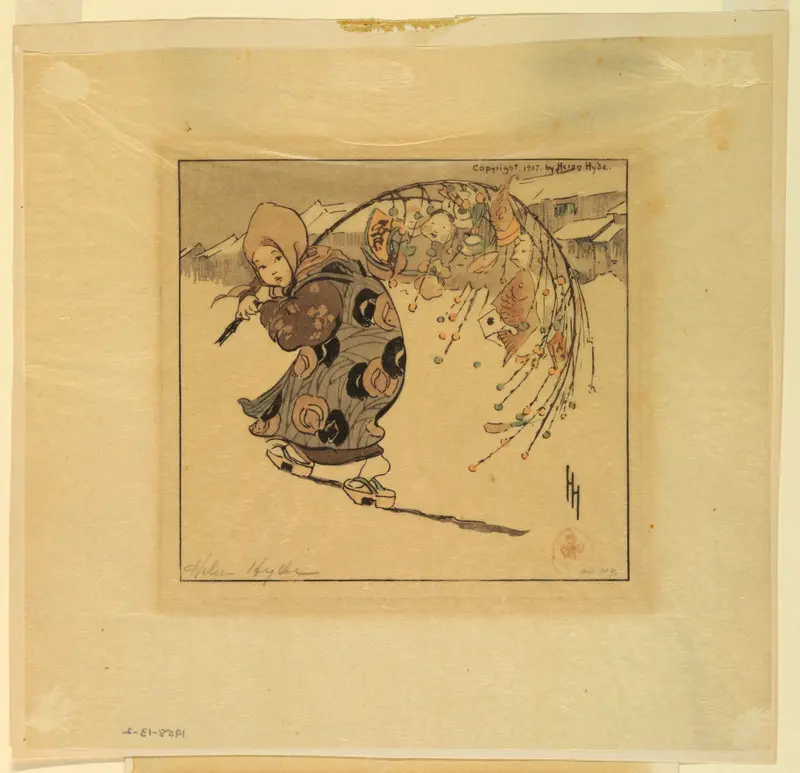
Print, The Good Luck Branch
Helen Hyde
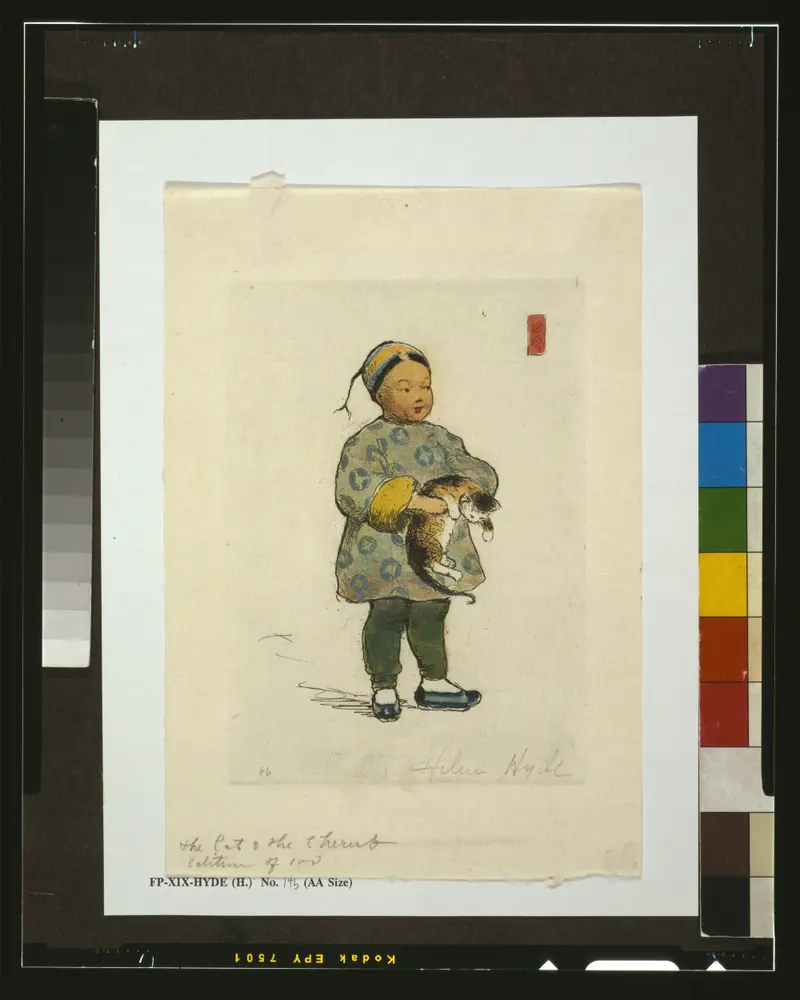
The cat and the cherub LCCN200367
Helen Hyde

Hon(orable Mr) cat - HH (monogram). LCCN200367
Helen Hyde
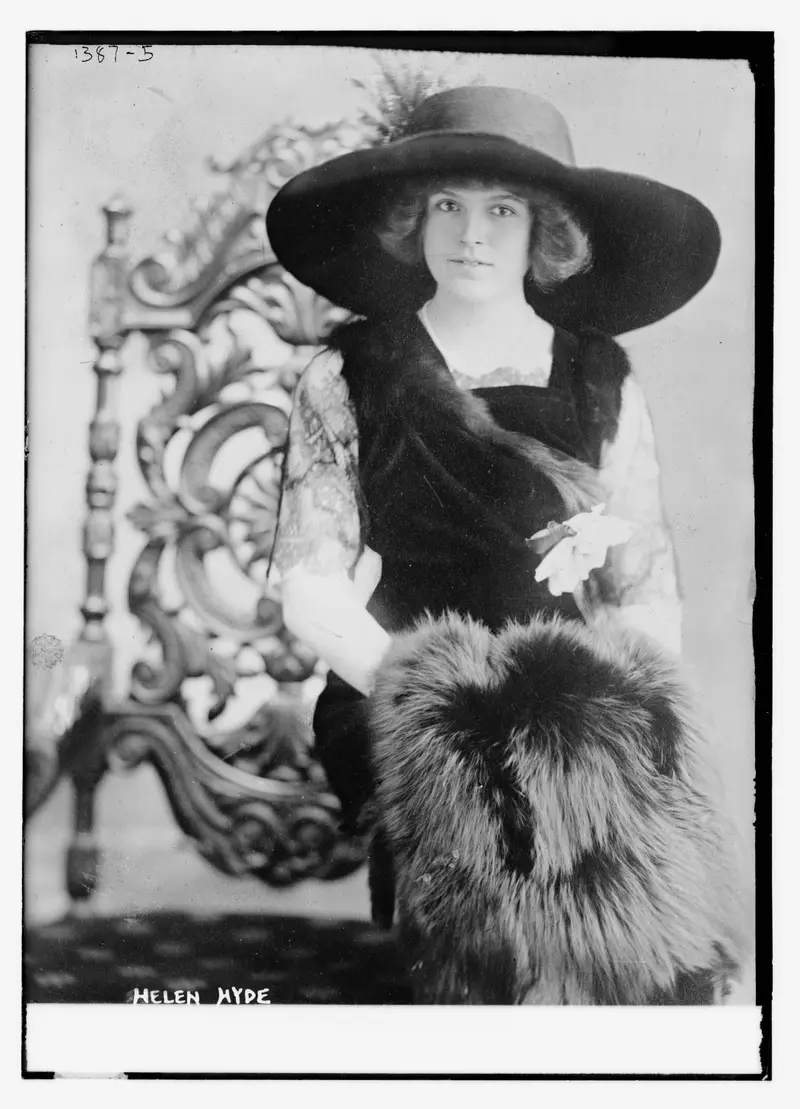
Helen Hyde LCCN201468
Helen Hyde
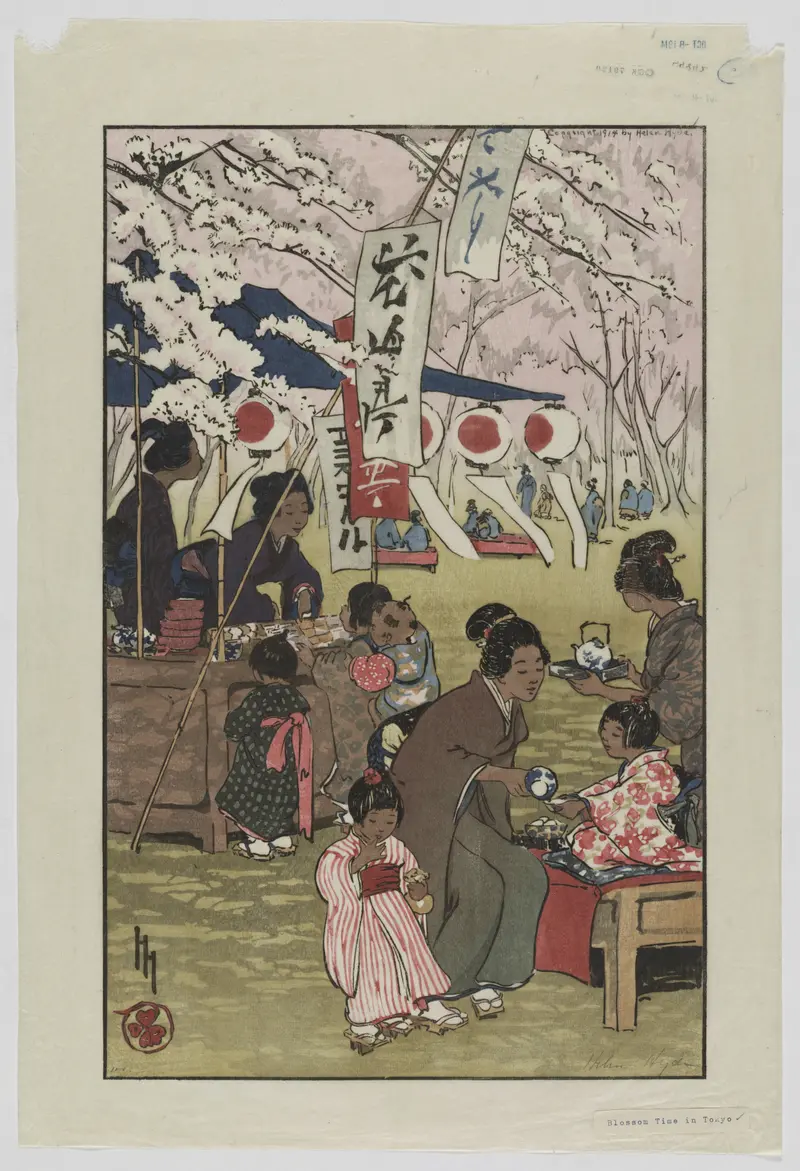
Blossom time in Tokyo) - HH (monogram) LCCN0065
Helen Hyde
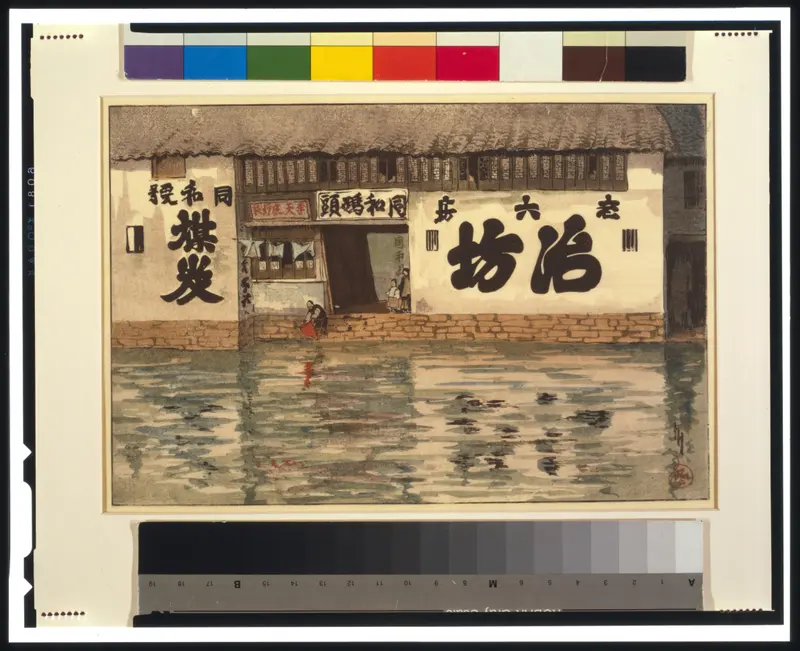
The sauce-pan shop) - HH (monogram) LCCN0065
Helen Hyde

New Year's Day in Tokyo
Helen Hyde
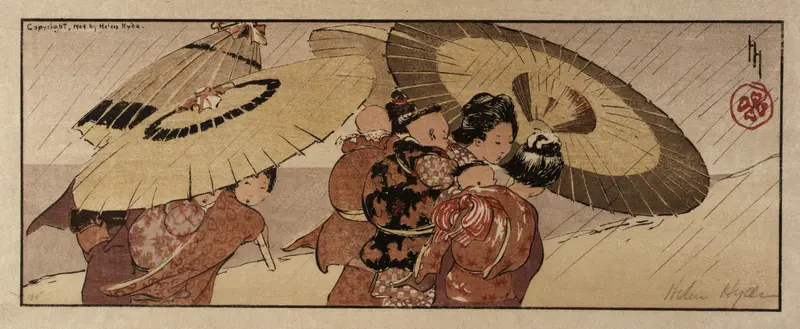
A Summer Shower
Helen Hyde
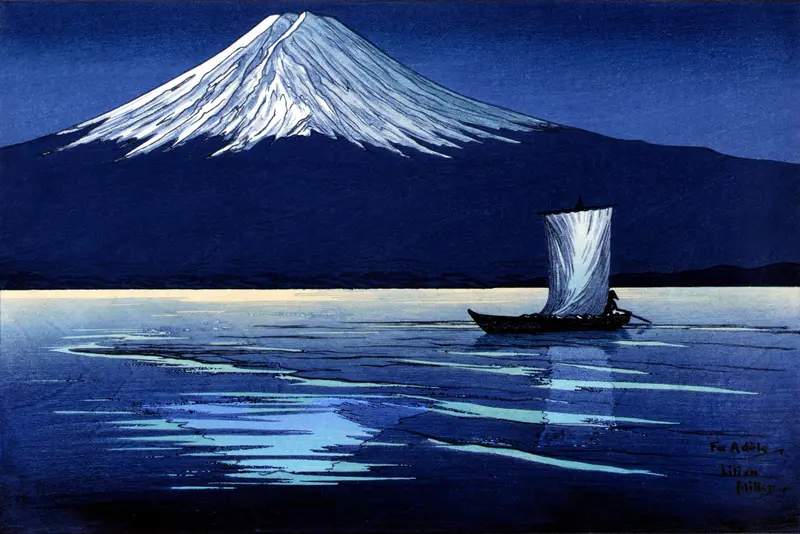
Moonlight on Mt. Fuji
Helen Hyde
More Genre Scene Art

Banquet of the Officers of the St George Civic Guard
Frans Hals

Rembrandt and Saskia in the Scene of the Prodigal Son
Rembrandt van Rijn

Bal du moulin de la Galette
Pierre-Auguste Renoir

Quadrille at the Moulin Rouge
Henri de Toulouse-Lautrec

A Burial at Ornans
Gustave Courbet

When Will You Marry?
Paul Gauguin