
The Breaking Up of the Agamemnon, no. 1 — History & Facts
In the tumult of life, there exists the potential for awakening, where chaos transforms into a delicate equilibrium. Look to the center of the composition, where the jagged edges of the ship seem to fracture against the turbulent waves. The artist employs intricate line work, accentuated by soft shades of grey and blue, to convey both the violent action of the sea and the serenity of the sky above. Notice how the lighter hues break through the darker tones, suggesting hope amid despair—a subtle interplay of contrast that draws the eye and evokes a sense of movement and change. In the foreground, details such as the shards of wood and the foamy crest of the waves symbolize destruction, while the distant horizon hints at new beginnings.
The tension between the forces of nature and human endeavor unfolds in a symphony of lines, inviting the viewer to reflect on the fragility and resilience inherent in life. The work encapsulates a moment of transition, urging us to confront our own chaotic experiences and recognize the beauty that can arise from them. Created in 1870, this piece emerged from Haden's studio in London during a period marked by the rise of printmaking as an esteemed art form. The artist was deeply engaged with the evolving techniques of etching and aquatint, which allowed him to explore themes of nature and human struggle in novel ways.
His approach in this work reflects not only personal exploration but also a broader artistic movement, as many sought to capture the raw power of the natural world in an era of rapid change.
More Artworks by Francis Seymour Haden
Browse all →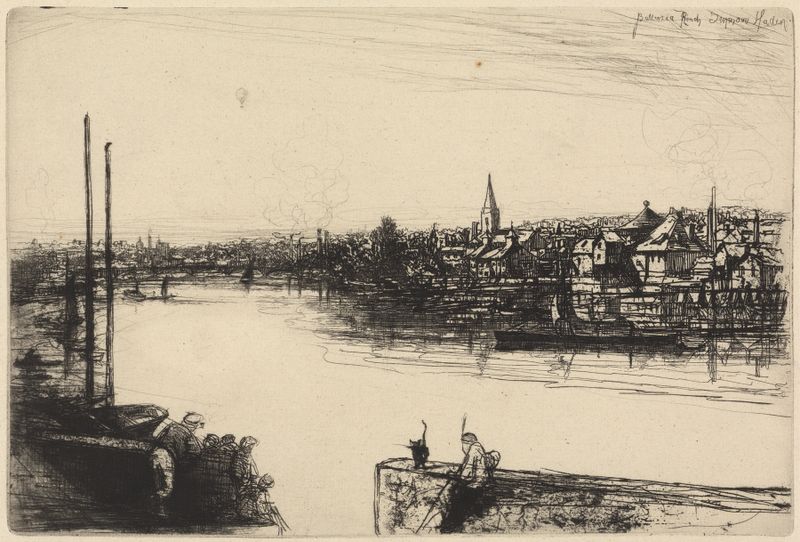
Battersea Reach
Francis Seymour Haden

Nine Barrow Down
Francis Seymour Haden
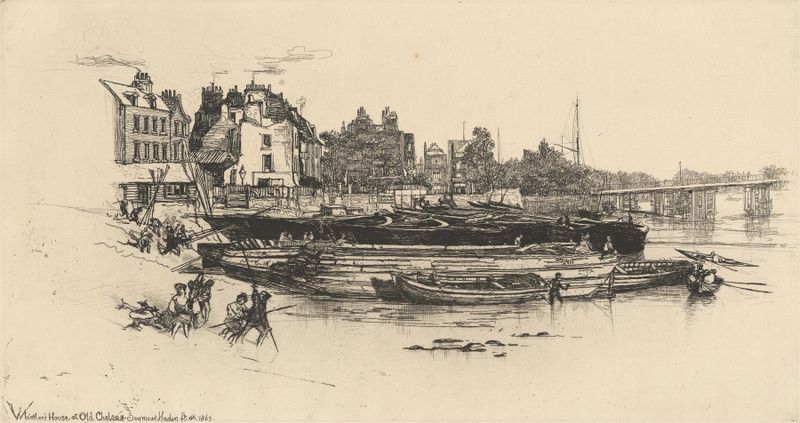
Whistler’s House at Old Chelsea
Francis Seymour Haden

The Mill-Wheel
Francis Seymour Haden
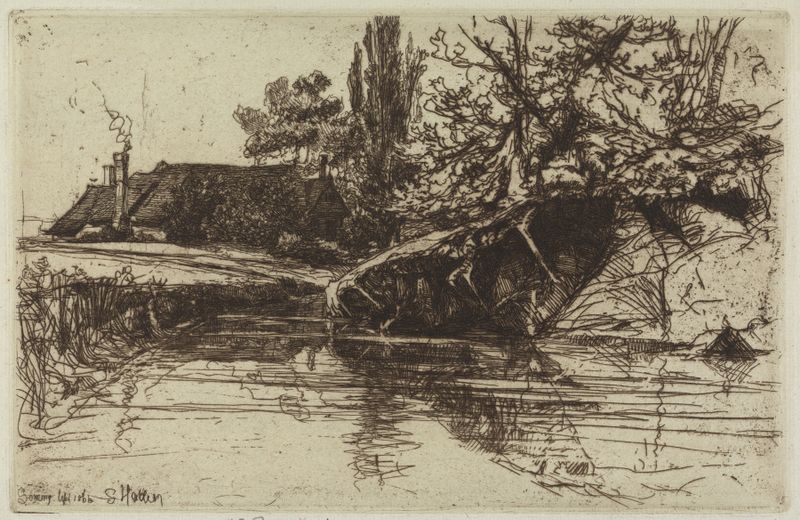
The Moat House
Francis Seymour Haden

By Twickenham
Francis Seymour Haden

Newcastle Emlyn
Francis Seymour Haden
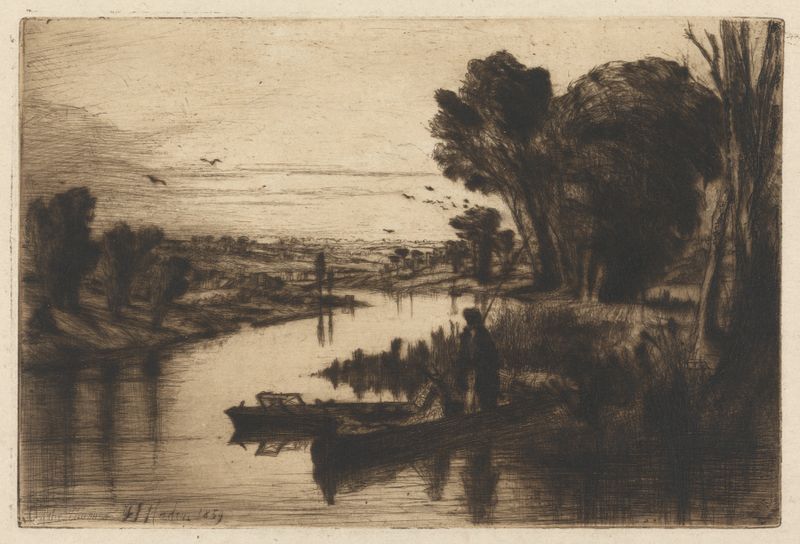
On the Thames
Francis Seymour Haden

Kidwelly Castle
Francis Seymour Haden
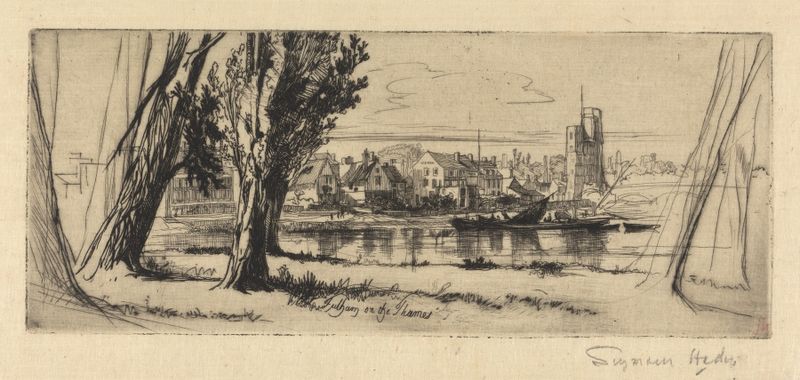
Fulham on the Thames
Francis Seymour Haden





