
The Castle of the Owls — History & Facts
When did color learn to lie? In a world where emotions bleed into the canvas, the hues of betrayal whisper secrets beneath their vibrant facade, revealing truths that often go unspoken. Focus your gaze on the delicate interplay of light and shadow in the foreground, where the castle, draped in an almost surreal palette, looms ominously against a violet sky. Notice how the sharp edges of the stonework contrast with the gentle curves of the surrounding landscape, embodying a tension that speaks to the duality of safety and threat. The color choices—rich greens and deep blues—invite a sense of wonder, yet they are layered with an undercurrent of unease, suggesting that all is not what it seems. Dig deeper into the composition, and you'll find the owls perched in anticipation, their watchful eyes embodying the betrayals hidden in the nocturnal hours.
The juxtaposition of tranquil nature and the imposing structure hints at a fractured relationship between the known and the unknown, revealing a world that thrives on deception. The seemingly idyllic scene envelops the viewer in an illusion, unsettlingly beautiful yet marked by the promise of unveiled darkness. Félix Hilaire Buhot painted this piece in 1887 during a period of personal and creative turmoil in France. The late 19th century was a time of great change in the art world, with the rise of Impressionism challenging traditional techniques.
Buhot, already influenced by earlier movements, sought to capture the essence of atmosphere, yet found himself grappling with themes of fidelity and illusion that pervaded both his life and his works. In this captivating landscape, he melded the intricate detail of printmaking with vibrant color, inviting the viewer to question the very nature of perception and reality.
More Artworks by Félix Hilaire Buhot
Browse all →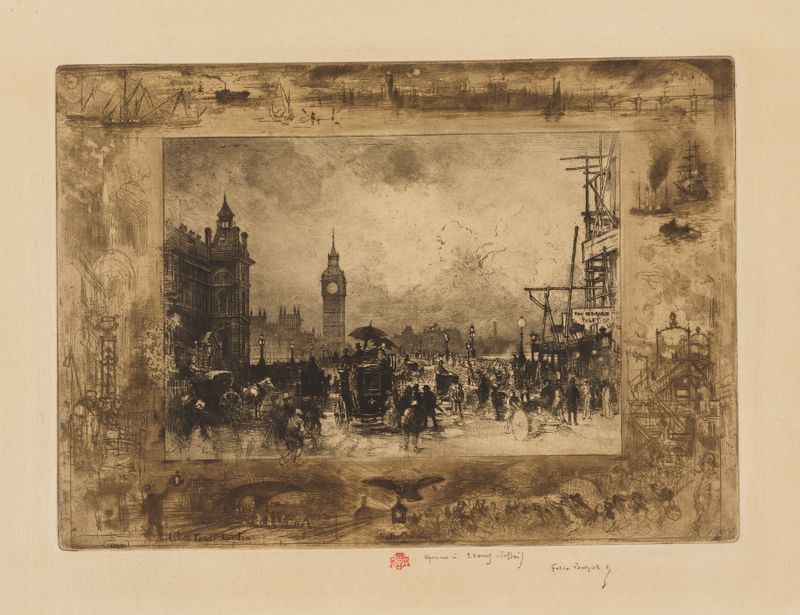
Westminster Bridge, or Westminster Clock Tower
Félix Hilaire Buhot
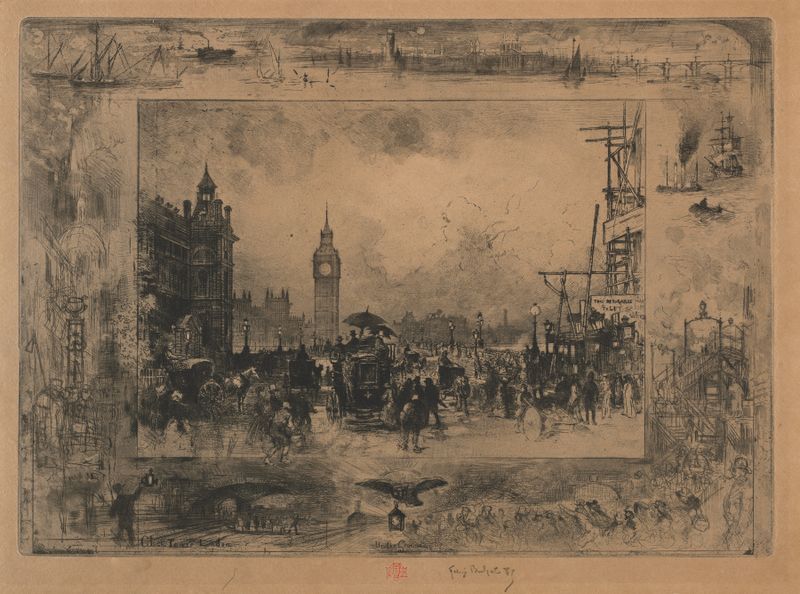
Westminster Bridge, or Westminster Tower
Félix Hilaire Buhot
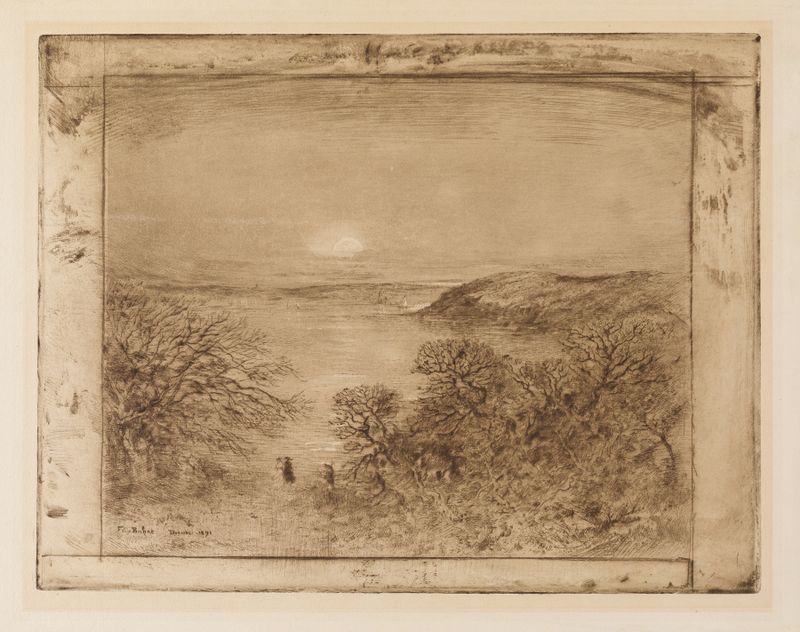
Moonrise at Dinard
Félix Hilaire Buhot
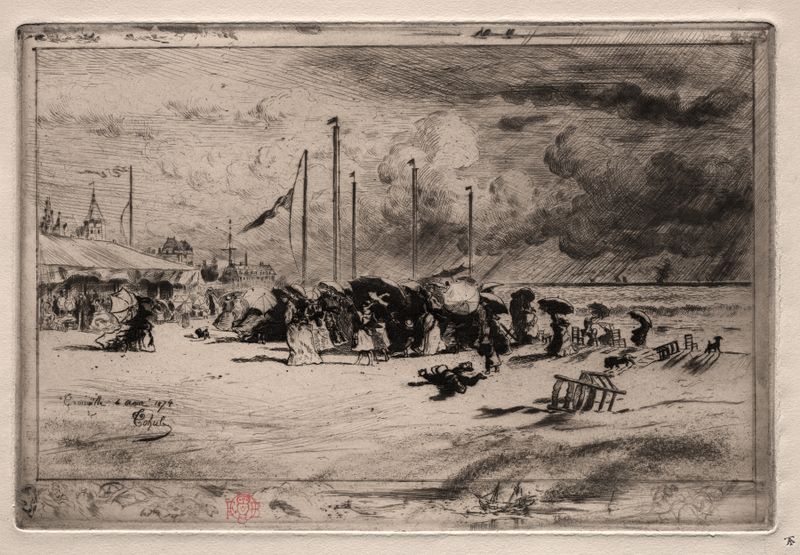
A Squall at Trouville
Félix Hilaire Buhot
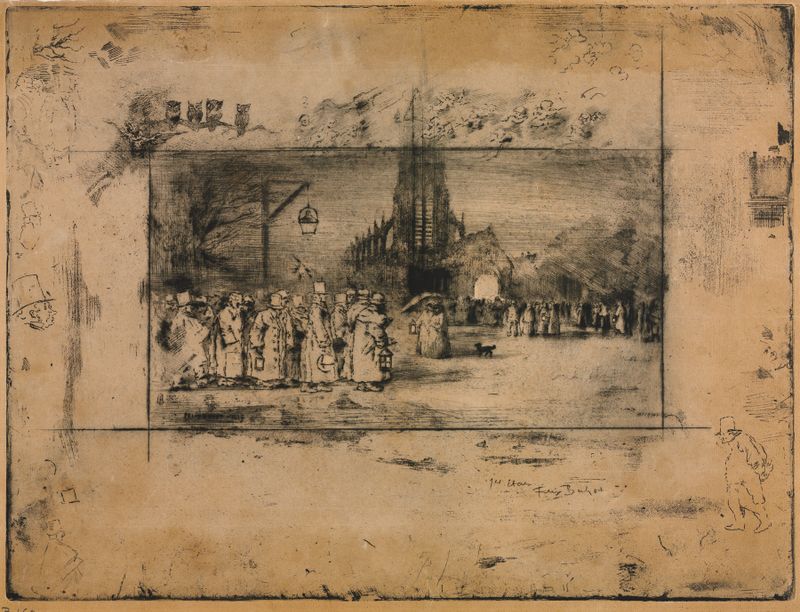
The Midnight Mass
Félix Hilaire Buhot
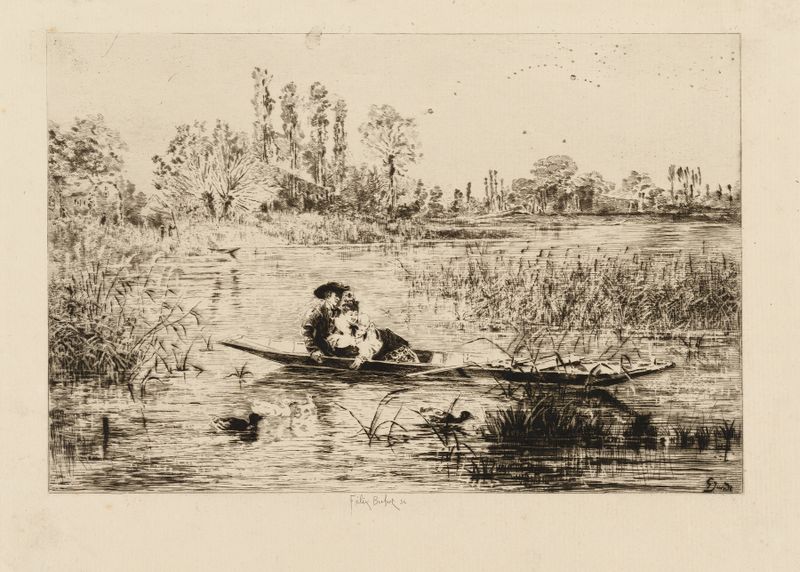
On the Thread of the Water
Félix Hilaire Buhot
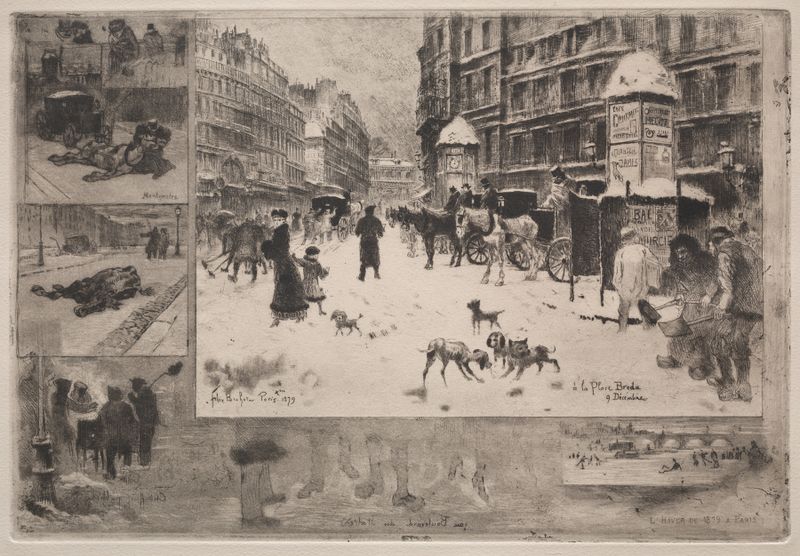
Winter in Paris
Félix Hilaire Buhot
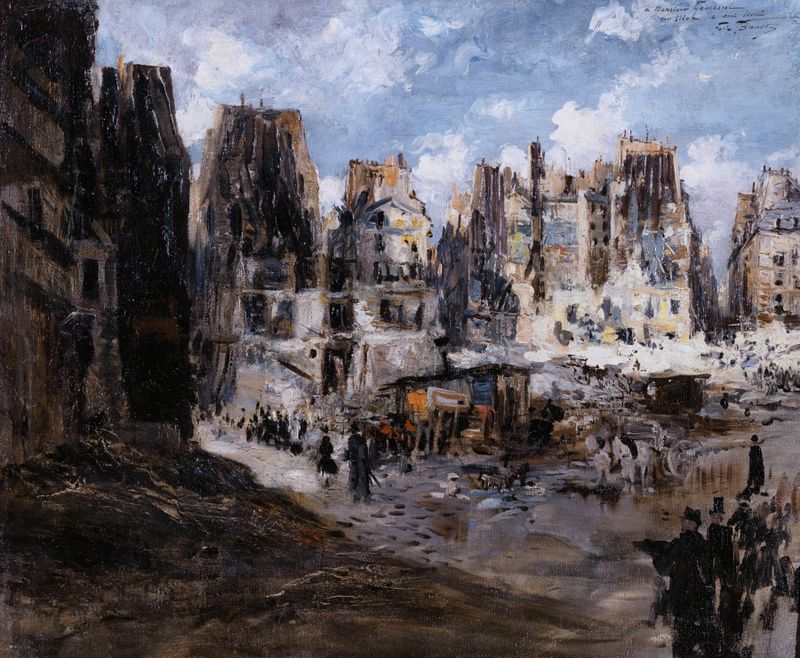
Le percement de l’avenue de l’Opéra.
Félix Hilaire Buhot
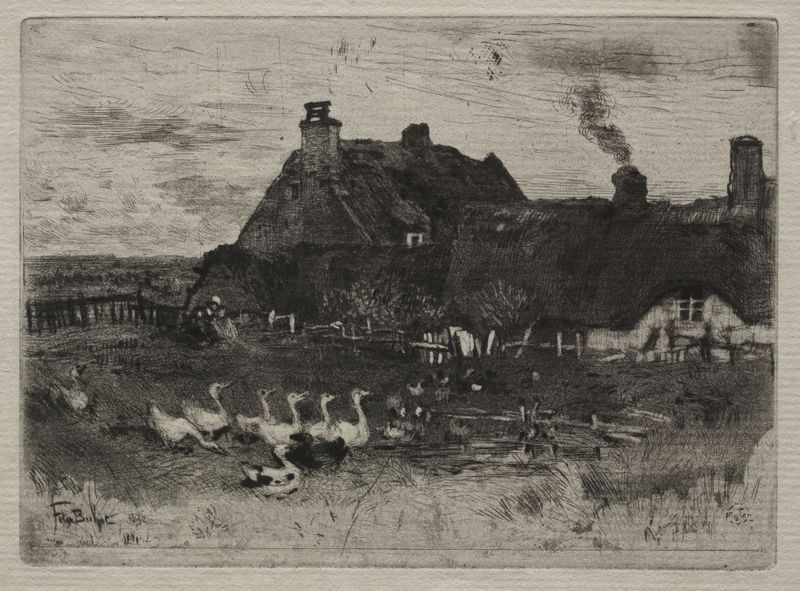
Thatched Cottages
Félix Hilaire Buhot
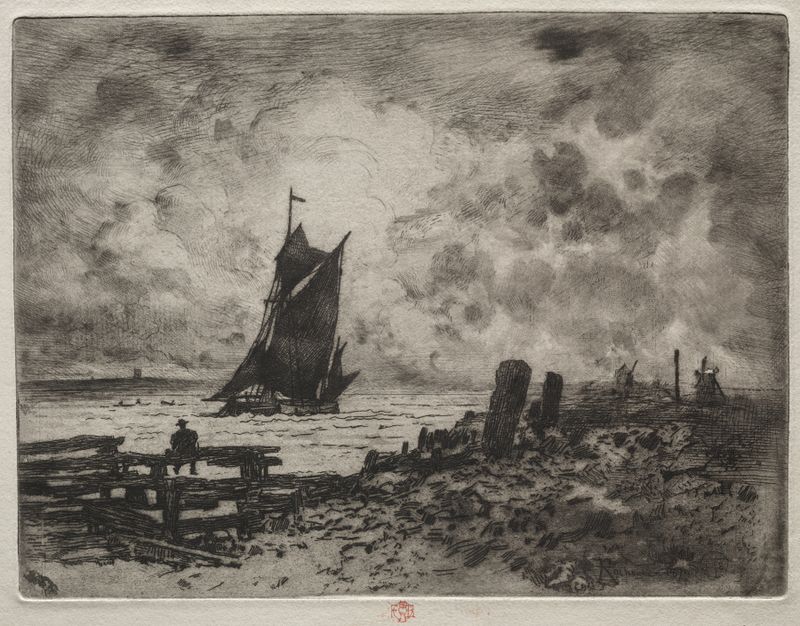
The Little Marine; Souvenir of Medway
Félix Hilaire Buhot
More Architecture Art
Browse all →
The statue of Liberty
Frédéric Auguste Bartholdi

View of Houses in Delft, Known as ‘The Little Street’
Johannes Vermeer

View of Houses in Delft, Known as ‘The Little Street’
Johannes Vermeer

The Cathedral in Rouen. The portal, Grey Weather
Claude Monet

The yellow house
Vincent van Gogh

The Church in Auvers-sur-Oise, View from the Chevet
Vincent van Gogh