
The Cottage — History & Facts
Could a single brushstroke hold eternity? In Meindert Hobbema's The Cottage, the chaos of nature and the serenity of human existence intertwine, creating a moment that transcends time itself. Focus on the lush greenery that envelops the cottage, which draws the eye with its vibrant strokes of green, contrasting sharply against the subdued, earthy tones of the structure. Notice how the light filters through the trees, casting gentle shadows that dance across the cottage's thatched roof. The composition is layered, inviting viewers to traverse the winding path that leads you deeper into this tranquil scene, while the sky opens up with soft blues and hints of white clouds, suggesting both calm and a fleeting moment of change. Within this idyllic portrayal, tensions emerge: the harmony of the rustic dwelling is juxtaposed against the wildness of the surrounding woodlands.
The asymmetrical arrangement of foliage creates a sense of movement, as if nature is in a constant state of flux. Additionally, the cottage stands resolute, a symbol of human resilience amidst the chaos, while the presence of the winding river off to the side hints at the passage of time, ever-flowing and unstoppable. In 1663, Hobbema painted this work in the Netherlands, where he was part of the Dutch Golden Age, a period marked by burgeoning artistic innovation and exploration of landscape portrayal. At this time, he was establishing his reputation as a master of capturing the beauty of rural life, reflecting the societal shifts and growing appreciation for nature in art.
More Artworks by Meindert Hobbema
Browse all →
The Water Mill (The Trevor Landscape)
Meindert Hobbema

Bewaldete Flusslandschaft mit Figuren auf einem Weg
Meindert Hobbema
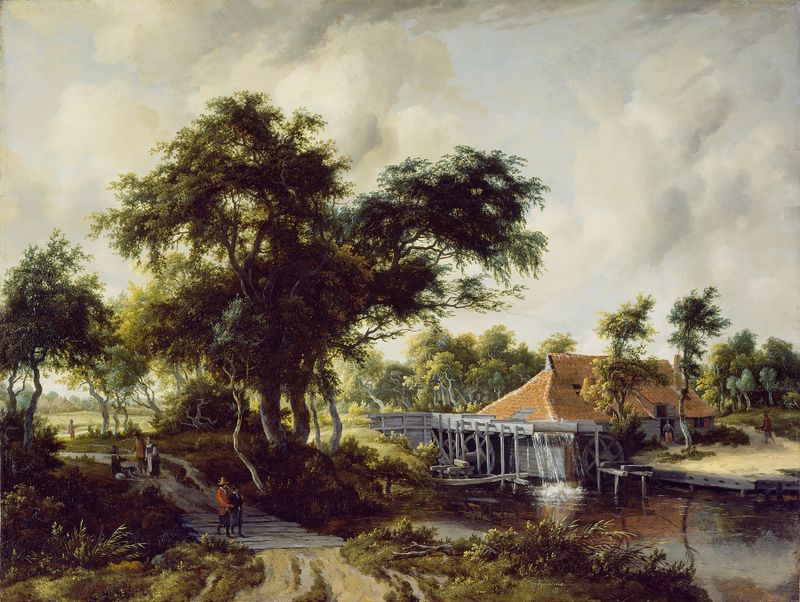
A Watermill
Meindert Hobbema
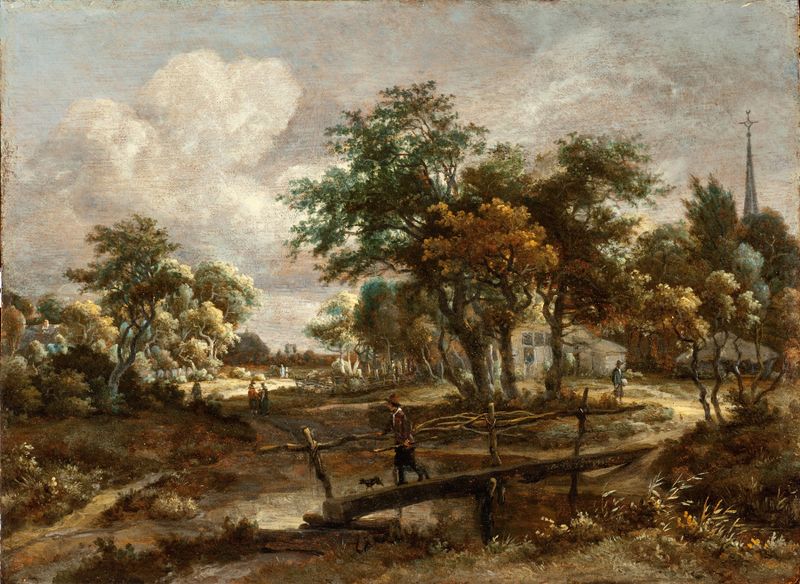
Landscape with a Footbridge
Meindert Hobbema

A Watermill
Meindert Hobbema
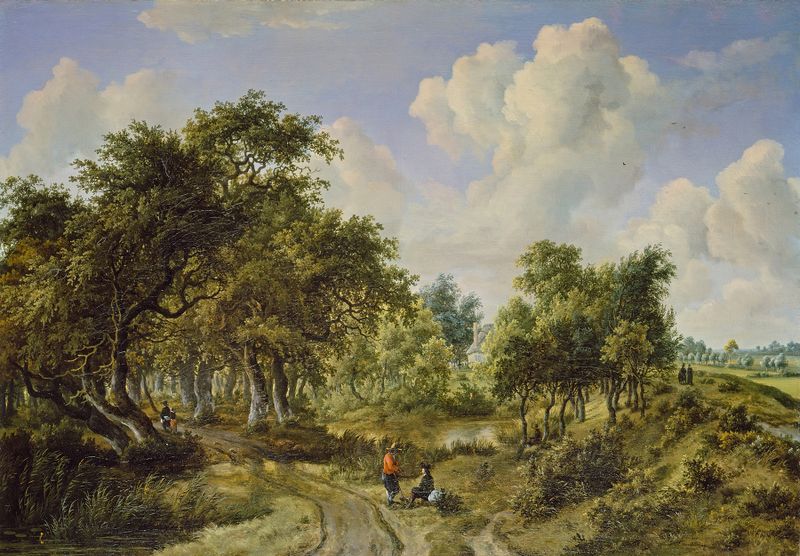
A Wooded Landscape
Meindert Hobbema

A Wooded Landscape
Meindert Hobbema
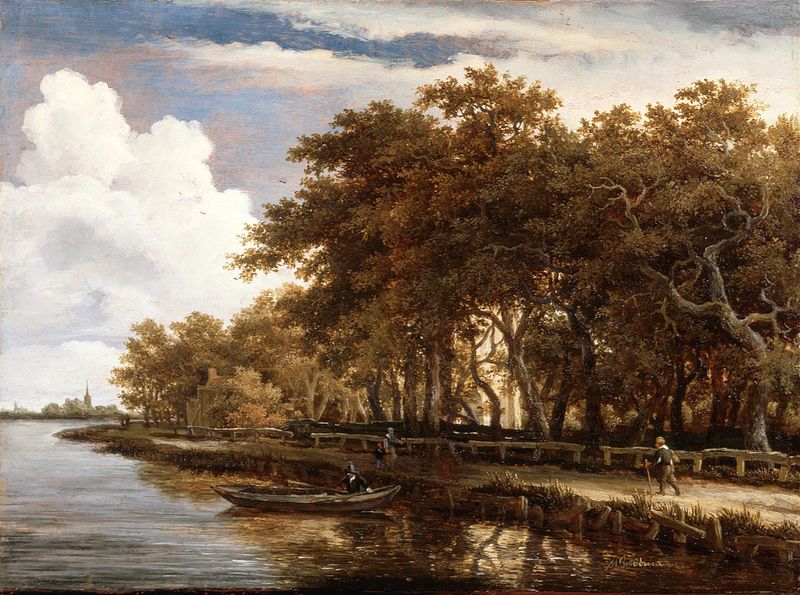
View Along the Amstel
Meindert Hobbema

The Watermill with the Great Red Roof
Meindert Hobbema

Water Mill
Meindert Hobbema





