
The Donkeys at the Hill of the Cailles — History & Facts
Did the painter know this moment would outlive them? In The Donkeys at the Hill of the Cailles, a quiet solitude envelops the scene, suggesting a poignant exploration of loneliness amidst pastoral life. Look to the left at the gentle slopes where two donkeys graze beneath a vast expanse of muted sky. The subtle brushstrokes create a hazy atmosphere, merging earth tones with soft blues that imbue the painting with a sense of timelessness. The composition draws the viewer’s eye toward the donkeys, their humble forms contrasting against the expansive landscape—a reminder of the simplicity and tranquility that often accompanies isolation. The emotional tension within the work lies in the juxtaposition of serenity and solitude.
While the donkeys appear at peace, the empty spaces around them evoke a profound sense of yearning. This quiet scene invites contemplation of the relationship between humanity and nature, hinting at unexpressed stories and connections lost in time. Each stroke whispers of the solitude of both the animals and the artist, suggesting a deeper commentary on the human condition. Félix Hilaire Buhot crafted this piece around 1875 in France, during a time when Impressionism was beginning to challenge traditional art forms.
As he navigated his evolving style, Buhot embraced the emotional resonance of landscapes and daily life, capturing fleeting moments in vivid detail. The world of art was alive with experimentation, yet this work captures an intimate reflection, perhaps revealing the artist’s own feelings of isolation amidst a rapidly changing society.
More Artworks by Félix Hilaire Buhot
Browse all →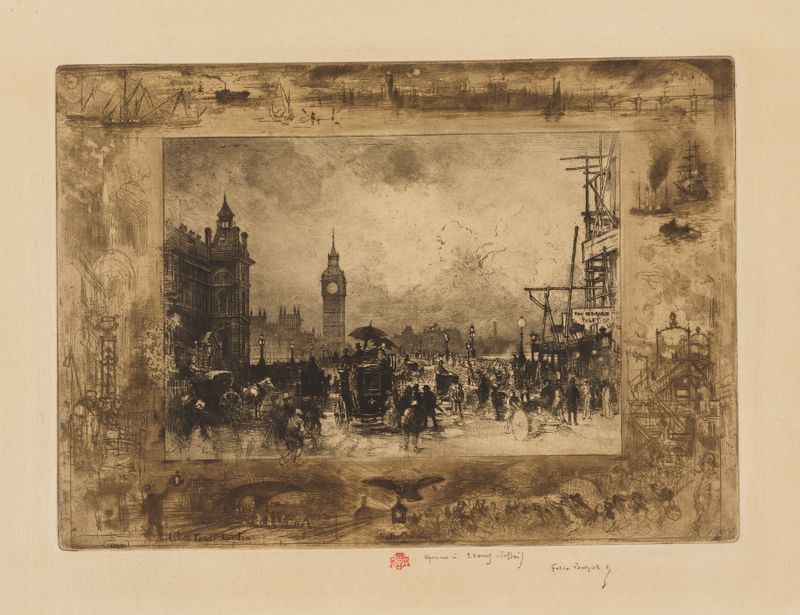
Westminster Bridge, or Westminster Clock Tower
Félix Hilaire Buhot
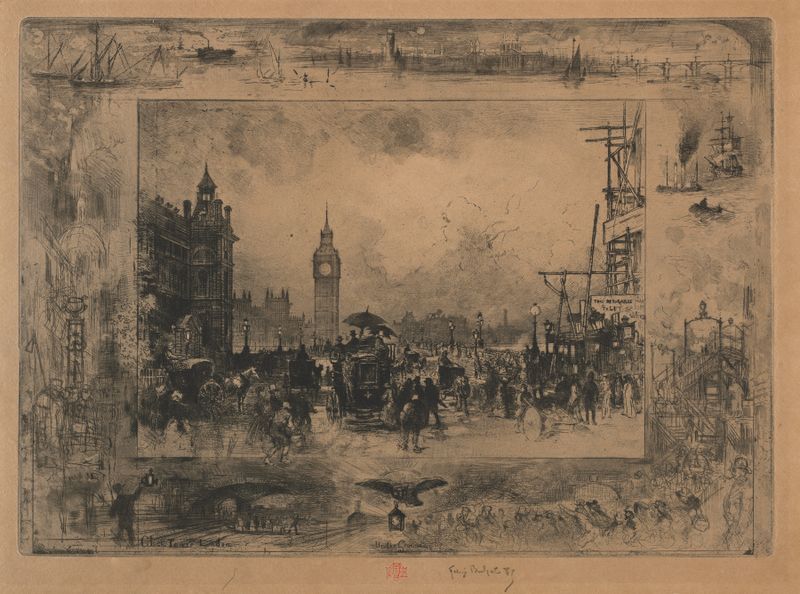
Westminster Bridge, or Westminster Tower
Félix Hilaire Buhot
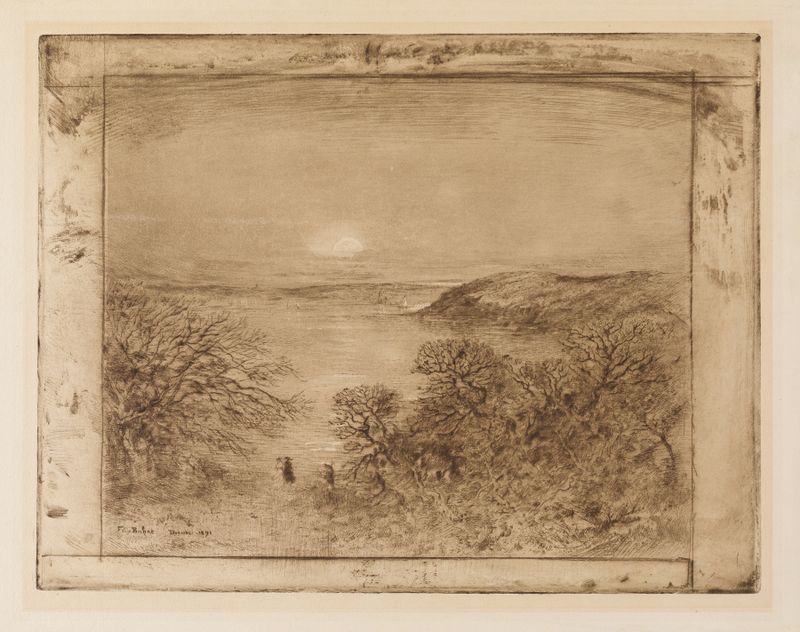
Moonrise at Dinard
Félix Hilaire Buhot
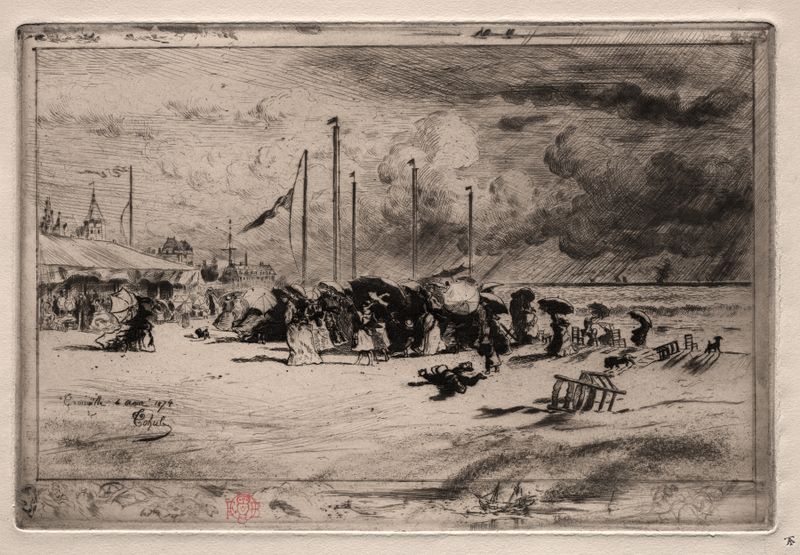
A Squall at Trouville
Félix Hilaire Buhot
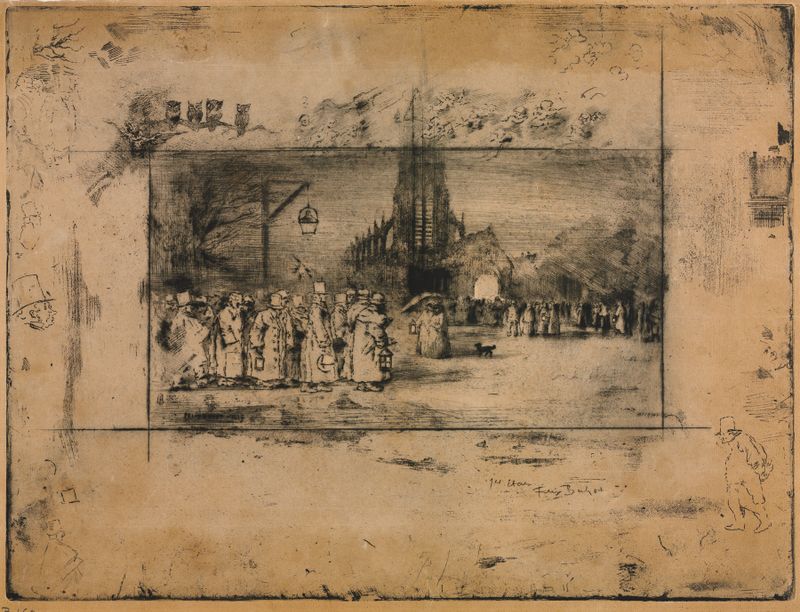
The Midnight Mass
Félix Hilaire Buhot
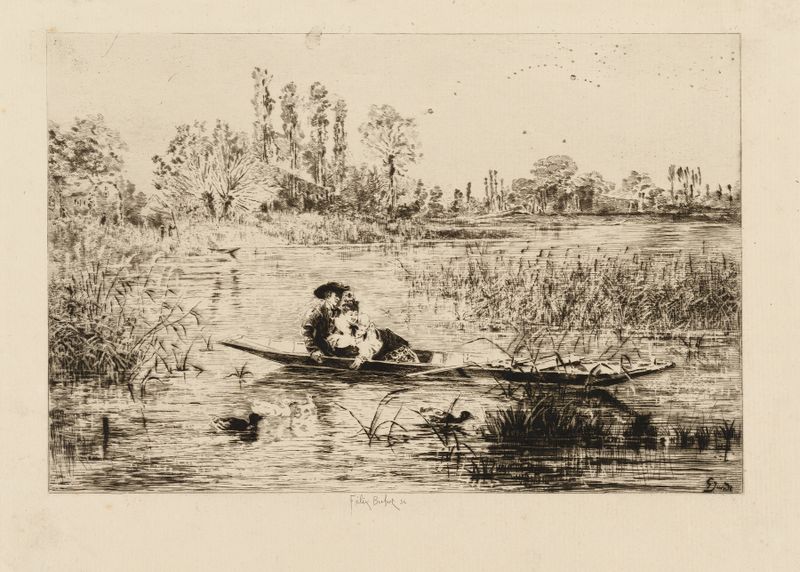
On the Thread of the Water
Félix Hilaire Buhot
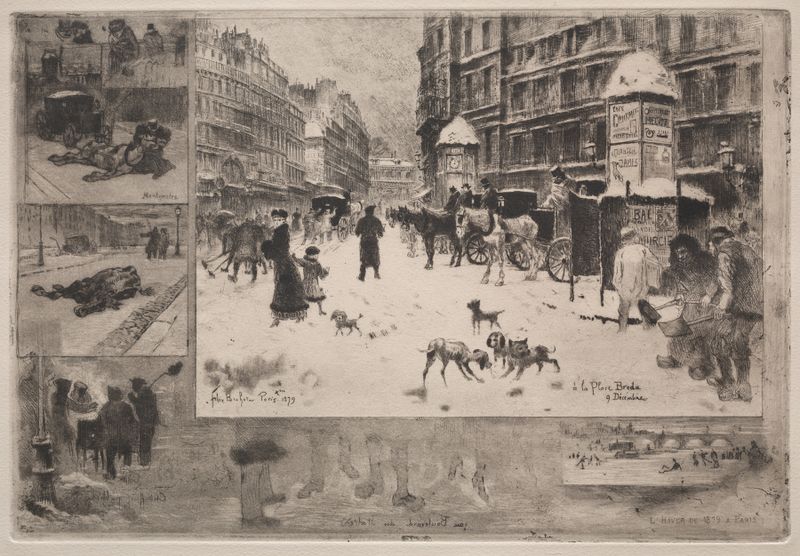
Winter in Paris
Félix Hilaire Buhot
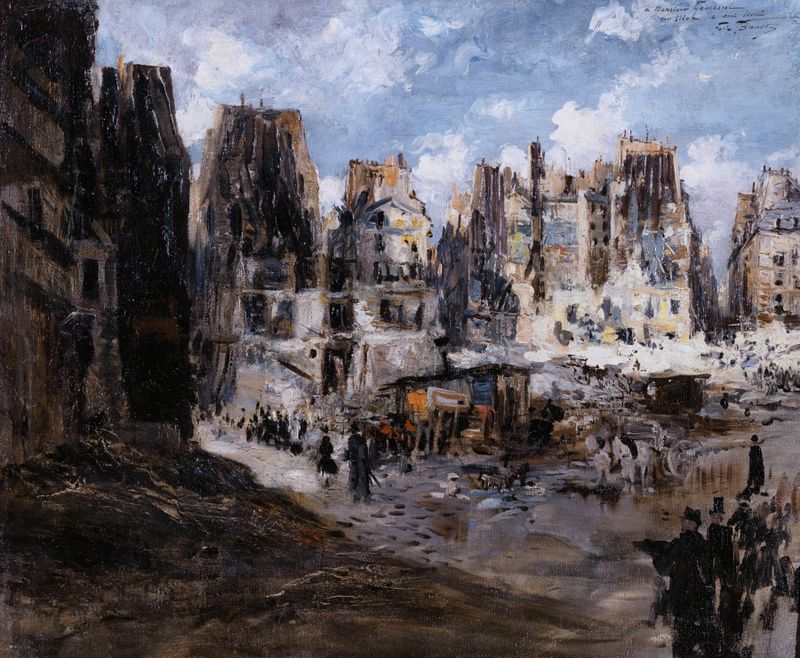
Le percement de l’avenue de l’Opéra.
Félix Hilaire Buhot
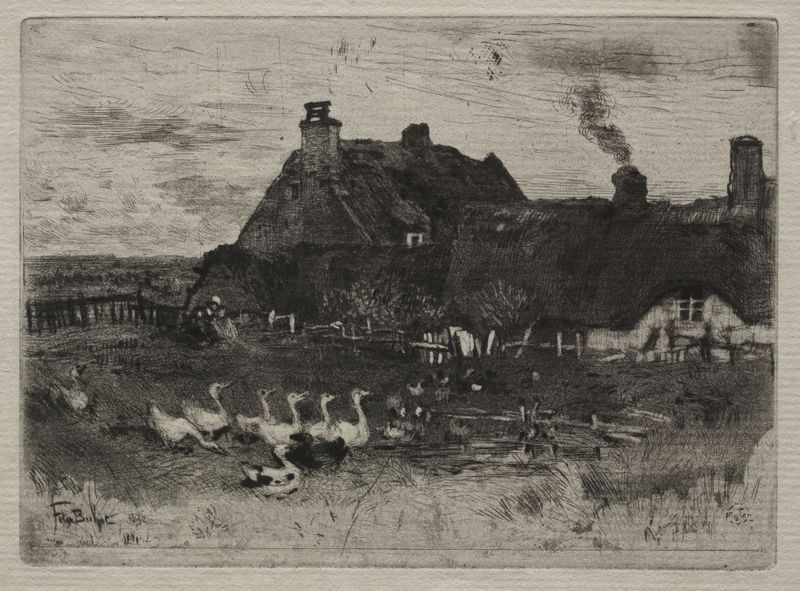
Thatched Cottages
Félix Hilaire Buhot
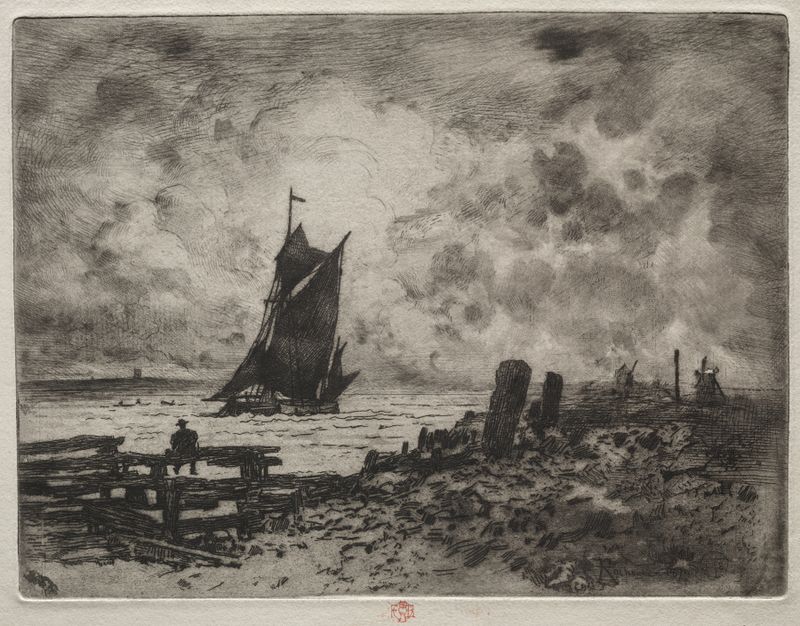
The Little Marine; Souvenir of Medway
Félix Hilaire Buhot





