
The Drawbridge — History & Facts
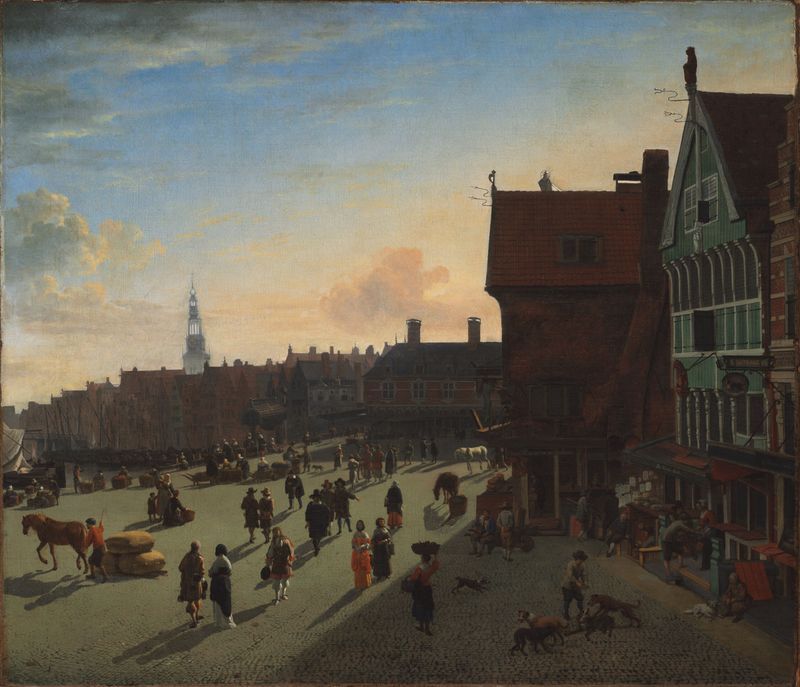
What secret hides in the quiet of the canvas? Beneath the calm exterior of The Drawbridge, a profound sorrow lingers, inviting viewers to delve into a world where silence speaks volumes. Look to the left at the sturdy, yet slightly worn stone edifice framing the drawbridge—a symbol of both connection and separation. Notice how the soft, golden light bathes the wooden beams, emphasizing their texture and age, while shadows curl around the edges, whispering of forgotten stories. The meticulously rendered reflections in the water reveal a mirror of tranquility, creating a juxtaposition between the serene surface and the underlying currents of emotion. As you explore further, consider the figures—small and distant—moving beneath the arch.
Their gestures reflect a sense of solitude and contemplation, suggesting a past filled with loss or longing. The vessel approaching the bridge adds to this tension, representing the inevitable passage that lies ahead, a crossing that may evoke both hope and regret. Each element in the composition, from the sky's muted blues to the earthy tones of the bridge, speaks to a deep-rooted grief that permeates the landscape, urging the viewer to reflect on their own experiences of transition and memory. Jan van der Heyden painted this work in the Netherlands during the period of 1660 to 1672, a time marked by artistic innovation and the Dutch Golden Age's flourishing landscape painting.
Emerging as a master of light and urban scenes, he was influenced by the changing dynamics of his environment, where industry and nature began to intertwine more intricately. In capturing this moment, he invites us to ponder the deeper layers of existence, as nature and humanity coexist in a delicate balance, often shadowed by loss.
More Artworks by Jan van der Heyden
Browse all →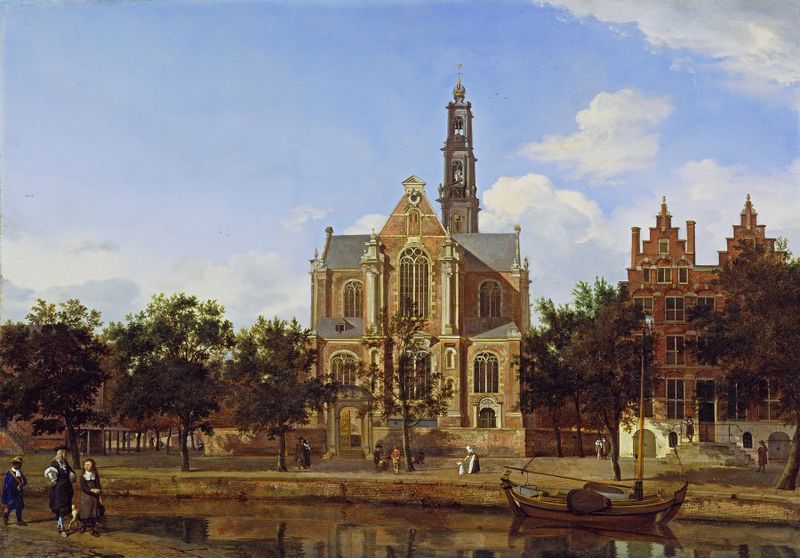
View of the Westerkerk, Amsterdam
Jan van der Heyden
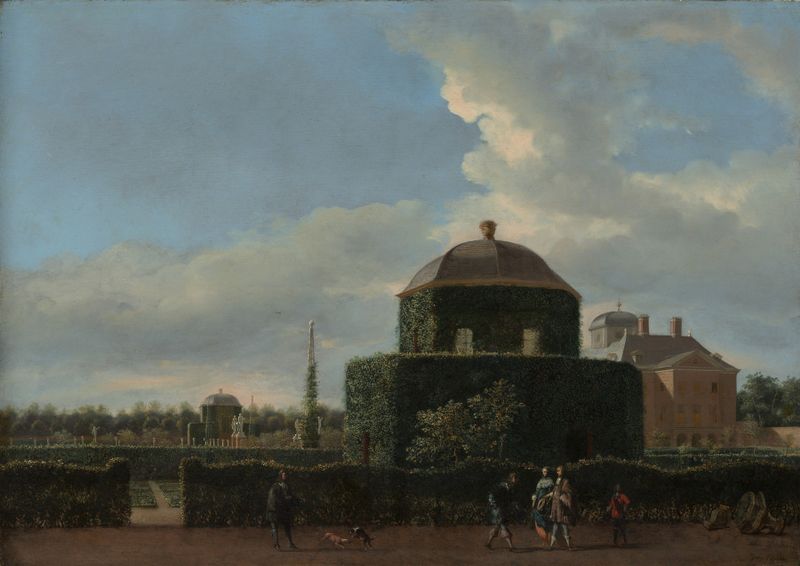
The Huis ten Bosch at The Hague and Its Formal Garden (View from the East)
Jan van der Heyden

The Dam in Amsterdam towards the Townhall and Nieuwe Kerk
Jan van der Heyden
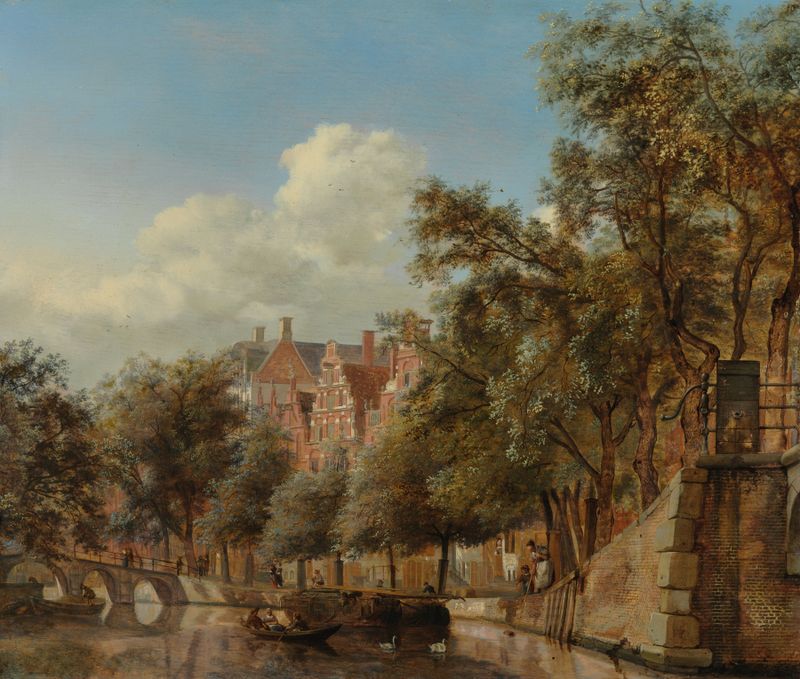
The Herengracht, Amsterdam, Viewed from the Leliegracht
Jan van der Heyden

Amsterdam City View with Houses on the Herengracht and the old Haarlemmersluis
Jan van der Heyden

View of the Oude Delft Canal, Delft
Jan van der Heyden
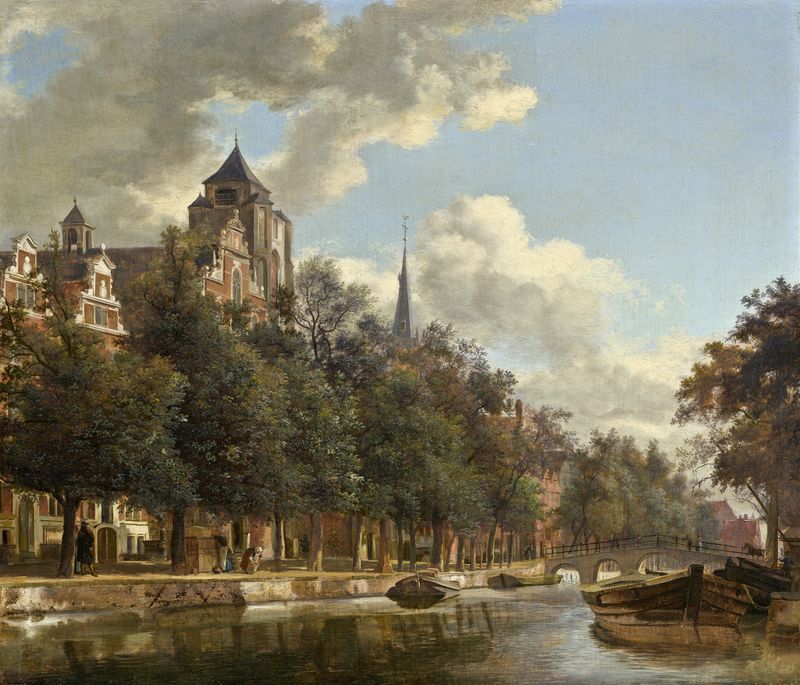
View Down a Dutch Canal
Jan van der Heyden
The Dam and Damrak, Amsterdam
Jan van der Heyden

View of Oudezijds Voorburgwal with the Oude Kerk in Amsterdam
Jan van der Heyden

The Herengracht, Amsterdam, Viewed from the Leliegracht
Jan van der Heyden





