
The Edge of the Pool — History & Facts
Did the painter know this moment would outlive them? A fleeting scene, captured forever, whispers of loss and solitude beneath a serene surface. Look to the center of the canvas, where a figure, half-submerged in tranquil water, gazes into the depths. The rippling reflection creates an ethereal connection between reality and contemplation, inviting you to explore the interplay of light and shadow. The lush greens surrounding the pool contrast with the muted browns of the earth, showcasing Courbet’s masterful use of color to evoke a sense of calm yet disquiet, while the brushstrokes feel almost tangible, drawing you into the intimate space of the moment. As you delve deeper, notice the subtle tension in the figure's posture; a quiet resignation emerges from their body language, embodying the essence of loss.
The stillness of the water serves as a metaphor for reflection and introspection, allowing a dialogue between the viewer and the painter’s emotions. Surrounding details, like the gentle sway of the reeds, emphasize the ephemeral nature of this encounter with solitude, inviting questions about the weight of existence and the passage of time. During the summer of 1866, as The Edge of the Pool came to life in Courbet's studio in France, he was navigating the complexities of the art world — pushing against convention, embracing realism amidst romanticism. This period was marked by a growing tension between traditional representations of nature and the emerging modernist ideas.
Thus, in this painting, the artist captures not only a moment in nature but also his own struggle for authenticity and meaning in an ever-changing world.
More Artworks by Gustave Courbet
Browse all →
Marine
Gustave Courbet
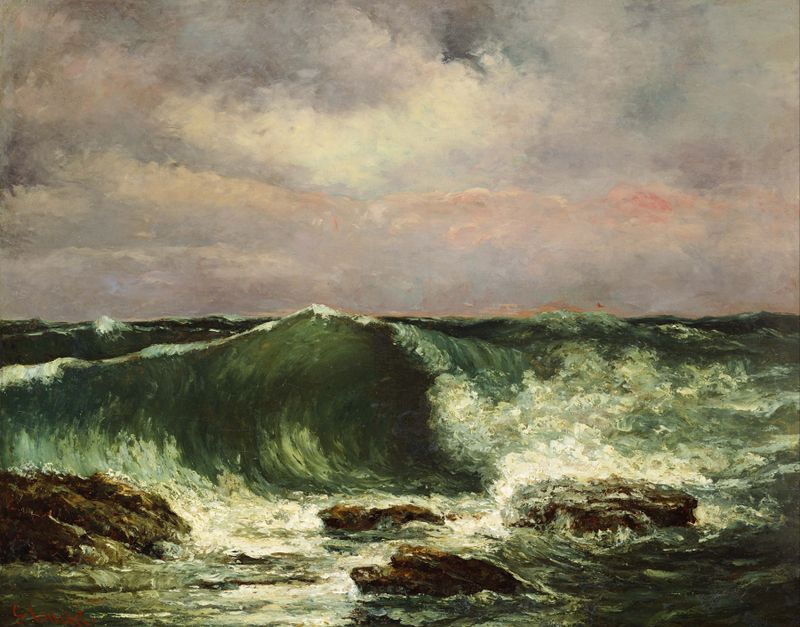
Waves
Gustave Courbet

Étretat; Les Falaises
Gustave Courbet
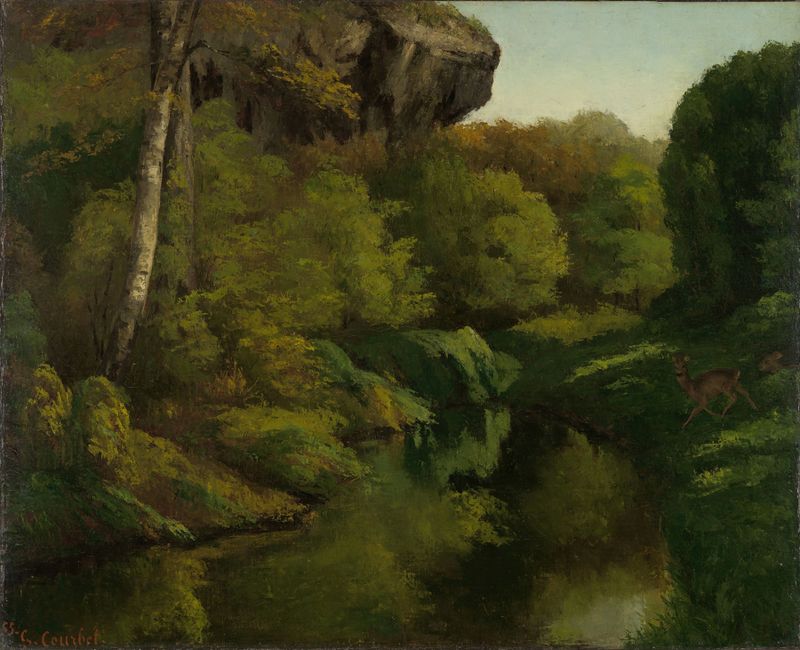
View in the Forest of Fontainebleau
Gustave Courbet
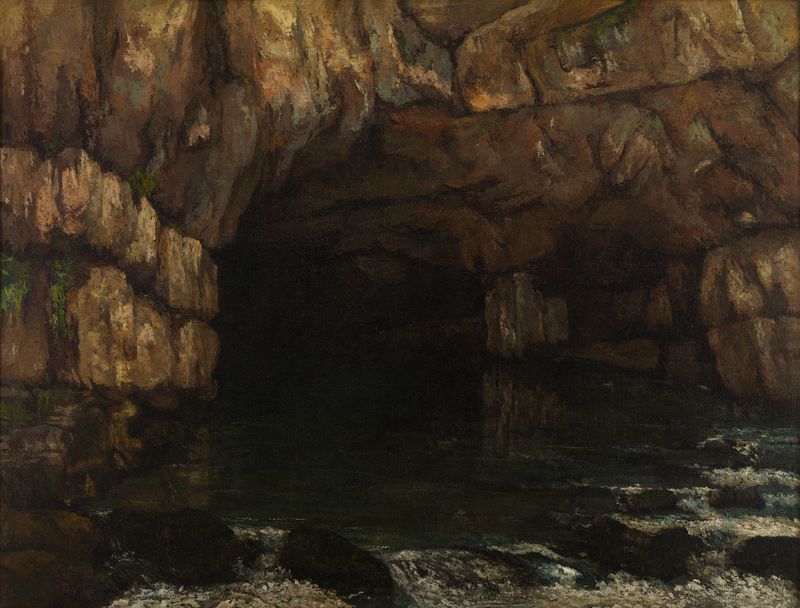
La source de la Loue (The Source of the Loue)
Gustave Courbet

Low Tide at Trouville
Gustave Courbet
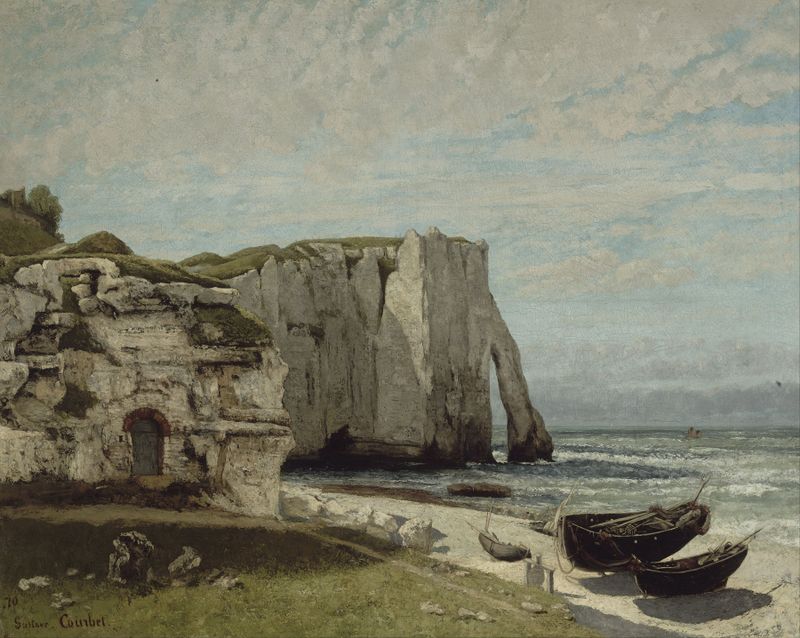
The Etretat Cliffs after the Storm
Gustave Courbet
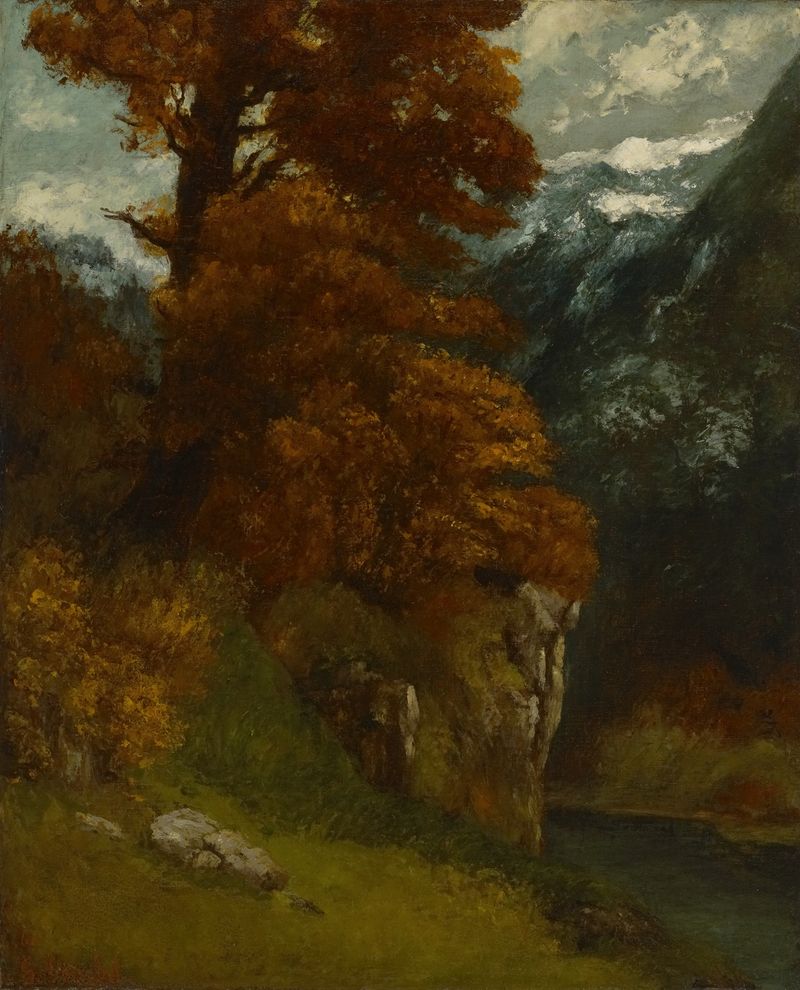
The Glen at Ornans (Bords du Doubs; Effet d’Automne)
Gustave Courbet
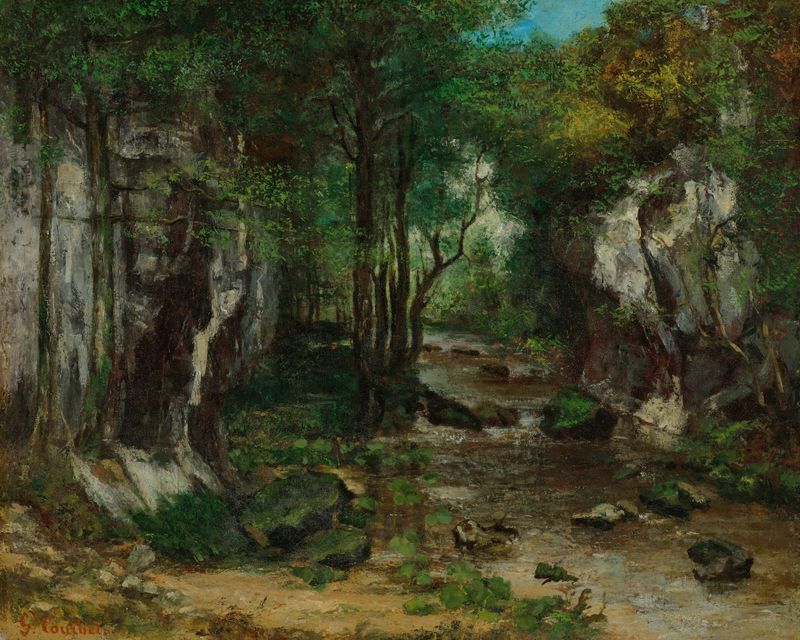
Le Ruisseau de Puits Noir
Gustave Courbet
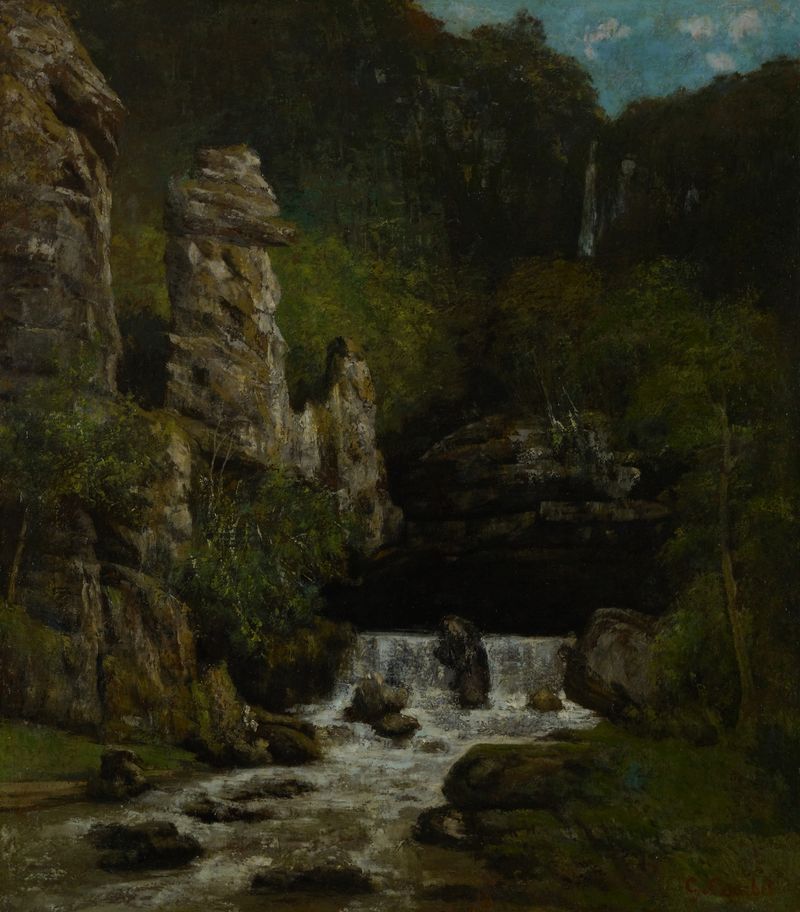
Landscape with a Waterfall
Gustave Courbet





