
The English fleet from the ill-fated campaign of the Duke of Buckingham before La Rochelle — History & Facts
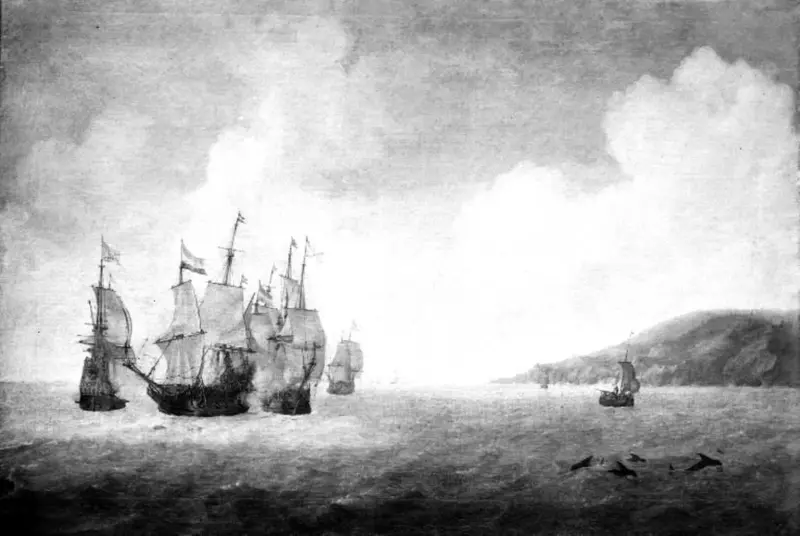
The first thing that seizes the eye in Abraham de Verwer’s The English fleet from the ill-fated campaign of the Duke of Buckingham before La Rochelle is the sheer sweep of the horizon, crowded with ships that seem to jostle for space beneath a sky dense with cloud. The artist draws you into the heart of a naval encounter, where the billowing sails and taut rigging signal both readiness and tension. Flags snap in the wind, each one a coded message of allegiance and intent, while the churning water below hints at the chaos and uncertainty that defined such campaigns.
The low vantage point places the viewer almost at water level, amplifying the scale of the vessels and the sense of anticipation that hangs over the scene. Every detail, from the tiny figures in the boats to the distant silhouettes of fortifications, is a piece of a larger puzzle—one that invites you to linger and search for meaning in the interplay of ships, sea, and sky. Painted in 1633, this work belongs to a world where maritime power was both spectacle and strategy, and where paintings like this served as visual records and quiet boasts of naval ambition. In the Dutch Republic and beyond, such grand seascapes were prized by merchants, admirals, and city fathers eager to commemorate victories or mourn defeats.
The genre flourished in the wake of expanding trade and shifting alliances, with artists like de Verwer capturing not only the ships themselves but the atmosphere of an age defined by risk and rivalry. Today, this painting resides in Het Scheepvaartmuseum, a fitting home for a work that bridges art and maritime history. Its survival is a reminder of how much the sea once shaped the destinies of nations—and how much there is still to discover in its painted surface.
More Artworks by Abraham de Verwer

An Amsterdam East Indiaman
Abraham de Verwer
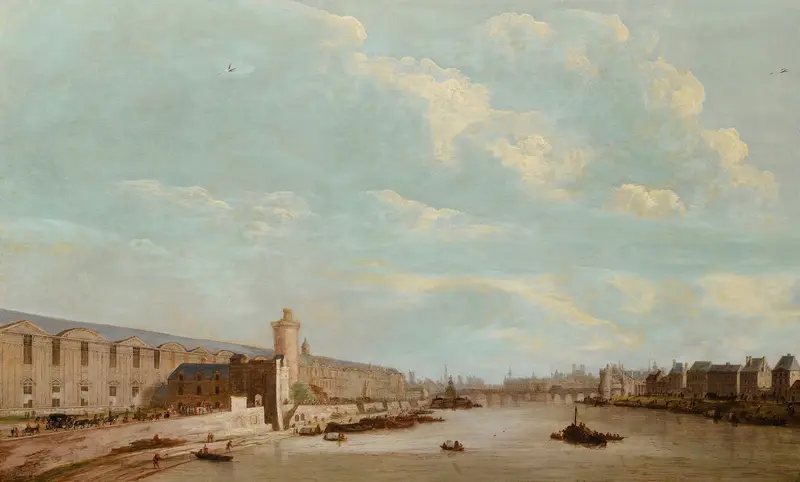
View of Paris from the Pont-royal with the Grande galerie du Louvre, the Pont-Neuf and the Nesle tower
Abraham de Verwer
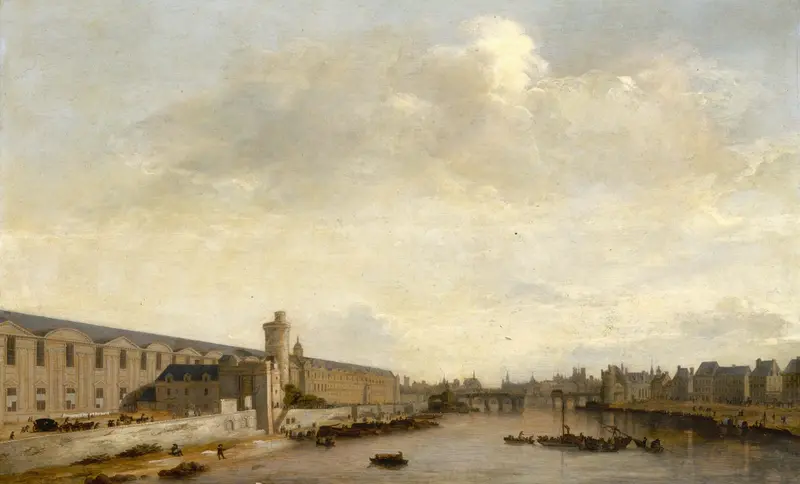
La Grande Galerie du Louvre, avec la porte Neuve et la tour de Bois
Abraham de Verwer
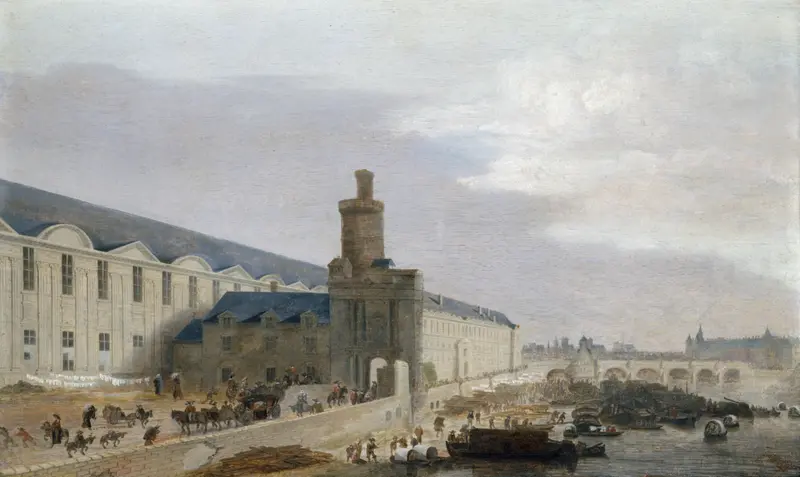
La Grande Galerie du Louvre avec la porte Neuve et la tour de Bois
Abraham de Verwer
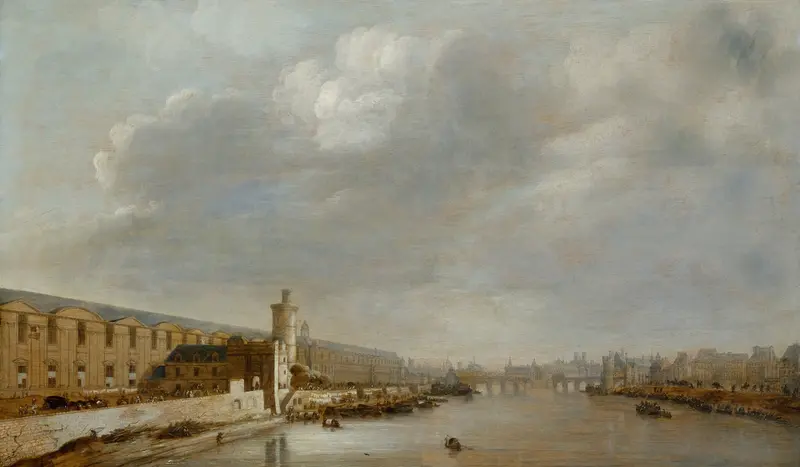
La Grande Galerie du Louvre avec la porte Neuve et la tour de Bois
Abraham de Verwer
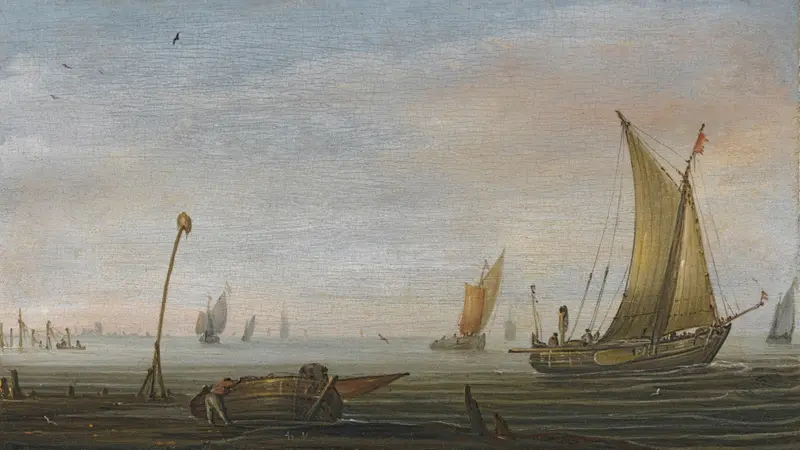
Small Vessels On The Zuider Zee
Abraham de Verwer
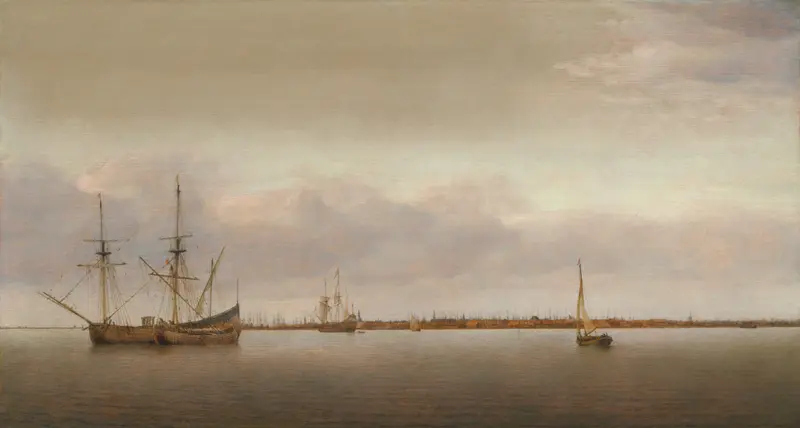
View of Hoorn
Abraham de Verwer
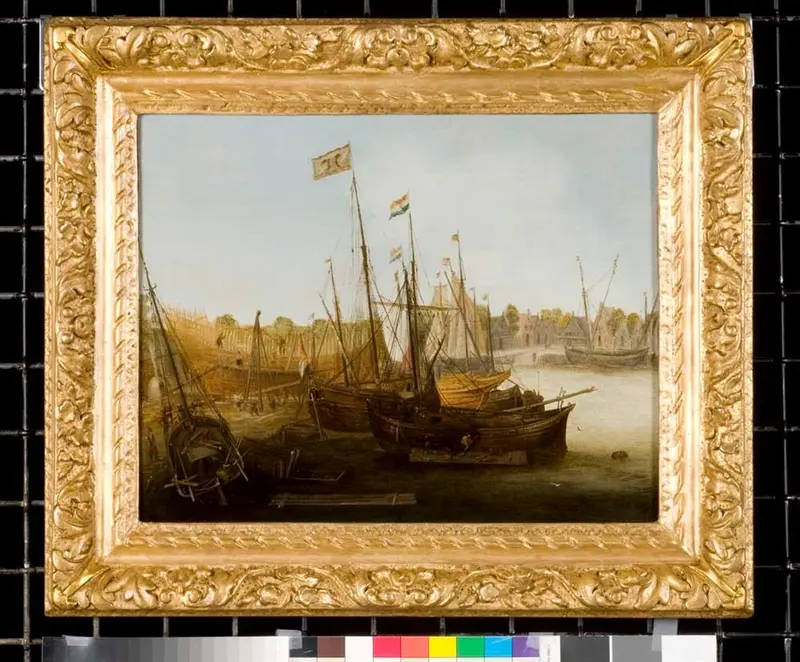
A shipyard with vessels being built
Abraham de Verwer
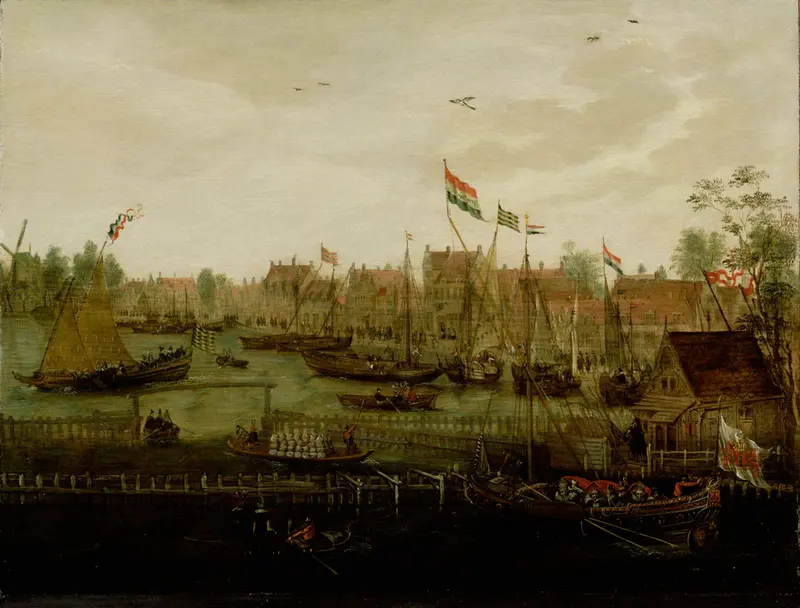
Gezicht vanaf de Blauwbrug over de Amstel-Schepen op de Amstel-View across the river Amstel from the Blauw Bridge
Abraham de Verwer
Naval Battle between Dutch and Spanish Ships of the Line
Abraham de Verwer





