
The Escaut River in Antwerp — History & Facts
This delicate reflection invites us to consider the ephemeral nature of innocence captured in art. Look closely at the foreground, where the gentle ripples of the Escaut River beckon your gaze, their shimmer mirroring the soft tones of the sky above. Notice how the painter balances light and shadow, with soft blues and grays blending seamlessly into the warm glow of the riverbank. The delicate brushwork creates a sense of movement, as if the water is whispering secrets carried from the past, while boats float lazily, their sails billowing in a gentle breeze. Hidden within this serene landscape, the contrast between the tranquil water and the distant cityscape signifies the tension between nature and human encroachment.
The vibrant greenery reflects innocence, untouched by modernity, yet the looming architecture hints at a world transforming. Each element, from the rippling waves to the distant spires, speaks to the passage of time and the inevitable loss of simplicity. Created between 1871 and 1874, this piece emerged during a pivotal moment in Eugène Boudin's career, as he sought to capture the fleeting beauty of coastal scenes. Working in France and traveling extensively, Boudin was inspired by the Impressionist movement, which was gaining traction.
His commitment to plein air painting allowed him to infuse his work with a freshness that resonated deeply with the changing landscapes of both nature and society during this period.
More Artworks by Eugène Boudin
Browse all →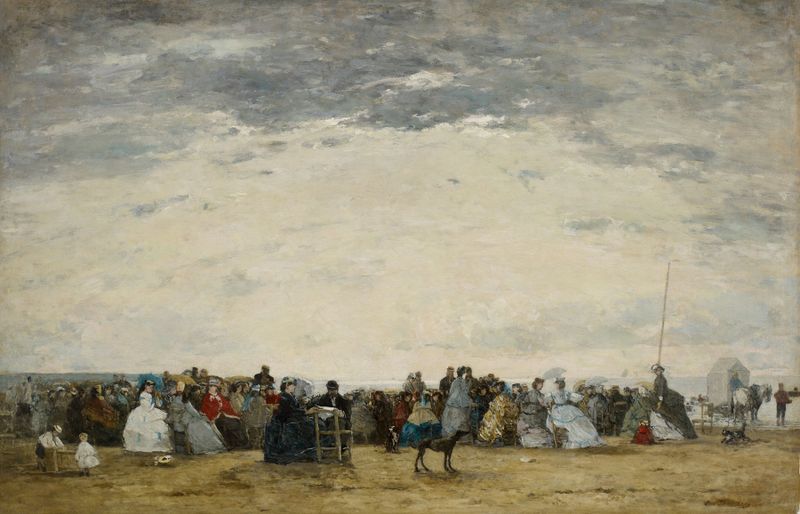
Vacationers on the Beach at Trouville
Eugène Boudin

Washerwoman near Trouville
Eugène Boudin
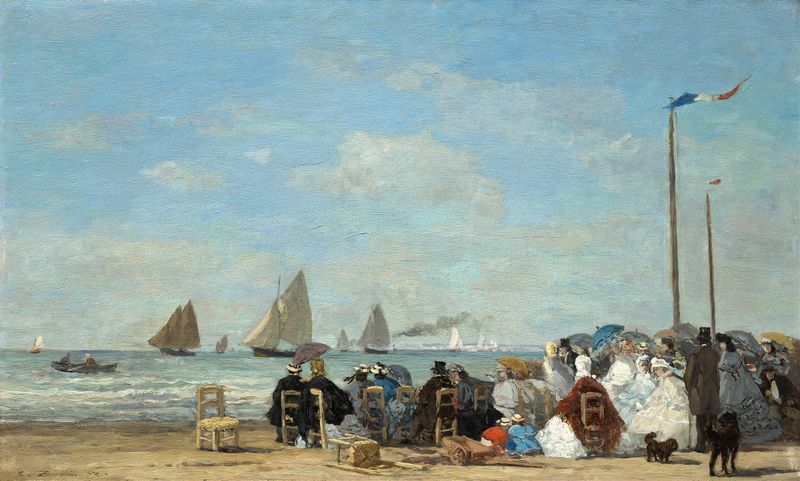
Beach Scene at Trouville
Eugène Boudin

Port aux environs d’Honfleur
Eugène Boudin

Le Faou, un coin du village
Eugène Boudin
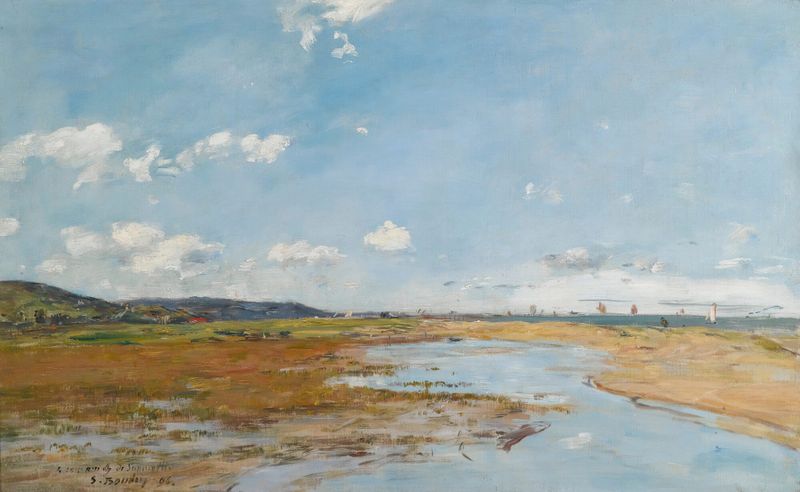
Deauville. Le Rivage
Eugène Boudin
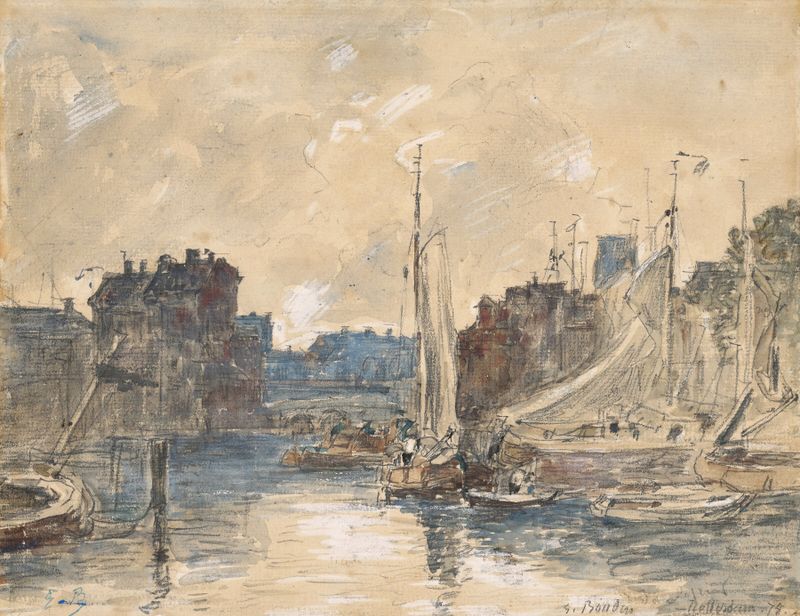
Port de Rotterdam
Eugène Boudin

View of Bordeaux, from the Quai des Chartrons
Eugène Boudin

Trouville, Scène De Plage
Eugène Boudin

Trouville, Le Port
Eugène Boudin





