
The Family Umbrella — History & Facts
What draws the eye first in The Family Umbrella is the way a single, oversized parasol becomes a world unto itself—a shelter, a stage, a secret. Beneath its broad green canopy, patterned with blue and white, a figure in a richly textured garment perches delicately on a wooden bench, the umbrella’s ribs radiating outward like the spokes of a wheel. The artist, Helen Hyde, has chosen a moment of pause: the child’s head is bowed, the patterned robe almost merging with the umbrella’s design, creating a sense of intimacy and enclosure.
The reflection in the water below hints at a recent rain, while the careful lines etched in the background suggest falling drops or perhaps the memory of them. Every element is placed to draw the viewer into the quiet ritual of sheltering together, the umbrella both a shield and a symbol of familial closeness. Created in 1915, this work belongs to a moment when Western artists were captivated by Japanese printmaking, and Helen Hyde was among the most notable American interpreters of this style. Prints like this were often made for collectors eager to bring a piece of distant cultures into their homes, at a time when travel and communication were rapidly changing the world’s sense of distance.
The Smithsonian American Art Museum now houses this small yet vivid image, its dimensions just 7 1/8 by 6 1/8 inches—a reminder that intimacy and artistry are not measured in size. History has kept few traces of the specific story behind this print, but its quiet charm invites viewers to linger, searching for their own reflections in the shelter of the family umbrella.
More Artworks by Helen Hyde

Moonlight on the Viga Canal) - HH (monogram) LCCN0065
Helen Hyde
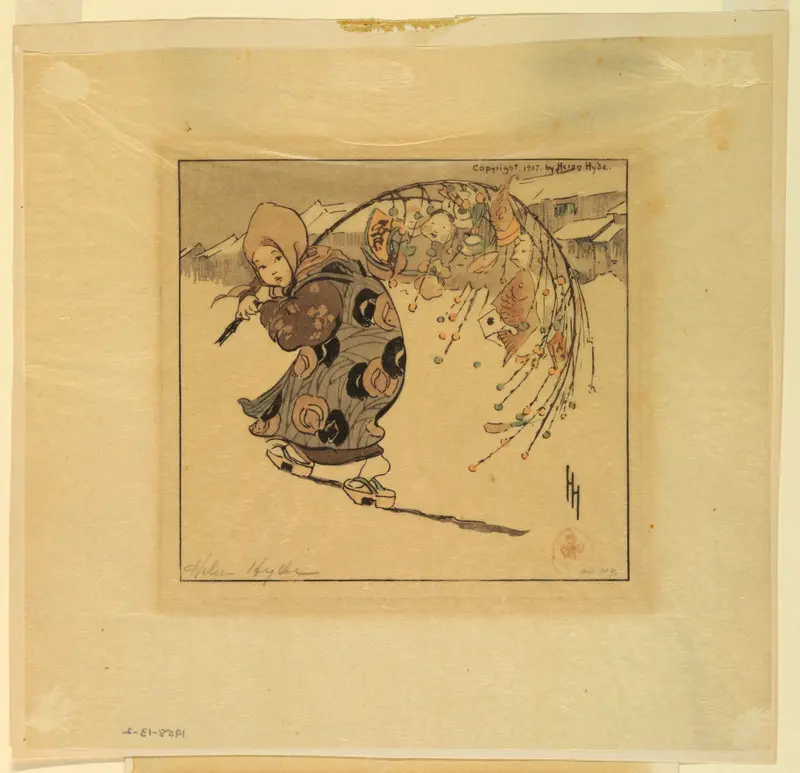
Print, The Good Luck Branch
Helen Hyde
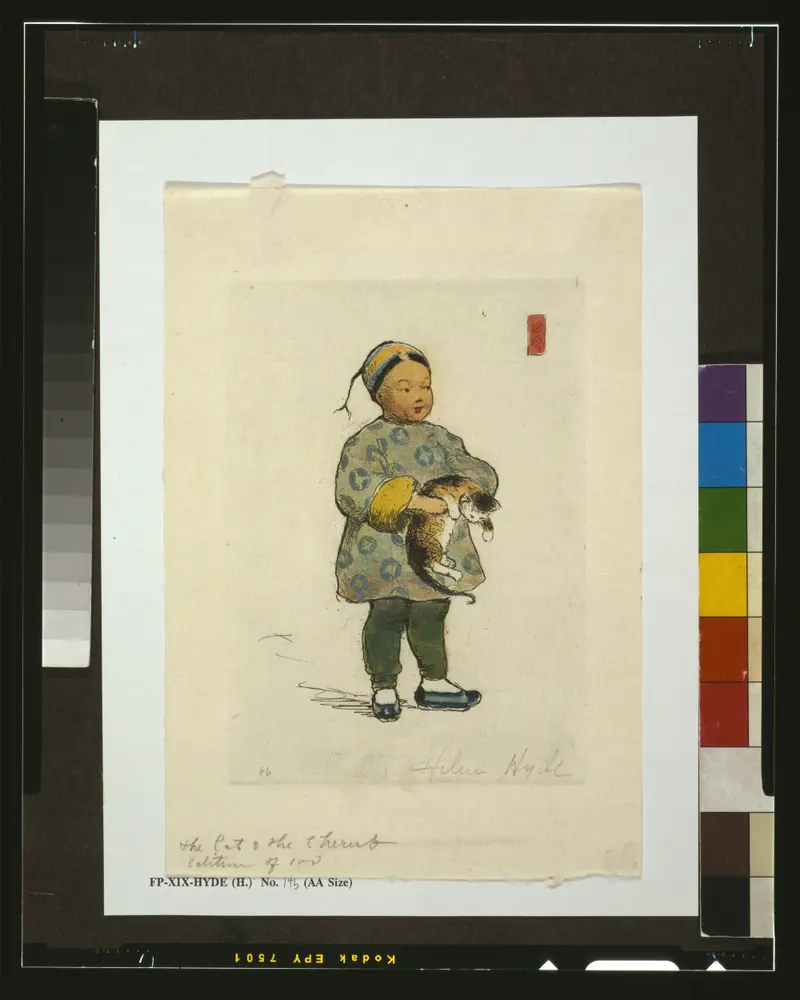
The cat and the cherub LCCN200367
Helen Hyde

Hon(orable Mr) cat - HH (monogram). LCCN200367
Helen Hyde
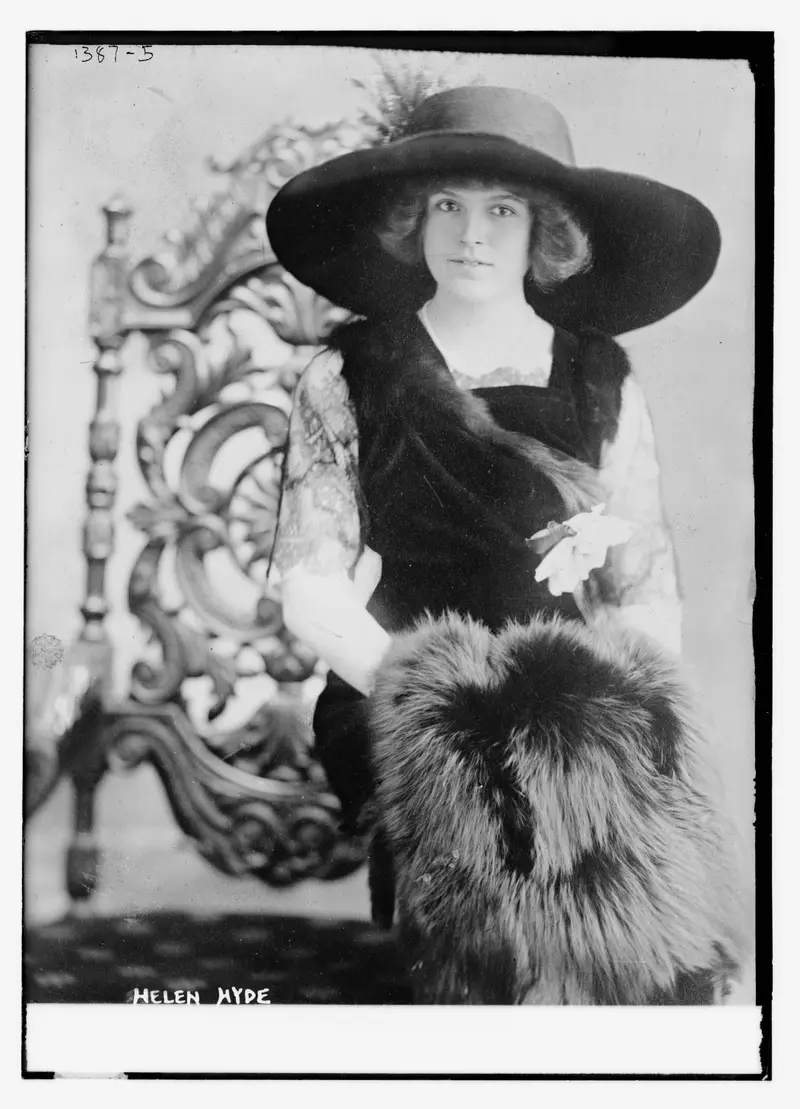
Helen Hyde LCCN201468
Helen Hyde
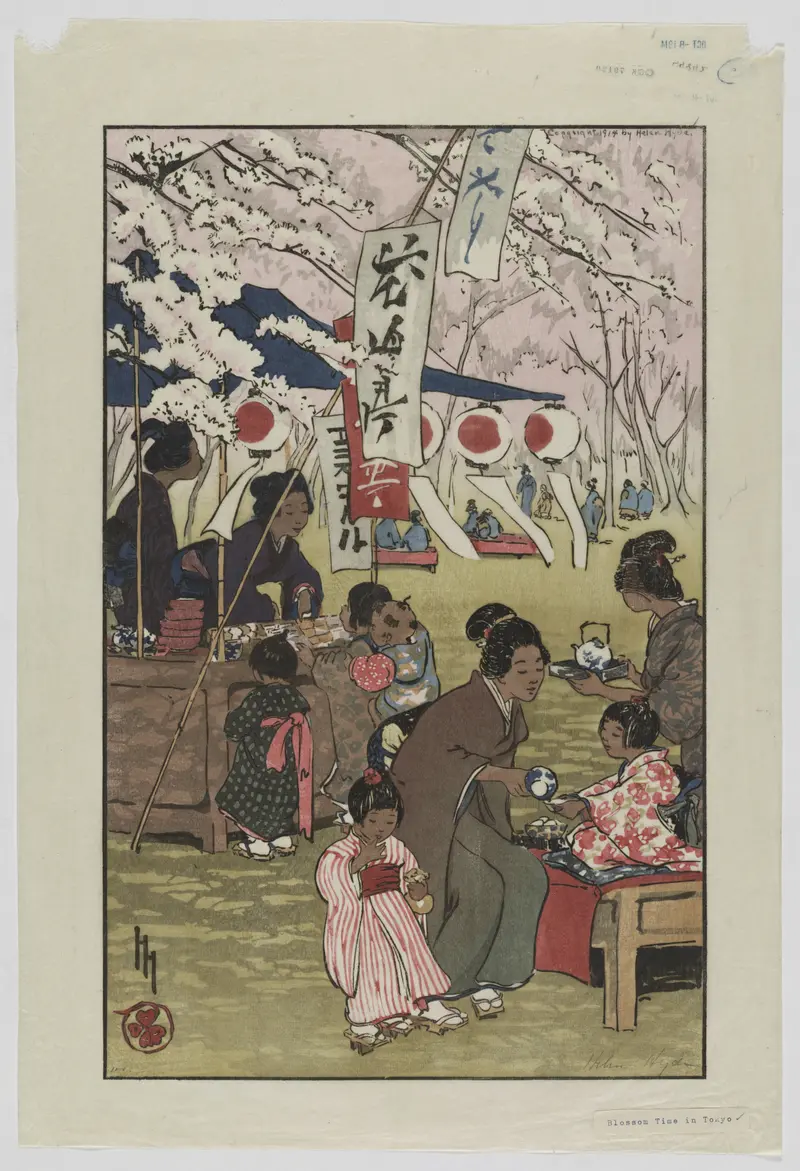
Blossom time in Tokyo) - HH (monogram) LCCN0065
Helen Hyde
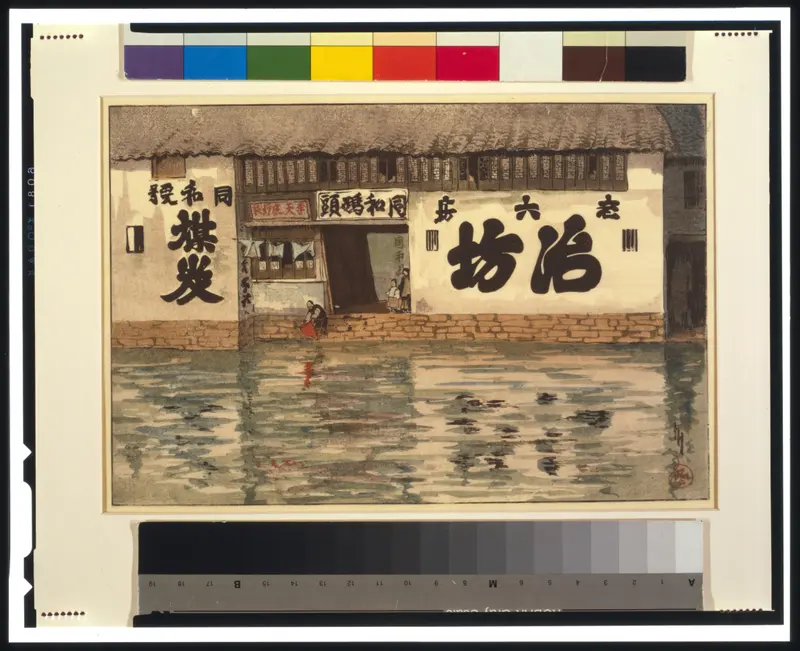
The sauce-pan shop) - HH (monogram) LCCN0065
Helen Hyde

New Year's Day in Tokyo
Helen Hyde
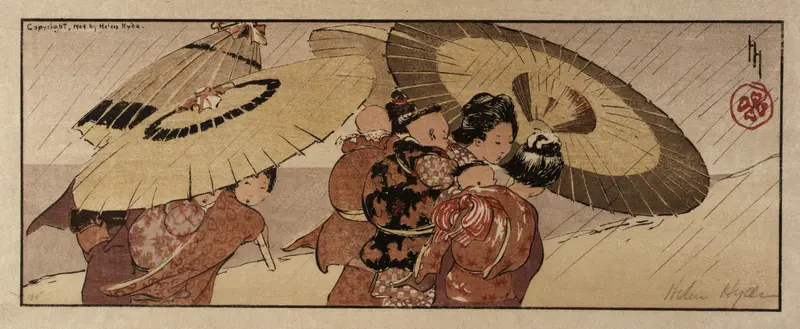
A Summer Shower
Helen Hyde
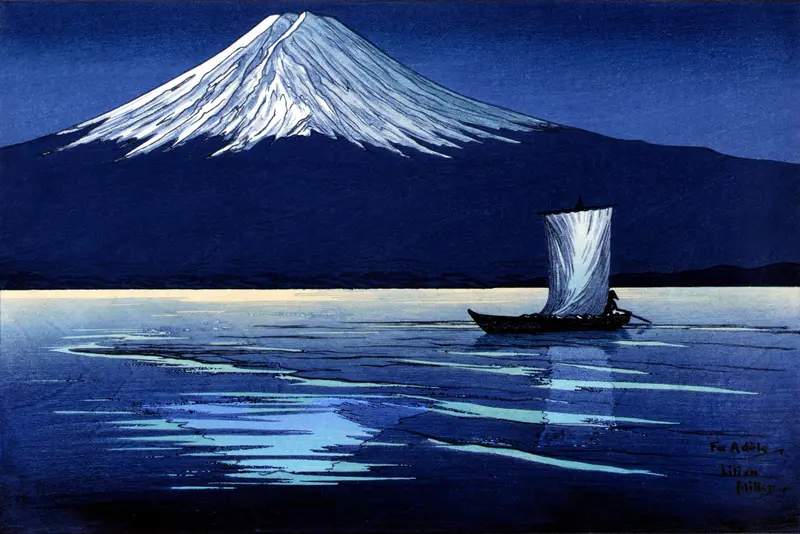
Moonlight on Mt. Fuji
Helen Hyde
More Genre Scene Art

Banquet of the Officers of the St George Civic Guard
Frans Hals

Rembrandt and Saskia in the Scene of the Prodigal Son
Rembrandt van Rijn

Bal du moulin de la Galette
Pierre-Auguste Renoir

Quadrille at the Moulin Rouge
Henri de Toulouse-Lautrec

A Burial at Ornans
Gustave Courbet

When Will You Marry?
Paul Gauguin