
The Feast of Saint John — History & Facts
When The Feast of Saint John was first exhibited in 1875, it captured the attention of Parisian critics for its rare glimpse into rural festivity—a subject often overlooked in favor of grand historical or mythological scenes. Jules Breton, celebrated for his sympathetic portrayals of peasant life, here turned his gaze to the age-old midsummer celebration of Saint John’s Eve, a tradition deeply rooted in the French countryside. The painting’s focus on communal joy and ritual marked a departure from the somber realism that dominated much of Breton’s earlier work.
Its popularity was such that it inspired several engravings and reproductions, spreading the image well beyond its original audience. At the heart of the scene, villagers gather around a towering bonfire, their faces illuminated by its flickering glow as dusk settles over the fields. The moment Breton chose is one of anticipation and unity: young women in white dresses prepare to leap over the flames, a custom believed to bring luck and ensure a good harvest. The artist’s careful rendering of gestures—a hand clasped in encouragement, a child’s wide-eyed wonder—invites viewers into the intimacy of the celebration.
The warm palette and attention to rural costume recall the approach of Jean-François Millet, though Breton’s mood is more festive than Millet’s often somber tone. The bonfire itself, central and radiant, becomes both literal and symbolic hearth, binding the community together. The exact provenance of The Feast of Saint John remains somewhat obscure, as records from the late 19th century do not always trace the journeys of such works in detail. What is certain is that the painting solidified Jules Breton’s reputation as one of the foremost chroniclers of rural France, influencing both his contemporaries and later artists interested in regional customs.
Today, the painting is held in a private collection, rarely exhibited but frequently cited in studies of Breton’s oeuvre and the broader movement of Realism. Its enduring appeal lies in its fusion of documentary detail and celebration, capturing a fleeting moment of collective joy that resonates across time.
More Artworks by Jules Breton

The Song of the Lark
Jules Breton
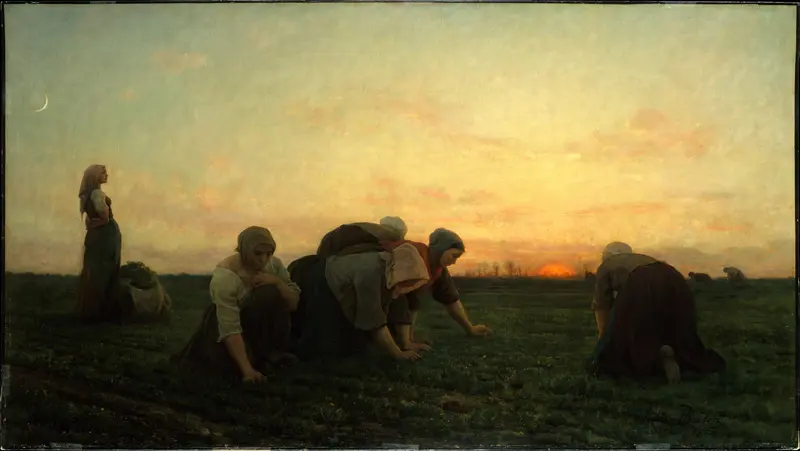
The Weeders
Jules Breton
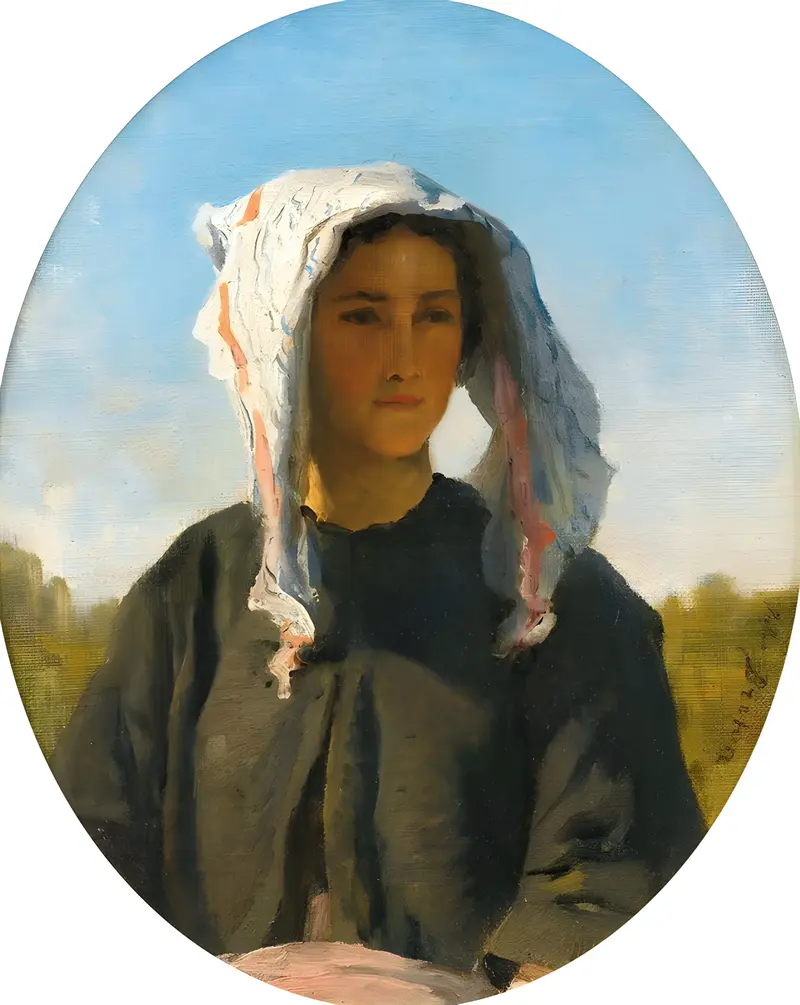
Portrait de jeune Paysanne Bordelaise
Jules Breton
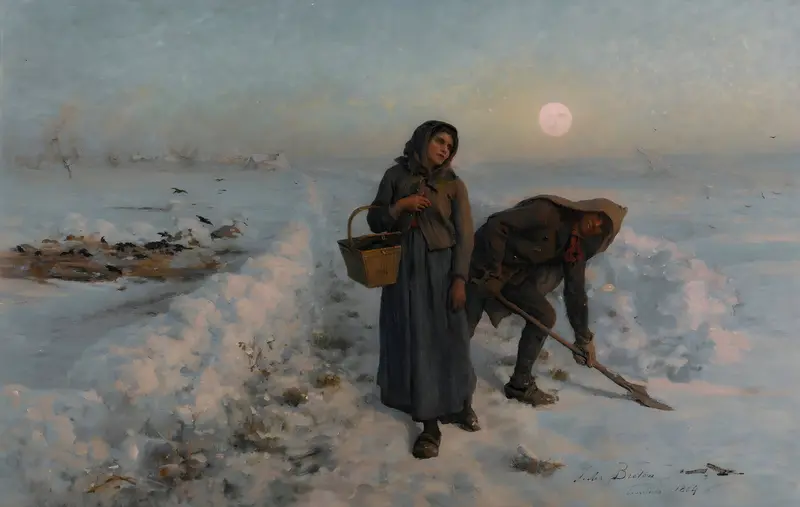
Sur la route en hiver; artois
Jules Breton
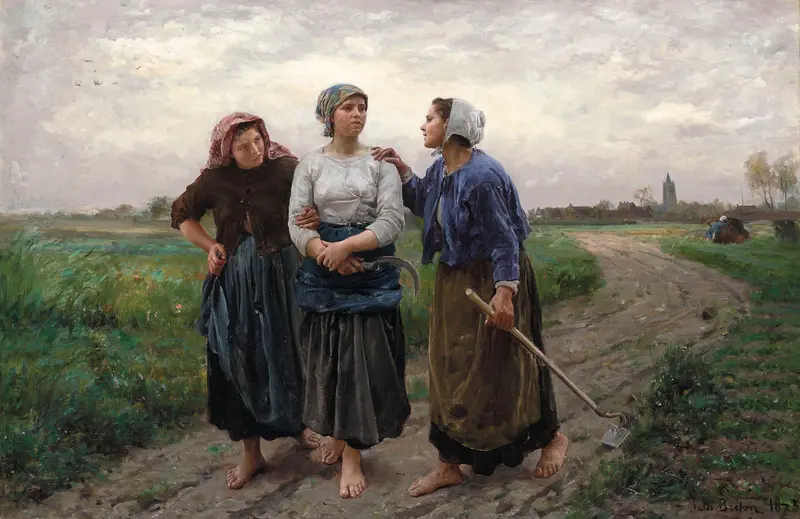
Les amies
Jules Breton
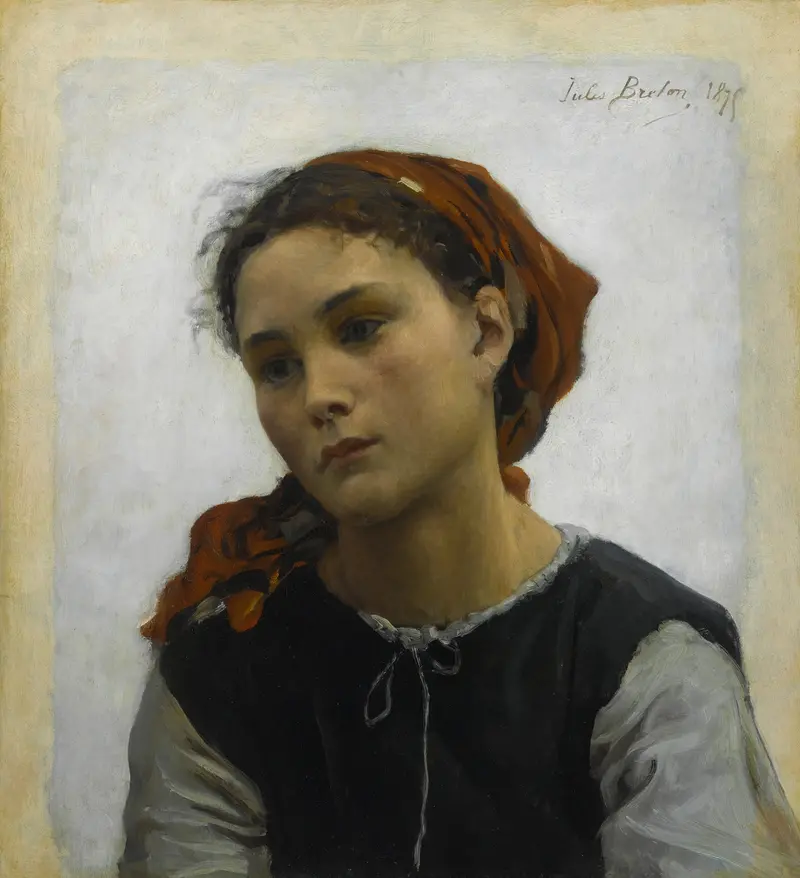
Innocente
Jules Breton
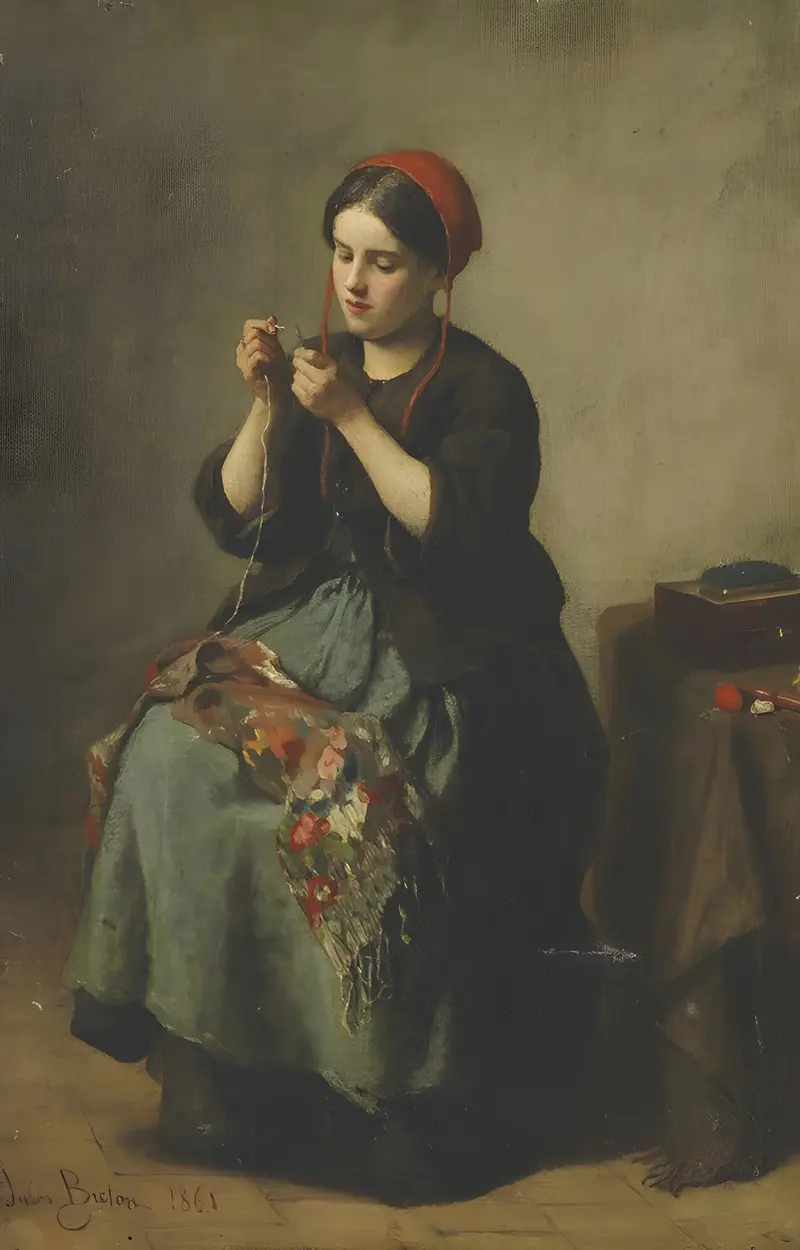
Peasant woman threading a needle
Jules Breton
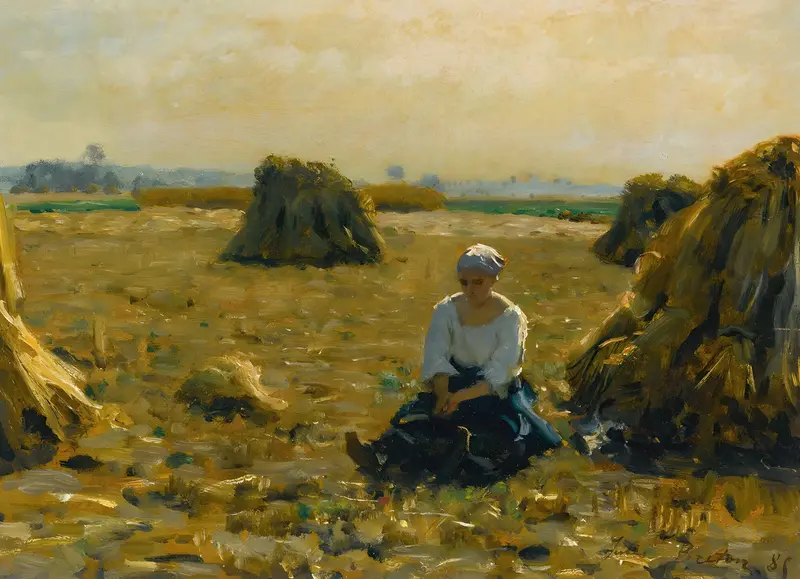
Jeune femme dans les champs
Jules Breton
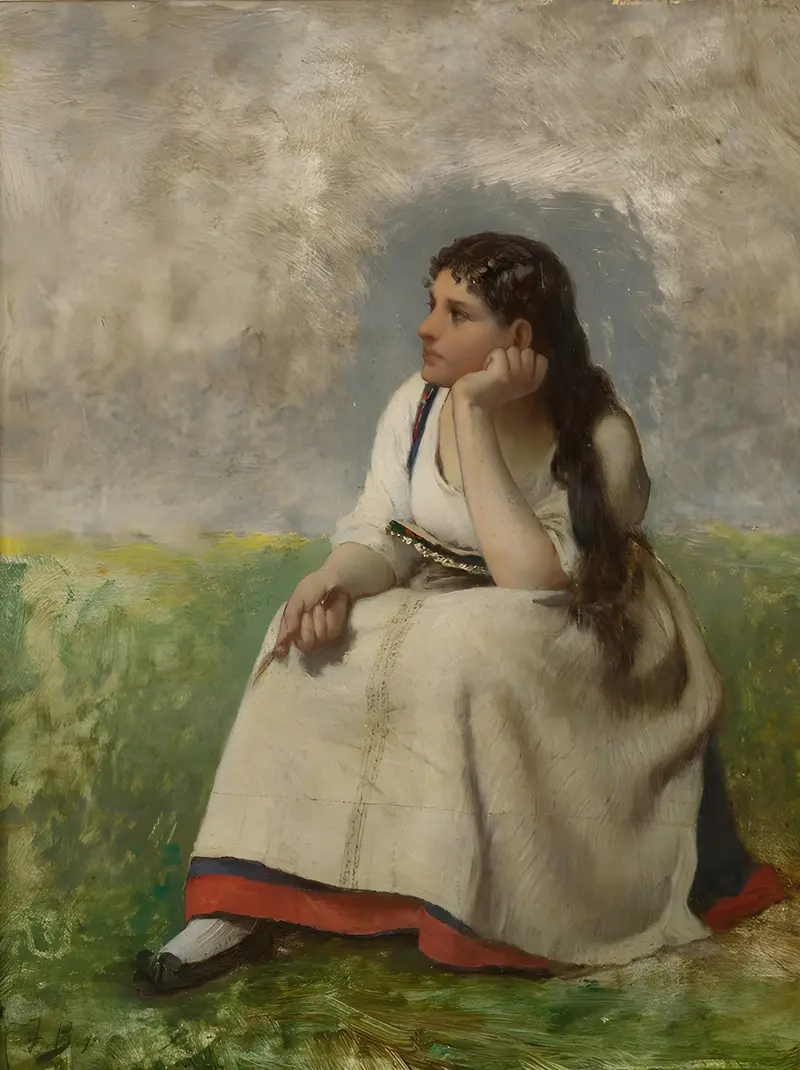
Jeune Fille Pensive
Jules Breton
Returning from the Fields
Jules Breton
More Genre Scene Art

Banquet of the Officers of the St George Civic Guard
Frans Hals

Rembrandt and Saskia in the Scene of the Prodigal Son
Rembrandt van Rijn

Bal du moulin de la Galette
Pierre-Auguste Renoir

Quadrille at the Moulin Rouge
Henri de Toulouse-Lautrec

A Burial at Ornans
Gustave Courbet

When Will You Marry?
Paul Gauguin