The Fish Weir, Maine Coast — History & Facts
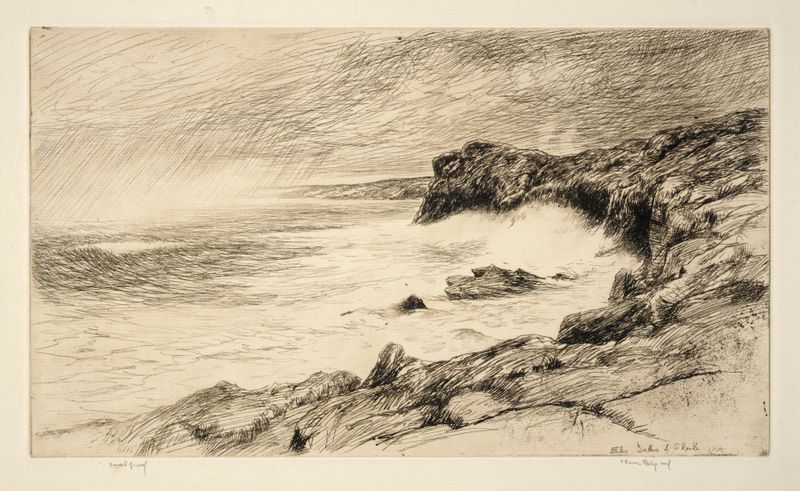
Can beauty exist without sorrow? In the tranquil yet haunting work of The Fish Weir, Maine Coast, a deep nostalgia permeates the landscape, suggesting that every serene moment may carry the weight of history. Look to the foreground, where the intricate lines of the fish weir crisscross the water, creating a delicate pattern that invites the eye to wander. The soft blues and greens of the sea blend seamlessly with the gentle browns of the land, emphasizing a harmony that feels both comforting and melancholic. Notice how the light dances upon the water's surface, casting playful reflections that shimmer like memories in the fading sunlight, revealing the artist's skill in capturing the ephemeral nature of time. In this composition, contrasts abound: the calm surface of the water juxtaposes the complex structure of the weir, hinting at the delicate balance between human intervention and nature's tranquility.
The gentle waves lap against the wood, whispering stories of those who’ve fished these waters before, suggesting a legacy intertwined with longing. This subtle tension evokes a sense of loss, reminding viewers that every corner of beauty carries a trace of something left behind. Kerr Eby painted this scene in 1921, during a period marked by personal and societal upheaval. Having recently shifted focus from printmaking to painting, he was exploring new artistic directions while reflecting on the changing landscape of America.
The post-war era was one of both hope and disillusionment, and his choice of subjects often revealed an introspective longing for simpler times amid the complexities of modern life.