
The Flight into Egypt — History & Facts
What first draws the eye in The Flight into Egypt by Adam Colonia is not the figures themselves, but the vast, luminous sky that seems to carry the weight of their journey. The moon hangs low, half-veiled by billowing clouds, casting a gentle, uncertain light over the landscape. The figures—Mary cradling the infant, riding a donkey, with Joseph walking beside—are framed almost as an afterthought at the painting’s lower edge, dwarfed by the grandeur of nature.
The rocky outcrop rising in the distance serves as both a literal and symbolic obstacle, suggesting the trials that lie ahead. Every element, from the still water to the twisting trees, conspires to make the travelers’ vulnerability palpable. Painted before 1685, this work belongs to a moment when religious stories were given new life through the lens of landscape painting, especially in Northern Europe. Artists like Colonia—active in the late seventeenth century—often worked for private patrons who sought both devotion and display: scenes like this offered a quiet meditation on faith and exile, set within the familiar wildness of the European countryside.
The genre thrived on the tension between the smallness of human figures and the immensity of their surroundings, a motif visible here in the careful play of light and shadow. Little is recorded about the specific journey of this painting, now preserved in the collection referenced above, but its atmosphere invites us to linger, searching for the quiet drama unfolding beneath that restless sky.
More Artworks by Adam Colonia

The Annunciation to the Shepherds
Adam Colonia
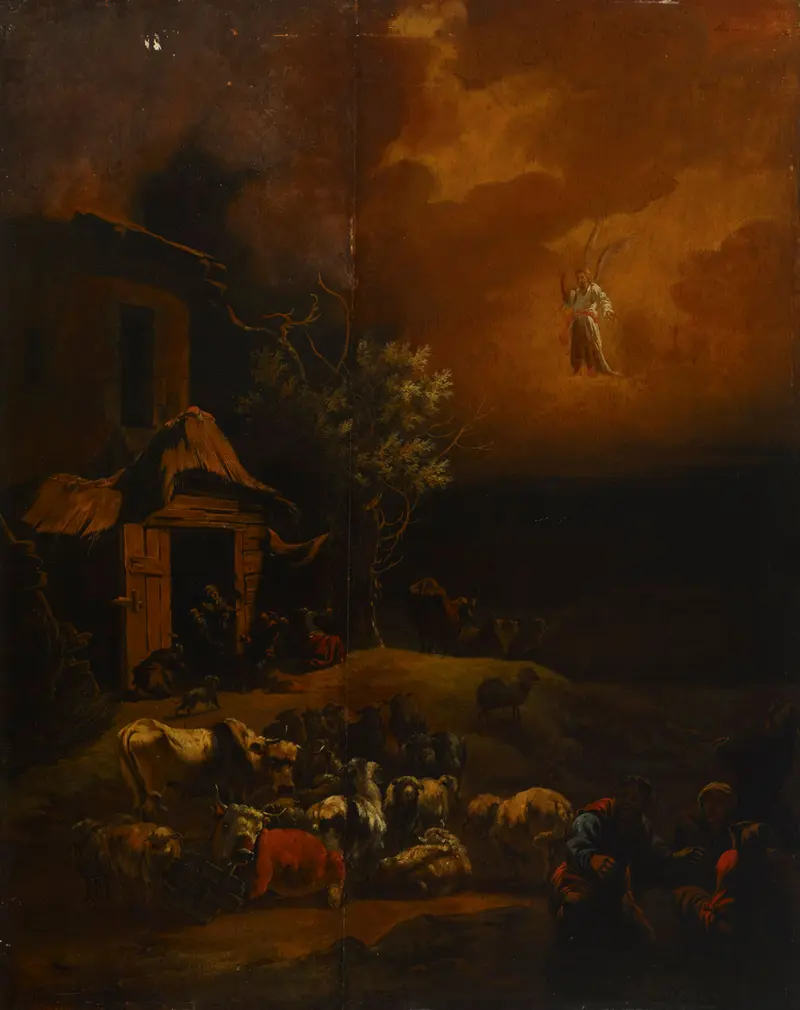
The Annunciation of the Shepherds
Adam Colonia
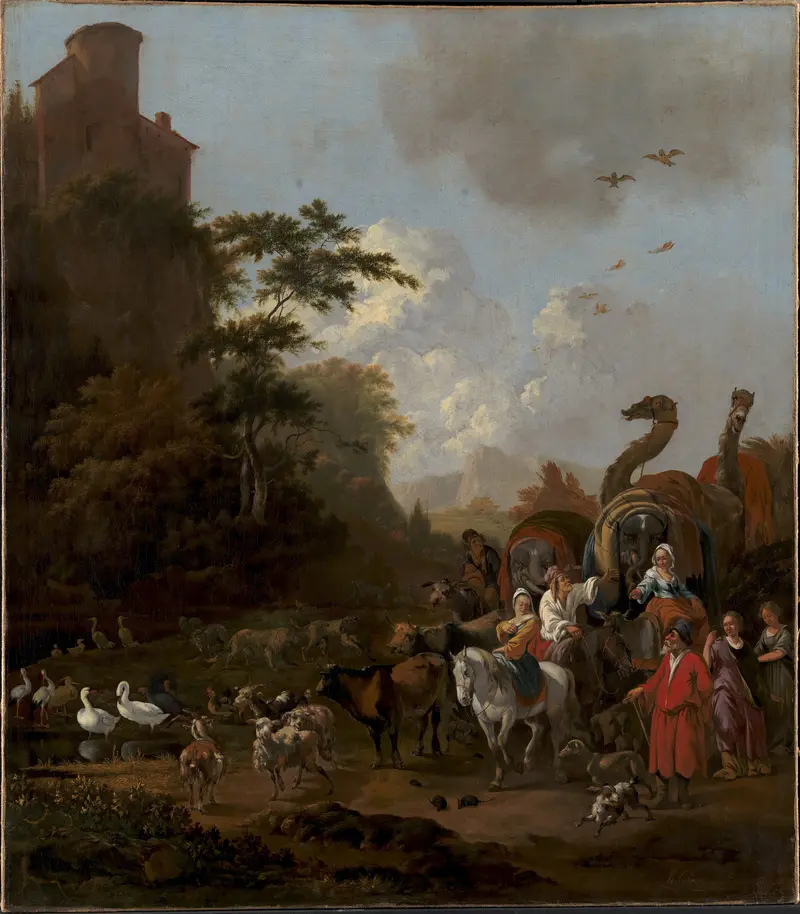
Noah Leaving the Ark
Adam Colonia
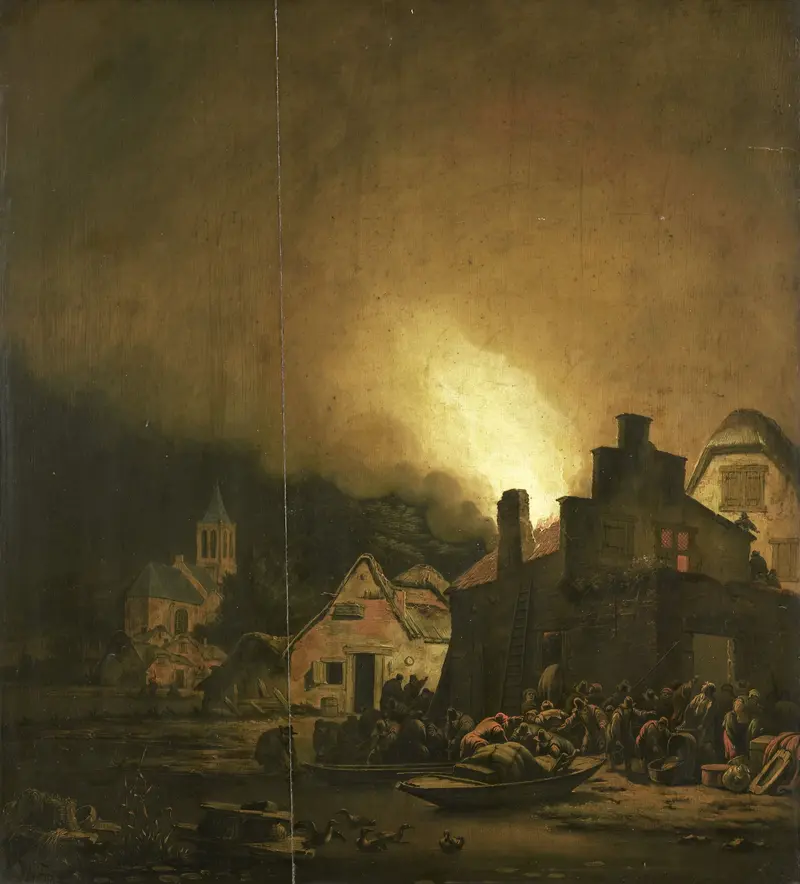
Nighttime fire in a village
Adam Colonia
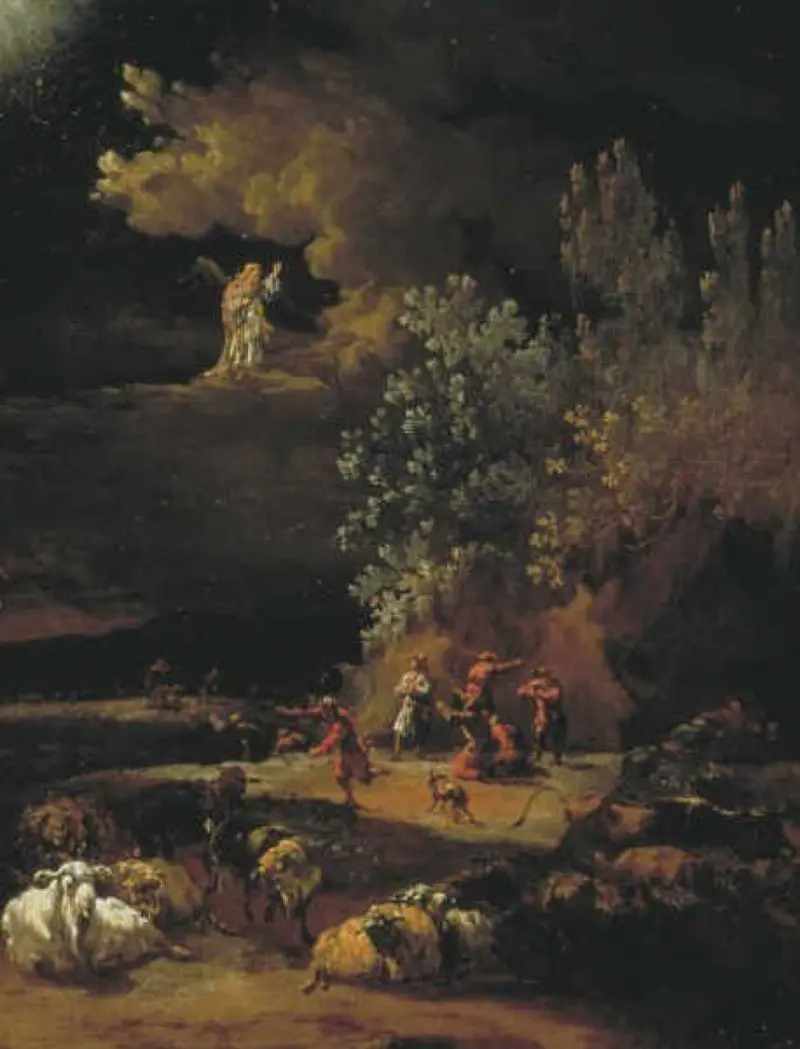
The Annunciation of the Angel to the Shepherds
Adam Colonia
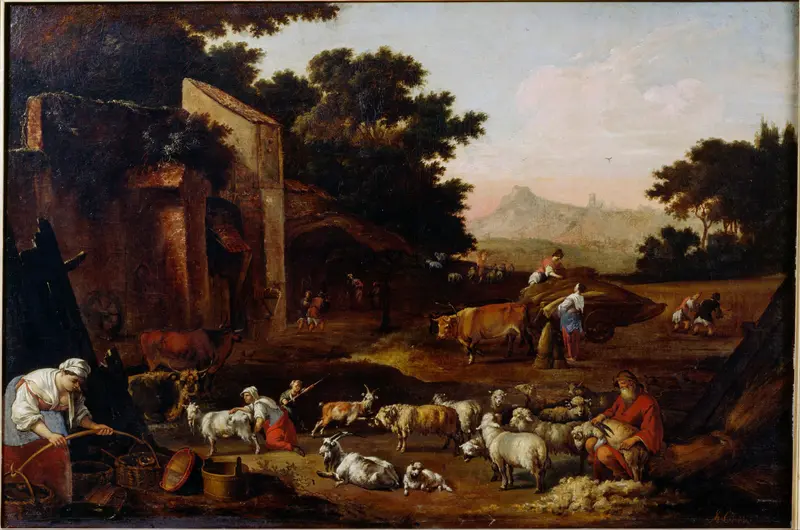
Sheep Shearing
Adam Colonia
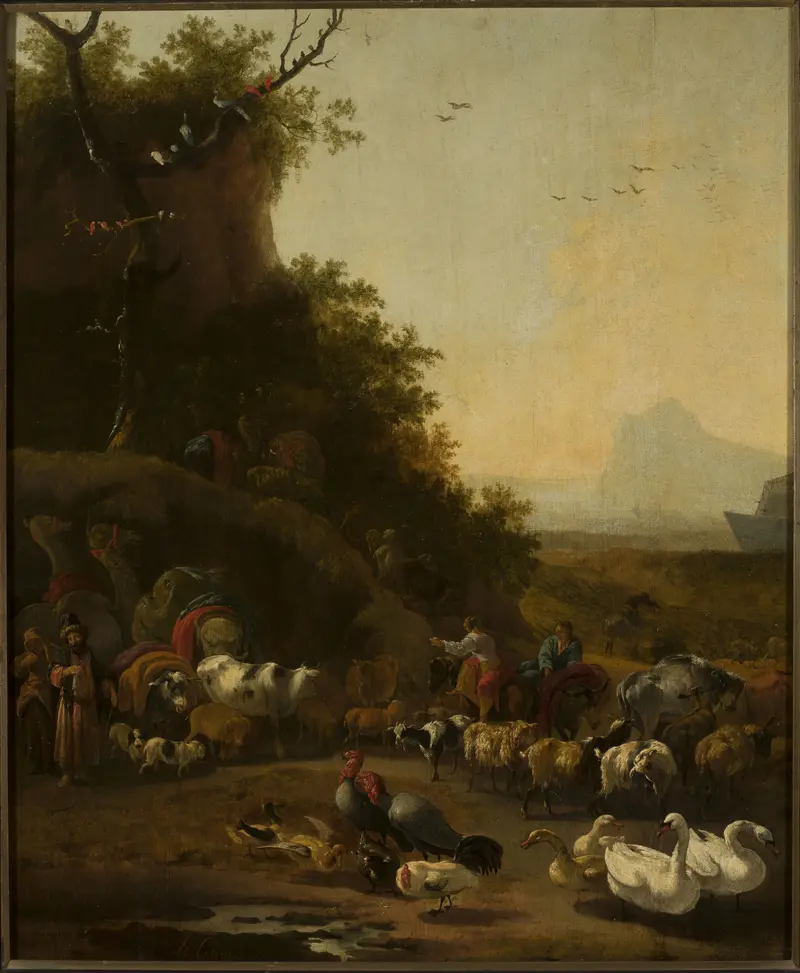
Noah’s family and animals in front of the ark (Genesis 7:1-3)
Adam Colonia
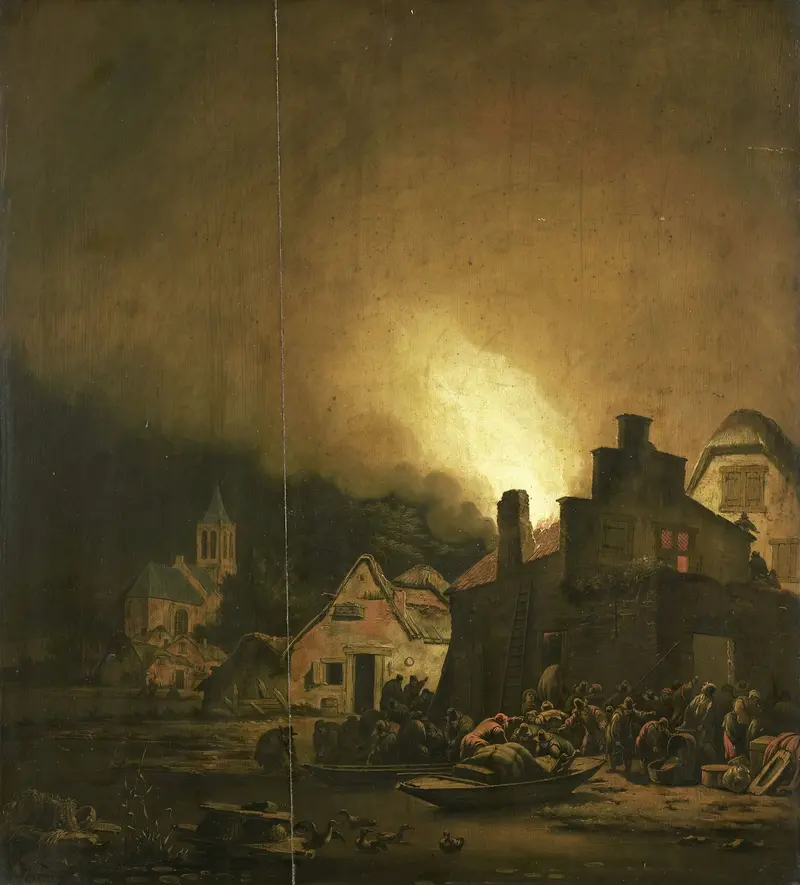
Fire by night in a Village
Adam Colonia





