
The Flock — History & Facts
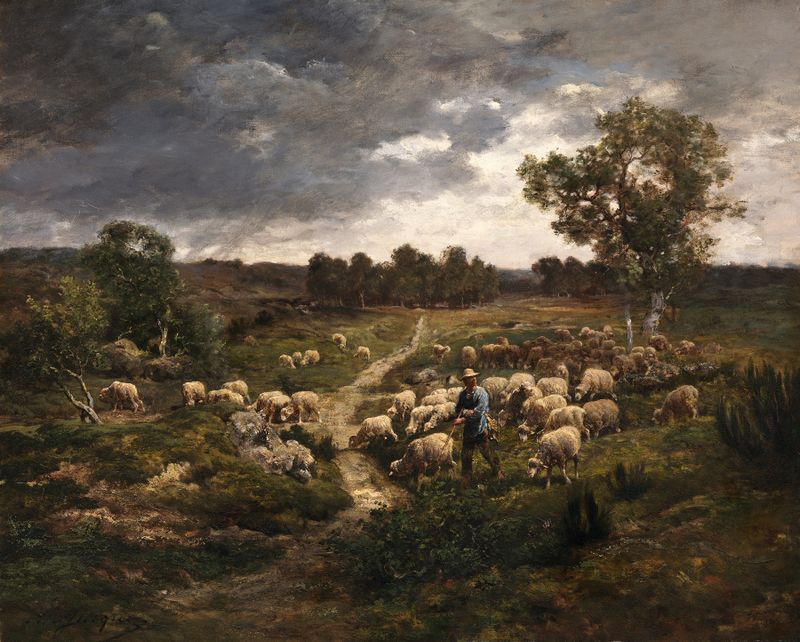
Is this a mirror — or a memory? In The Flock, the subtle interplay of light and shadow invites us to reflect on the ephemeral nature of existence and the deep yearning for connection that underpins our shared experiences. Look to the center, where a shepherd, clad in earth-toned garments, stands sentinel over a gathering of sheep. Their woolly forms are rendered with meticulous attention, each stroke of the brush bringing texture and life, while the muted palette radiates a qualitative warmth. Notice how the soft golden light spills into the scene, caressing the figures and casting delicate shadows that evoke a gentle, pastoral tranquility. Yet, beneath this serene surface lies a tension — the sheep’s eager faces are turned towards the shepherd, as if seeking guidance, while his gaze drifts beyond them, hinting at a longing for something just out of reach.
The flock, both a literal gathering and a metaphor for community, speaks to the human desire for belonging. The distance between the shepherd and his flock encapsulates the poignant isolation that can accompany leadership, a deep yearning for companionship intertwined with responsibility. Charles Emile Jacque painted The Flock during a period of shifting artistic currents in the late 19th century, when naturalism was gaining prominence in France. Having spent years capturing rural life, Jacque was influenced by the Barbizon School's emphasis on realism and the beauty of nature.
In this work, he not only reflects his technical mastery but also an intimate understanding of the human condition, resonating with audiences seeking solace and connection in an ever-changing world.
More Artworks by Charles Emile Jacque
Browse all →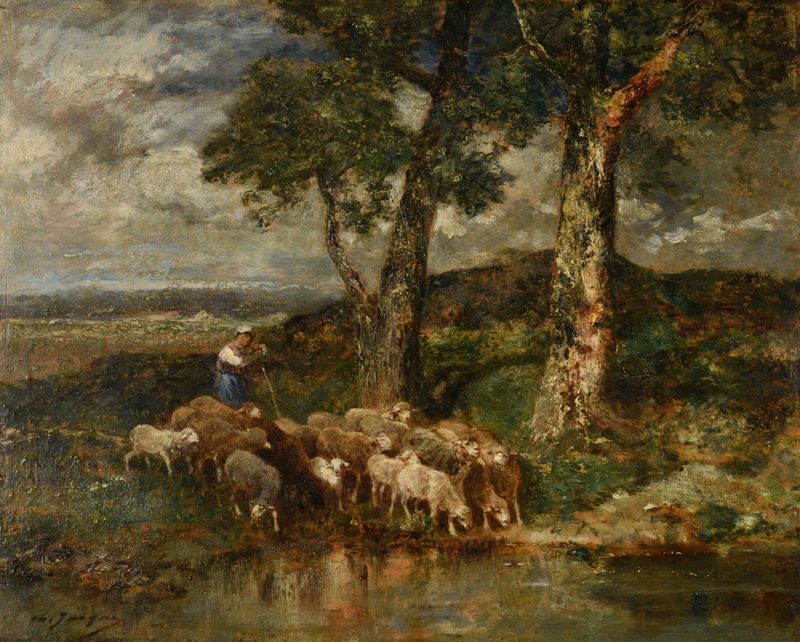
Moutons à l’abreuvoir
Charles Emile Jacque

The Sheepfold
Charles Emile Jacque
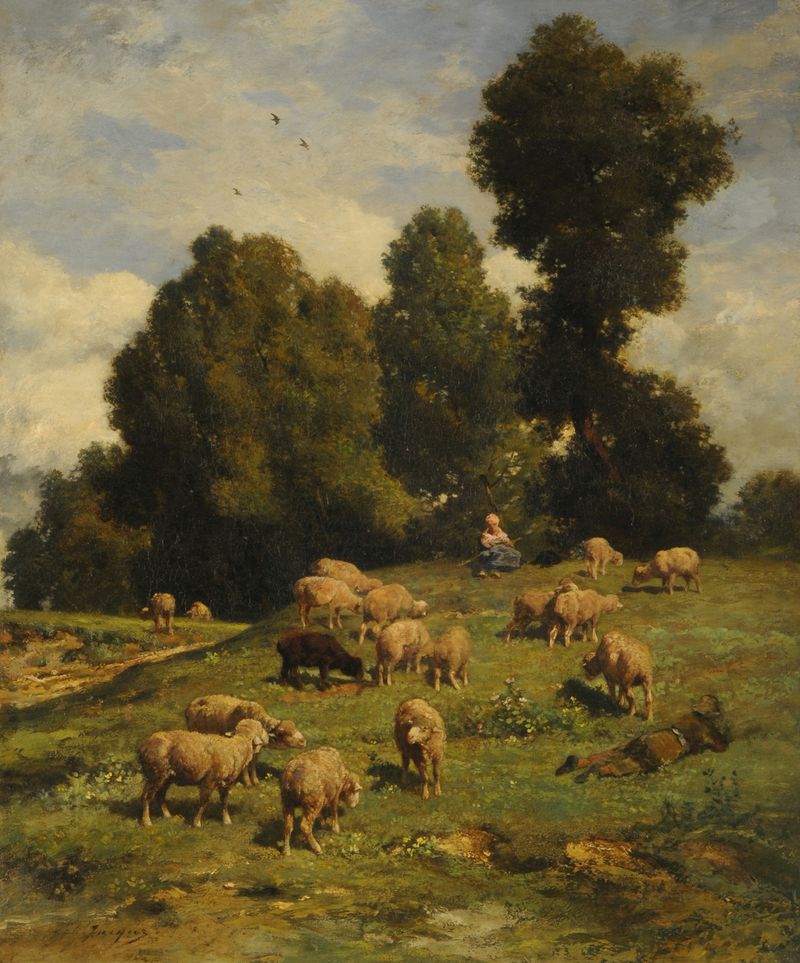
Moutons au pâturage
Charles Emile Jacque
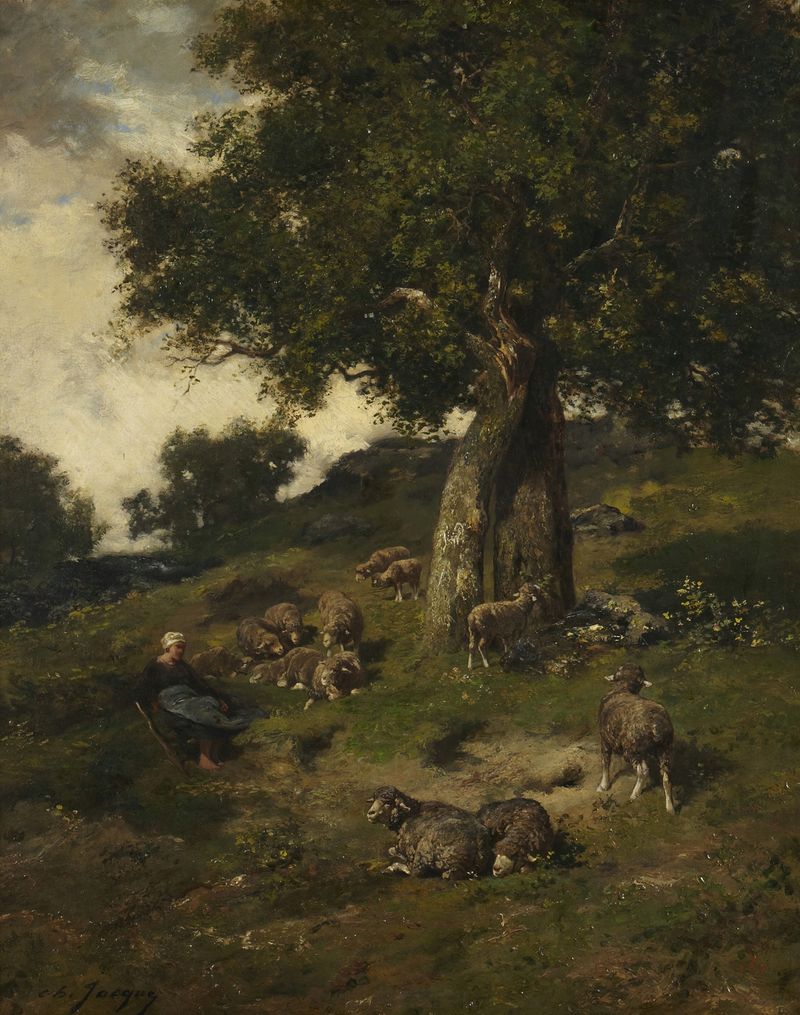
Shepherdess and Sheep
Charles Emile Jacque
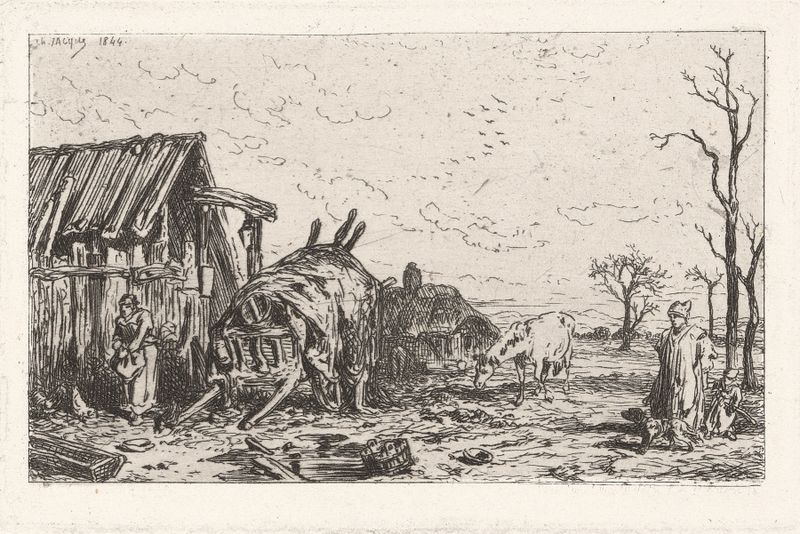
Rural farm scene with barn, cart, two farmers
Charles Emile Jacque

Shepherdess and her flock
Charles Emile Jacque

Ducks in the courtyard
Charles Emile Jacque

Two-horse plow in field
Charles Emile Jacque

Farmers loading ox cart
Charles Emile Jacque
Sheep
Charles Emile Jacque





