
The Four Days' Battle, 1-4 June — History & Facts
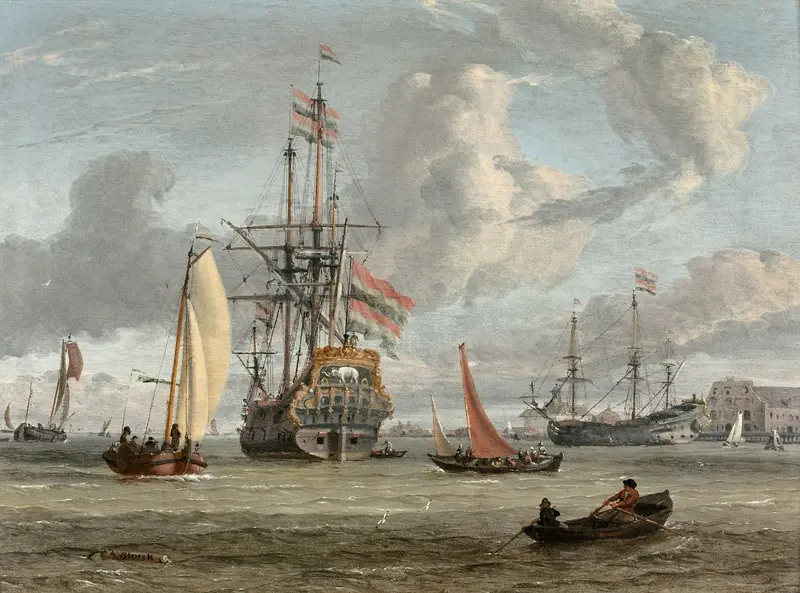
A restless sky presses down on a chaos of rigging and cannon smoke, where ships crowd the waves so tightly that the sea itself seems barely able to contain them. The eye is drawn first to the proud Dutch flags snapping atop the tallest masts, their color a rare note of clarity amid the confusion of sails and splintered wood. Look closer and the story unfolds in layers: the angled lines of the ships’ hulls thrust forward, the billowing sails catch what little light breaks through the clouds, and the dark water churns with the violence of battle.
Each vessel is alive with figures—tiny but urgent—suggesting the scale of ambition and the cost of conflict. The painter’s palette, dominated by stormy greys and ochres, gives the whole scene a sense of gathering energy, as if the battle is still unresolved. Works like this, painted in the late seventeenth century, were born from a world in which naval power was both a source of national pride and a matter of survival. In the Dutch Republic, marine paintings surged in popularity, commissioned by merchants, admirals, and city councils eager to commemorate victories or mourn losses at sea.
The Four Days' Battle, 1-4 June by Abraham Storck belongs to this tradition, created between 1666 and 1674, when the memory of epic sea battles was still fresh. Though history has kept few traces of this specific canvas, its presence in a Dutch collection today speaks to the enduring fascination with the era’s maritime drama. Let your gaze drift from ship to ship, and imagine the stories unfolding on every deck.
More Artworks by Abraham Storck

The Muscovite legation visiting Amsterdam, 29 August 1697
Abraham Storck
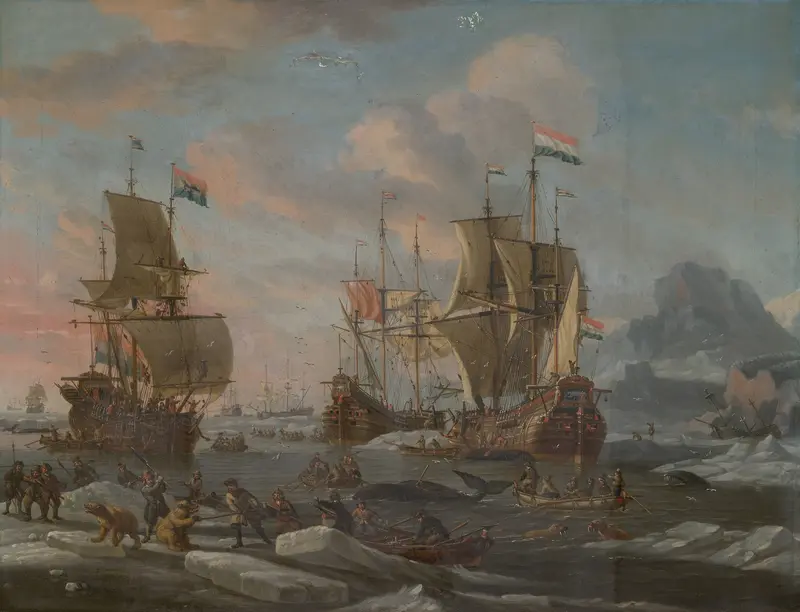
The Dutch Whaling Fleet
Abraham Storck
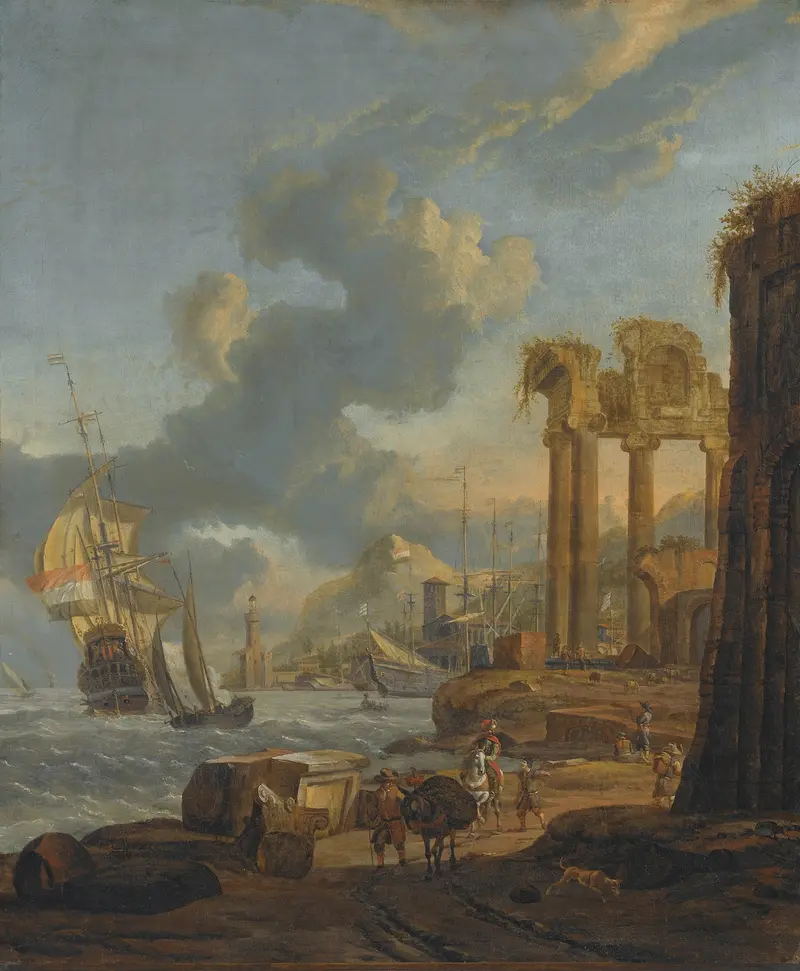
A Mediterranean Harbour Scene With Travellers On The Shore, A Dutch Man-Of-War On The Left
Abraham Storck
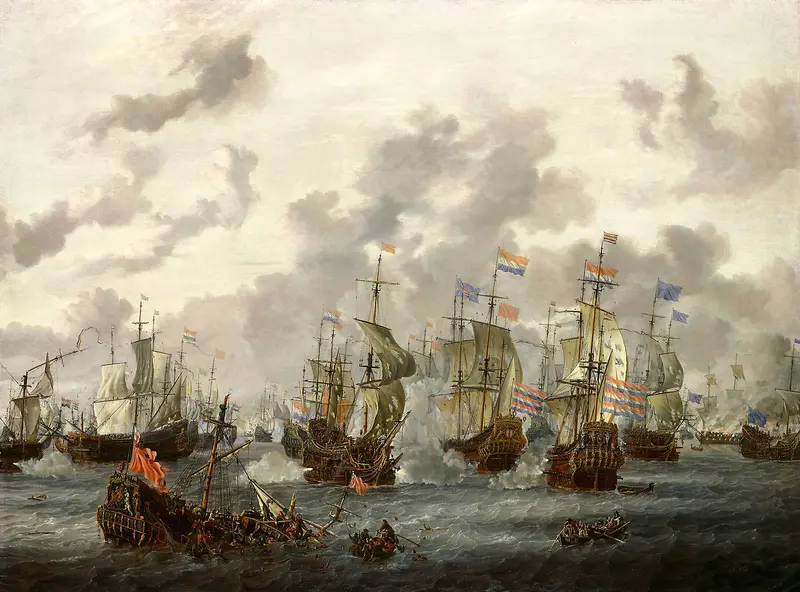
The Four Days’ Battle
Abraham Storck
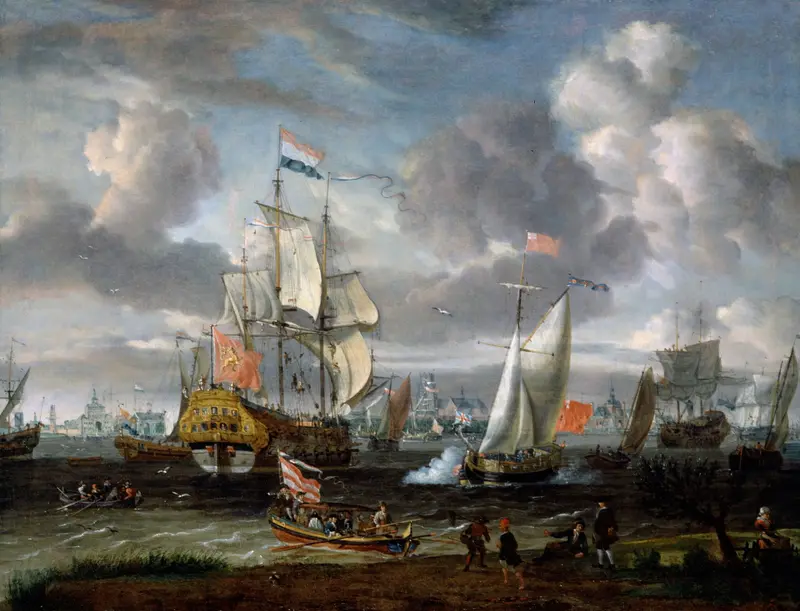
An English Yacht saluting a Dutch Man-of-War in the port of Rotterdam
Abraham Storck
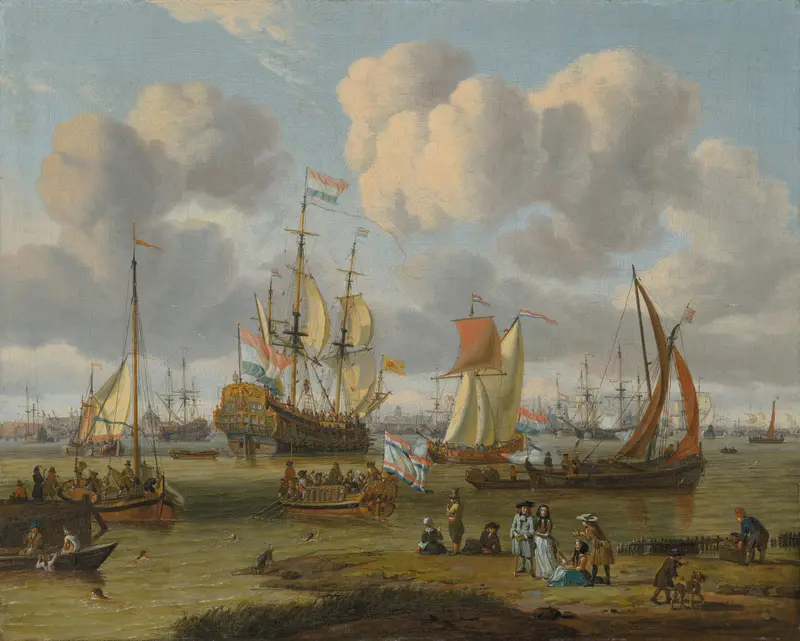
Shipping off Amsterdam with figures on a quay
Abraham Storck
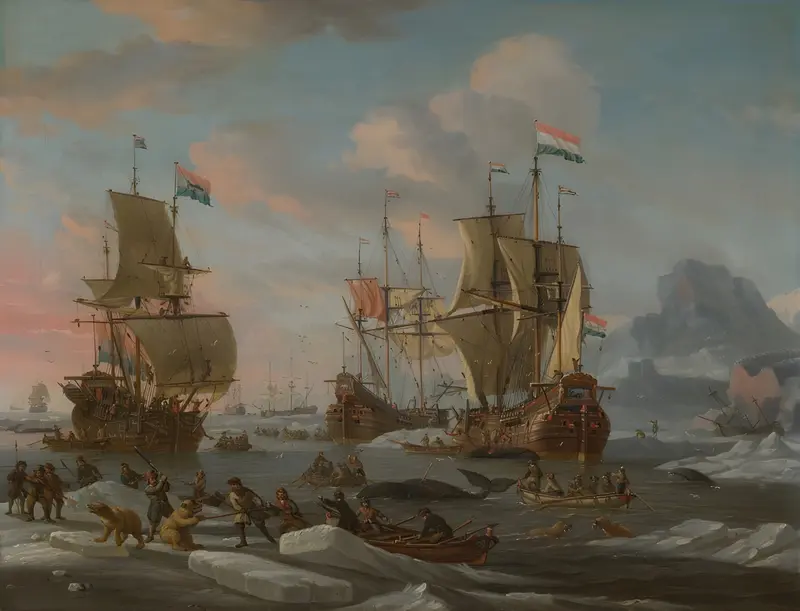
The Dutch Whaling Fleet
Abraham Storck
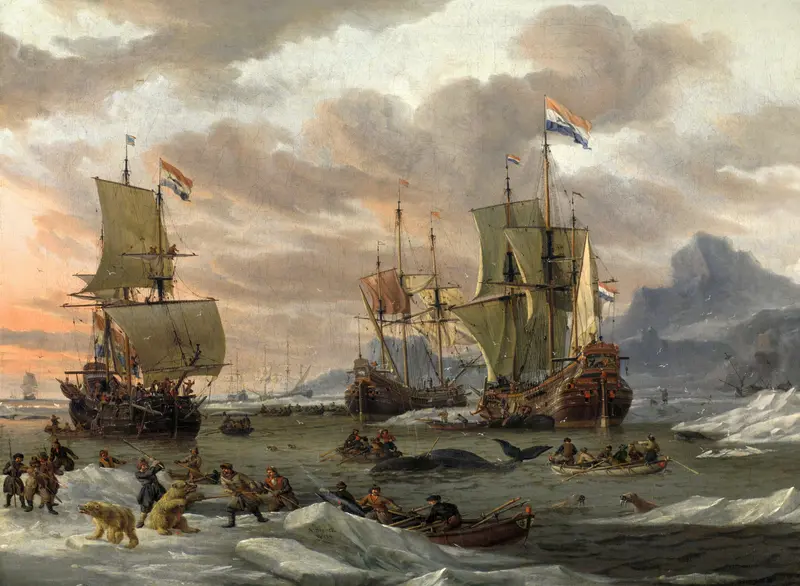
Whaling Grounds in the Arctic Ocean
Abraham Storck
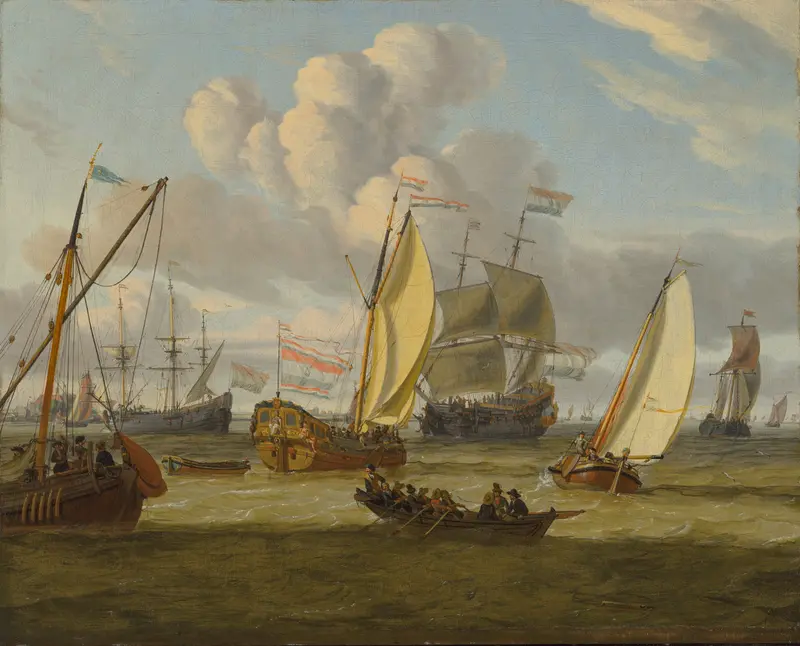
Shipping in an estuary
Abraham Storck
Grand navire de la couronne du Danemark près d’un littoral
Abraham Storck





