
The Go-Cart — History & Facts
A child’s world, captured in a moment of quiet invention, draws the viewer into The Go-Cart by Helen Hyde. At the heart of the image, a young girl, dressed in a simple checked garment and wooden sandals, leans earnestly over a makeshift cart, her intent gaze fixed on the baby nestled within. The cart’s great wheel dominates the foreground, its spokes radiating outward like a sunburst, while the background’s deep blue and green blocks of color frame the scene with a sense of calm enclosure.
The child’s posture—half climbing, half protecting—suggests both play and responsibility, the everyday drama of childhood rendered with gentle humor and care. Created in 1913, this work belongs to a period when Western artists were deeply influenced by Japanese printmaking, and Helen Hyde herself is known for her sensitive adaptations of this style. Small in size but rich in detail, the print speaks to a time when such intimate domestic moments were increasingly valued as subjects worthy of art. Hyde’s work was often collected by Americans fascinated by both Japonisme and the changing roles of women and children in society.
Though little is recorded about the specific journey of this print, its presence in the Smithsonian American Art Museum today invites us to linger over its quiet wit and the universal language of childhood it so deftly captures.
More Artworks by Helen Hyde

Moonlight on the Viga Canal) - HH (monogram) LCCN0065
Helen Hyde
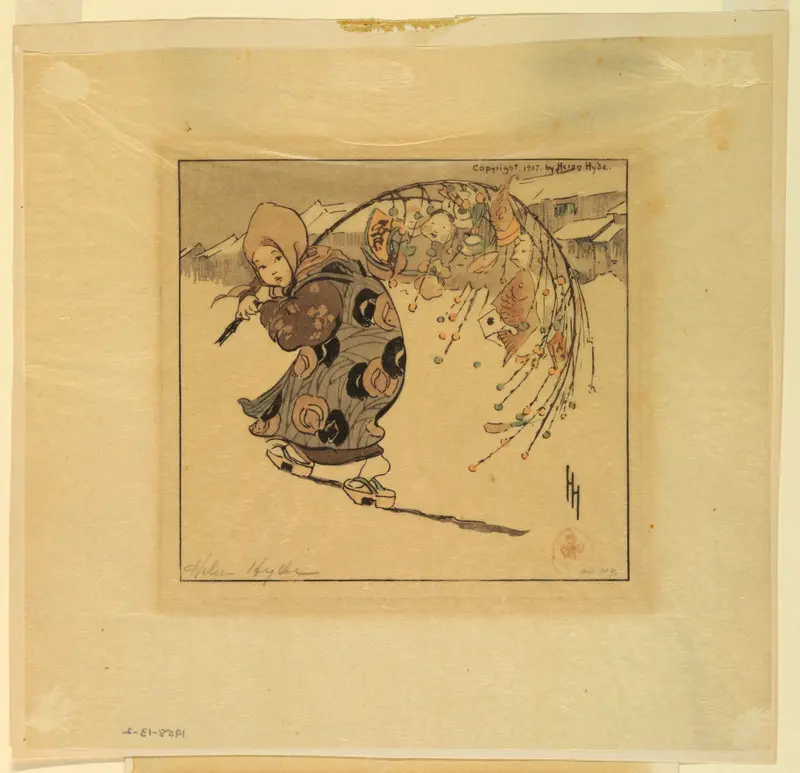
Print, The Good Luck Branch
Helen Hyde
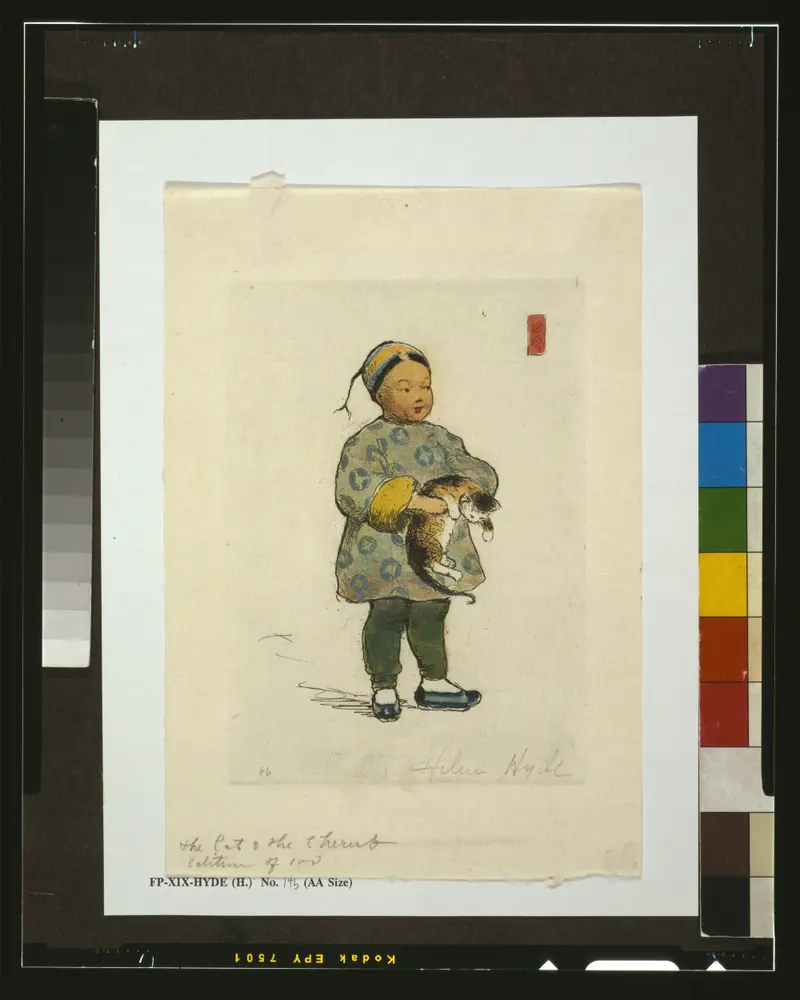
The cat and the cherub LCCN200367
Helen Hyde

Hon(orable Mr) cat - HH (monogram). LCCN200367
Helen Hyde
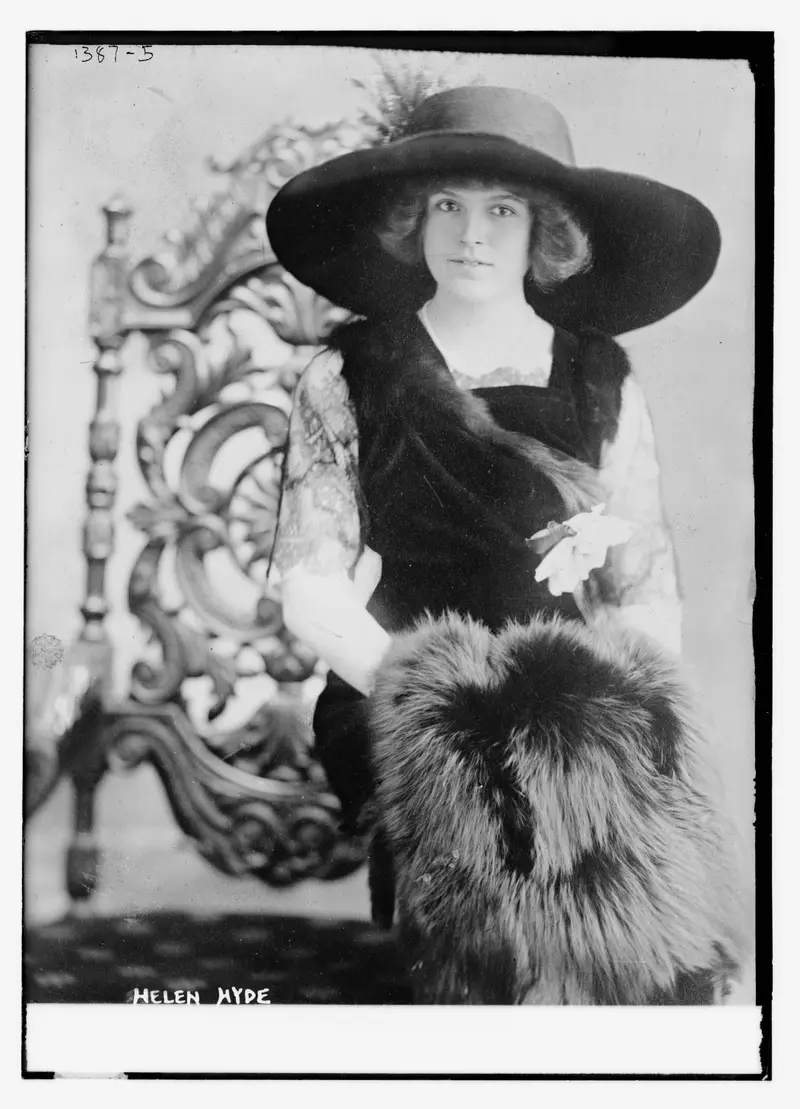
Helen Hyde LCCN201468
Helen Hyde
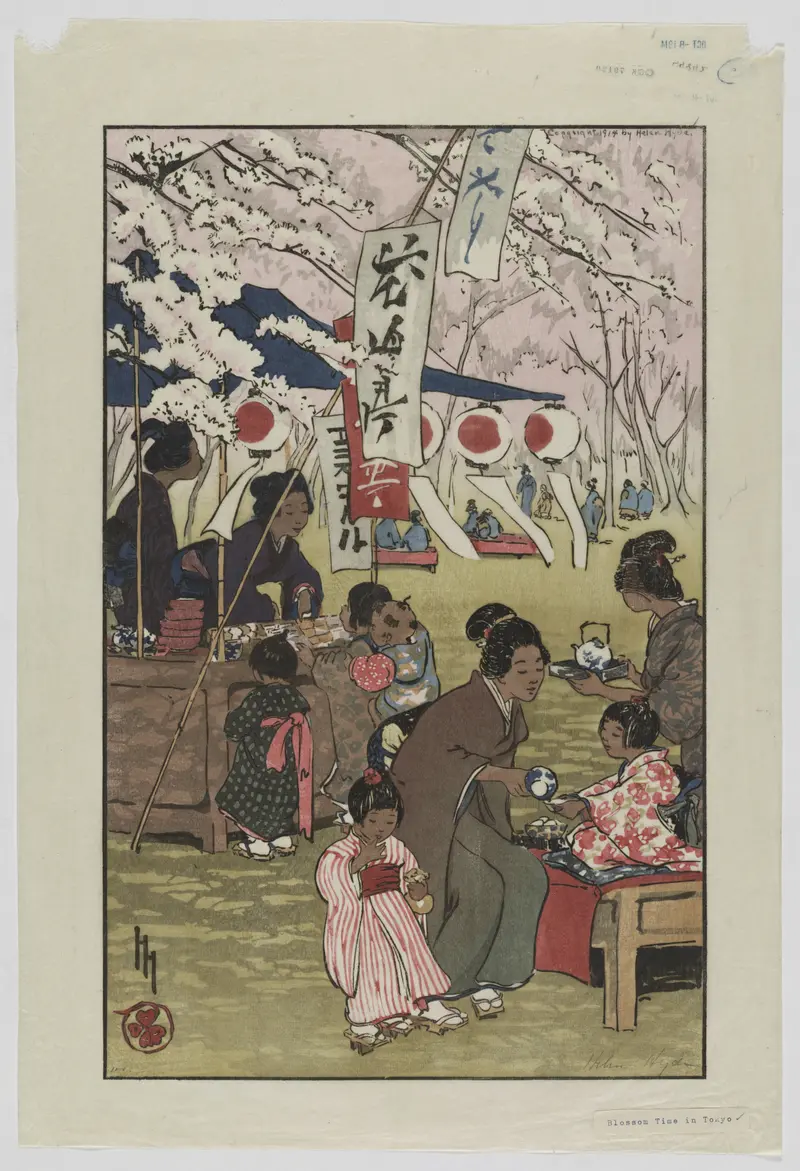
Blossom time in Tokyo) - HH (monogram) LCCN0065
Helen Hyde
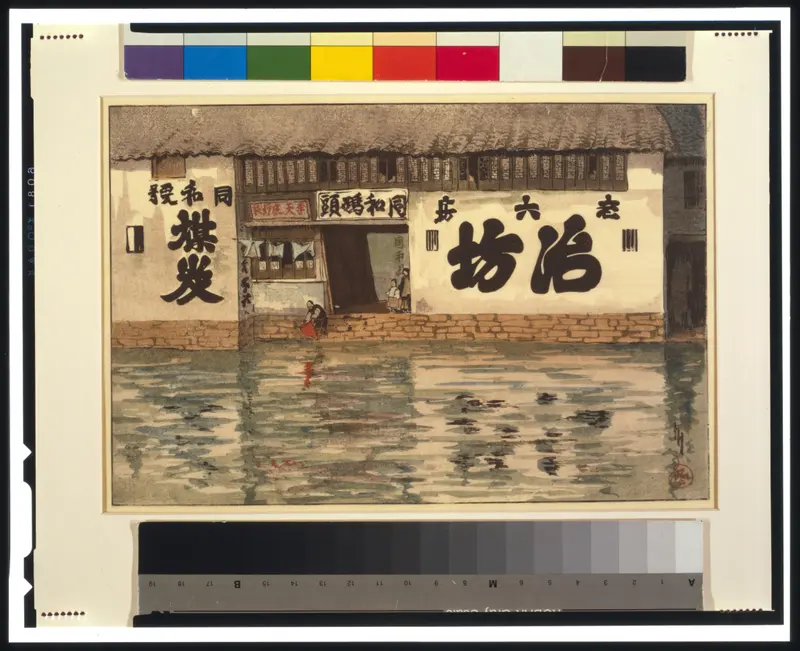
The sauce-pan shop) - HH (monogram) LCCN0065
Helen Hyde

New Year's Day in Tokyo
Helen Hyde
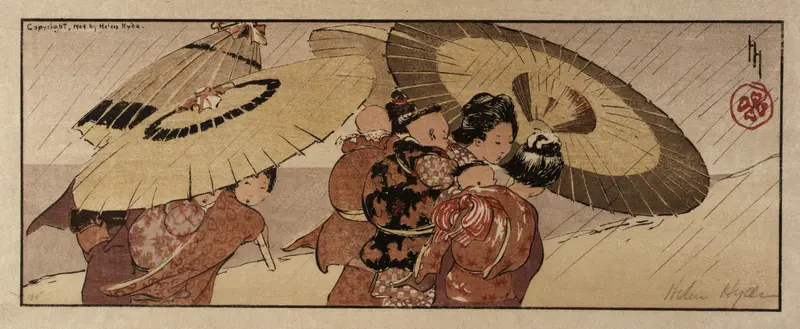
A Summer Shower
Helen Hyde
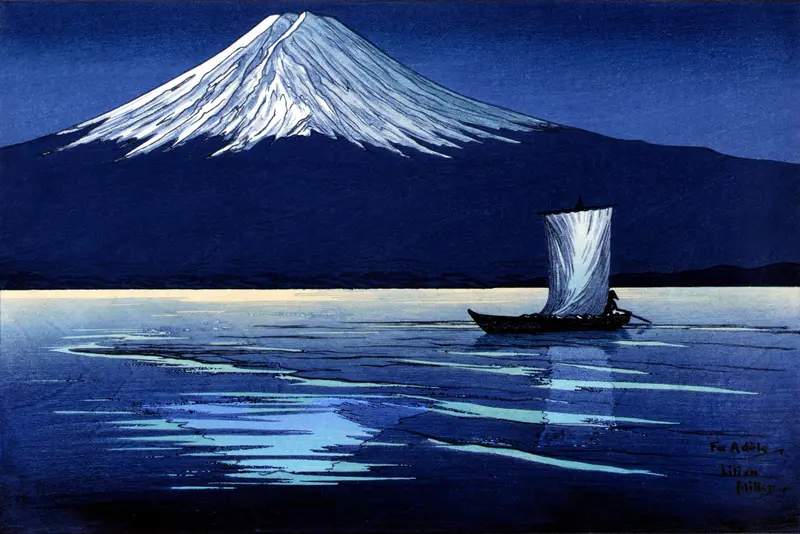
Moonlight on Mt. Fuji
Helen Hyde
More Genre Scene Art

Banquet of the Officers of the St George Civic Guard
Frans Hals

Rembrandt and Saskia in the Scene of the Prodigal Son
Rembrandt van Rijn

Bal du moulin de la Galette
Pierre-Auguste Renoir

Quadrille at the Moulin Rouge
Henri de Toulouse-Lautrec

A Burial at Ornans
Gustave Courbet

When Will You Marry?
Paul Gauguin