
The Goulden Leeuw Engaging Royal Prince at the Battle of the Texel, 11 August — History & Facts
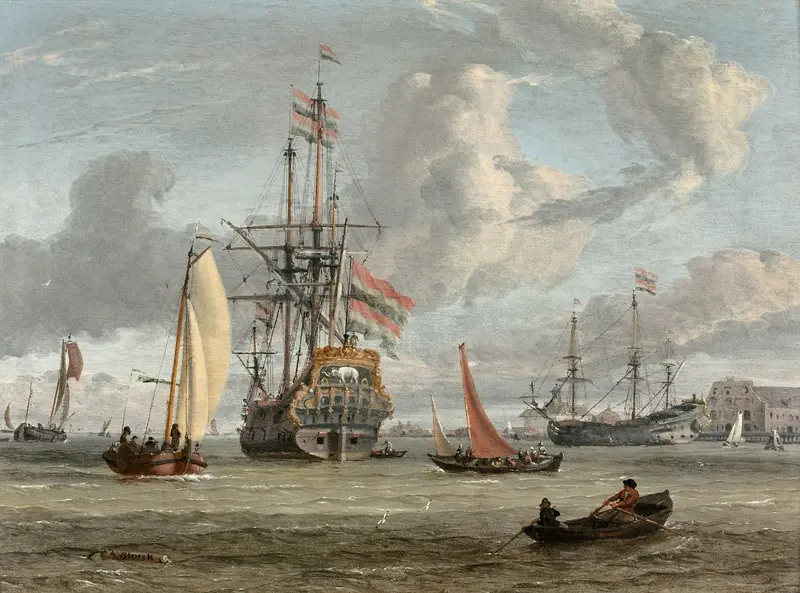
A flotilla of towering ships, their sails taut with wind and ambition, commands the center of The Goulden Leeuw Engaging Royal Prince at the Battle of the Texel, 11 August by Abraham Storck. The eye is drawn first to the proud stern of the Goulden Leeuw, its gilded carvings catching the light as it looms above the churning water. Billowing smoke from cannon fire drifts across the scene, blurring the boundary between sky and sea, while flags—Dutch tricolors and their rivals—signal the tangled allegiances of the day.
The drama intensifies at the right, where a burning ship crackles with orange fury, and desperate figures crowd lifeboats in the foreground, their fate uncertain. Storck’s palette—cool blues, creamy whites, flashes of gold—lends the battle a clarity that belies its chaos, while the low horizon grants the heavens a sweeping, almost theatrical presence. Works like this emerged from the late 17th-century Dutch Republic, a world where naval power was both lifeblood and legend. Maritime paintings were prized by merchants, admirals, and city leaders alike, serving as both commemoration and propaganda—proof of Dutch resilience in the face of overwhelming odds, as at Texel in 1673.
Abraham Storck was among those who specialized in such scenes, blending precise ship portraiture with a flair for spectacle. Though little is recorded about the specific journey of this canvas, its presence in a major collection today speaks to the enduring fascination with the age when the fate of nations played out upon the water. Look again, and let your eye wander from the smoke-wreathed decks to the distant sails dissolving into cloud—a reminder of how history and myth merge on the painted sea.
More Artworks by Abraham Storck

The Muscovite legation visiting Amsterdam, 29 August 1697
Abraham Storck
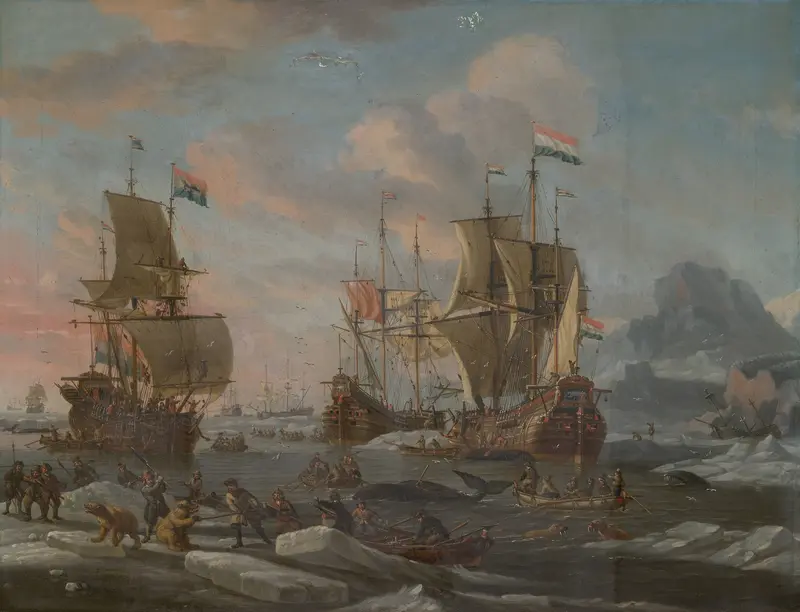
The Dutch Whaling Fleet
Abraham Storck
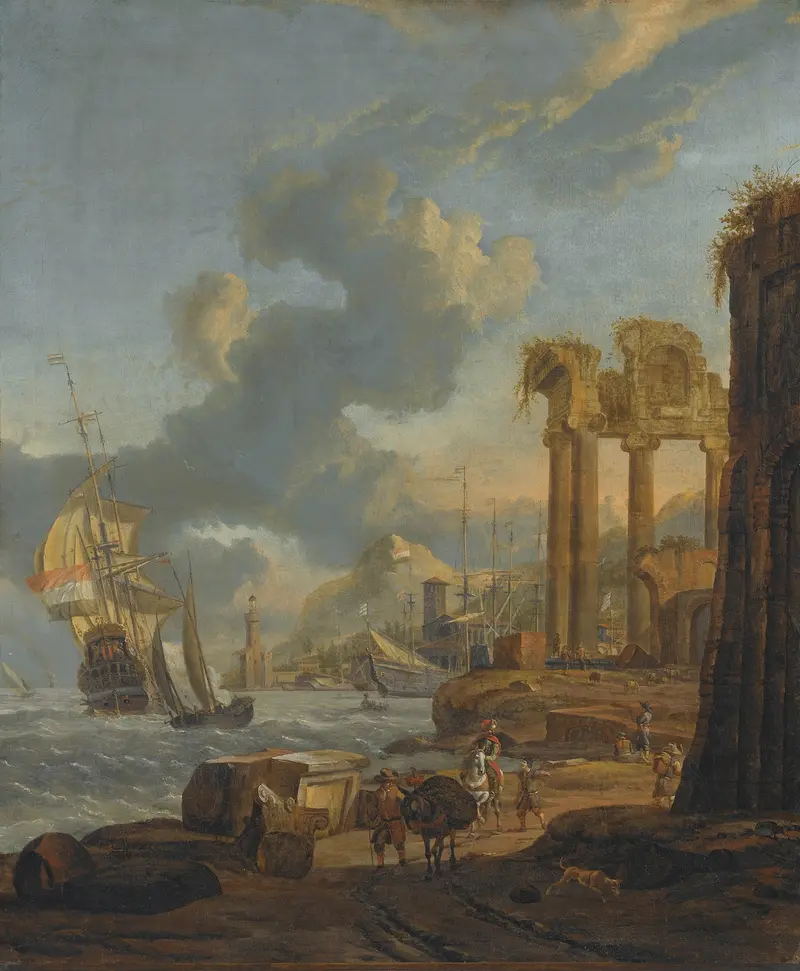
A Mediterranean Harbour Scene With Travellers On The Shore, A Dutch Man-Of-War On The Left
Abraham Storck
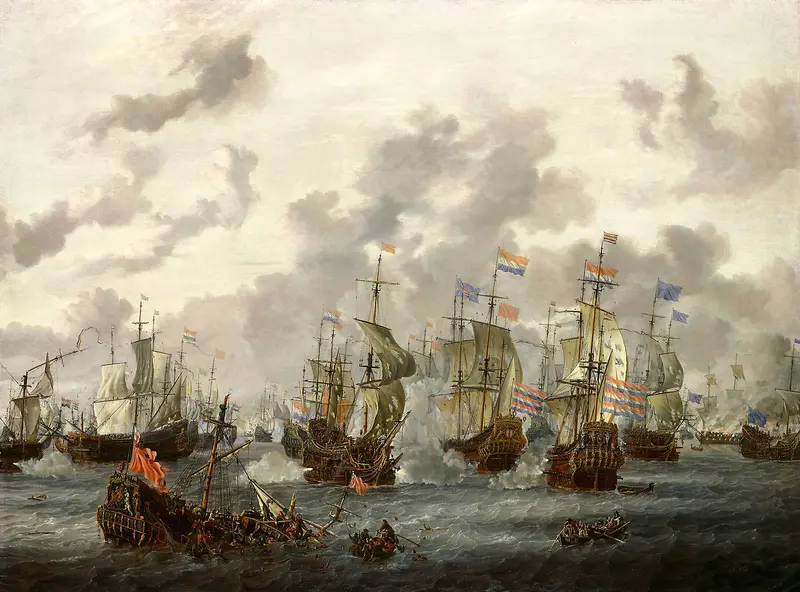
The Four Days’ Battle
Abraham Storck
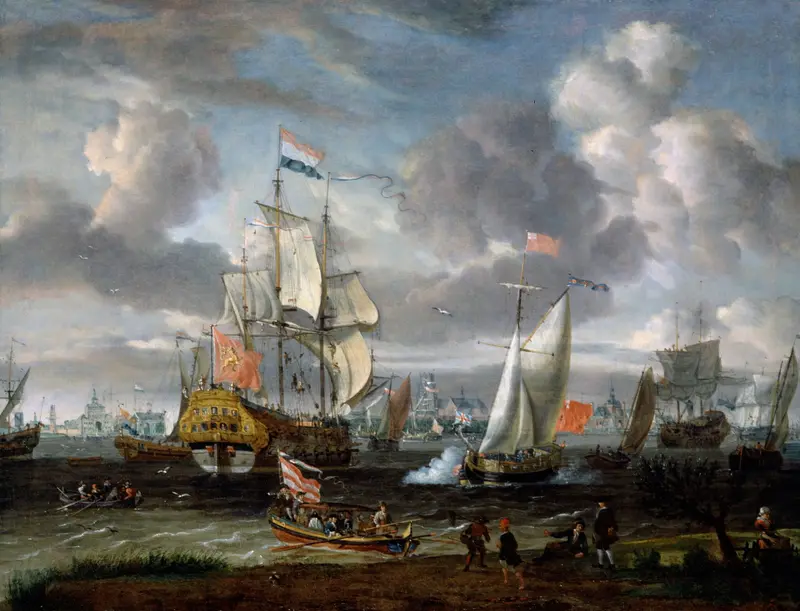
An English Yacht saluting a Dutch Man-of-War in the port of Rotterdam
Abraham Storck
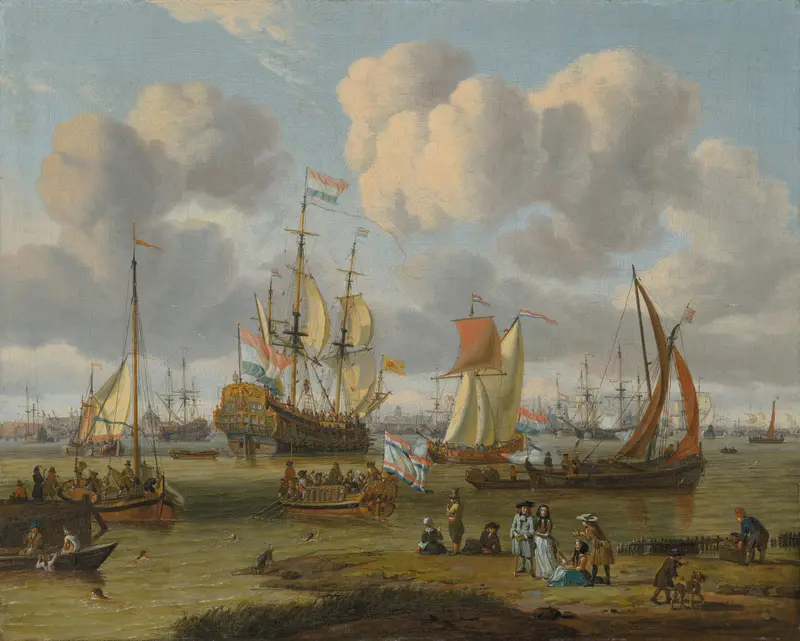
Shipping off Amsterdam with figures on a quay
Abraham Storck
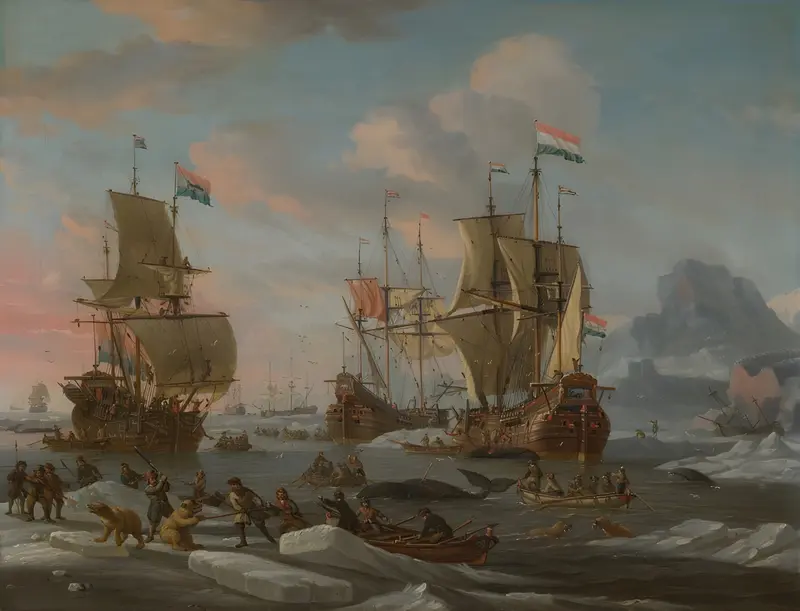
The Dutch Whaling Fleet
Abraham Storck
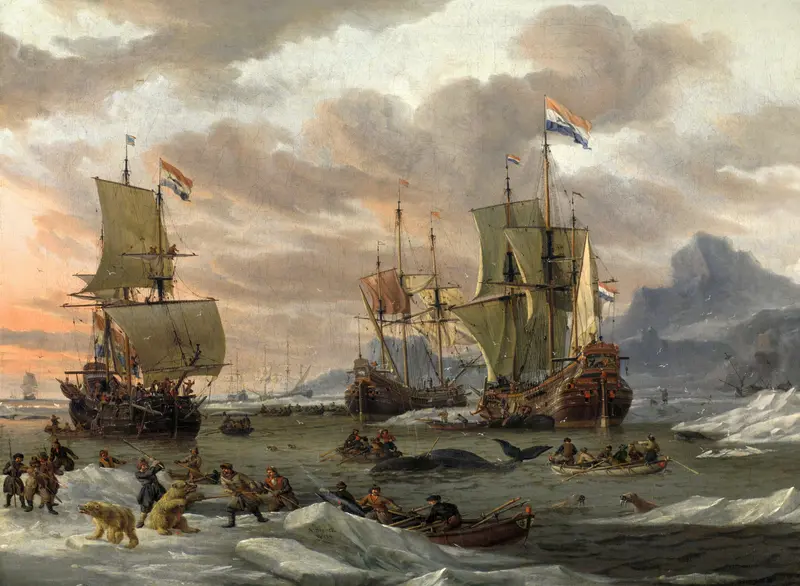
Whaling Grounds in the Arctic Ocean
Abraham Storck
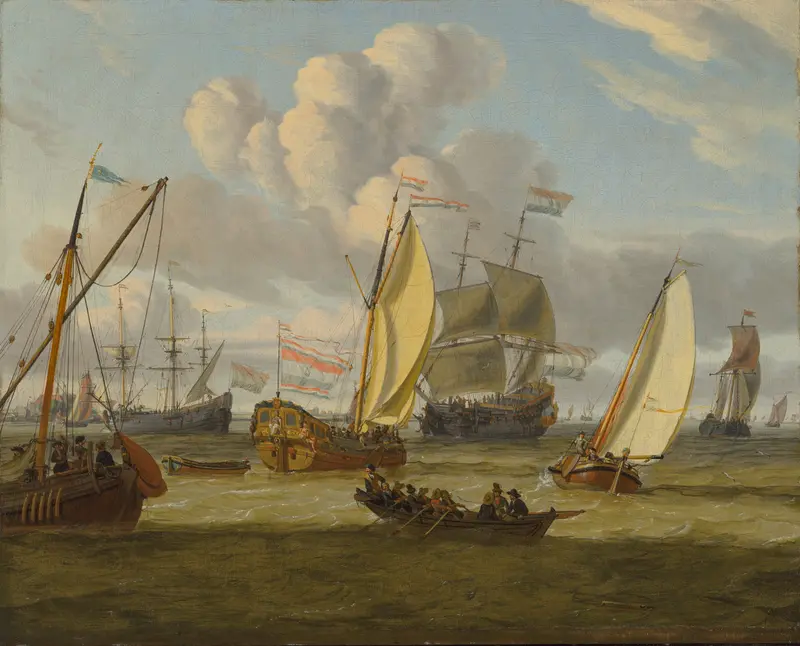
Shipping in an estuary
Abraham Storck
Grand navire de la couronne du Danemark près d’un littoral
Abraham Storck





