
The Green Hill — History & Facts
Light, in its many forms, holds the power to reveal the soul of a landscape, transforming the ordinary into the extraordinary. Look to the center of The Green Hill, where a lush expanse of emerald grass sweeps upward, inviting the viewer’s eye to wander across the undulating terrain. Notice how the dappled sunlight filters through, casting a warm glow that emphasizes the vibrant greens and soft shadows. The horizon, a delicate blend of sky and earth, suggests the infinite—a world that is alive, breathing, and untouched.
The composition balances simplicity with depth, drawing you into Homer’s world of serene beauty. Delve deeper into the subtleties of the work, where tension resides in the interplay of light and shadow. The hill, bathed in sunlight, stands in stark contrast to the darker, brooding clouds looming overhead, hinting at an emotional undercurrent of hope against uncertainty. This duality embodies a moment suspended in time, where nature's tranquility meets the turbulence of the human experience, evoking a sense of contemplative stillness. Winslow Homer painted The Green Hill in 1878 during a period of personal exploration and growth.
Residing in coastal Maine, he was influenced by the changing American landscape and the rise of outdoor painting, which celebrated nature's beauty and complexity. This work reflects a pivotal moment in his career, where he blended realism with a profound appreciation for the light and atmosphere, marking his evolution as an artist and a keen observer of the world around him.
More Artworks by Winslow Homer
Browse all →
The Gulf Stream
Winslow Homer
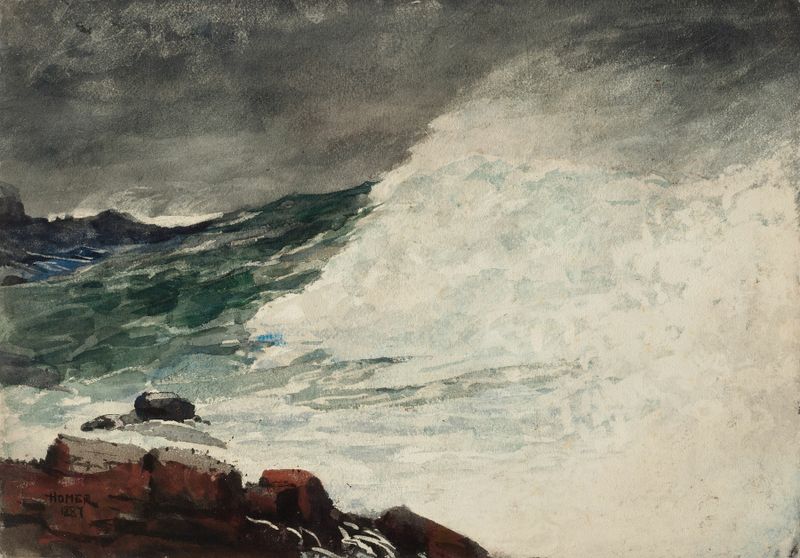
Prout’s Neck, Breaking Wave
Winslow Homer
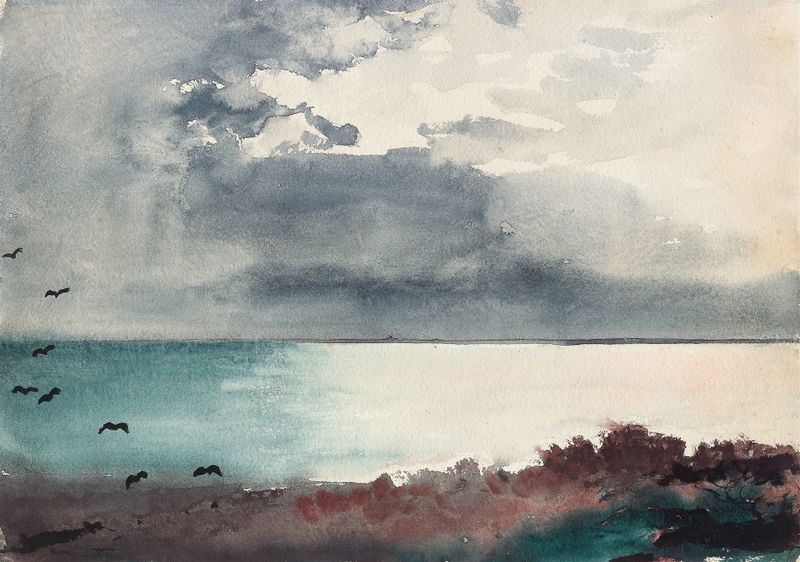
Breaking Storm, Coast of Maine
Winslow Homer
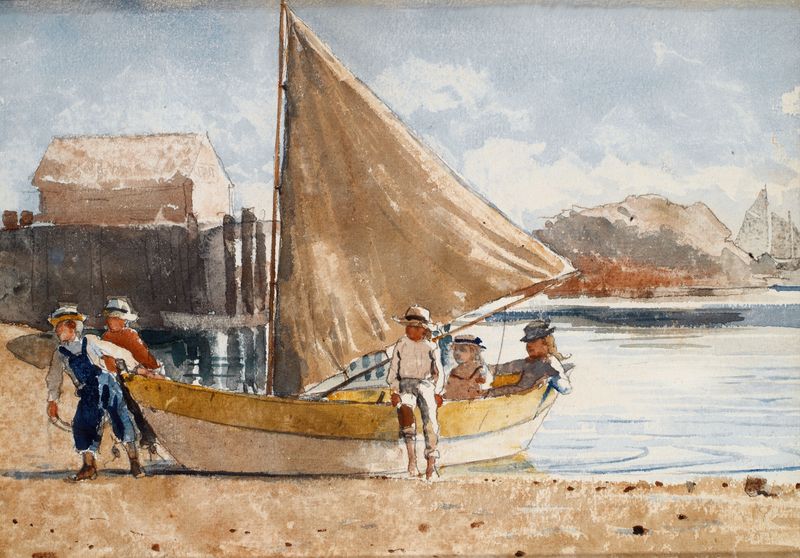
Summertime
Winslow Homer
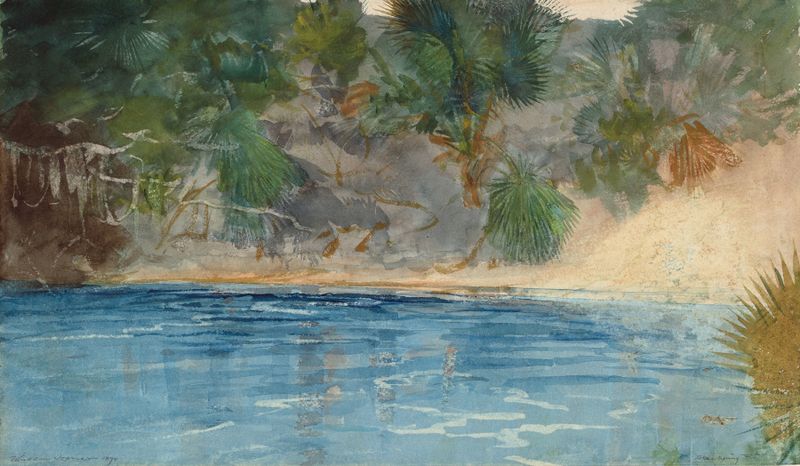
Blue Spring, Florida
Winslow Homer
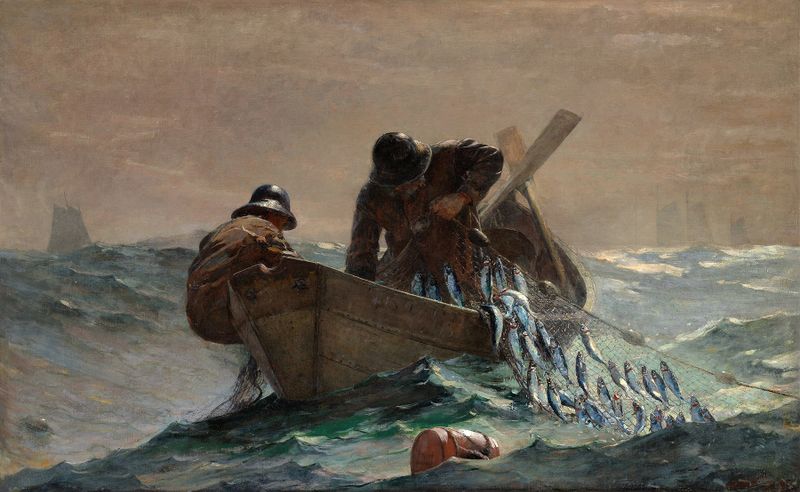
The Herring Net
Winslow Homer
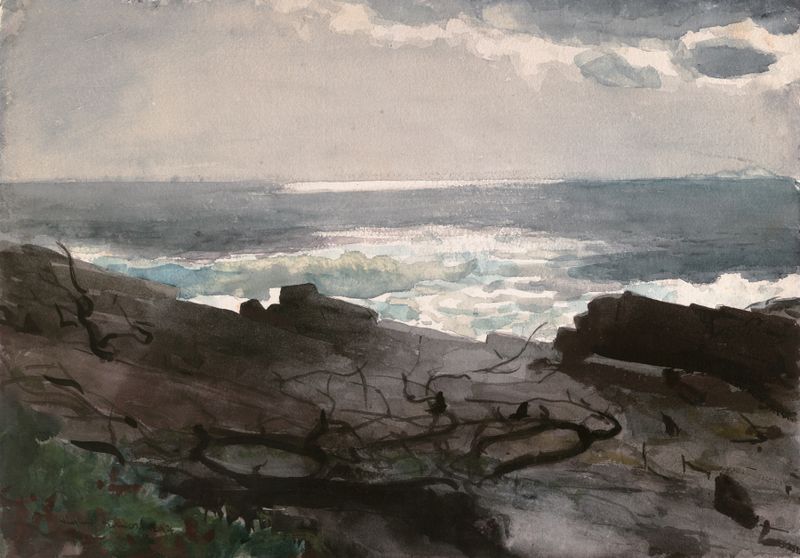
Sunshine and Shadow, Prout’s Neck
Winslow Homer
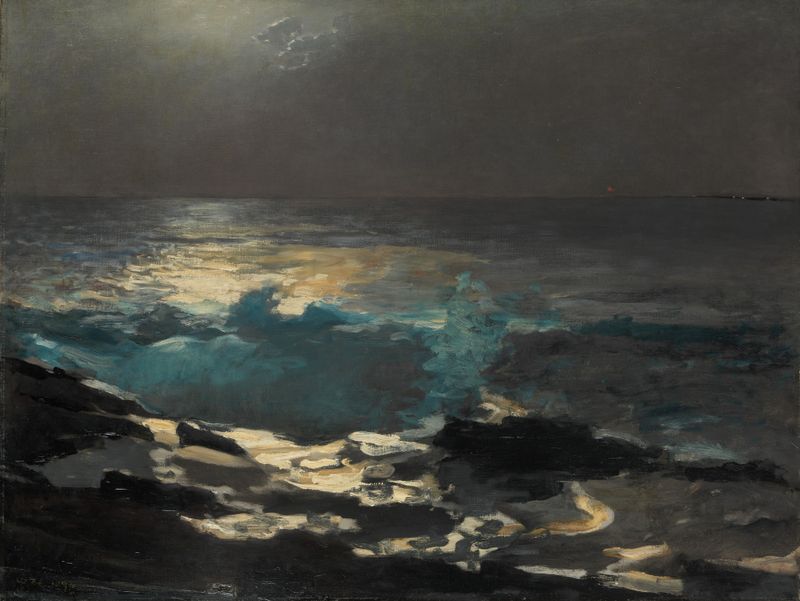
Moonlight, Wood Island Light
Winslow Homer
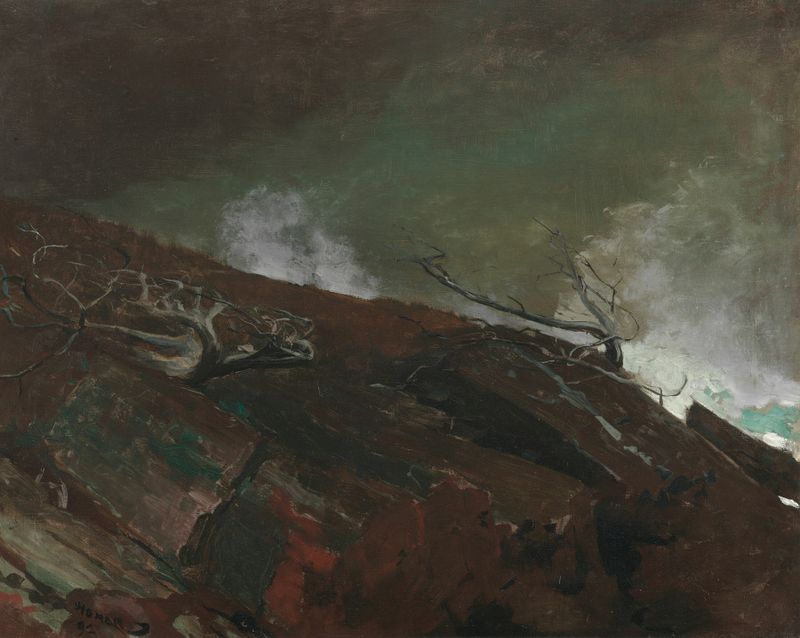
Coast of Maine
Winslow Homer
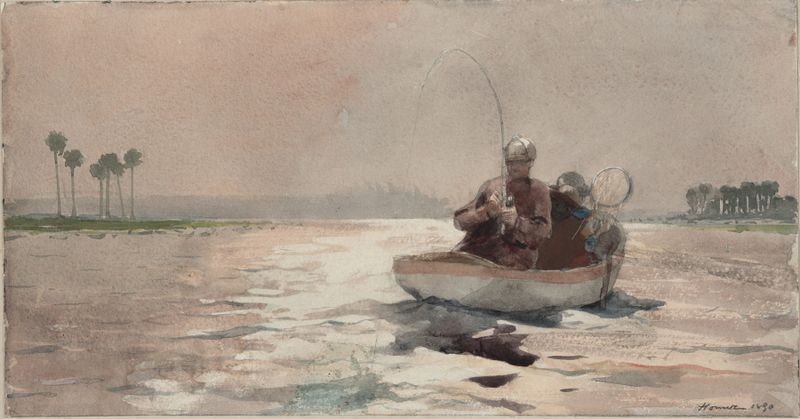
Bass Fishing – Florida
Winslow Homer





