
The Harbor at Antwerp by — History & Facts
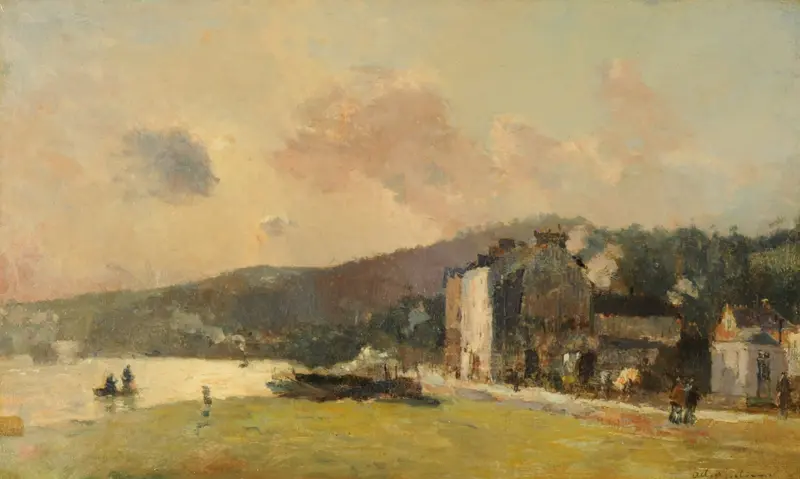
A haze of industry hangs over the water, where the river and sky seem to merge in a muted, silvery wash. In The Harbor at Antwerp by Albert Charles Lebourg, the eye is drawn first to the restless movement of steamers and barges, their smokestacks trailing pale plumes that dissolve into the low, clouded sky. The cranes and masts along the quay rise like black calligraphy against the light, anchoring the composition and hinting at the ceaseless labor of the port.
Figures on the dock are rendered as fleeting marks, their presence almost swallowed by the scale of the scene and the damp, enveloping atmosphere. Lebourg’s brushwork is loose yet deliberate, capturing not the specifics of a moment but the sensation of a city in motion, its fortunes tied to the tides and the traffic of the river. Painted between 1895 and 1897, this work belongs to a world on the cusp of modernity, when ports like Antwerp were throbbing engines of trade and transformation. The late nineteenth century saw artists increasingly drawn to industrial subjects, fascinated by the changing face of Europe’s cities and the new rhythms of urban life.
Lebourg, associated with the Impressionist movement, was known for his ability to translate shifting light and weather into paint, and here he turns that sensibility to the industrial landscape. Now in the Phoenix Art Museum, The Harbor at Antwerp stands as a record of both a place and a fleeting mood—inviting the viewer to linger in the cool, metallic air and imagine the stories carried by every ship and shadow.
More Artworks by Albert Charles Lebourg

Le Jardin du Docteur Viau
Albert Charles Lebourg
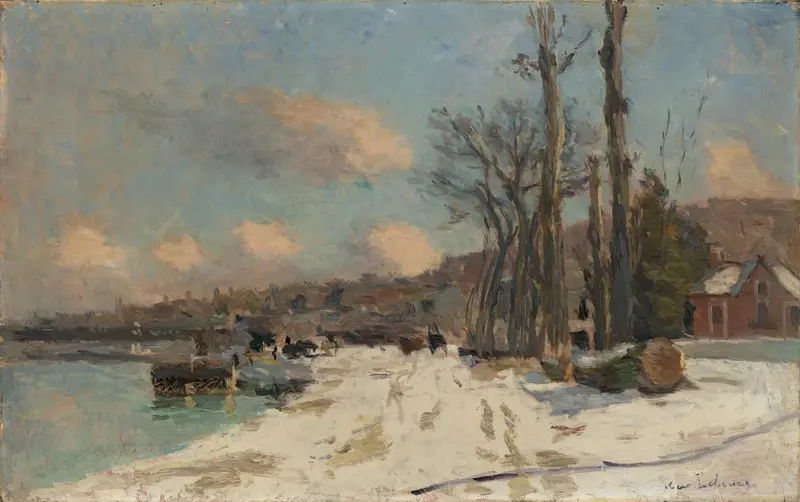
Snow Scene at Bougival
Albert Charles Lebourg
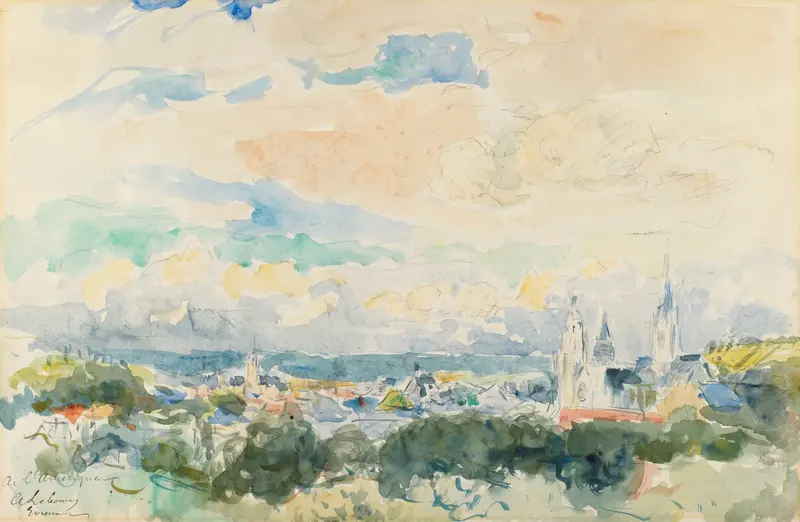
Sketch of a Village
Albert Charles Lebourg
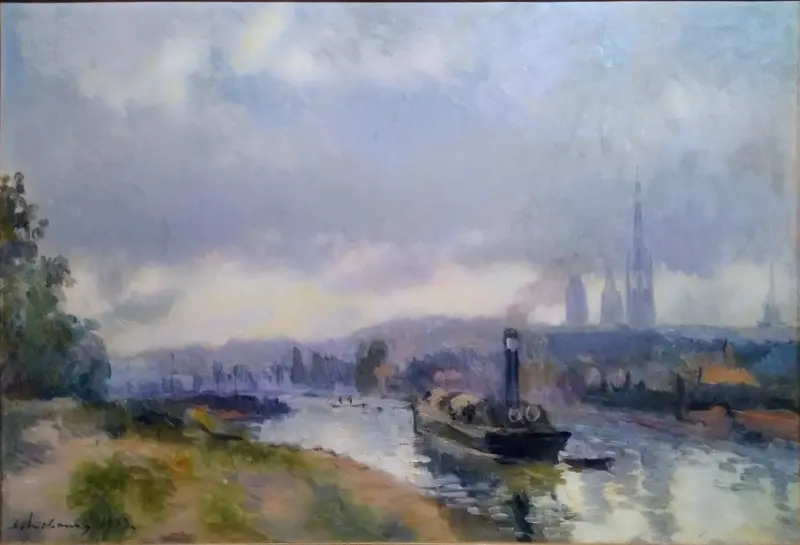
Remorqueurs à Rouen
Albert Charles Lebourg
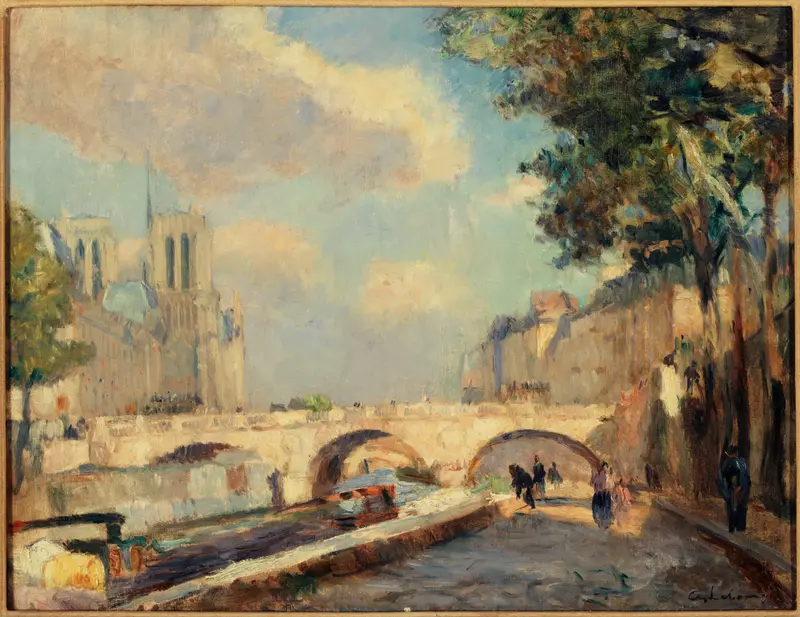
Le pont Saint Michel et Notre Dame, vus du quai des Grands Augustins P459 Musée Carnavalet
Albert Charles Lebourg
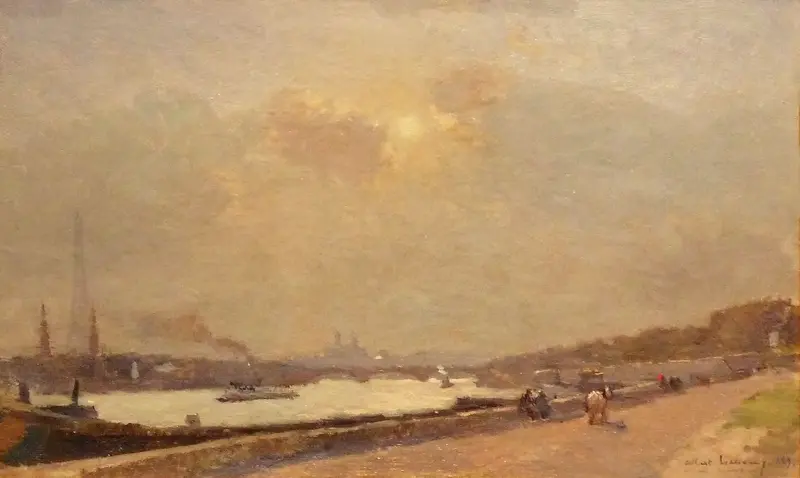
Banks of the Seine, Cours La Reine
Albert Charles Lebourg
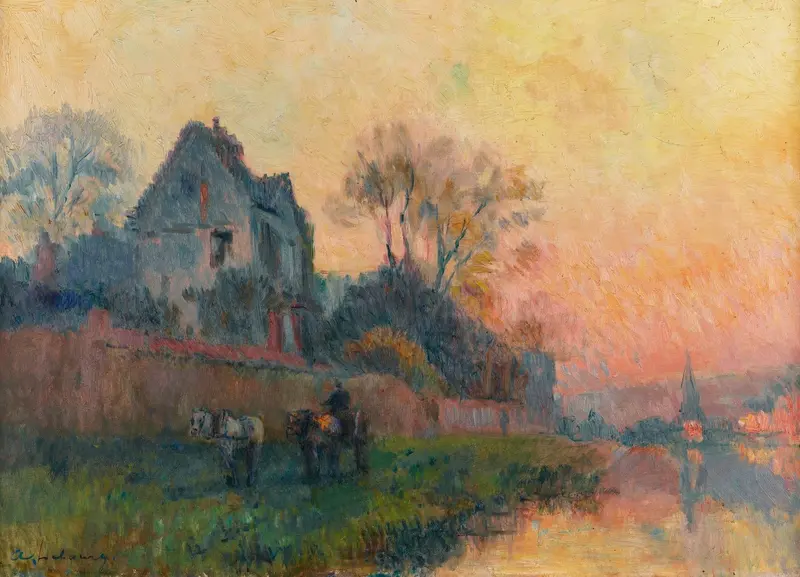
Bords de Seine à Chatou, oil on canvas, 46.4 by 65.1cm, 18.25 by 25.6 in
Albert Charles Lebourg
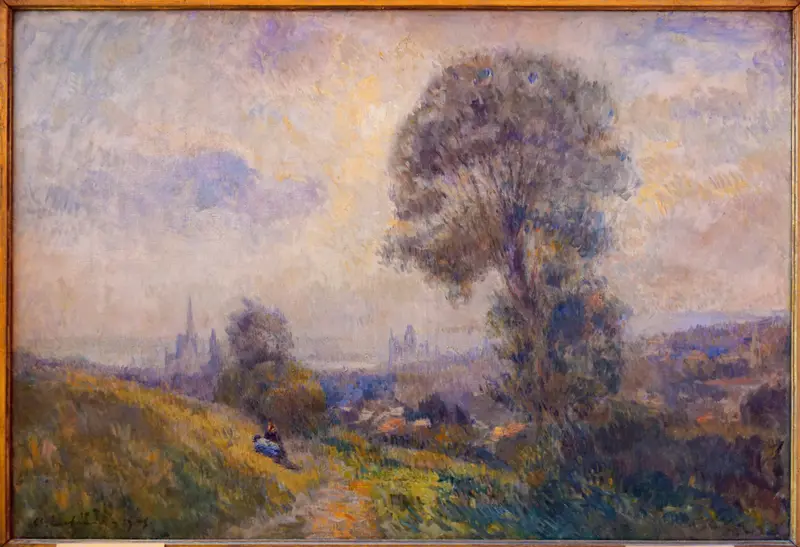
Camaret. The Harbor During a Thunderstorm
Albert Charles Lebourg
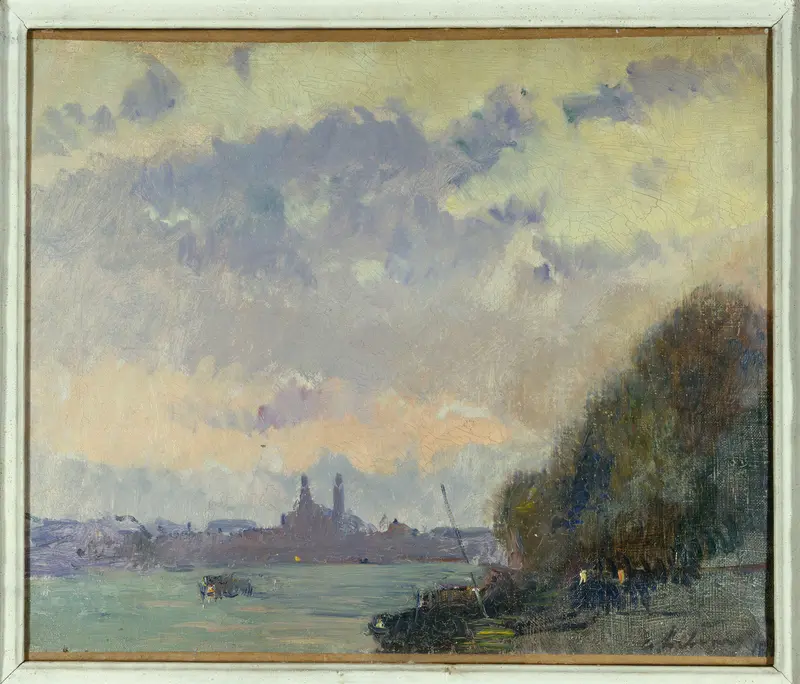
La Seine et l'ancien Trocadéro P2269 Musée Carnavalet
Albert Charles Lebourg
La Seine à Croisset, près de Rouen
Albert Charles Lebourg





