
The haunt of the heron — History & Facts
Could beauty survive in a century of chaos? This poignant question lingers in the air, echoing through the bittersweet landscape captured by an artist who knew how to weave tranquility into turmoil. Look closely at the shimmering waters reflecting the dusky hues of twilight, where the heron stands poised like a delicate sentinel. The painting’s rich palette blends deep blues with soft golds, inviting the viewer to wander beneath the twilight sky. Notice how the light glimmers across the surface, creating a pathway of glistening reflections that draw you toward the horizon.
Each brushstroke is intentional, narrating a story of stillness amidst the unfolding night. The heron, with its elegant form, symbolizes solitude and resilience, embodying a moment of peace that contrasts with the encroaching darkness. The surrounding landscape, lush yet slightly ominous, hints at nature's quiet persistence in the face of human strife. The careful balance of light and shadow reveals the tension between tranquility and the uncertainty of what lies ahead—an interplay that is both haunting and hopeful. In the late 19th century, during a period of industrial upheaval and societal change, the artist channeled his surroundings into works like this.
Living in England, Grimshaw was influenced by the Pre-Raphaelite movement, emphasizing detail and emotion. His mastery of nocturnal scenes and atmospheric lighting became a hallmark of his style, reflecting the beauty of nature at a time when it was increasingly threatened.
More Artworks by John Atkinson Grimshaw
Browse all →
Under the Silvery Moonbeams
John Atkinson Grimshaw
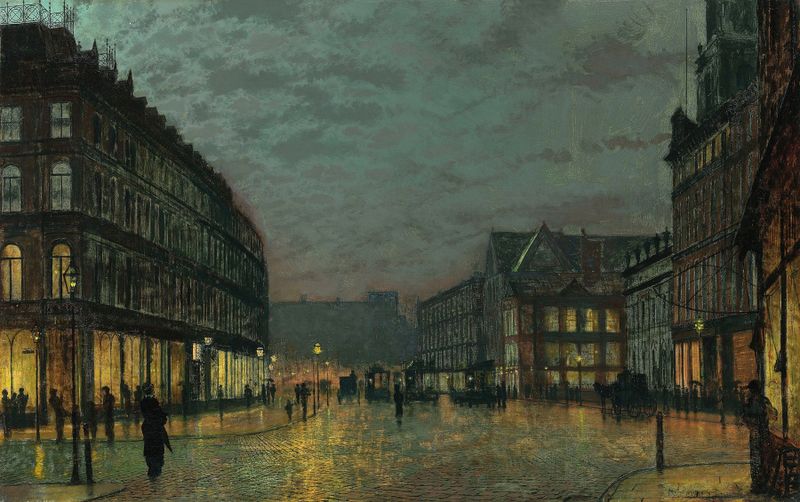
Boar Lane, Leeds by lamplight
John Atkinson Grimshaw
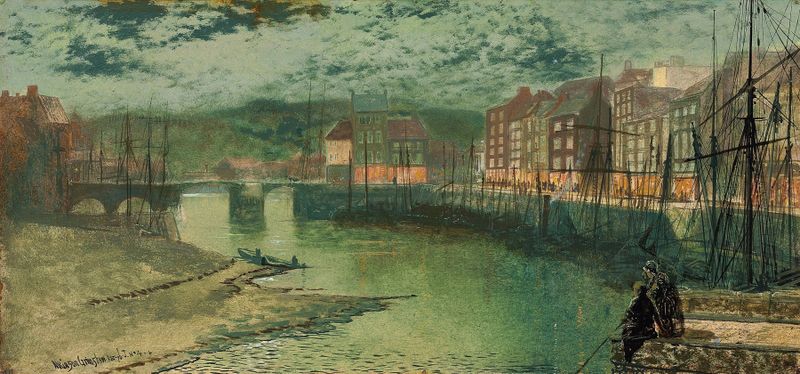
Whitby docks
John Atkinson Grimshaw

Old Chelsea
John Atkinson Grimshaw

Late October
John Atkinson Grimshaw
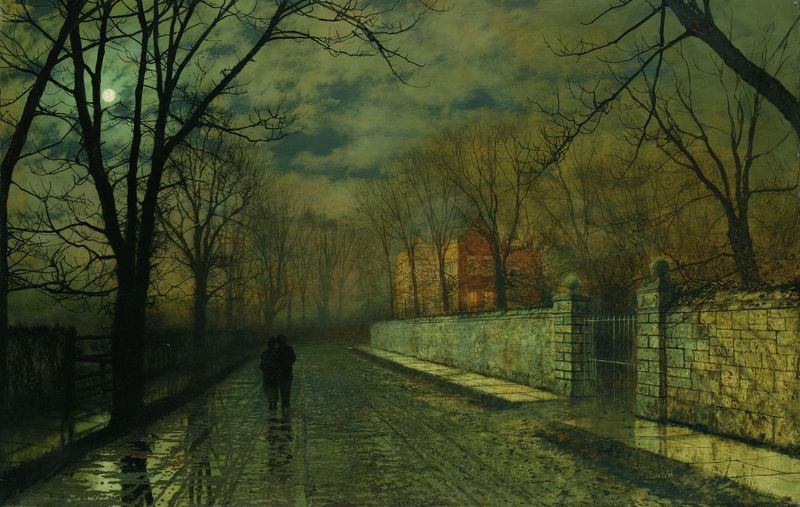
Figures In A Moonlit Lane After Rain
John Atkinson Grimshaw

Liverpool Lights
John Atkinson Grimshaw
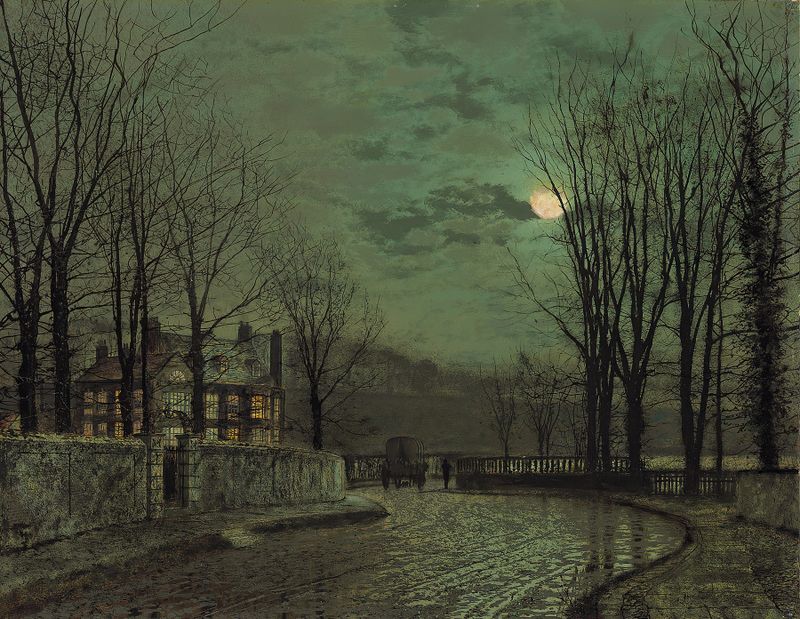
November Moonlight
John Atkinson Grimshaw
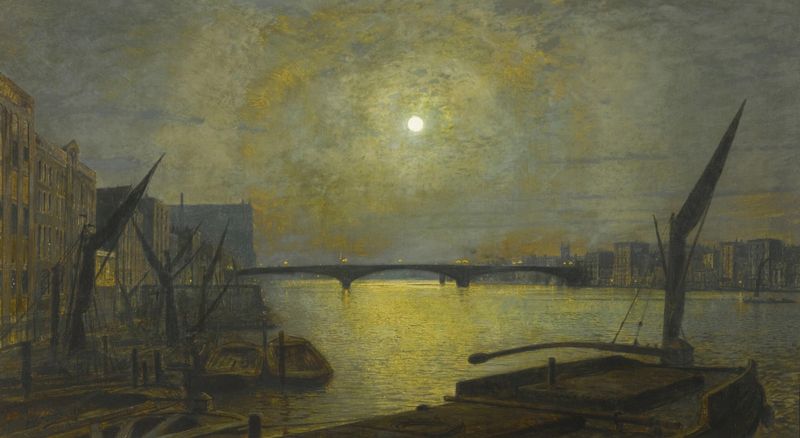
Southwark Bridge from Blackfriars by Moonlight
John Atkinson Grimshaw

Whitby From Scotch Head, Moonlight On The Esk
John Atkinson Grimshaw





