
The House of the King of Poland (Angers) — History & Facts
A riverbank unfolds with a few sure lines, and suddenly the whole town of Angers seems to breathe on the page. The eye is drawn first to the arch of the distant bridge, a single bold curve that anchors the scene, then drifts along the gentle slope of the river’s edge, where boats rest and figures stoop to their work. The houses cluster on the right, their rooftops jagged and lively, while the tower at the far edge hints at stories of old authority and quiet watchfulness.
There is a sense of pause here, as if the town is holding its breath under the wide, empty sky. This kind of rapid, evocative sketch belongs to a tradition that valued capturing the spirit of a place over precise detail. In the later nineteenth and early twentieth centuries, artists like Auguste Lepère often worked en plein air, using ink or pencil to fix a fleeting impression before the light changed. Such works were rarely made for grand patrons; instead, they served as personal records, studies for larger compositions, or intimate gifts.
History has kept few traces of the journeys of these sketches, but this one, now in the National Gallery of Art and freely shared under its open access policy, invites us to linger over the quiet drama of an ordinary riverside morning.
More Artworks by Auguste Lepère

Le Pont-Neuf (Paris)
Auguste Lepère
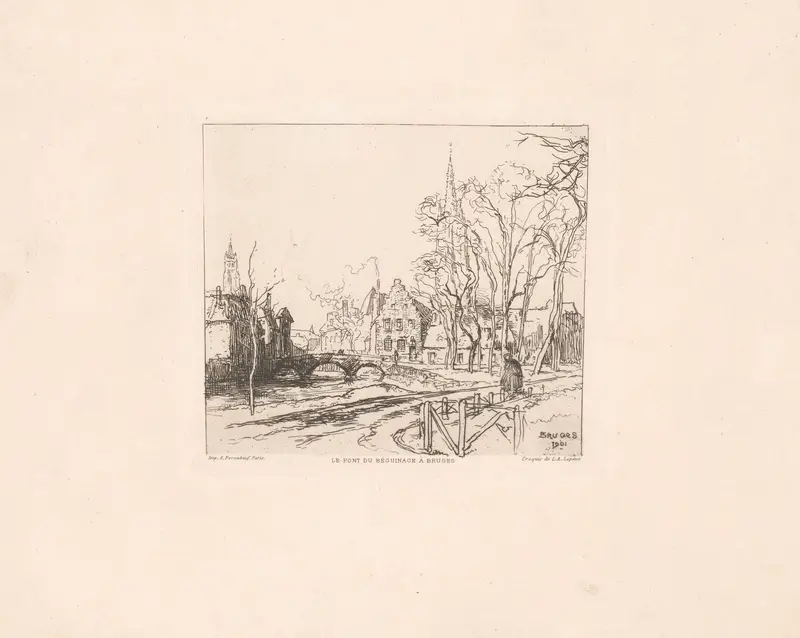
Le pont du Beguinage à Bruges
Auguste Lepère
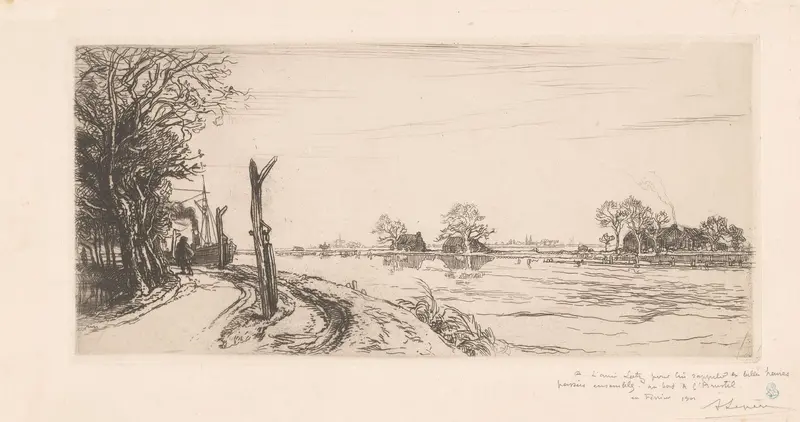
Au bord de l’Amstel
Auguste Lepère
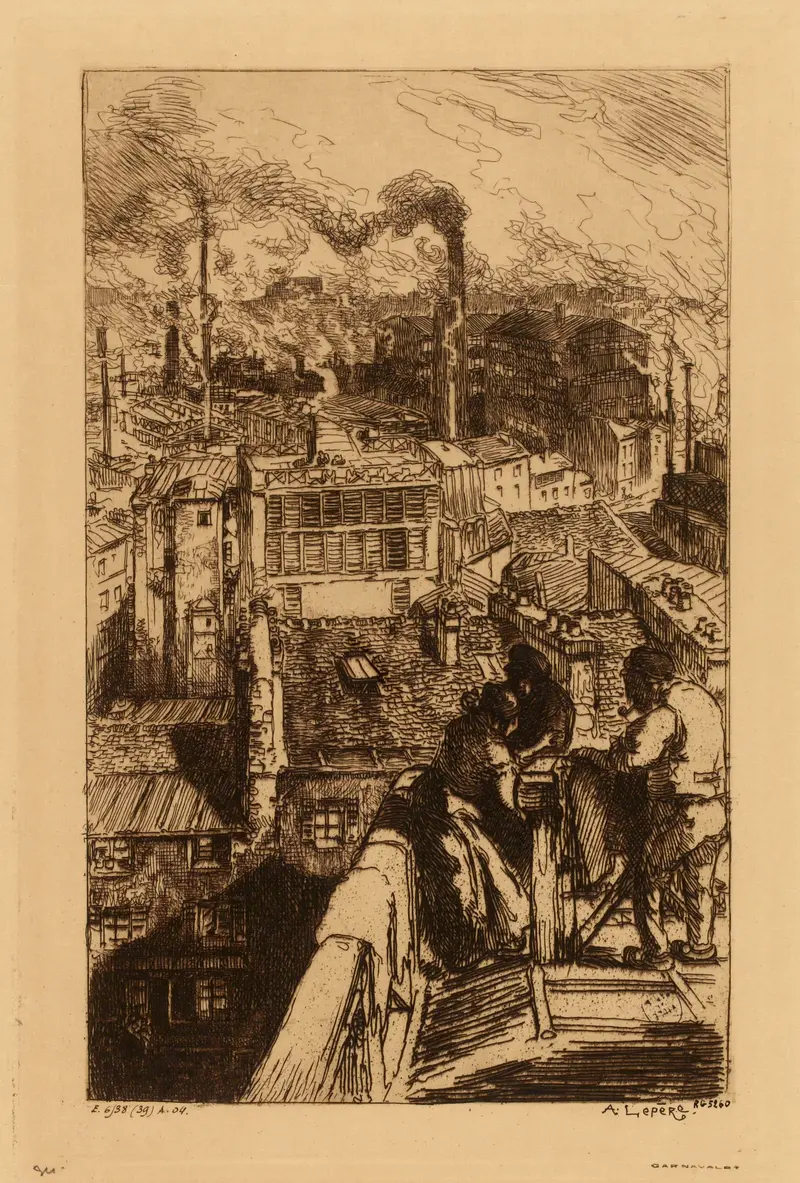
Le quartier des Gobelins
Auguste Lepère
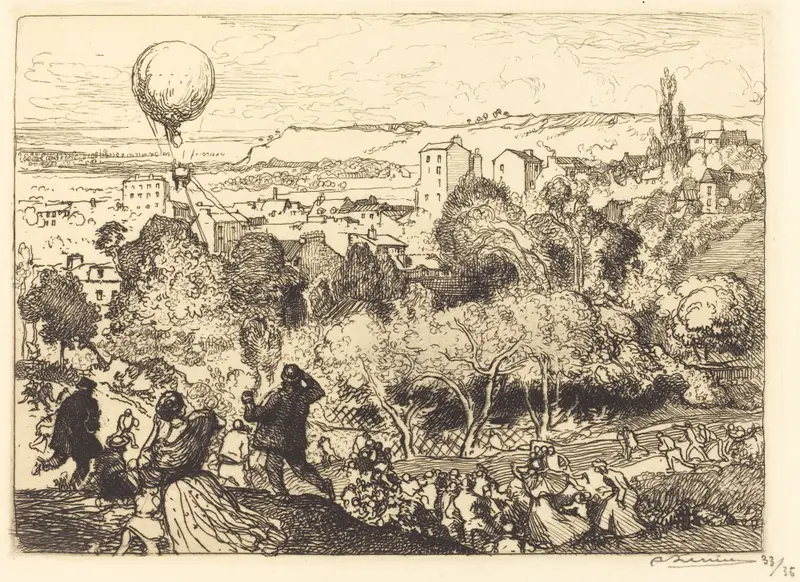
The Falling Balloon, in Pre-Saint-Gervais (Lebaloon qui tombe, au Pre-Saint-Gervais)
Auguste Lepère
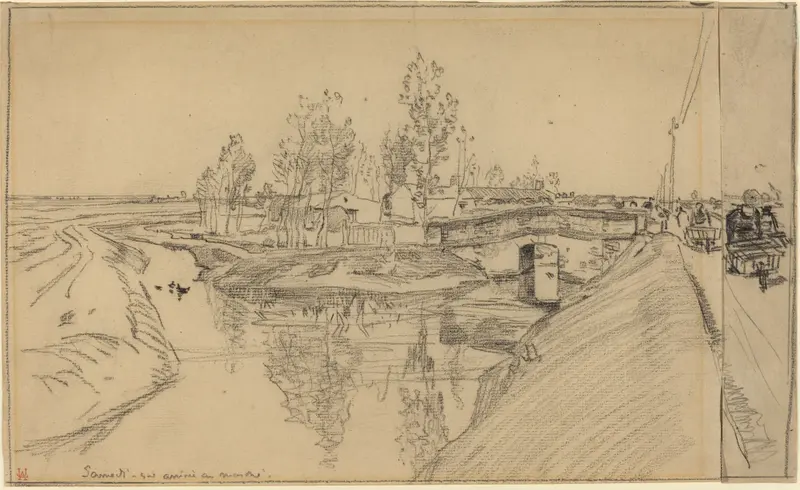
Arrivee au Marche
Auguste Lepère
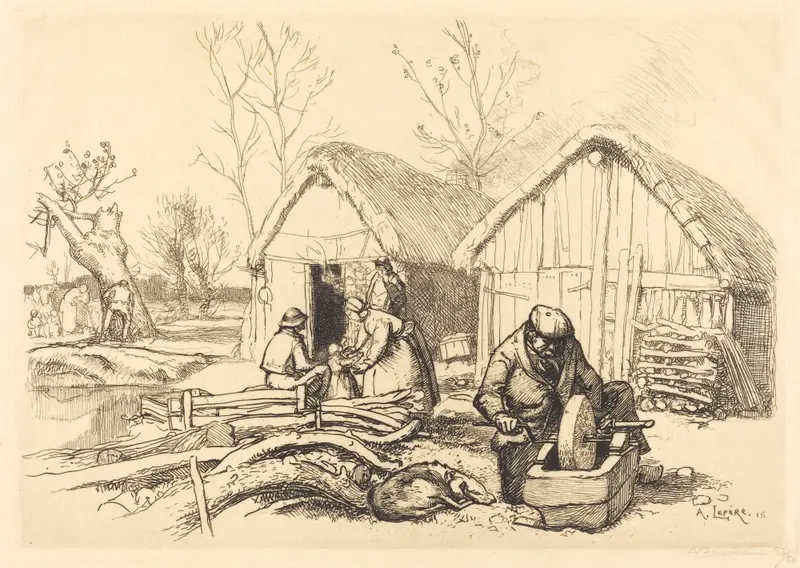
The House of the Woodcutter, Vendee (La maison du bucheron, Vendee)
Auguste Lepère
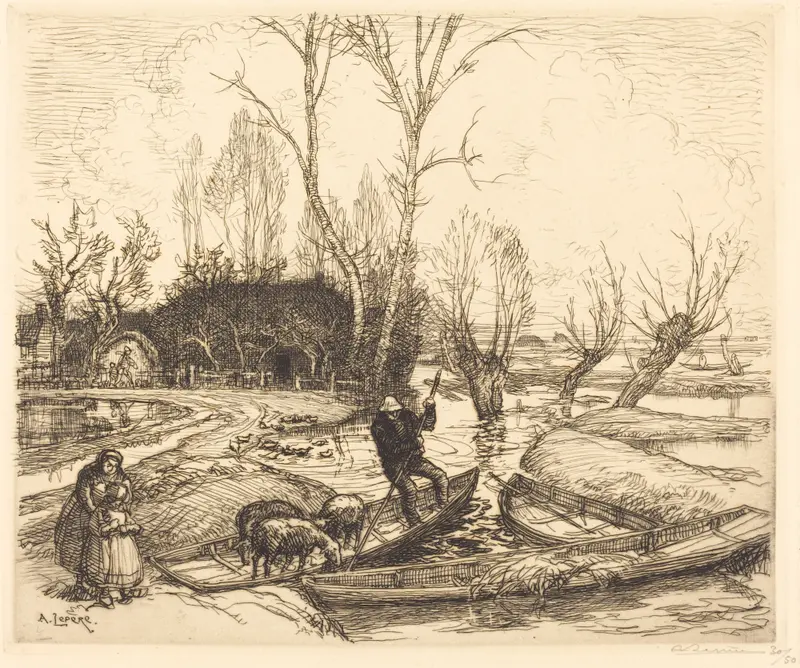
In the Deluged Marsh - The Shepherd (Au marais inonde - Le berger)
Auguste Lepère
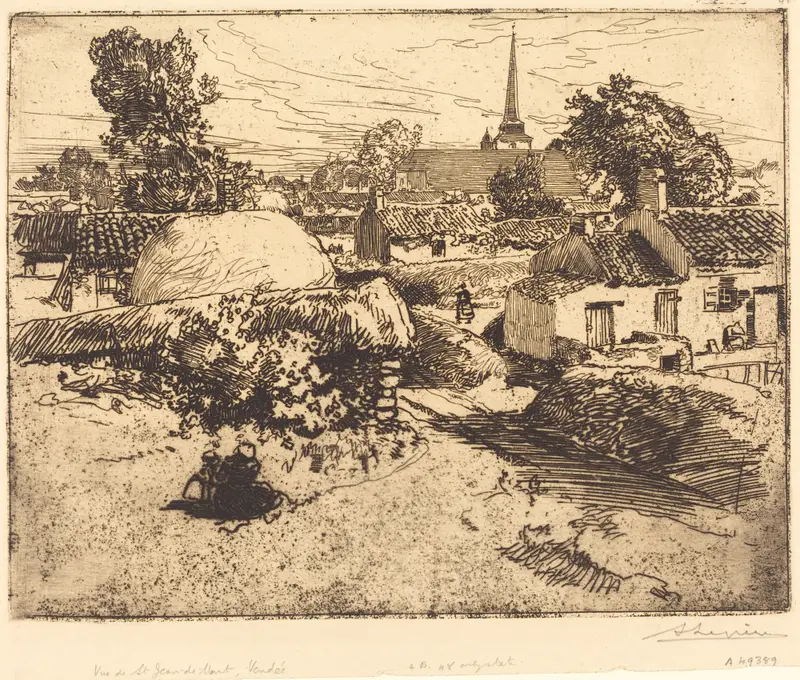
View of St.-Jean-de-Mont, Vendee (Vue de St.-Jean-de-Mont, Vendee)
Auguste Lepère
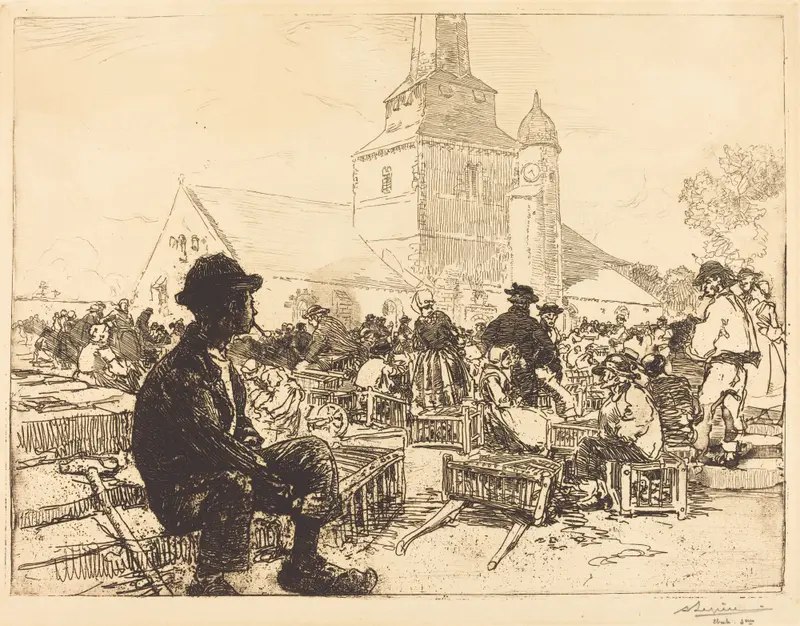
Poultry Market at St.-Jean-de-Mont (Marche a la volaille, a St.-Jean-de-Mont)
Auguste Lepère
More Landscape Art

The Starry Night
Vincent van Gogh

View of Delft
Johannes Vermeer

Water Lilies
Claude Monet

The Grand Canal, Venice, looking north-west from the Ca' Corner to the Ca' Contarini degli Scrigni, with the campanile of Santa Maria della Carità
Canaletto

Windsor Castle
Canaletto

The Grand Canal looking North-East from the Palazzo Dolfin-Manin to the Rialto Bridge
Canaletto