
The Hut of the Herb-Woman in Full Moon — History & Facts
Can beauty exist without sorrow? This poignant question echoes through the muted colors and thoughtful composition of a world where life and death intertwine, capturing the essence of human existence. Look to the left at the delicate interplay of light and shadow cast by the full moon, illuminating the humble hut nestled among the trees. The cool blues and silvery whites contrast starkly with the earthy browns of the structure, inviting the viewer to explore the depth of the scene. Notice how the gnarled branches seem to cradle the hut, almost as if nature itself mourns the fragility of life, while the soft glow suggests a comforting presence amidst the darkness. In this work, the interplay of light and shadow symbolizes the perpetual dance between life and mortality.
The herb-woman, likely a figure of healing, channels a wisdom that transcends her surroundings, embodying both the nurturing qualities of nature and the inevitable passage of time. Her silhouette against the moonlight hints at a story that resonates with loss and memory, as if she is the guardian of secrets held within the earth, coaxing beauty from the sorrow that binds us all. Julius Sergius Klever painted The Hut of the Herb-Woman in Full Moon in 1907, during a transformative period in the art world marked by the rise of symbolism and a yearning to express deeper emotional truths. Living in Russia, Klever was influenced by the rich folklore and mystical elements of his homeland, which permeated his works.
This particular piece reflects not only his artistic evolution but also the broader cultural context, as artists sought solace and meaning in the face of a rapidly changing world.
More Artworks by Julius Sergius Klever
Browse all →
Homecoming at sunset
Julius Sergius Klever
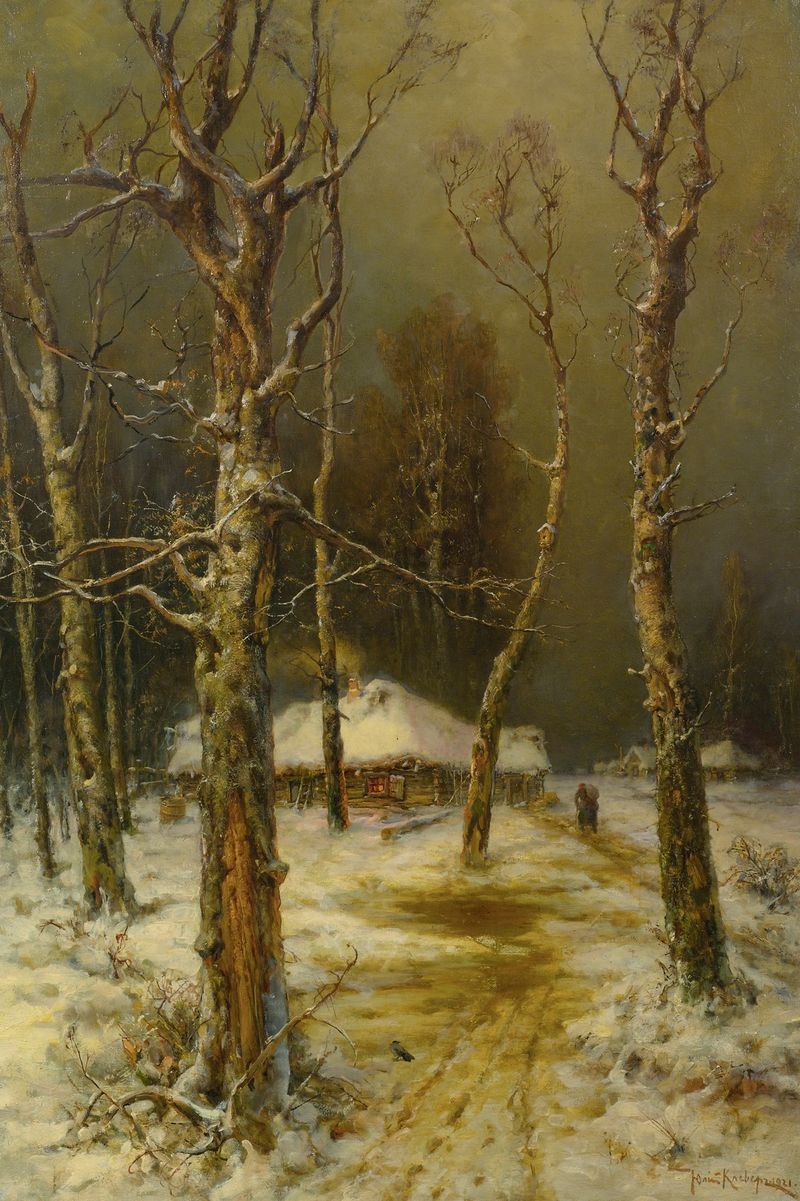
Winter In Russia
Julius Sergius Klever
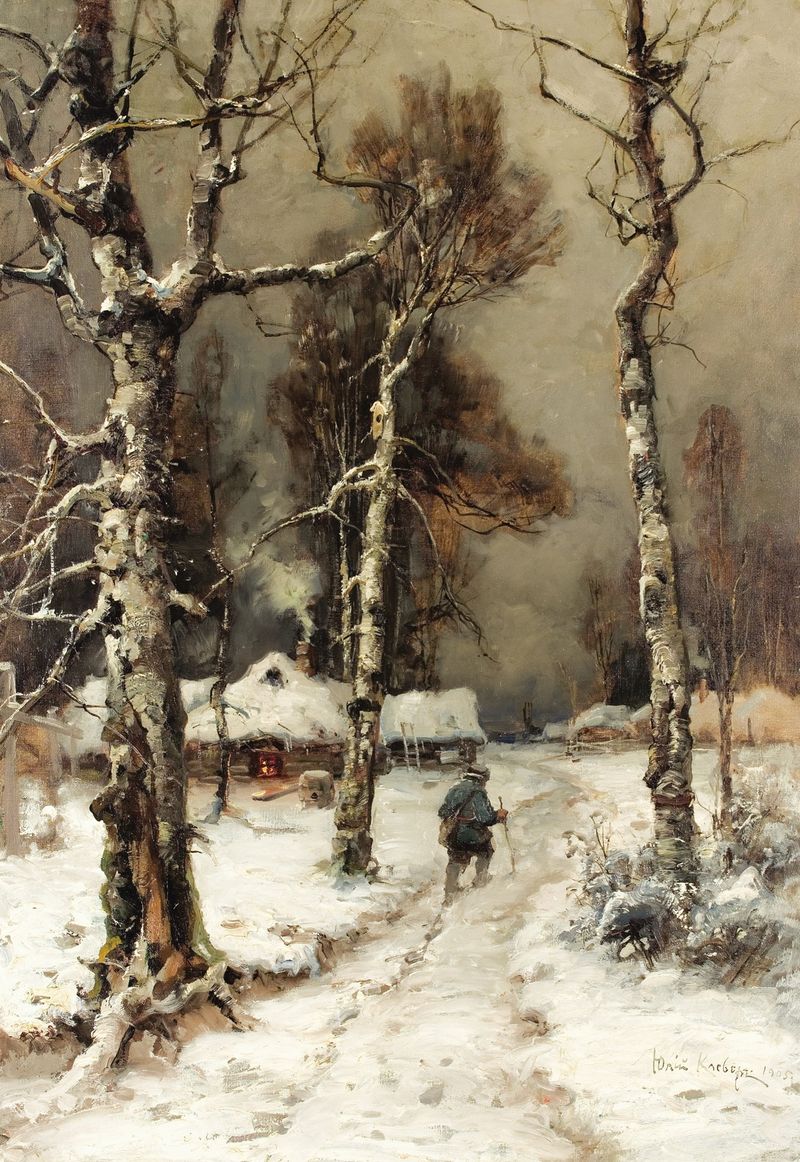
Homeward Bound through a Wintry Forest
Julius Sergius Klever
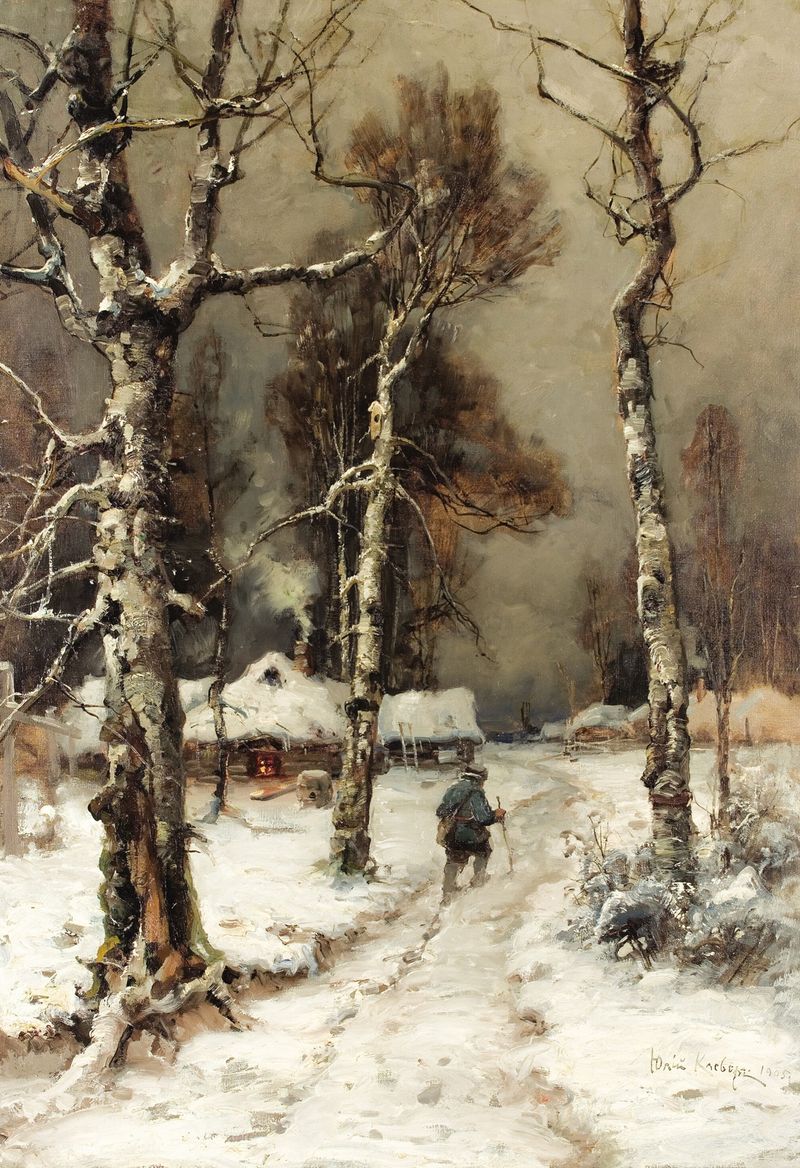
Homeward Bound through a Wintry Forest
Julius Sergius Klever
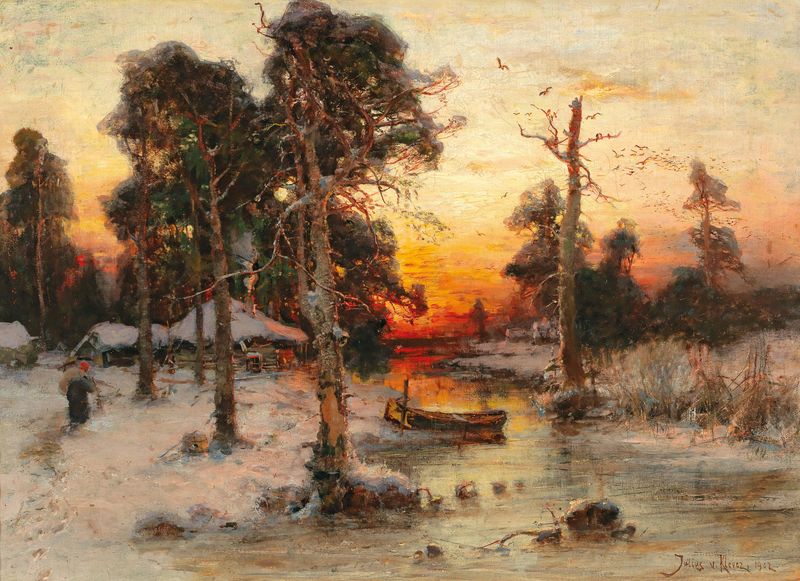
Returning Home At Sunset
Julius Sergius Klever

A moonlit night in the forest
Julius Sergius Klever
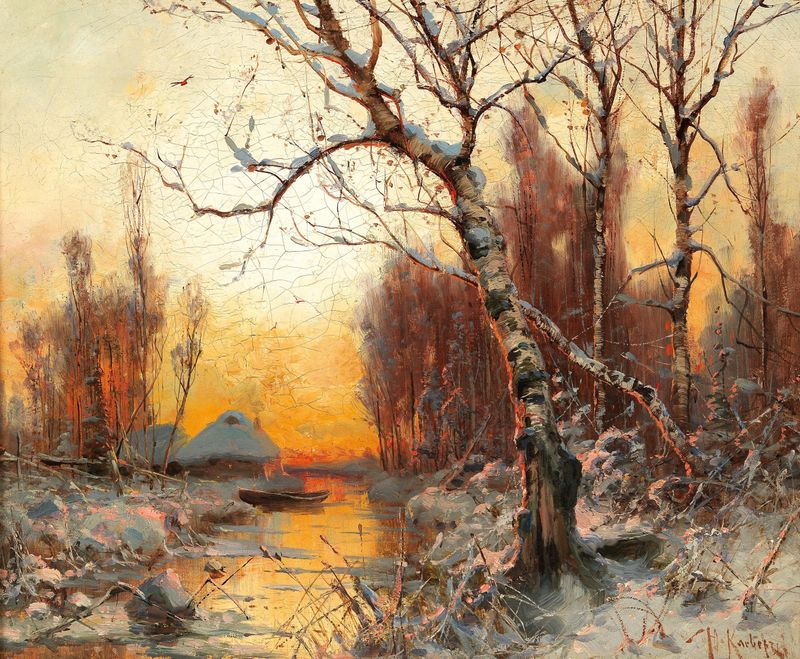
Winter Landscape With Birch In The Evening Light
Julius Sergius Klever
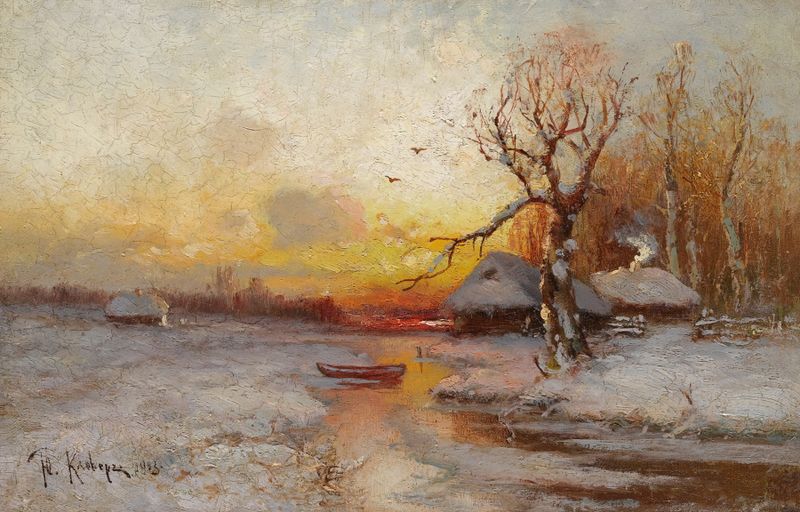
Winter Sunset
Julius Sergius Klever
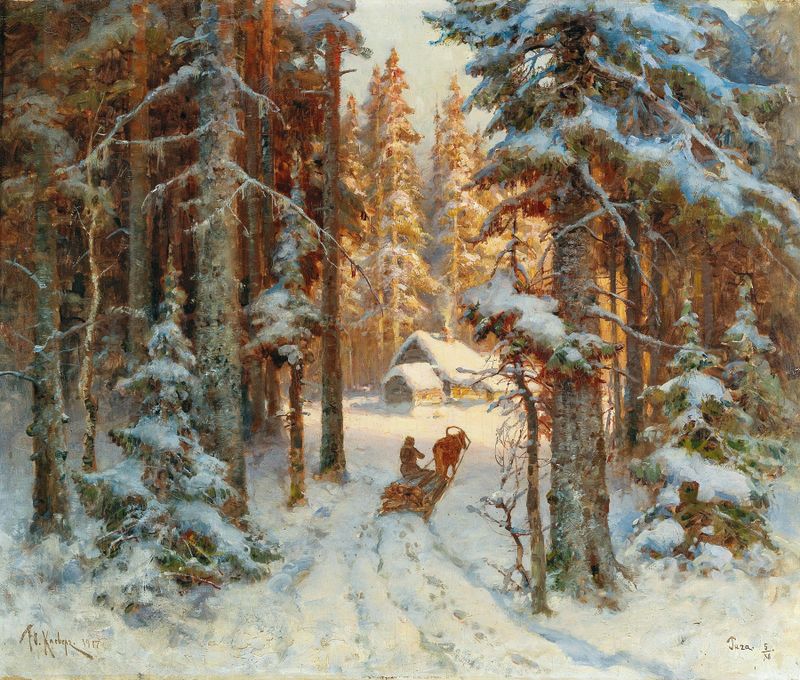
Woodcutters returning home
Julius Sergius Klever

Winter Evening on the Lake
Julius Sergius Klever





