
The Jackal with the Betel-Leaves — History & Facts
A jackal waits at the foot of marble steps, its gaze fixed on a group of women above, who pause in their bright saris and delicate jewelry. The scene is a study in contrasts: the lush, tangled blooms and water lilies below, the cool geometry of domes and arches behind, and the poised, almost theatrical stillness of the figures. The central woman, draped in pink, extends her hand in a gesture that hovers between invitation and command, while her companions cluster in a tableau of curiosity and caution.
Every detail—the jackal’s tense posture, the careful arrangement of fabrics, the way sunlight softens the domes—invites the viewer to imagine the unspoken exchange at the heart of this folk-tale moment. Created in 1912 by Warwick Goble as an illustration for Folk-tales of Bengal by Lal Behari Dey, this work belongs to a moment when British illustrators were drawn to the visual storytelling of distant cultures. Such images were made for books, intended to transport readers into imagined worlds rich with local color and narrative possibility. Goble’s style, with its precise linework and gentle washes, reflects both the influence of Art Nouveau and the era’s fascination with the decorative arts of South Asia.
History has kept few traces of the journeys of individual illustrations like this, but their purpose endures: to make a story linger in the mind’s eye, long after the page is turned.
More Artworks by Warwick Goble
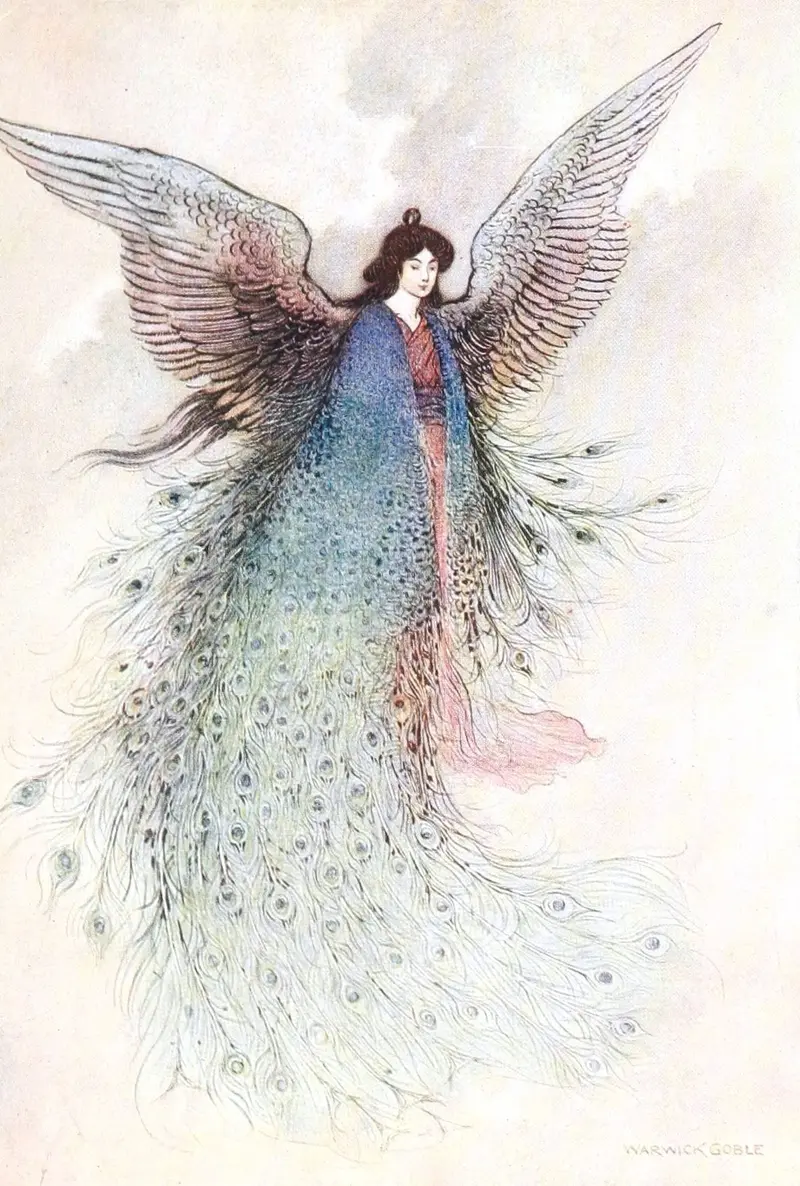
The Moon Maiden (Green Willow)
Warwick Goble
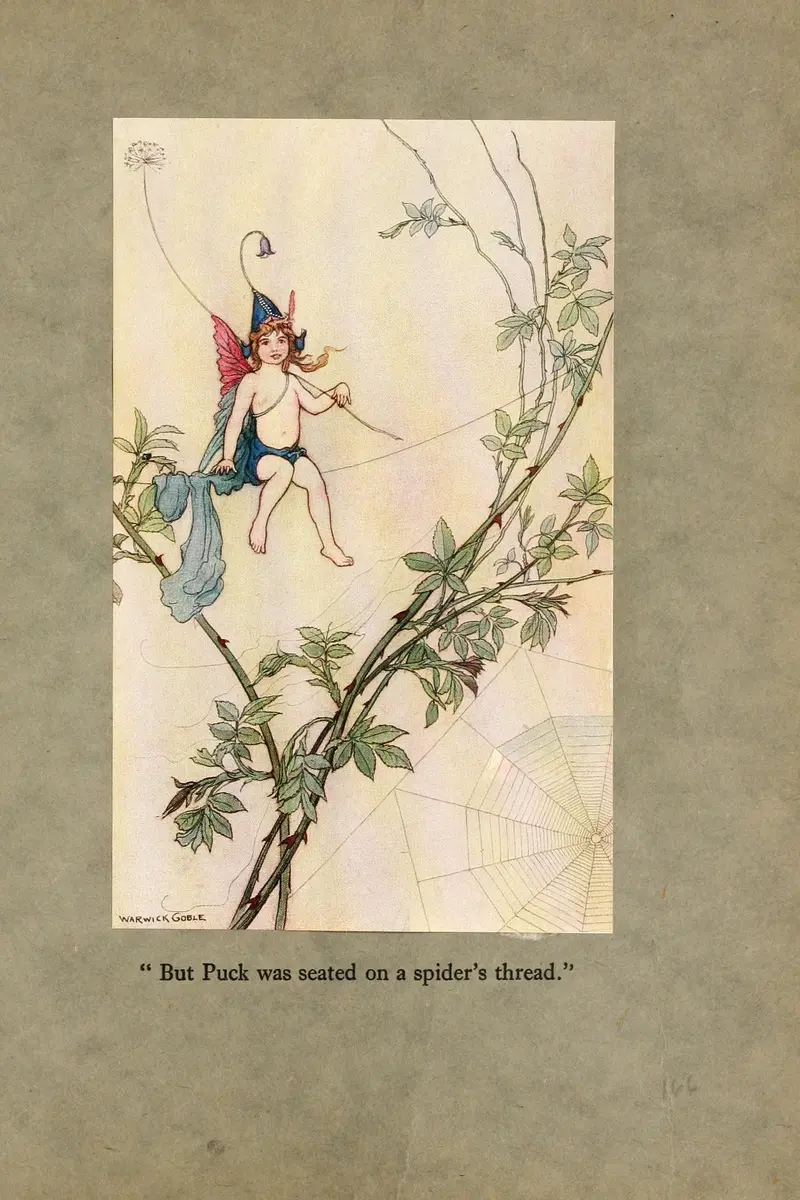
Puck
Warwick Goble

The Ordeal of Queen Draupadi
Warwick Goble

Momotaro
Warwick Goble
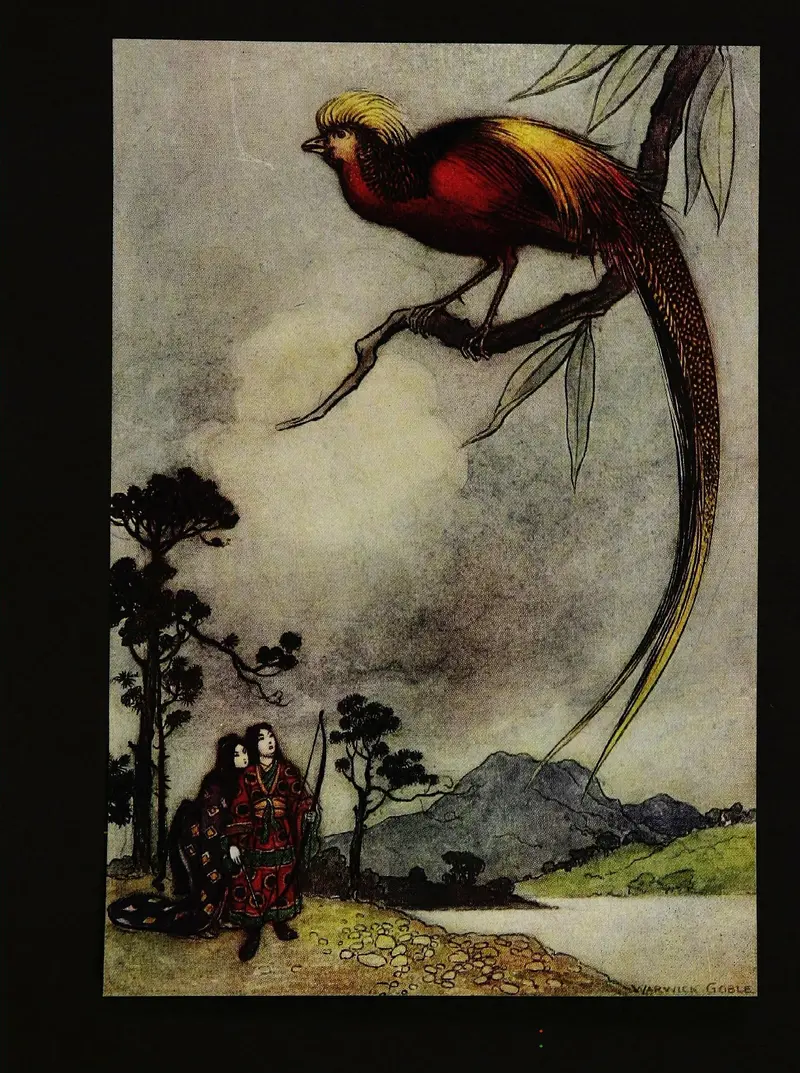
The Singing Bird of Heaven
Warwick Goble
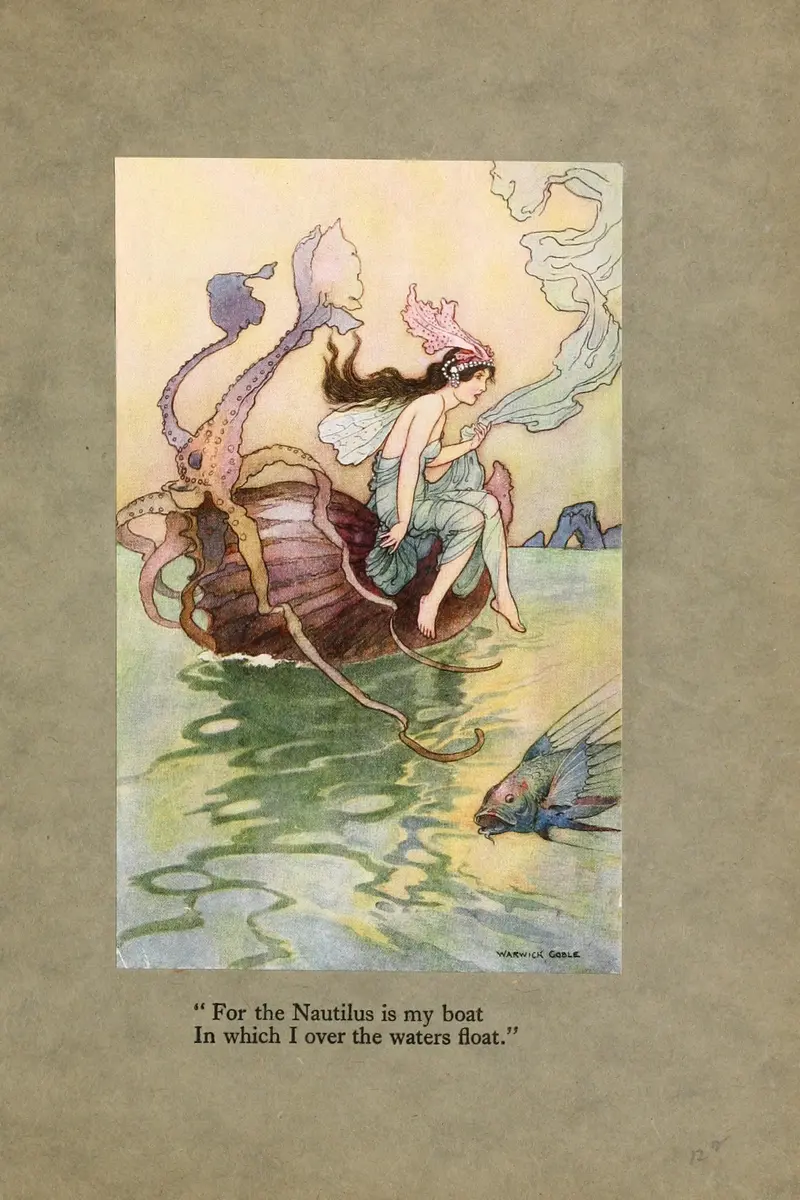
Fairies on the Seashore
Warwick Goble
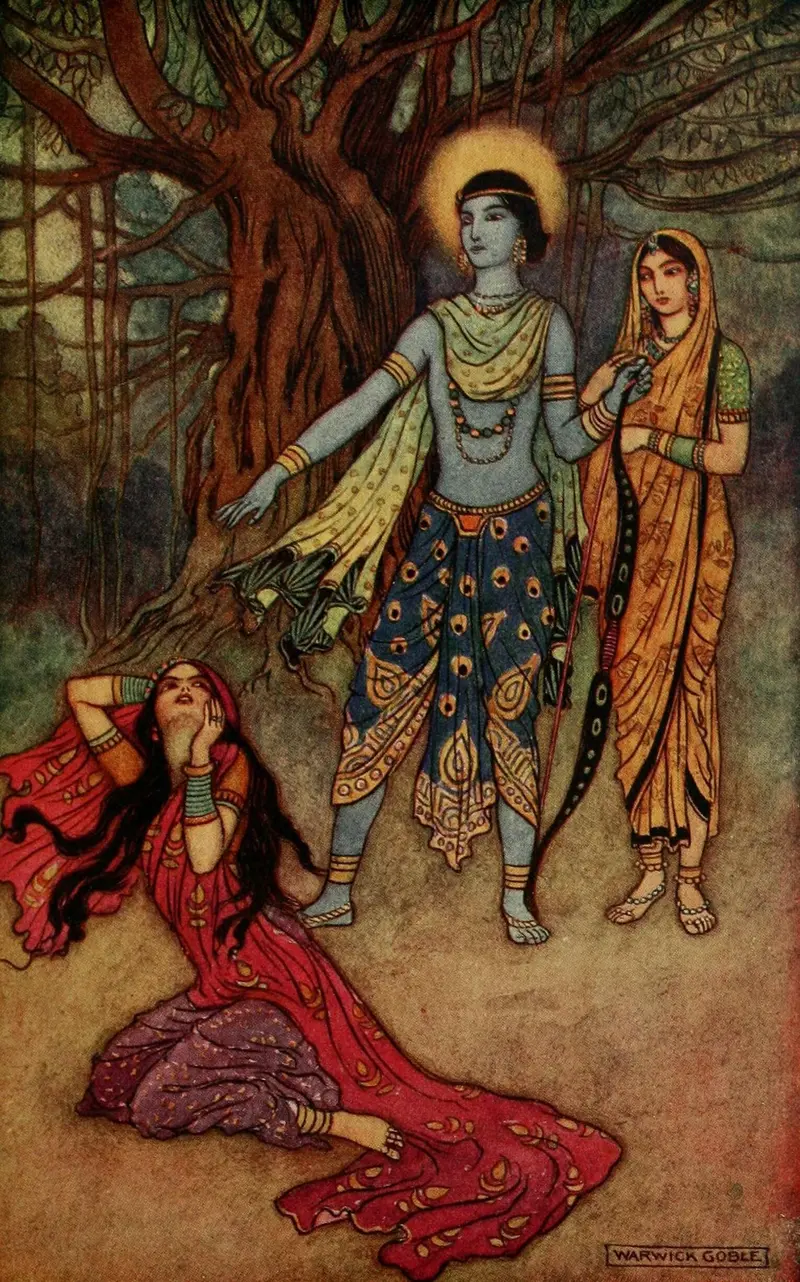
Rama Spurns the Demon Lover
Warwick Goble
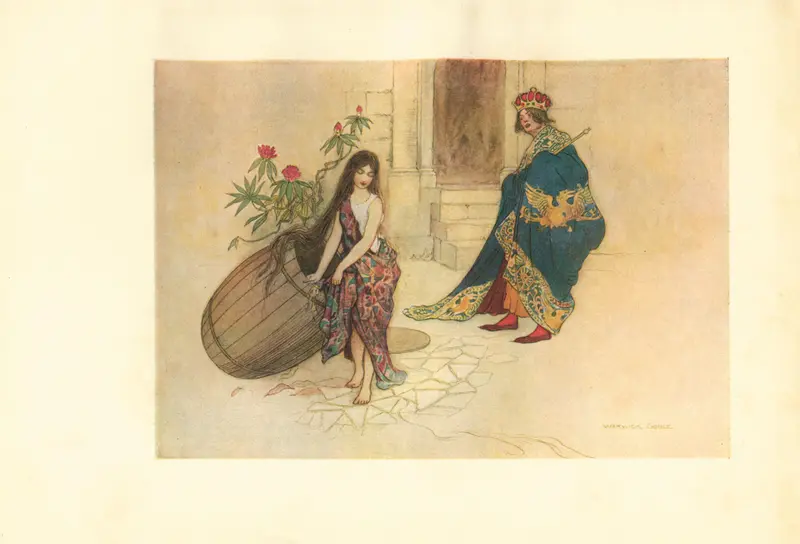
Cannetella Released from the Cask
Warwick Goble
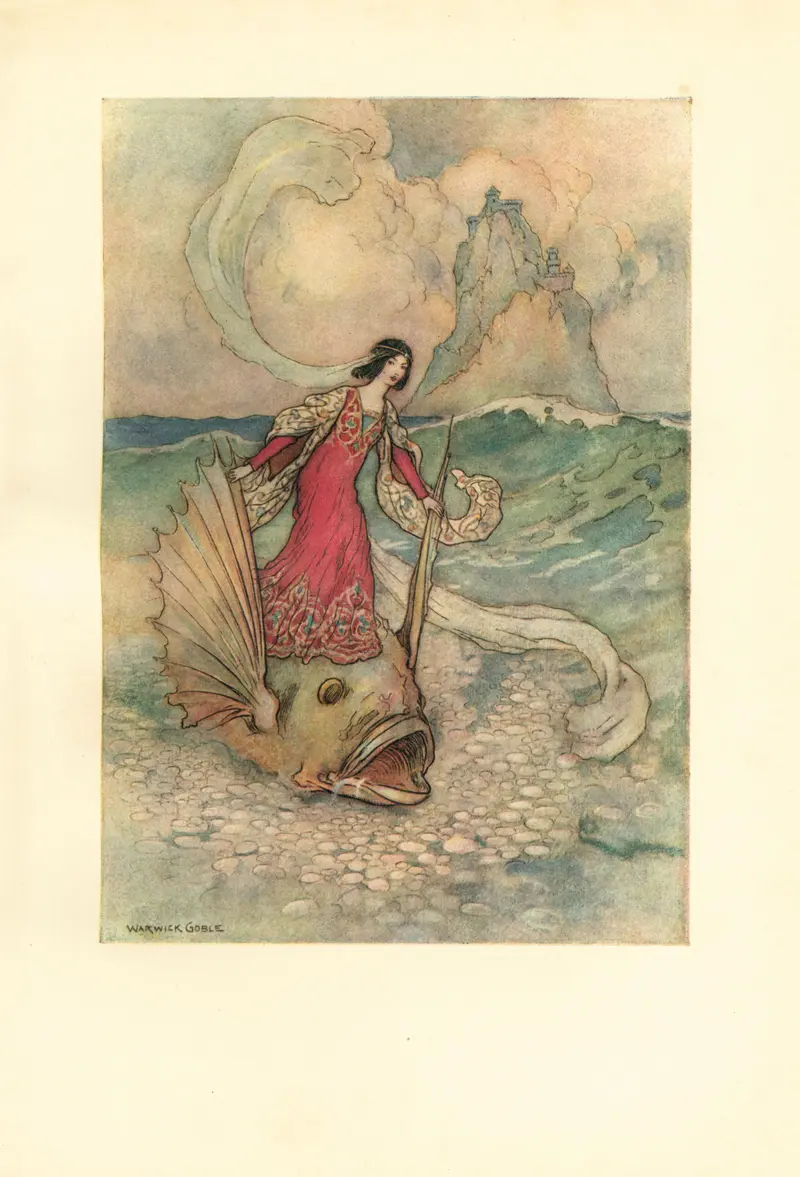
Rita Riding on the Dolphin
Warwick Goble
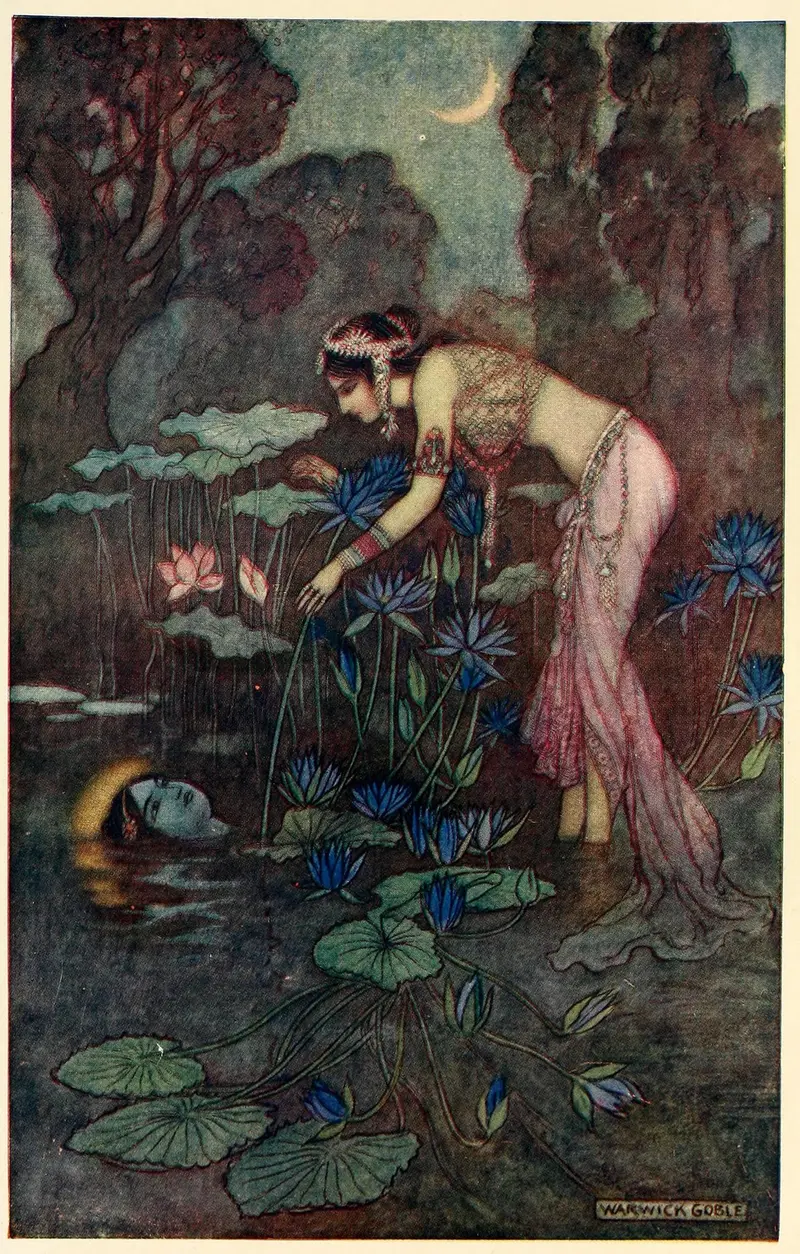
Sita Finds Rama Among Lotus Blooms
Warwick Goble





