
The Landscape Artist (Le paysagiste) — History & Facts
A single figure commands the foreground, utterly absorbed beneath the broad sweep of an umbrella, brush poised mid-air as if listening to the landscape itself. The artist’s gaze is fixed, not on us, but on the trees and winding path ahead, inviting us to share in the act of seeing. The bold, graphic lines carve out the scene with a clarity that feels both spontaneous and deliberate, every stroke echoing the rhythm of the trees that march into the distance.
Behind him, a group of walkers—perhaps Sunday strollers—move through the light, their presence a gentle reminder of the world’s bustle just beyond the painter’s focused solitude. The composition draws us in: the diagonal of the easel, the sweep of the road, the umbrella’s arc—all converging on the act of creation itself. Created in 1912, The Landscape Artist (Le paysagiste) by Auguste Lepère belongs to a time when French artists were redefining what it meant to capture nature. The early twentieth century saw a flourishing of open-air painting, as artists left the studio to work directly from life, chasing the fleeting effects of light and atmosphere.
Lepère, known for his mastery of printmaking, here distills that plein air spirit into a single, concentrated moment. The work now resides in the National Gallery of Art, a testament to the era’s fascination with both the landscape and the figure who dares to interpret it. Look again, and notice how the artist’s world—tools, vision, and the land itself—become inseparable, each line a record of observation and devotion.
More Artworks by Auguste Lepère

Le Pont-Neuf (Paris)
Auguste Lepère
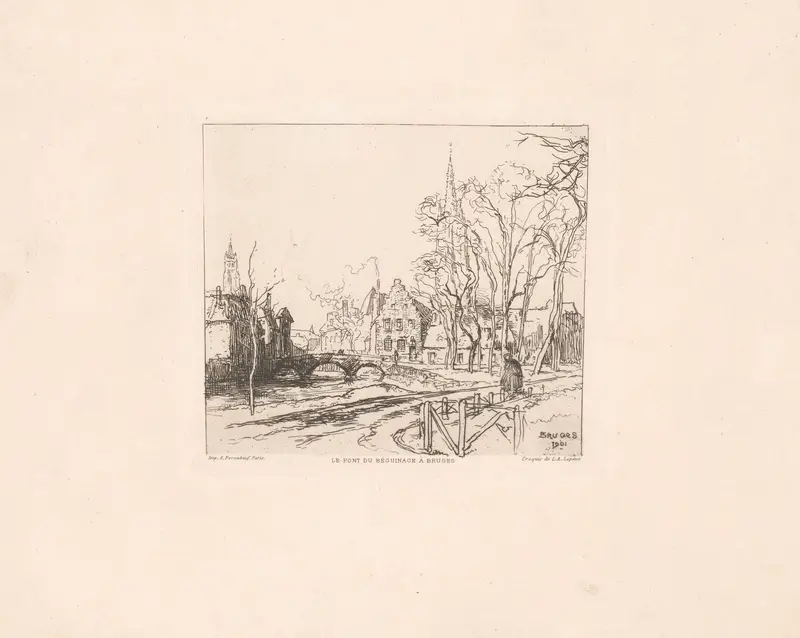
Le pont du Beguinage à Bruges
Auguste Lepère
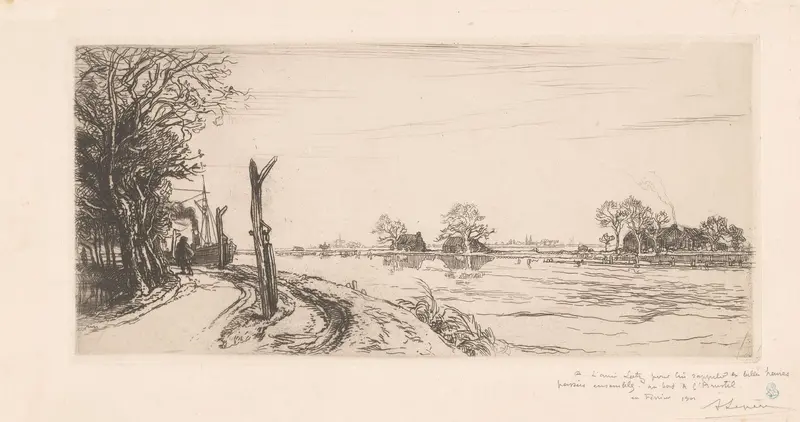
Au bord de l’Amstel
Auguste Lepère
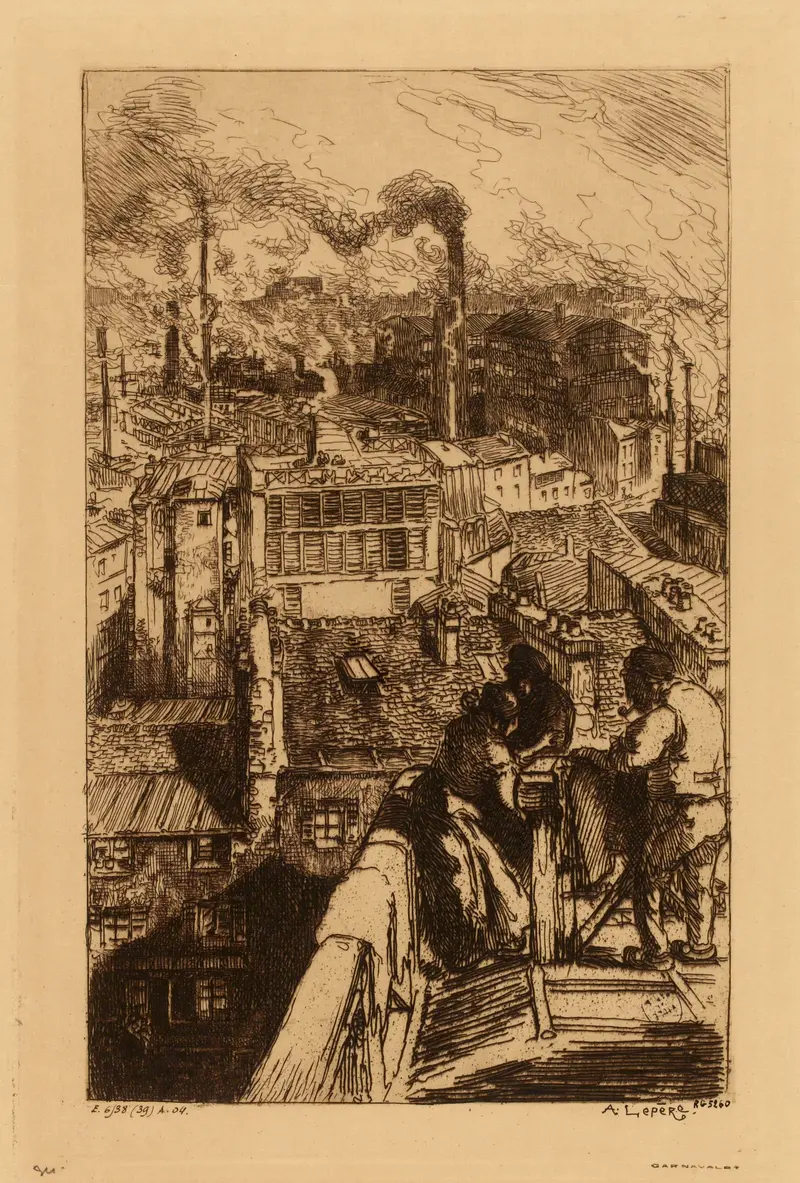
Le quartier des Gobelins
Auguste Lepère
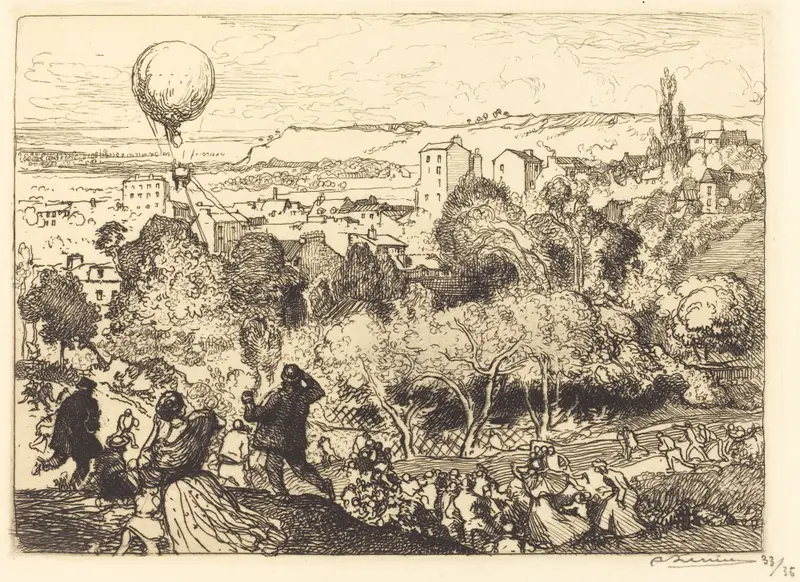
The Falling Balloon, in Pre-Saint-Gervais (Lebaloon qui tombe, au Pre-Saint-Gervais)
Auguste Lepère
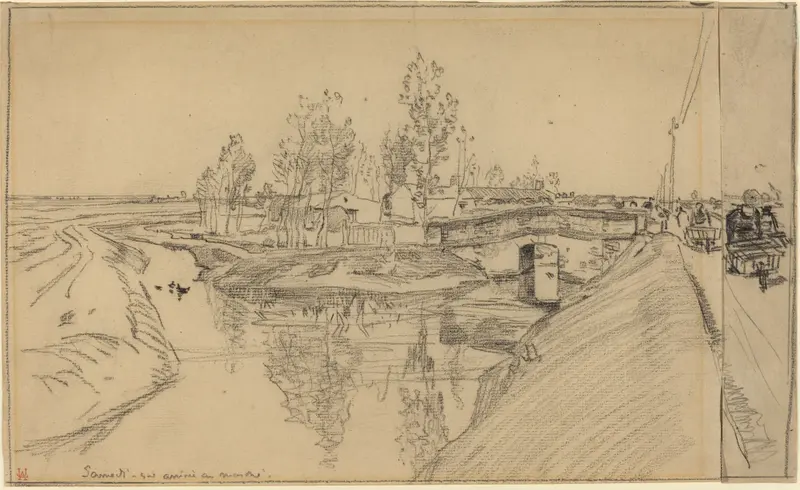
Arrivee au Marche
Auguste Lepère
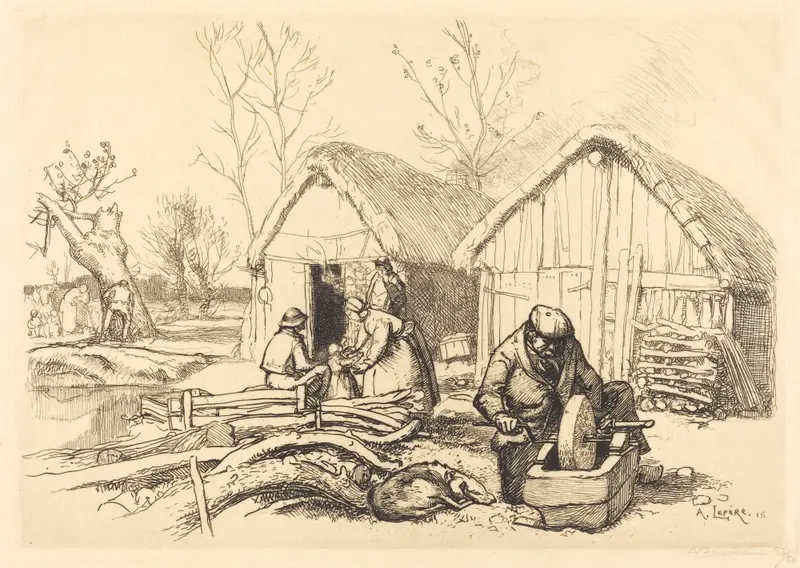
The House of the Woodcutter, Vendee (La maison du bucheron, Vendee)
Auguste Lepère
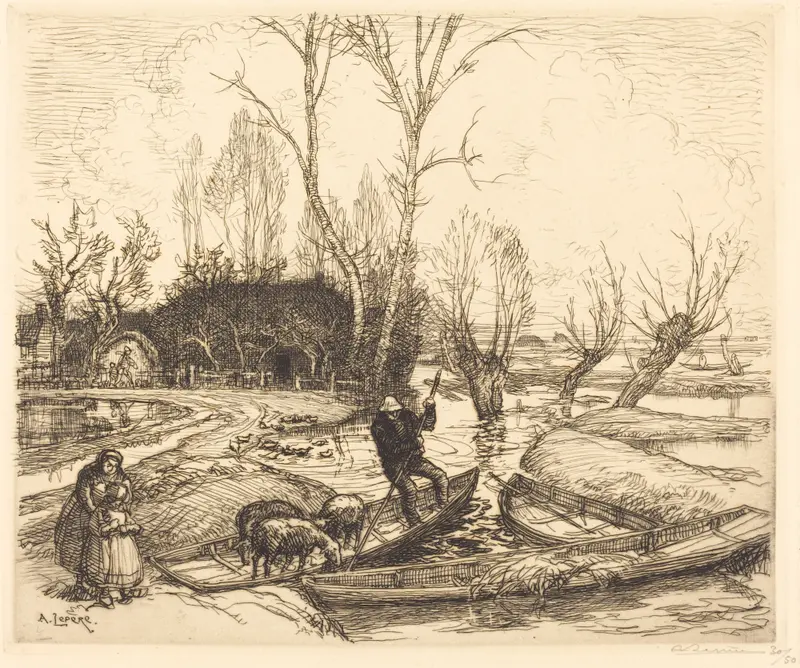
In the Deluged Marsh - The Shepherd (Au marais inonde - Le berger)
Auguste Lepère
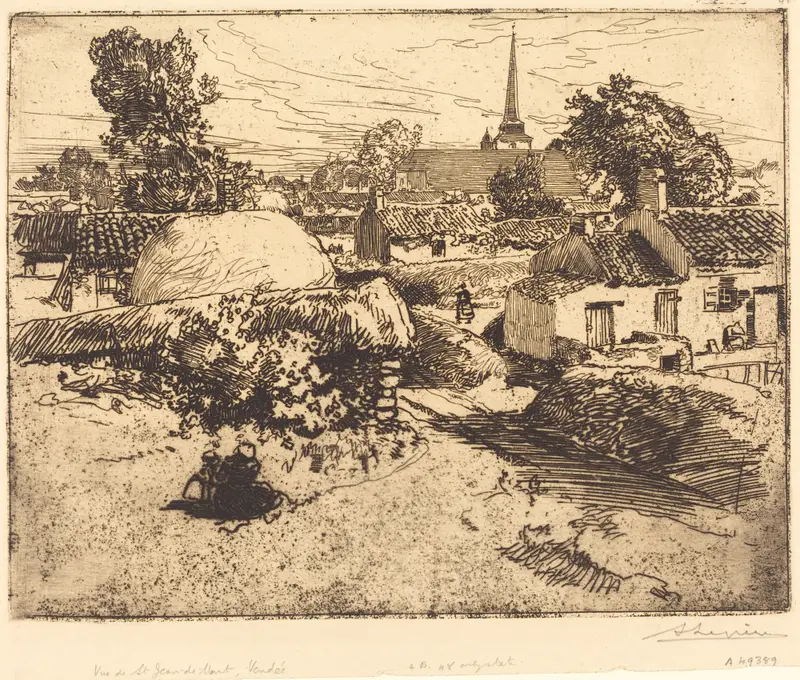
View of St.-Jean-de-Mont, Vendee (Vue de St.-Jean-de-Mont, Vendee)
Auguste Lepère
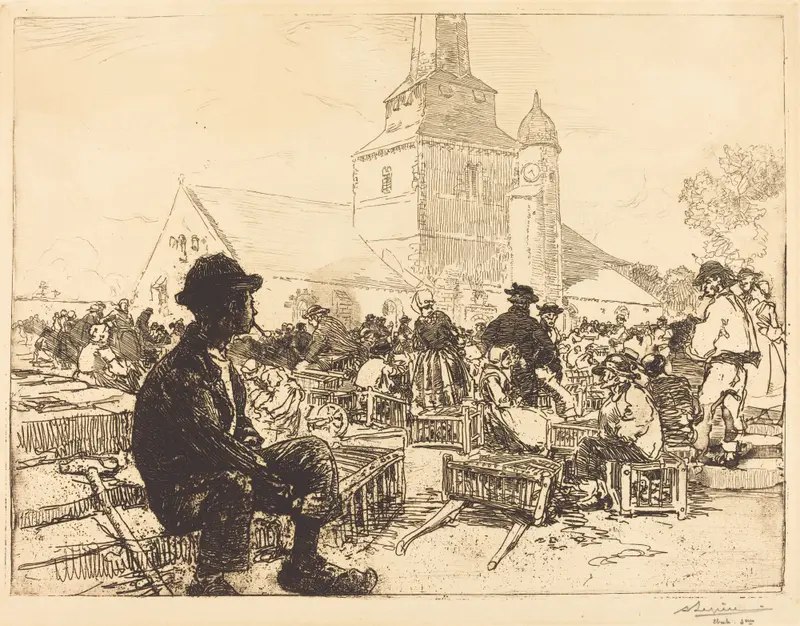
Poultry Market at St.-Jean-de-Mont (Marche a la volaille, a St.-Jean-de-Mont)
Auguste Lepère
More Landscape Art

The Starry Night
Vincent van Gogh

View of Delft
Johannes Vermeer

Water Lilies
Claude Monet

The Grand Canal, Venice, looking north-west from the Ca' Corner to the Ca' Contarini degli Scrigni, with the campanile of Santa Maria della Carità
Canaletto

Windsor Castle
Canaletto

The Grand Canal looking North-East from the Palazzo Dolfin-Manin to the Rialto Bridge
Canaletto