
The Little Boat House — History & Facts
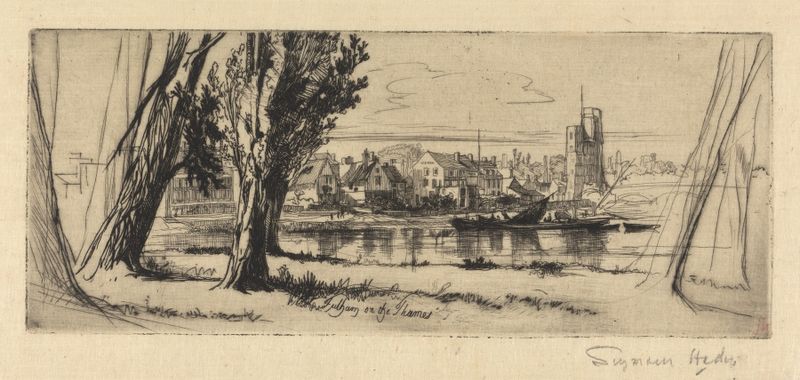
In its stillness, it yearns for the eye to see beyond surface and embrace what lies within. To begin your exploration, look to the left where the intricate shadows dance across the weathered planks of the boat house. The soft, muted colors blend together, inviting you into a world where time feels suspended. Notice how the gentle strokes create a tactile quality, highlighting the age of the wood and the ripples on the water's surface, suggesting a silent narrative of both solitude and nostalgia. As you delve deeper, consider the juxtaposition of light and shadow.
The tender glimmer reflecting off the water hints at a fleeting moment, a whisper of sunlight that captures the essence of longing. The presence of the boat, alone and gently tethered, evokes a sense of waiting—a yearning for a journey not yet taken. Each detail, from the delicate brushwork to the soft color palette, encapsulates an emotional tension between stillness and movement, presence and absence. Created in 1877, this piece emerged during Haden's time of artistic exploration in England, where he had begun to embrace the tranquil beauty of landscapes and rural scenes.
The late 19th century was a period when printmaking gained prominence, and Haden, a pioneering etcher, was navigating the intersection of traditional techniques and modern expression. His reflections on nature and solitude echo the broader sentiments of a world in transition as industrialization began to encroach upon the pastoral landscapes he cherished.
More Artworks by Francis Seymour Haden
Browse all →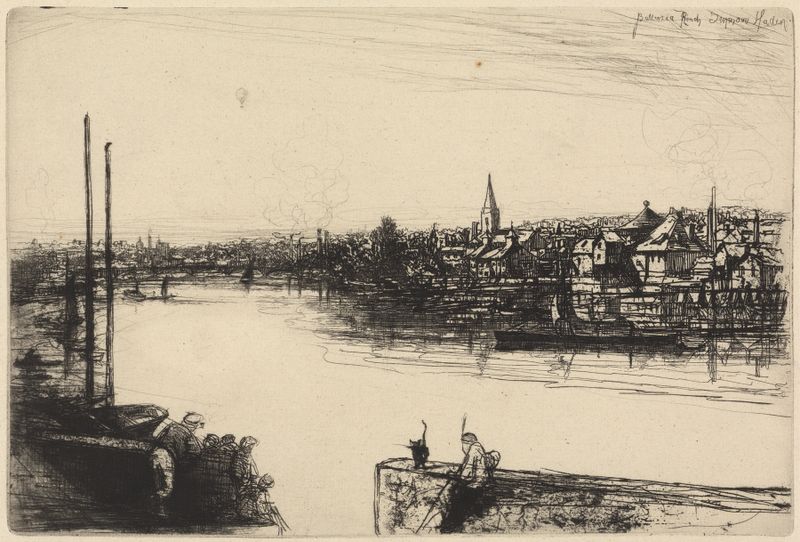
Battersea Reach
Francis Seymour Haden

Nine Barrow Down
Francis Seymour Haden
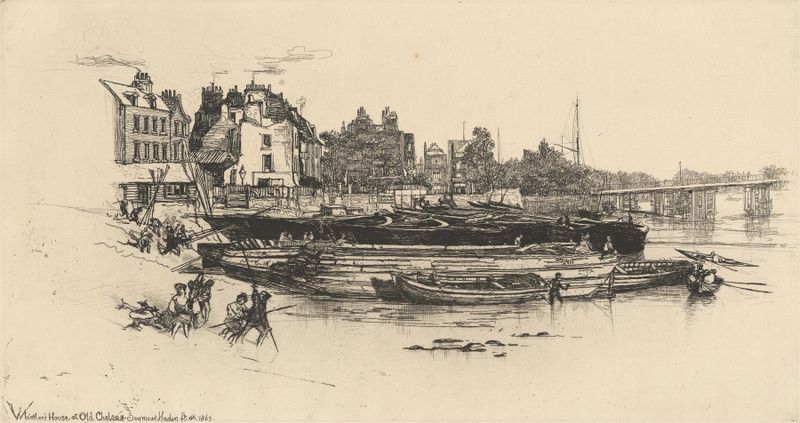
Whistler’s House at Old Chelsea
Francis Seymour Haden

The Mill-Wheel
Francis Seymour Haden
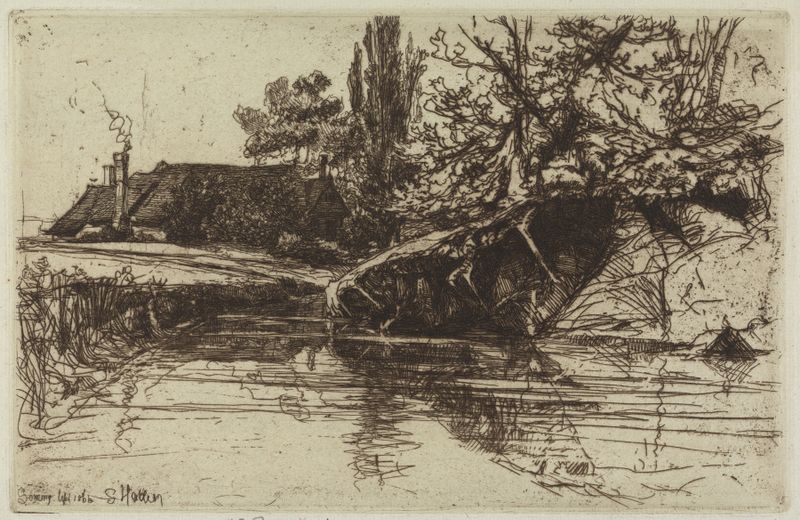
The Moat House
Francis Seymour Haden

By Twickenham
Francis Seymour Haden

Newcastle Emlyn
Francis Seymour Haden
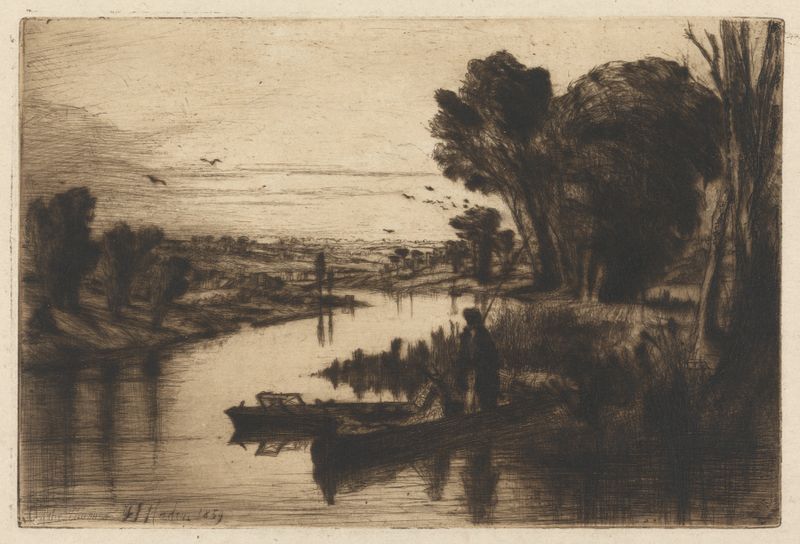
On the Thames
Francis Seymour Haden

Kidwelly Castle
Francis Seymour Haden
Fulham on the Thames
Francis Seymour Haden





