
The March of the Goths — History & Facts
A sense of anticipation crackles in the air of The March of the Goths, as if the land itself is holding its breath. The eye is drawn first to the armored rider on the pale horse, his back turned to us, surveying a procession that snakes across a stone bridge and up into the rugged hills. The light, breaking through a storm-dark sky, gilds the figures and animals crossing the bridge, casting the scene in a fleeting, almost theatrical glow.
Below, figures stoop to drink from the rocky stream, their thirst a quiet counterpoint to the restless energy above. Every detail—the glint of metal, the churned earth, the distant smoke—serves to heighten the tension between movement and pause, between the known and the unknown that lies ahead. Painted in 1881 by Arnold Böcklin, this work belongs to a world fascinated by the drama of history and the fate of civilizations. In the late nineteenth century, artists often turned to the migrations and upheavals of the distant past as a way to reflect on their own era’s anxieties and ambitions.
Böcklin, whose career bridged Romanticism and Symbolism, was known for infusing his historical scenes with a brooding, almost mythic atmosphere. While little is recorded about the specific origins or early history of this painting, it now resides in the collection of the Kunstmuseum Basel. The march continues, inviting us to follow its winding path and imagine what waits beyond the mountain’s shadow.
More Artworks by Arnold Böcklin

Die Toteninsel III
Arnold Böcklin
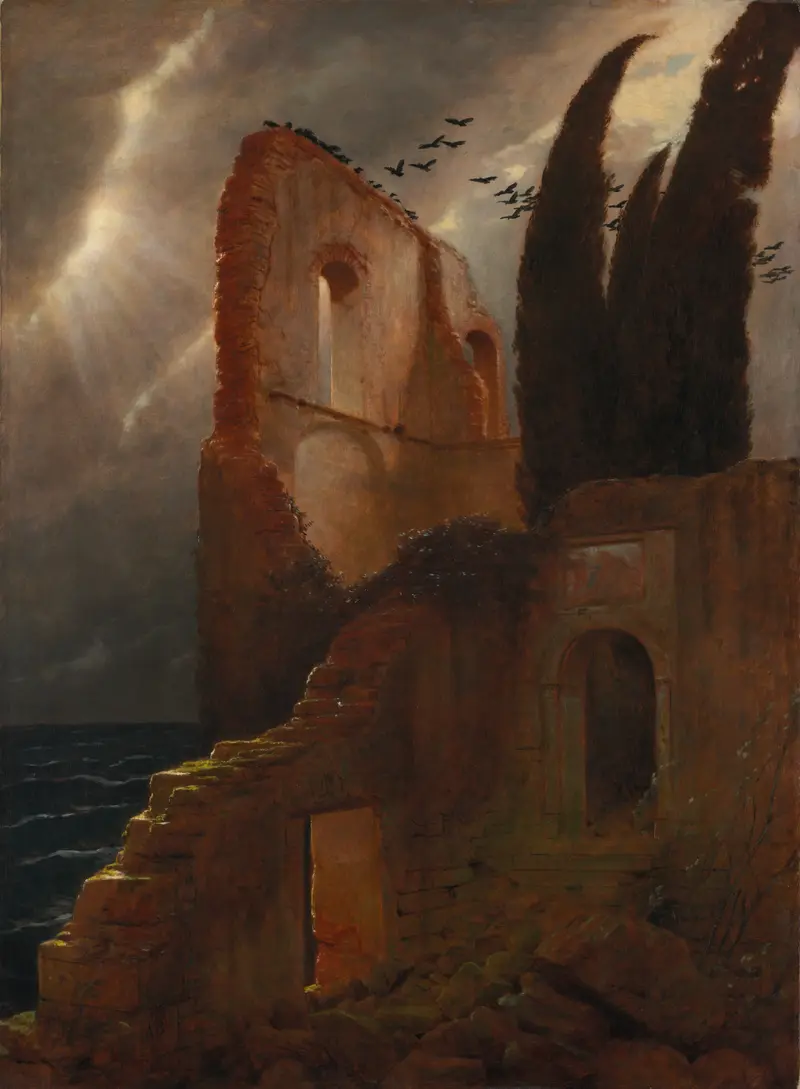
Ruin by the Sea
Arnold Böcklin
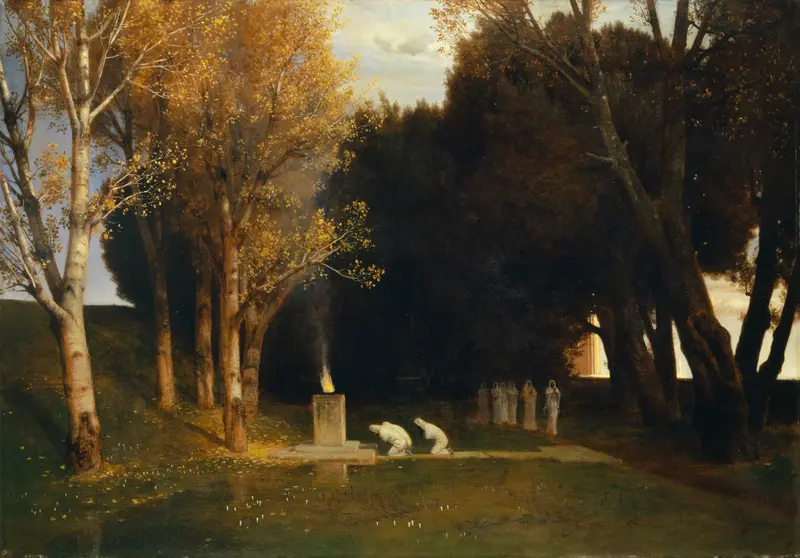
The Sacred Grove
Arnold Böcklin
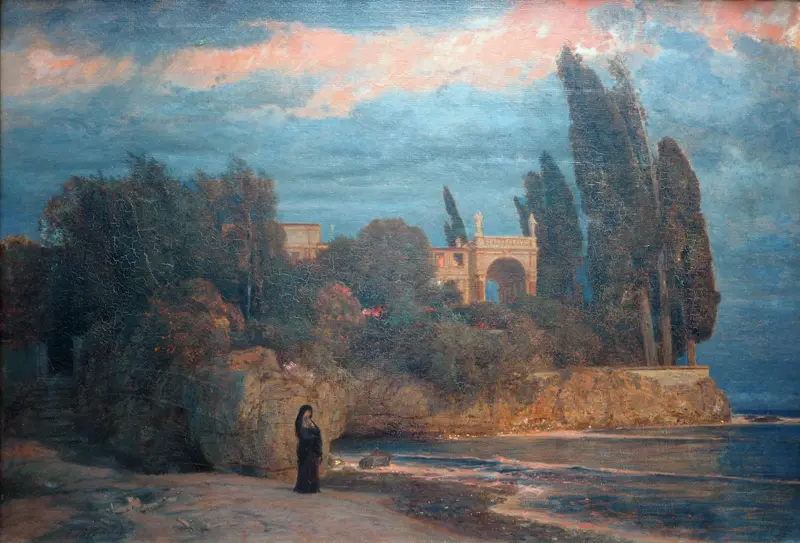
Villa by the Sea
Arnold Böcklin
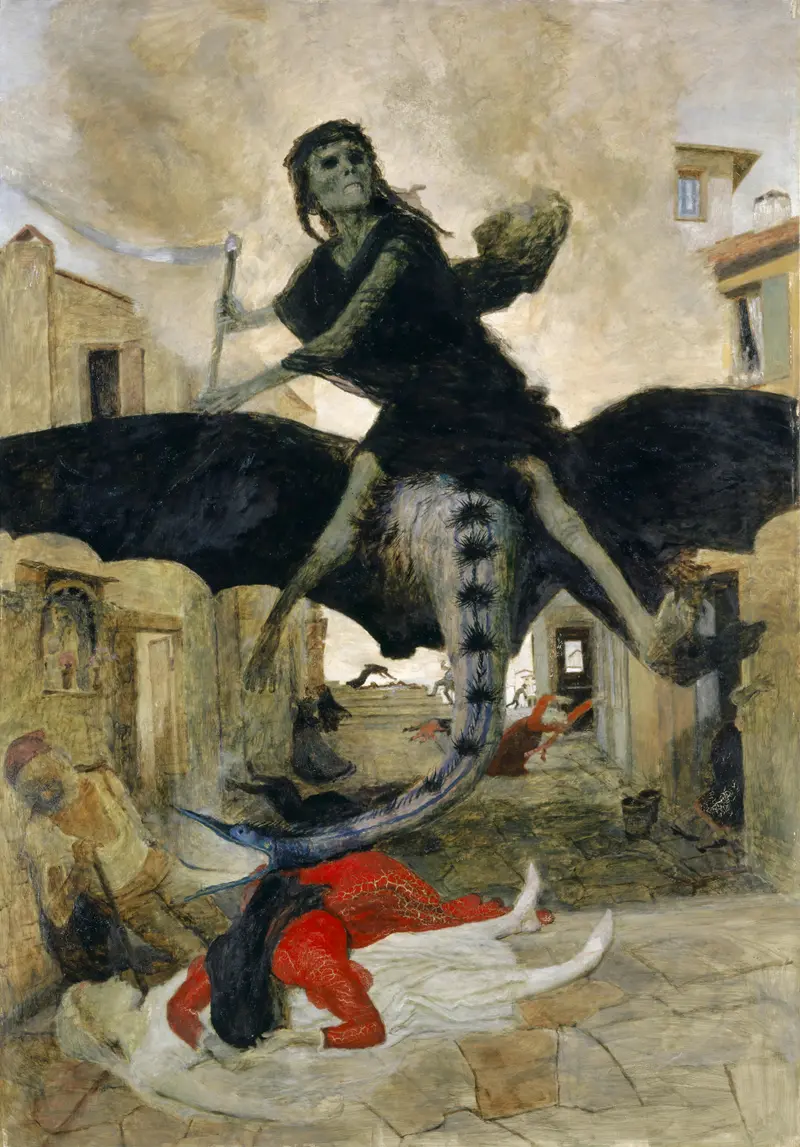
The Plague
Arnold Böcklin
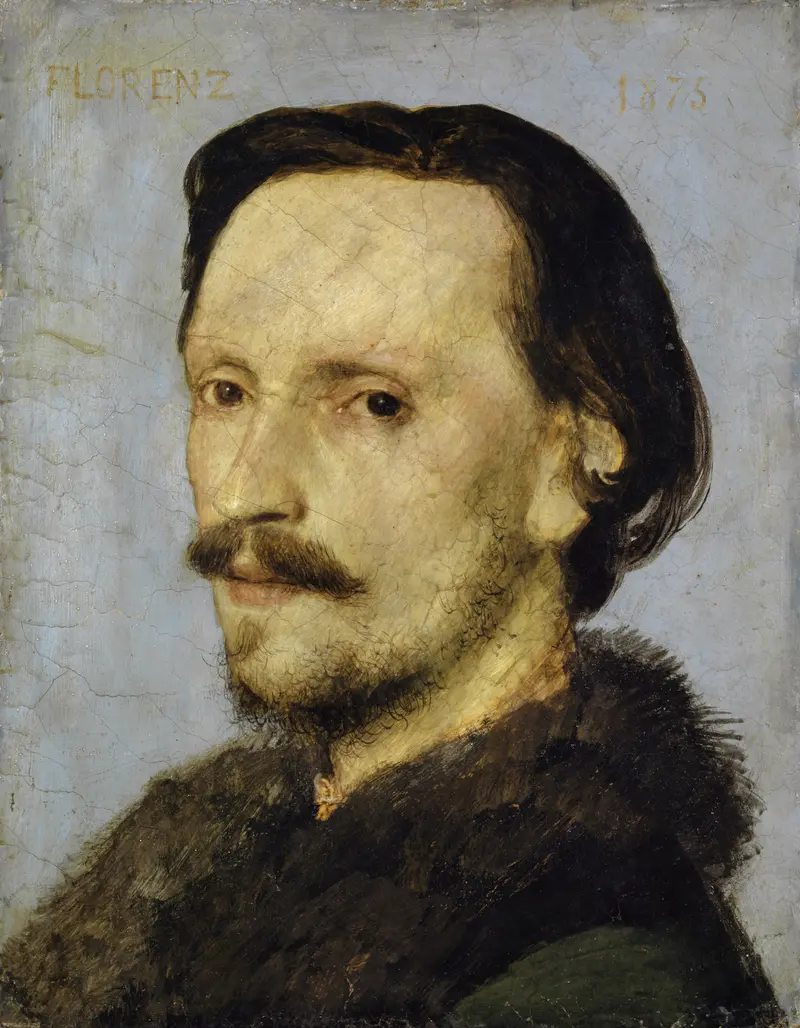
Böcklin Bildnis des Kunsthistorikers Adolph Bayersdorfer, 1875
Arnold Böcklin
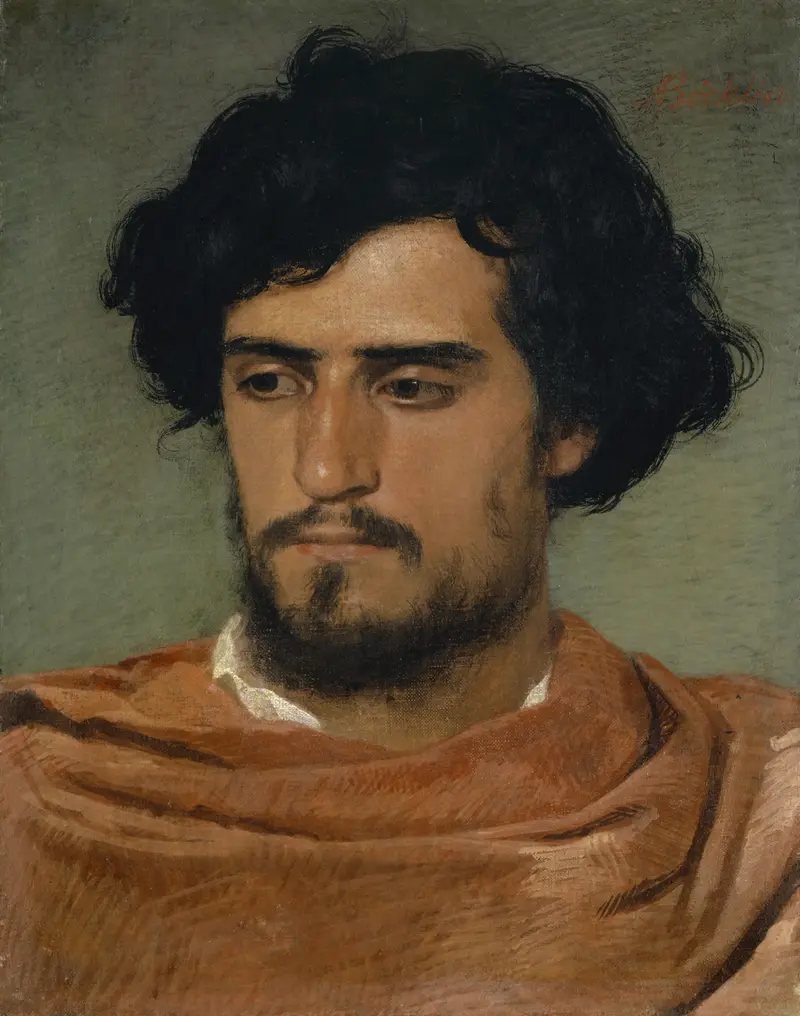
Head of a Roman
Arnold Böcklin
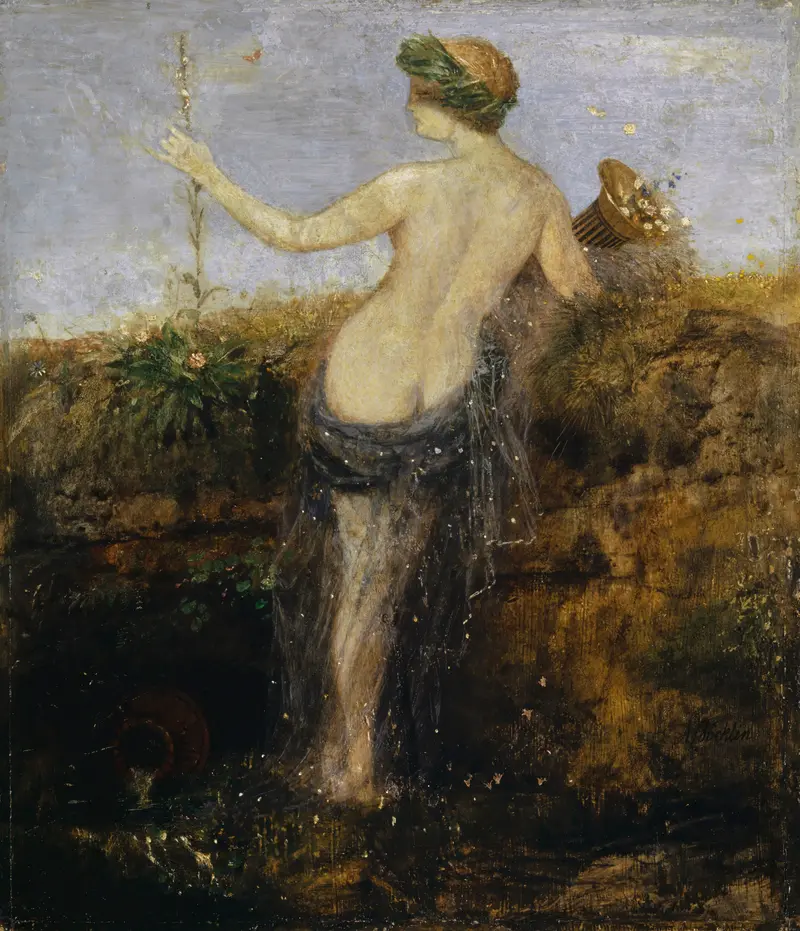
Nymphe with Horn of Plenty
Arnold Böcklin
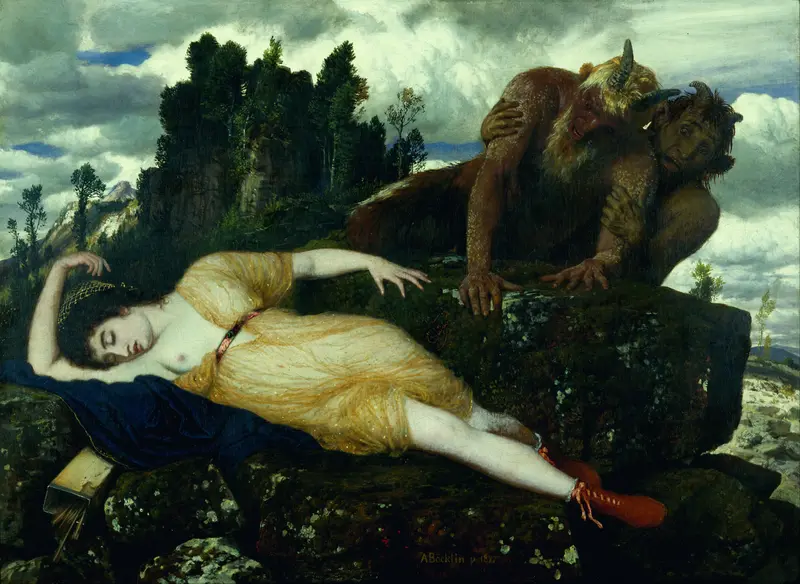
Sleeping Diana Watched by Two Fauns
Arnold Böcklin
Spring (Songs of Spring)
Arnold Böcklin





