
The merry homecoming — History & Facts
In The Merry Homecoming, Jan Steen captures a lively and colorful scene filled with joy and celebration. The painting features a group of people gathered in a warm, inviting interior, likely a home. Bright colors dominate the composition, with reds, yellows, and greens creating a festive atmosphere.
Figures are animated, engaging in laughter and conversation, embodying the spirit of togetherness. The technical aspects of the painting reveal Steen's skill in depicting human emotions and interactions. The use of oil on canvas allows for rich textures and vibrant colors, enhancing the overall liveliness of the scene. The figures are arranged in a dynamic composition, drawing the viewer's eye across the canvas.
Light plays a significant role, illuminating the faces and details of the setting. Jan Steen was known for his genre scenes that often depicted the humorous and chaotic aspects of daily life. The Merry Homecoming reflects Steen's ability to capture the essence of family gatherings and celebrations. Interestingly, Steen often included moral lessons in his works, and this painting can be seen as a commentary on the joys and follies of domestic life.
His works remain popular for their relatable themes and engaging narratives.
More Artworks by Jan Steen

The Family Concert
Jan Steen

The Fish Market at Leyden
Jan Steen
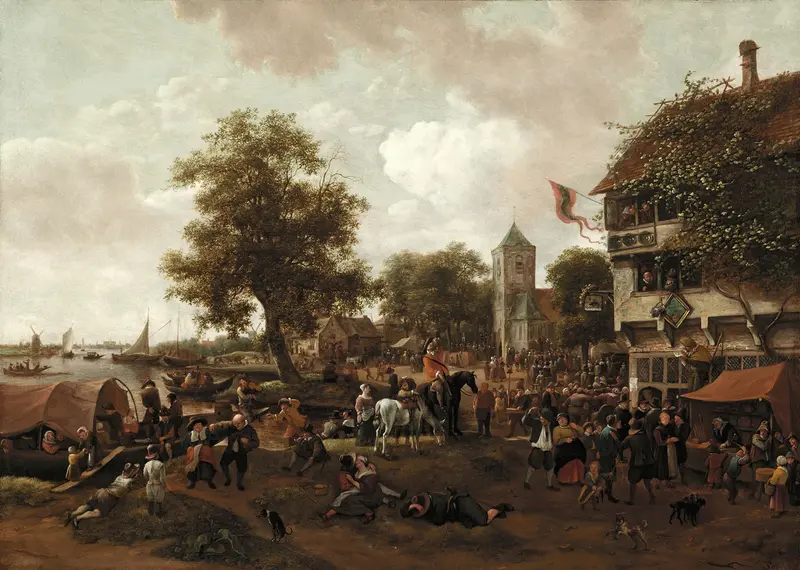
The Fair at Oegstgeest
Jan Steen
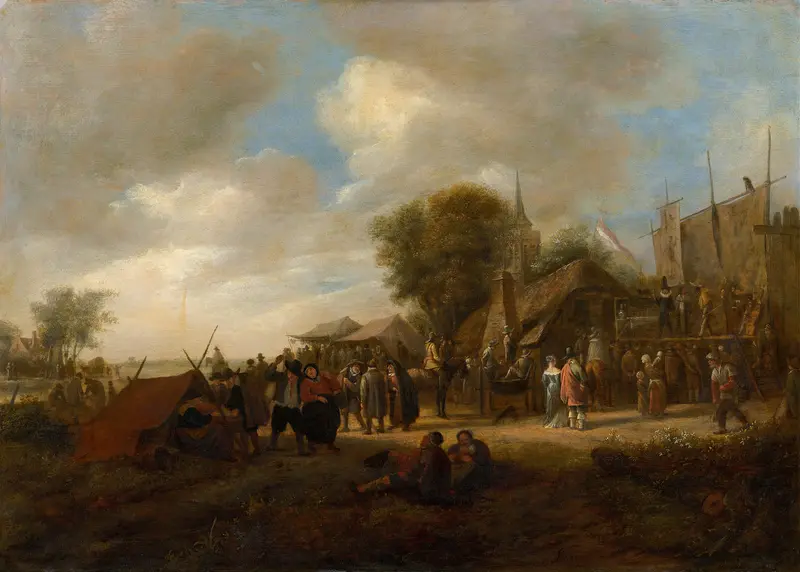
Village Fair
Jan Steen
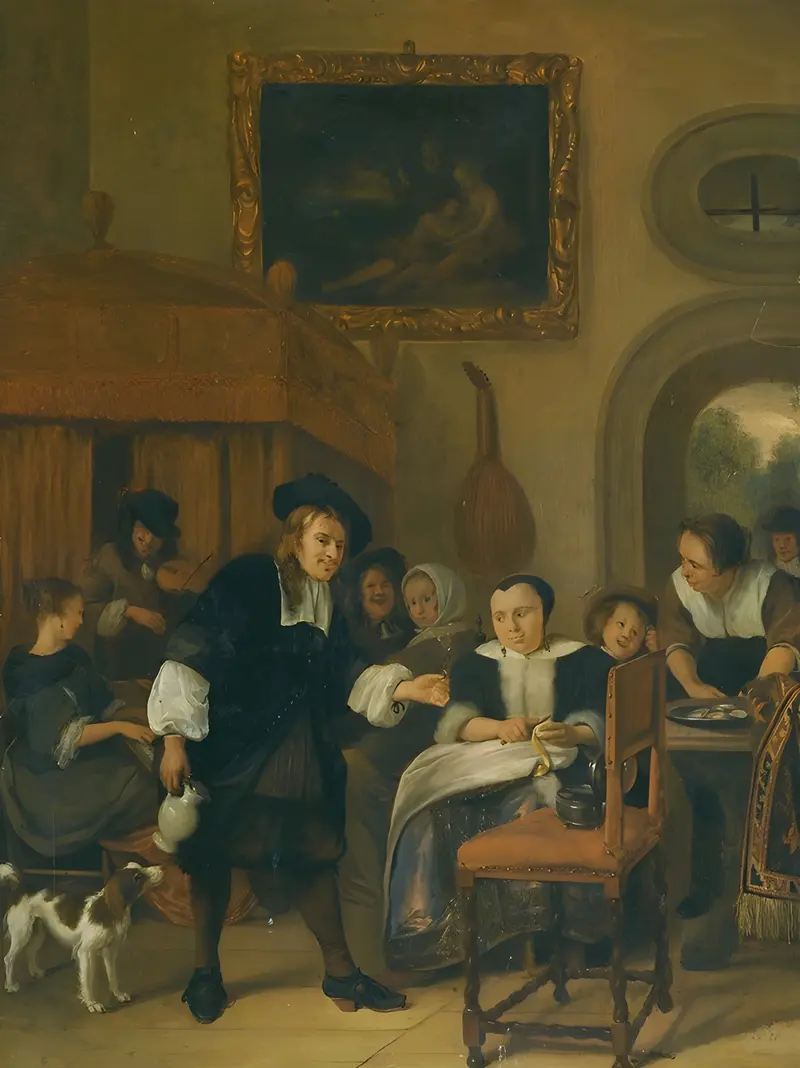
A Gentleman Offering A Lady A Glass Of Wine With A Couple Making Music And Other Townsfolk In An Interior
Jan Steen

The Dancing Lesson
Jan Steen
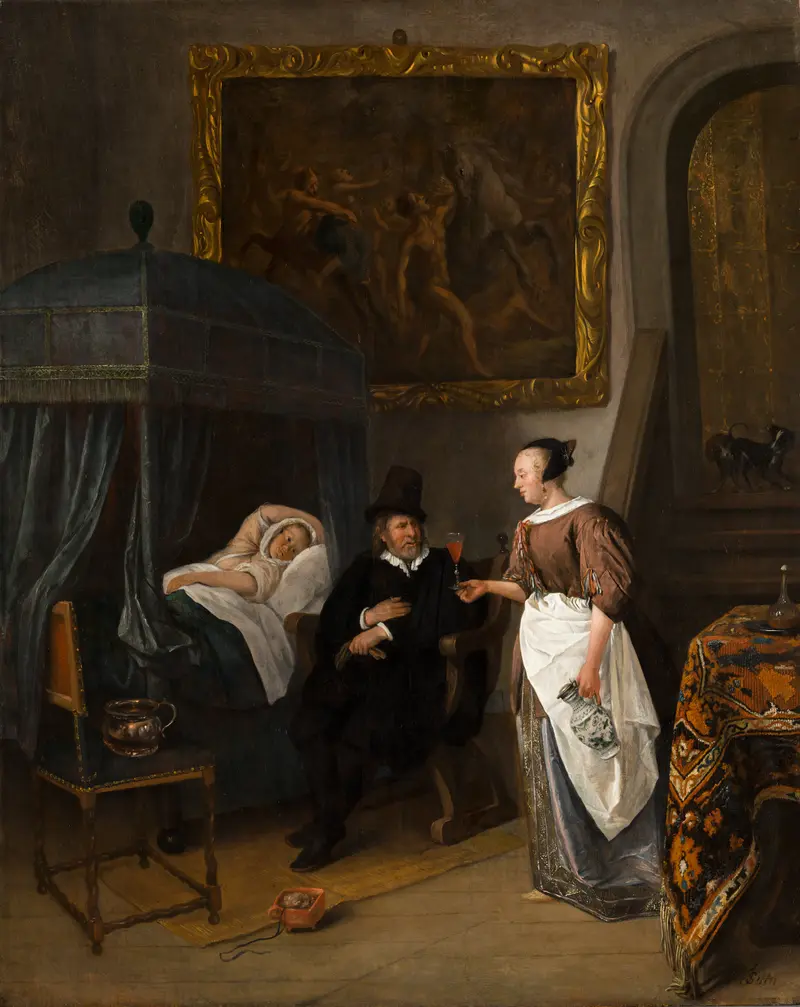
The Doctor’s Visit
Jan Steen
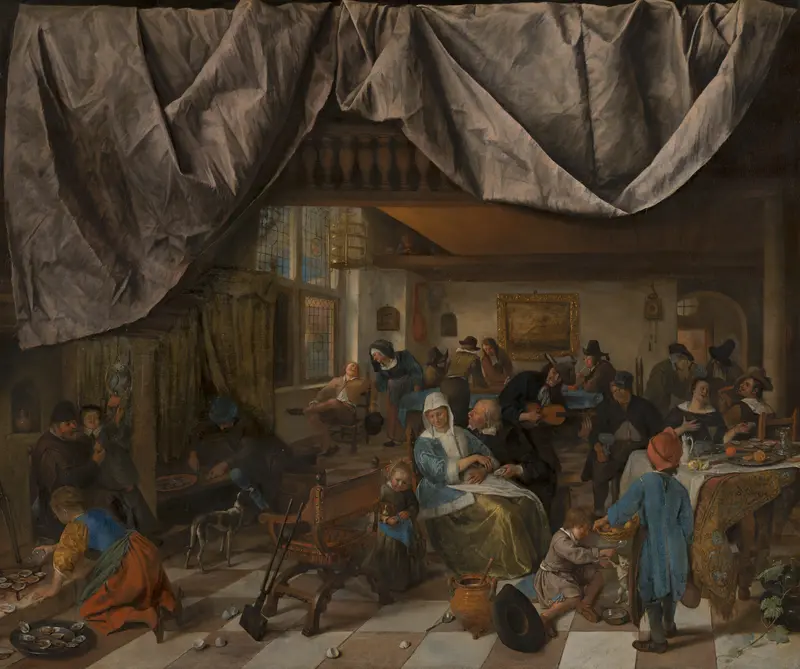
The Life of Man
Jan Steen
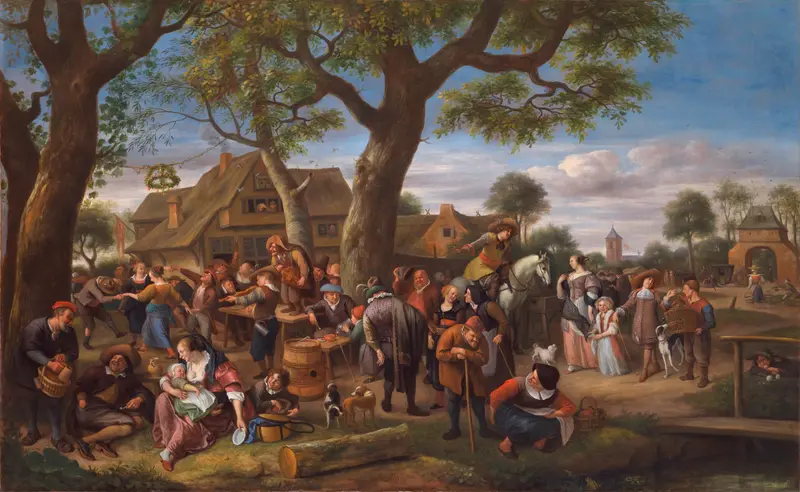
Peasants Merrymaking Outside an Inn
Jan Steen
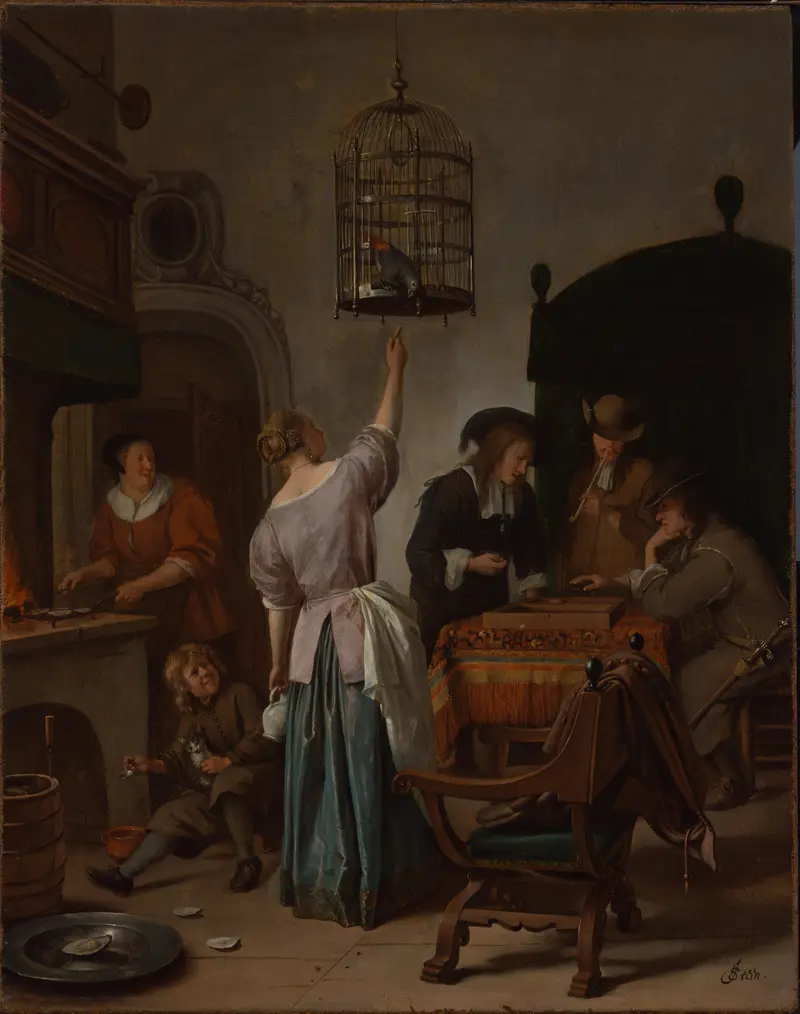
Interior with a Woman Feeding a Parrot, Known as ‘The Parrot Cage’
Jan Steen
More Genre Scene Art

Banquet of the Officers of the St George Civic Guard
Frans Hals

Rembrandt and Saskia in the Scene of the Prodigal Son
Rembrandt van Rijn

Bal du moulin de la Galette
Pierre-Auguste Renoir

Quadrille at the Moulin Rouge
Henri de Toulouse-Lautrec

A Burial at Ornans
Gustave Courbet

When Will You Marry?
Paul Gauguin