The Nativity — History & Facts
No other artist has ever fused poetry and painting quite like William Blake, and The Nativity stands as a rare surviving example of his early religious visions. Created around 1790, this work belongs to a period when Blake was developing his own mythological universe, yet here he returns to the Christian story with a strikingly personal touch. The precise medium remains a mystery—some suggest tempera, others watercolor on paper—adding to the aura of enigma that surrounds the piece.
Unlike the grand altarpieces of his contemporaries, Blake’s nativity scenes were never commissioned by church or crown; instead, they sprang from his own spiritual imagination, intended for a small circle of friends and patrons. At the heart of The Nativity, Blake selects the moment when the infant Christ radiates light in the darkness, surrounded by Mary, Joseph, and a host of ethereal angels. The newborn glows at the center, his body a source of illumination that pushes back the shadows—a visual metaphor for divine revelation. Mary’s gesture of open-armed awe, Joseph’s humble posture, and the swirling, almost transparent angels above all point to Blake’s belief in the visible presence of the spiritual world.
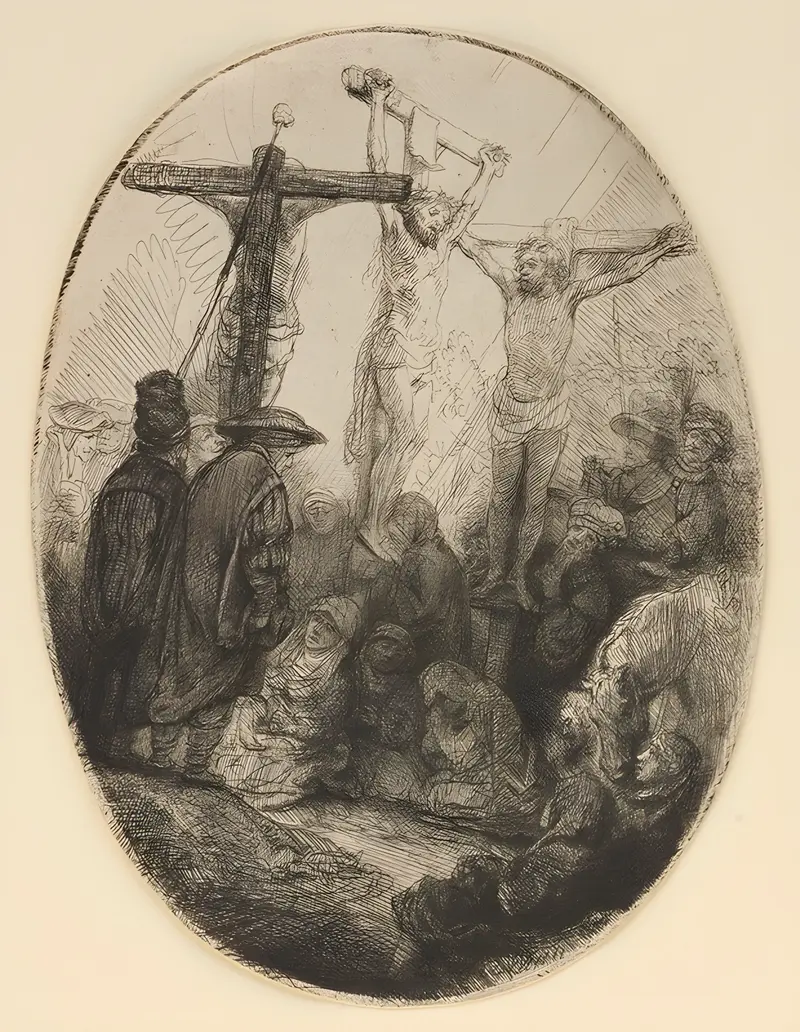
Unlike the earthy realism of Rembrandt’s nativity scenes, Blake’s figures are elongated, their faces serene, their forms almost weightless, as if the boundaries between heaven and earth have dissolved. The journey of this particular Nativity is uncertain; many of Blake’s works from this era were kept by friends or passed quietly through private collections, often without detailed records. Some scholars believe it was part of a series of biblical illustrations Blake created for his patron Thomas Butts, though documentation is incomplete. Today, The Nativity is recognized as a key example of Blake’s unique synthesis of visionary art and religious narrative, bridging his early illuminated books and later prophetic works.
Its survival offers a rare glimpse into the personal devotion and radical imagination of one of Britain’s most singular artists.
More Artworks by William Blake
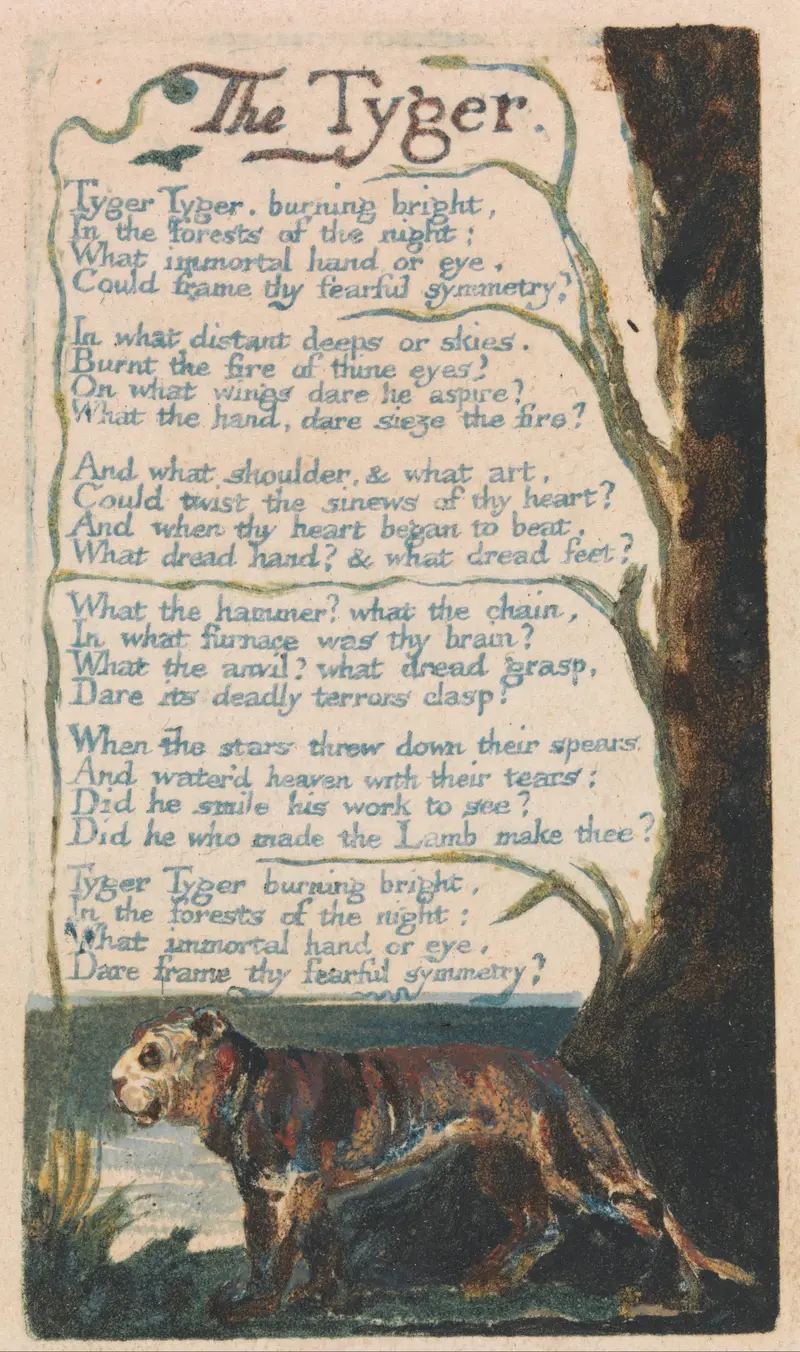
The Tyger
William Blake

Christ Blessing
William Blake
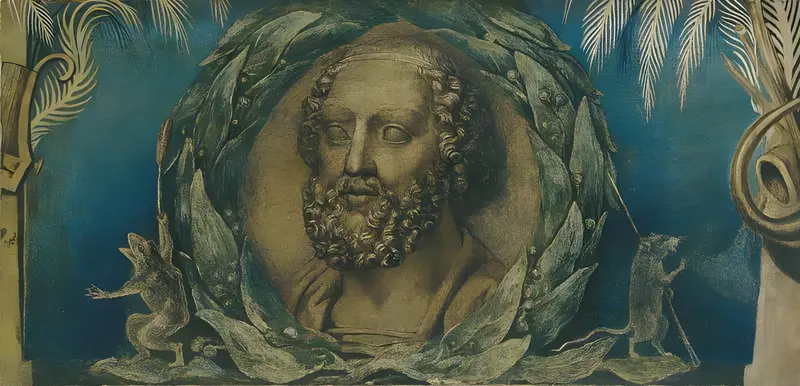
Homer
William Blake
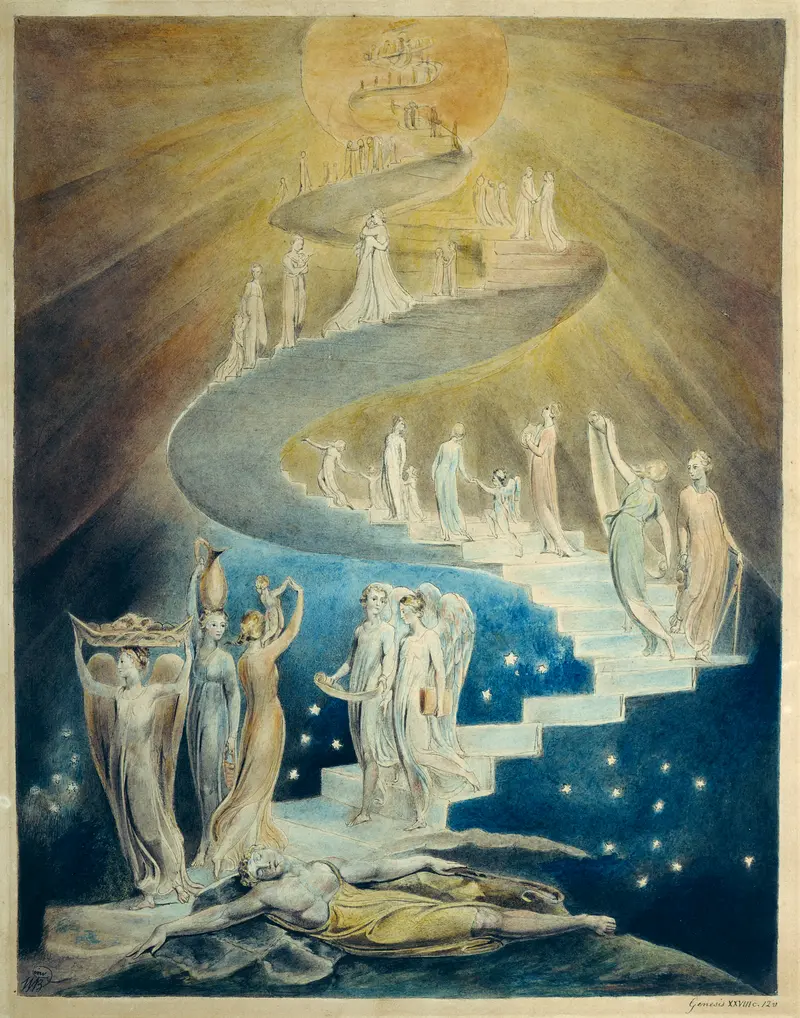
Jacob's Ladder
William Blake
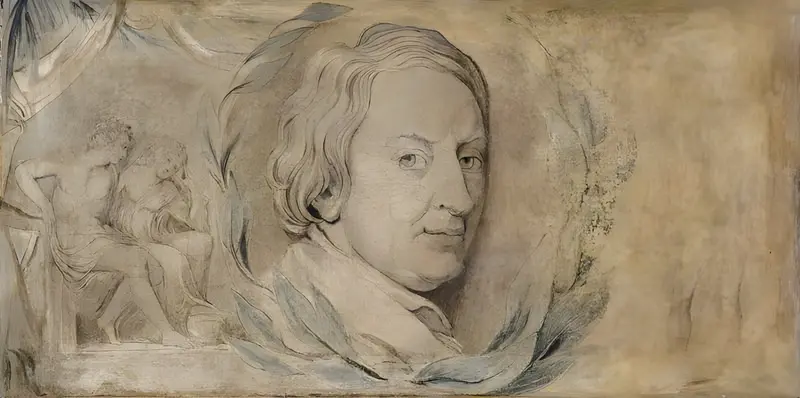
John Dryden (1631–1700)
William Blake
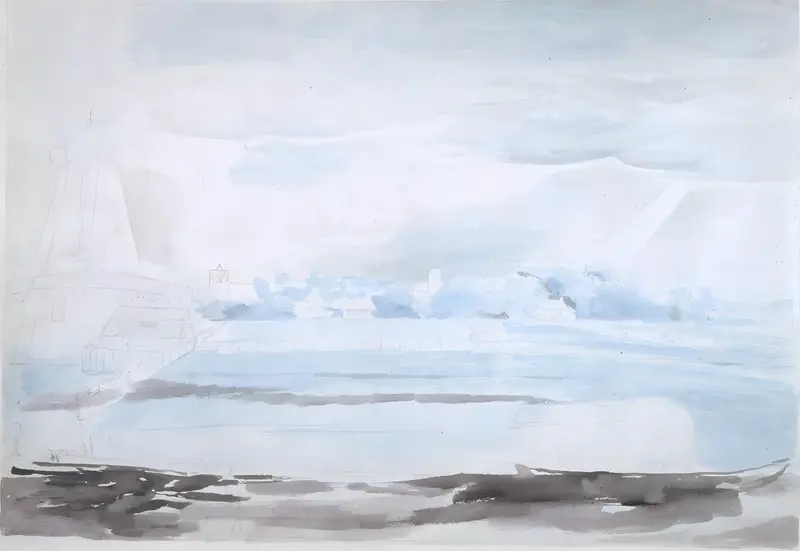
Landscape near Felpham
William Blake
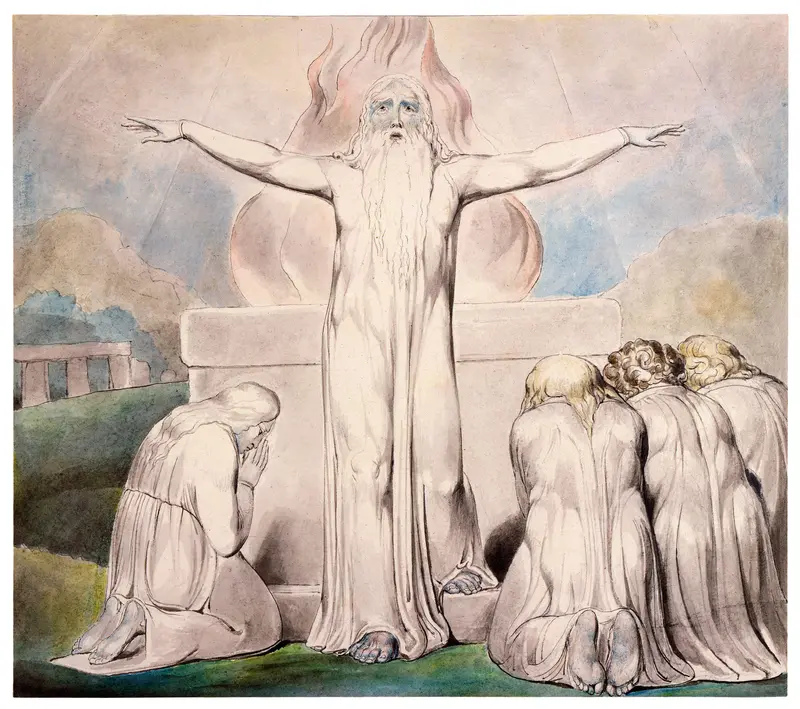
Sacrifice of Job
William Blake
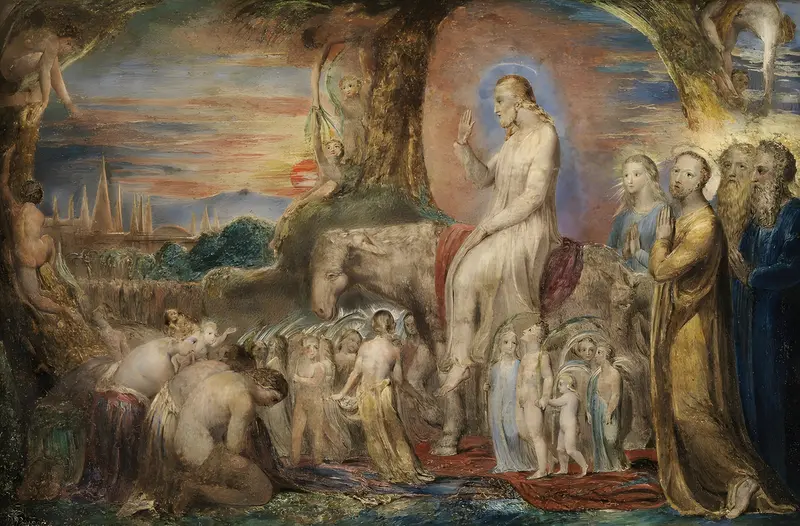
Christ's Entry into Jerusalem
William Blake
The Ancient of Days
William Blake
Adam Naming the Beasts
William Blake