
The Outskirts of the Town — History & Facts
When did color learn to lie? The vibrant hues of urban landscapes can often mask the complexities of existence, revealing a rebirth that straddles reality and illusion. Look to the foreground where the lively strokes of blues and greens converge, drawing the viewer's eye towards the town's edge, where nature and civilization intertwine. Notice how the sunlight cascades over the scene, illuminating the rooftops in warm golden tones while casting soft shadows that hint at the quiet lives within. The artist employs a delicate balance of impressionistic technique, blending colors to create a sense of movement as well as tranquility, evoking the essence of an everyday moment caught in time. As you delve deeper, consider the contrast between the vibrant colors and the subtle, yet somber, undertones lurking beneath the surface.
The juxtaposition of the bustling town against the stillness of the surrounding nature suggests a tension between progress and preservation, as if the inhabitants are caught in an eternal cycle of rebirth. This duality invites reflection on the transient nature of life and the spaces we create to inhabit it. In 1899, Jansson painted this piece during a period of artistic transition in Sweden. Influenced by the Symbolist movement, he explored themes of light and color while grappling with the rapid industrialization occurring around him.
His work reflects not only personal introspection but also a broader cultural shift, as artists sought new ways to depict the complexities of modern existence against the backdrop of an evolving world.
More Artworks by Eugène Jansson
Browse all →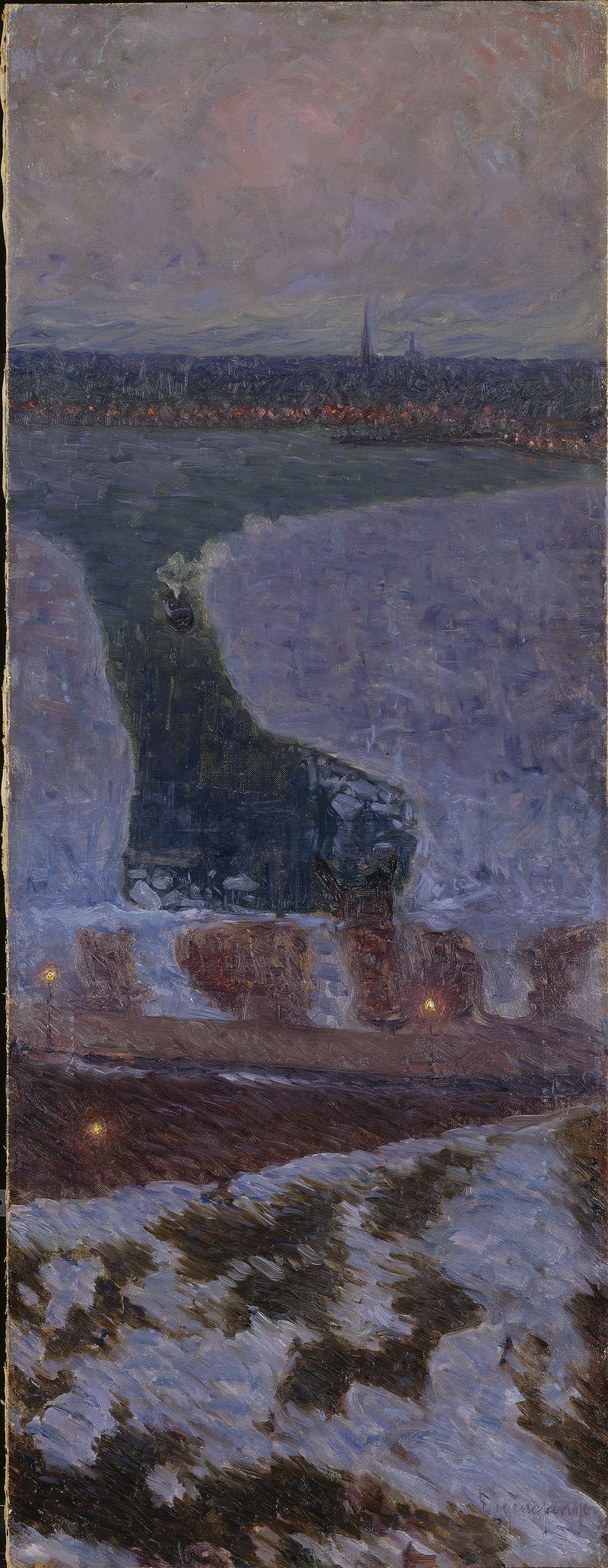
Riddarfjärden. A Stockholm
Eugène Jansson
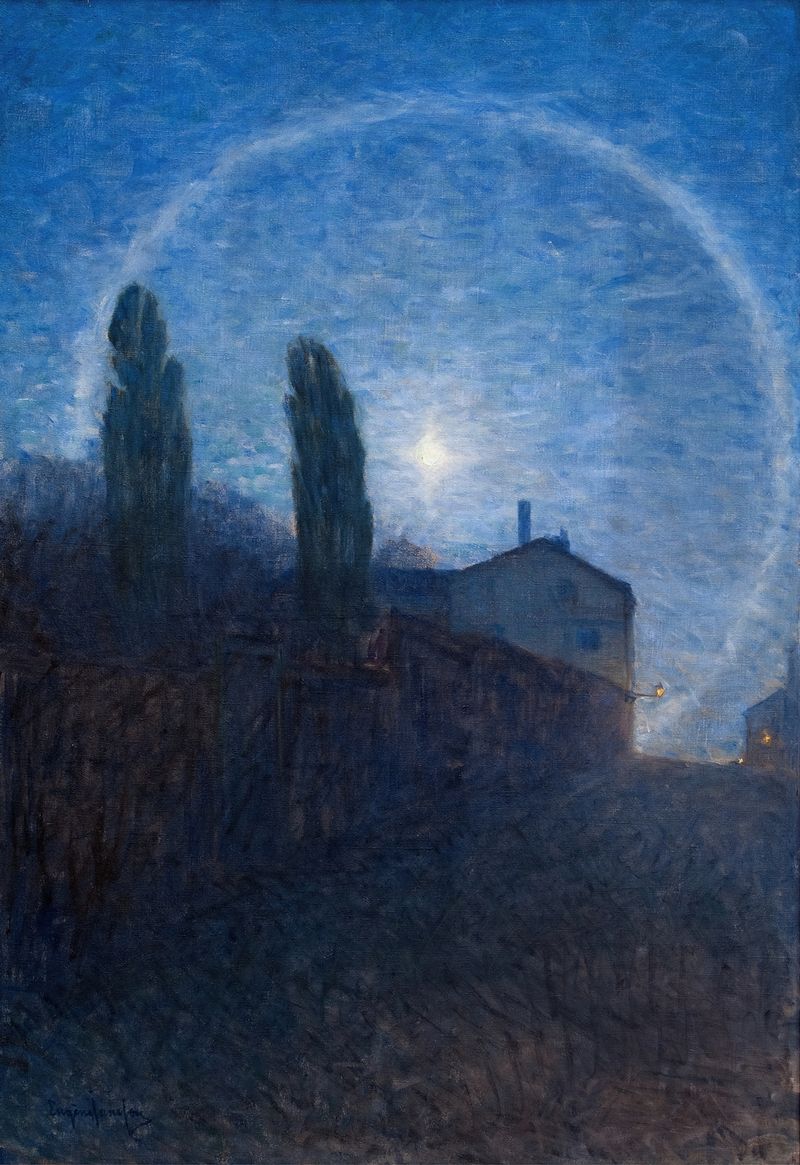
Lunar Halo
Eugène Jansson
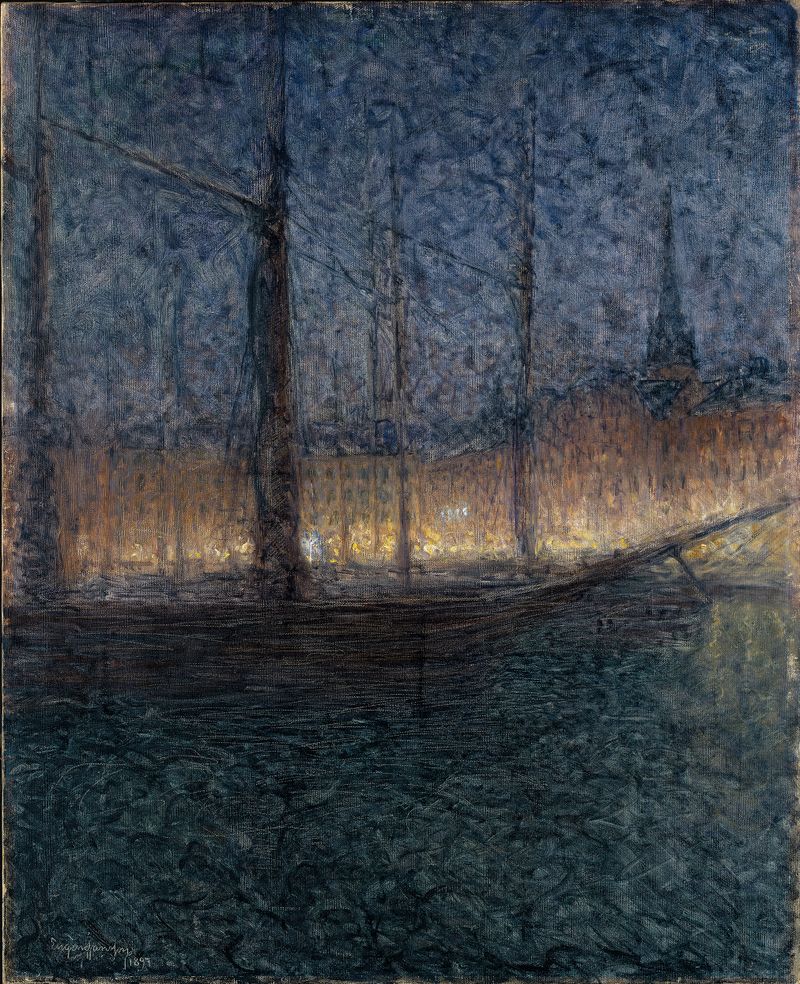
Evening in Kornhamnstorg, Stockholm
Eugène Jansson
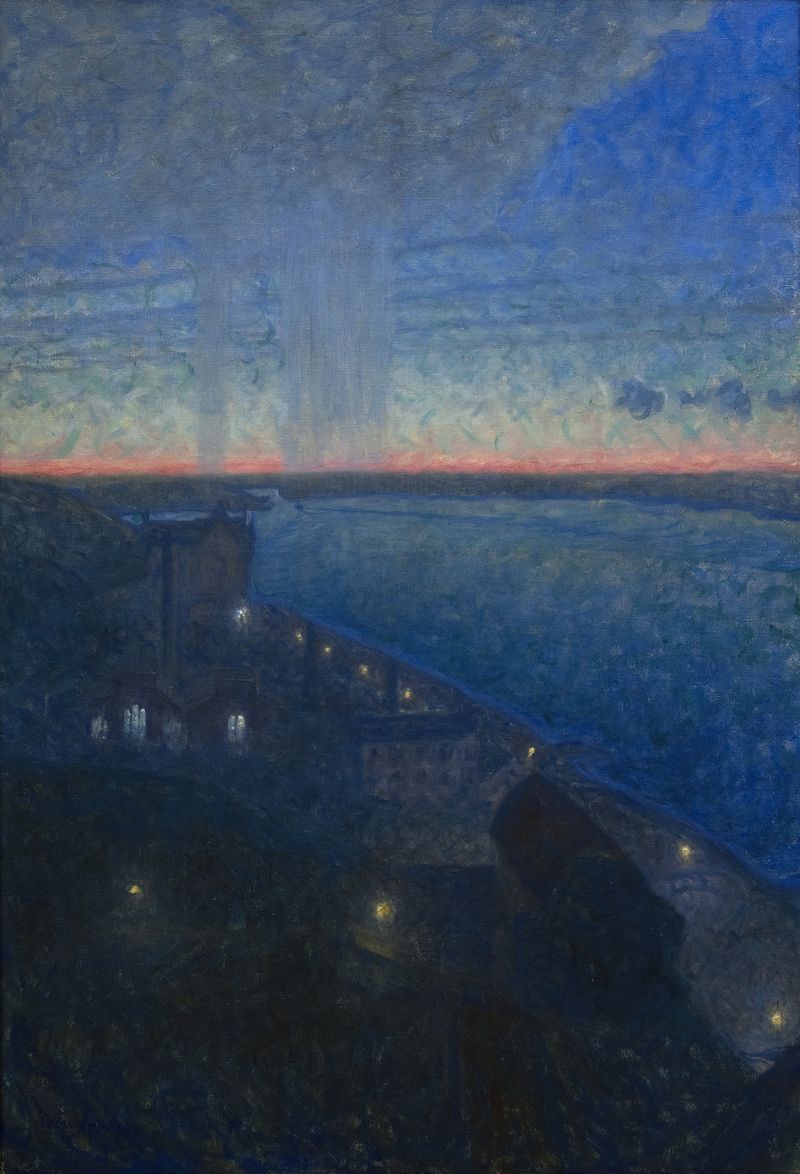
Söder Mälarstrand
Eugène Jansson
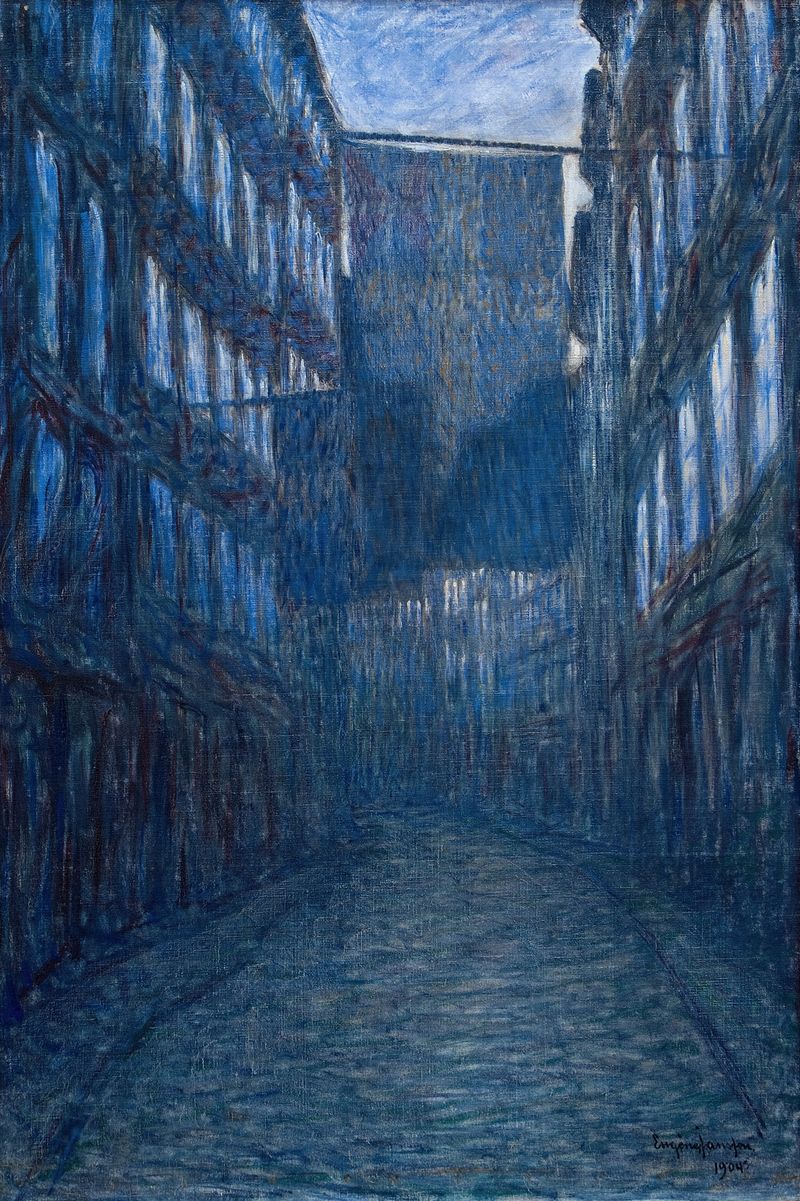
Österlånggatan
Eugène Jansson
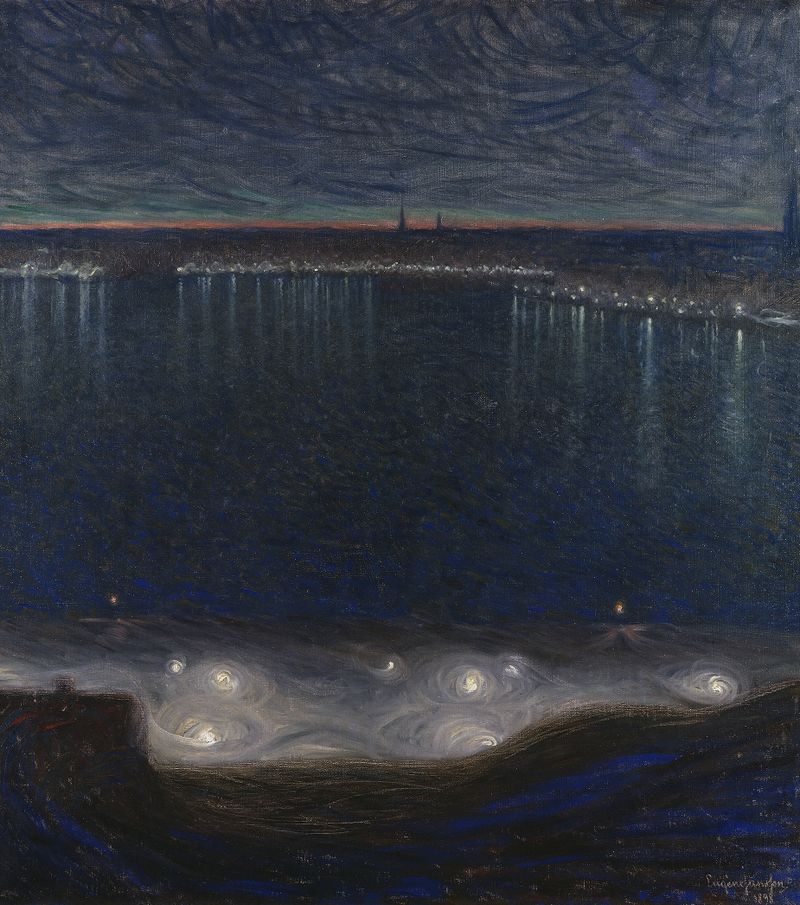
Riddarfjärden, Stockholm
Eugène Jansson
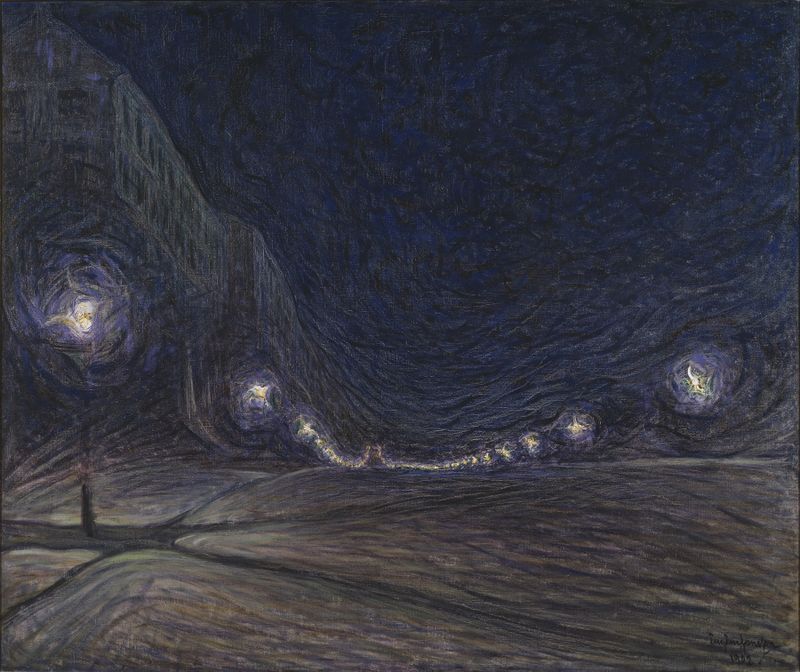
Hornsgatan by Night
Eugène Jansson
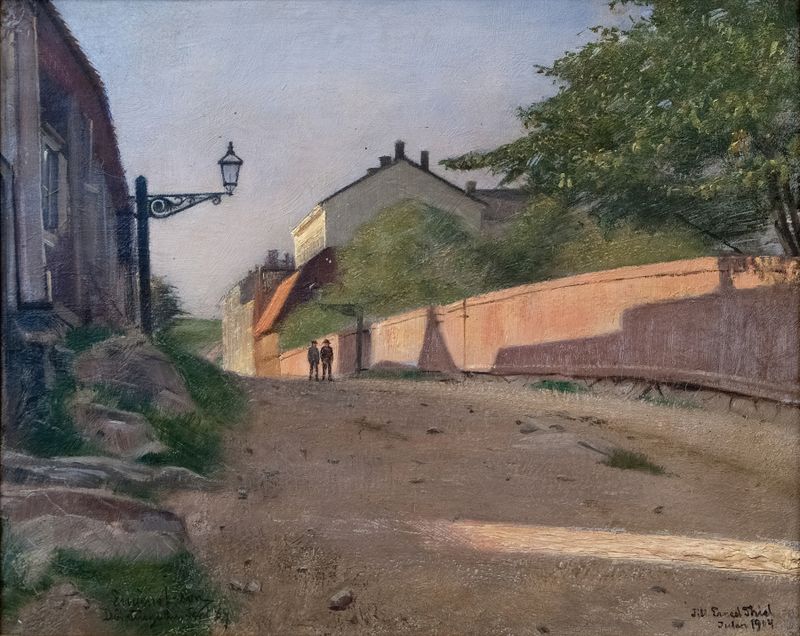
Döbelnsgatan
Eugène Jansson
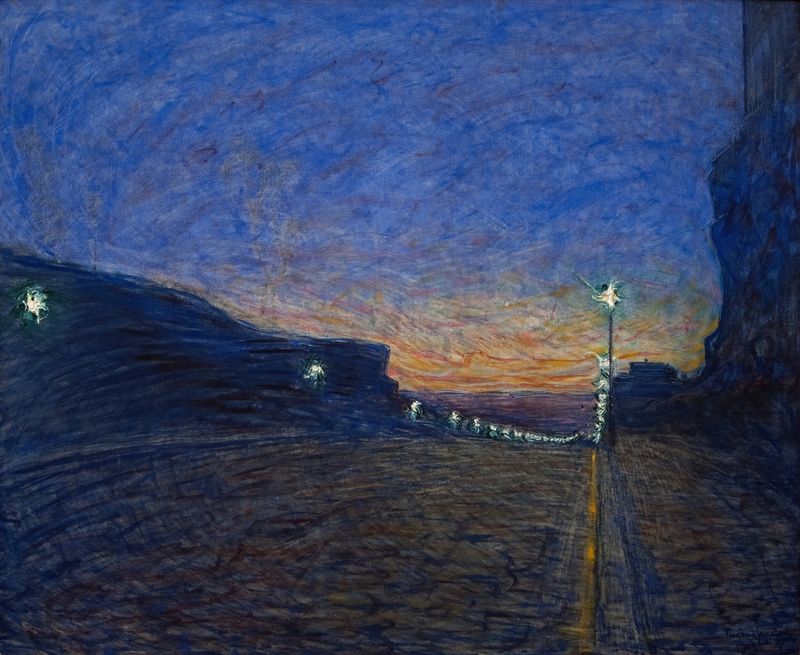
Hornsgatan
Eugène Jansson
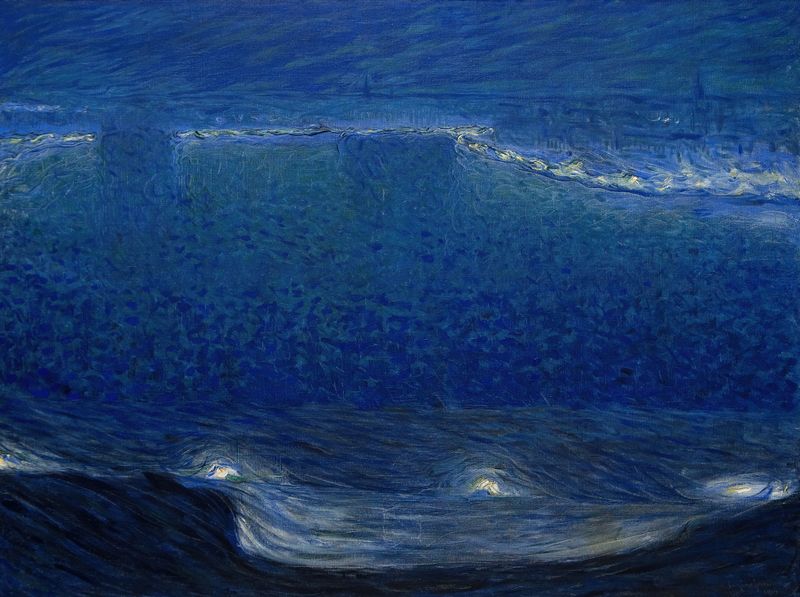
Nocturne
Eugène Jansson





