
The Plains of Hungary — History & Facts
What first grips the eye in The Plains of Hungary is the sense of utter stillness—the kind that settles in after a long struggle, when even the horses seem to have surrendered to the weight of the land. The viewer’s gaze is drawn first to the peasant, standing atop his cart, his posture rigid, his face turned toward a horizon that offers no relief. The cart’s wheels, half-sunken in the mire, echo the heavy, sodden sky above, while the horses, clustered together, embody both exhaustion and resignation.
Every detail, from the glistening mud beneath their hooves to the battered load, is rendered with a quiet precision that makes the viewer feel the chill and damp in their own bones. Painted in the mid-19th century by Adolf Schreyer, this work belongs to a period when artists across Europe were drawn to scenes of rural hardship and the drama of ordinary lives. Such images were not merely decorative; they spoke to anxieties about change, displacement, and the relentless advance of modernity. Collectors and museums of the era often prized these paintings for their ability to transport viewers into unfamiliar worlds—here, the vast Hungarian plain, rendered with a realism that is both unsparing and deeply humane.
Now part of the Walters Art Museum collection, The Plains of Hungary stands as a testament to a moment when art looked unflinchingly at the realities of work, weather, and waiting, inviting us to linger over every muddy detail.
More Artworks by Adolf Schreyer
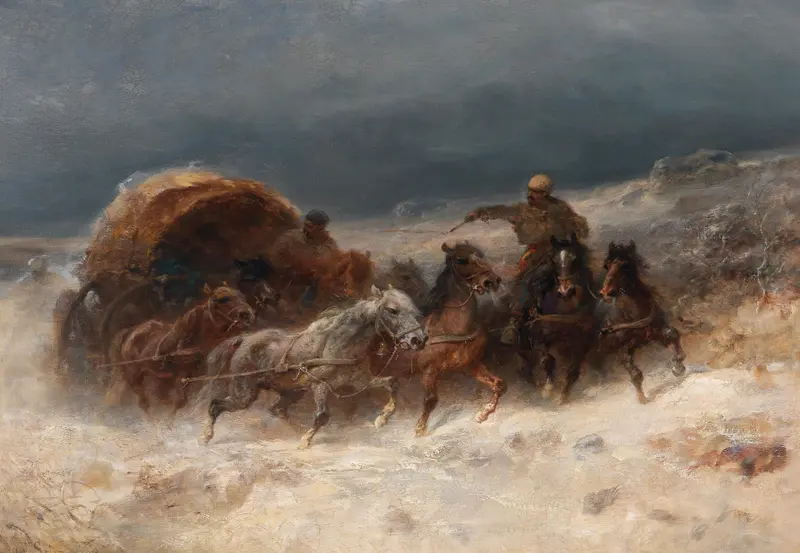
Geldings In A Winter Landscape
Adolf Schreyer
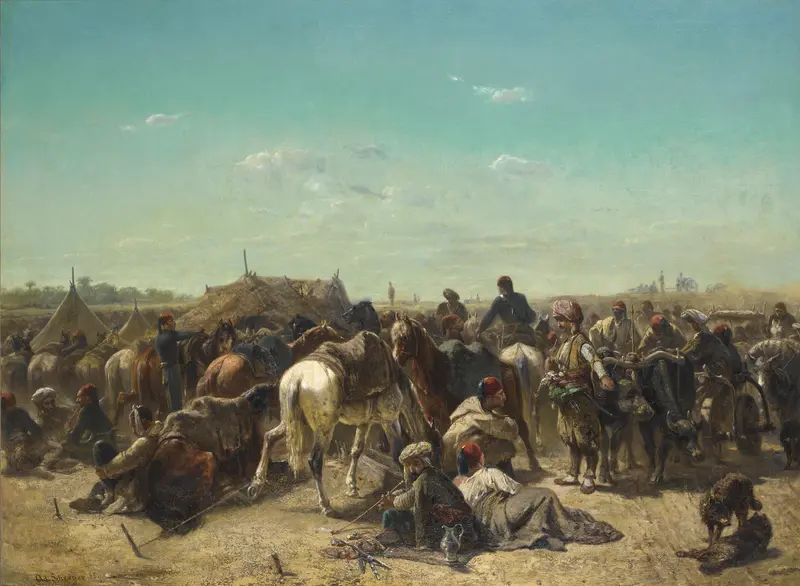
An Ottoman encampment
Adolf Schreyer
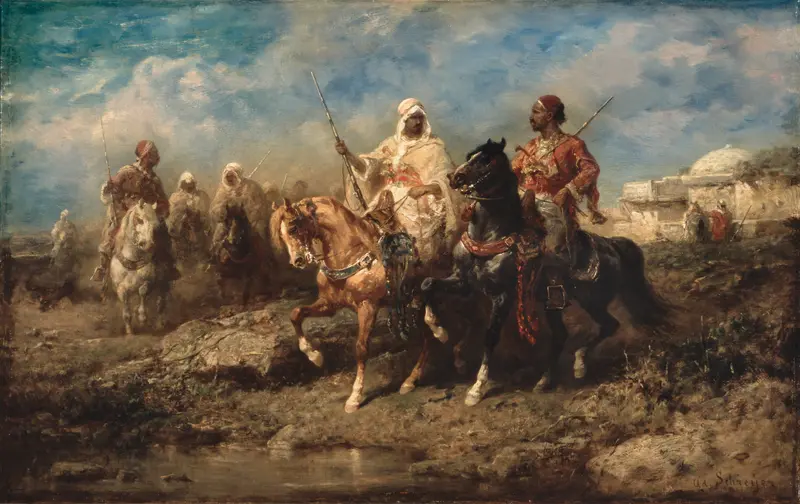
Arabs
Adolf Schreyer
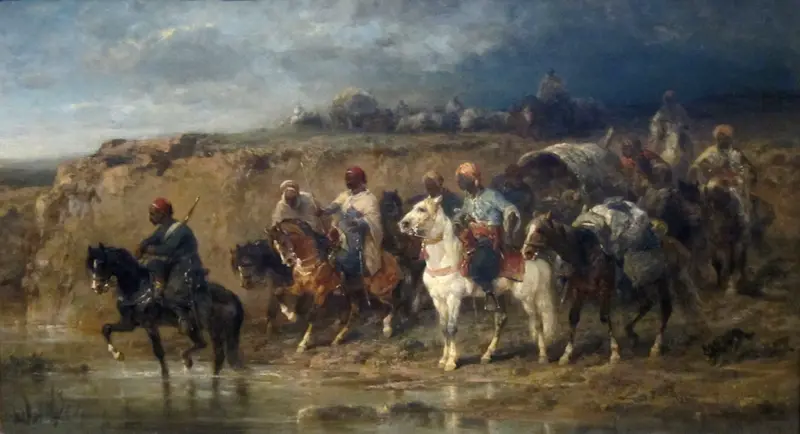
Arab Caravan
Adolf Schreyer
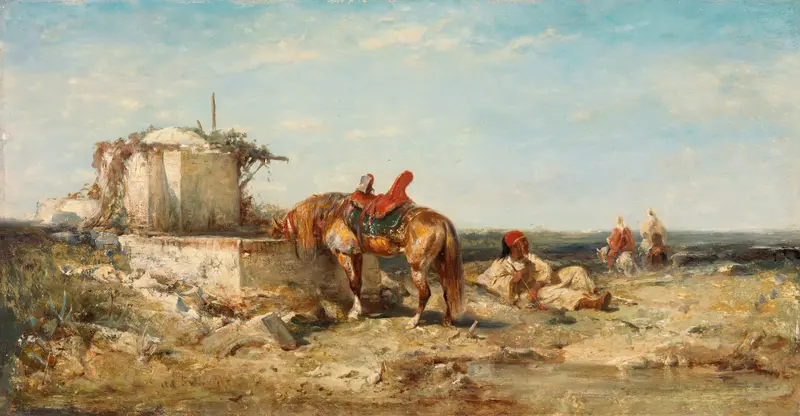
Eastern Soldiers with a Horse Drinking
Adolf Schreyer
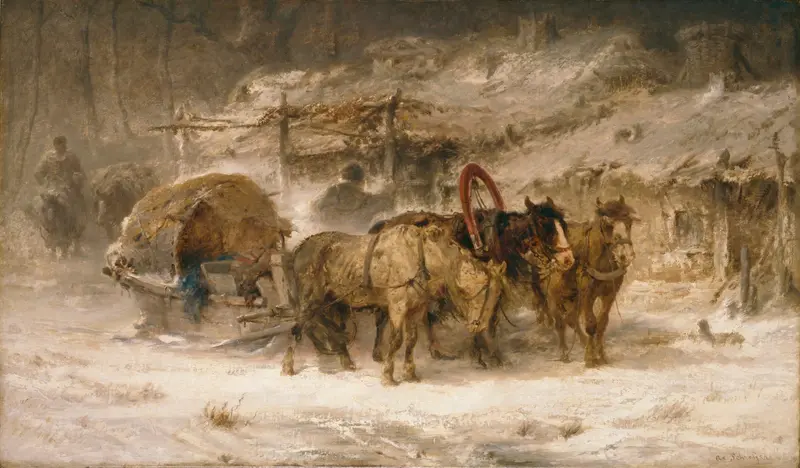
Halt at the Inn
Adolf Schreyer
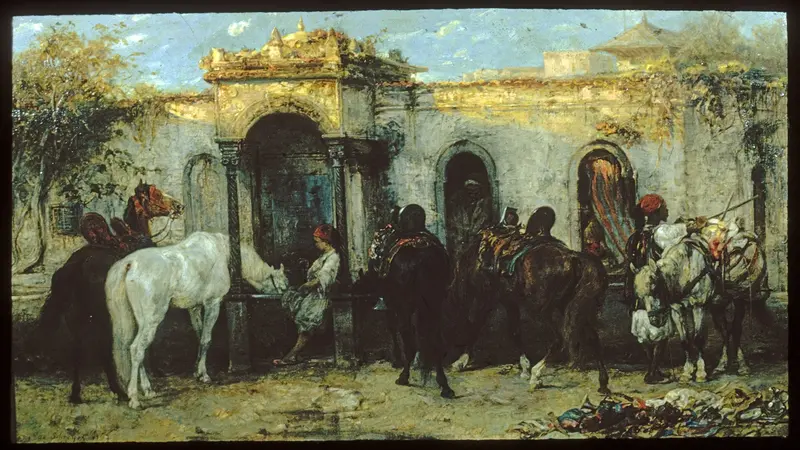
Arabs in Egypt, Sunrise
Adolf Schreyer
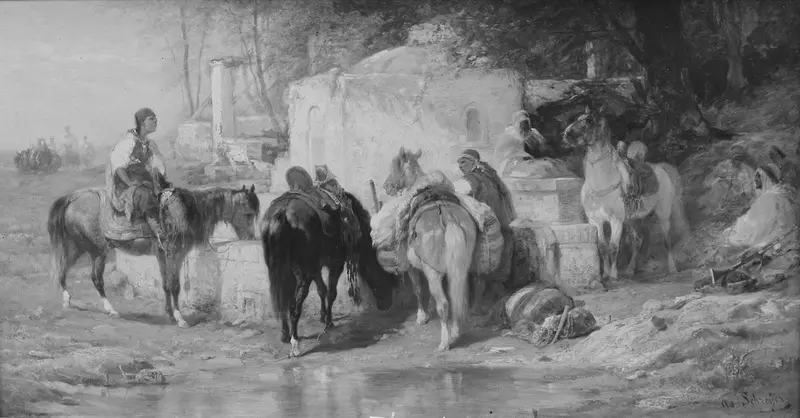
Arab Horsemen Resting at a Fountain
Adolf Schreyer
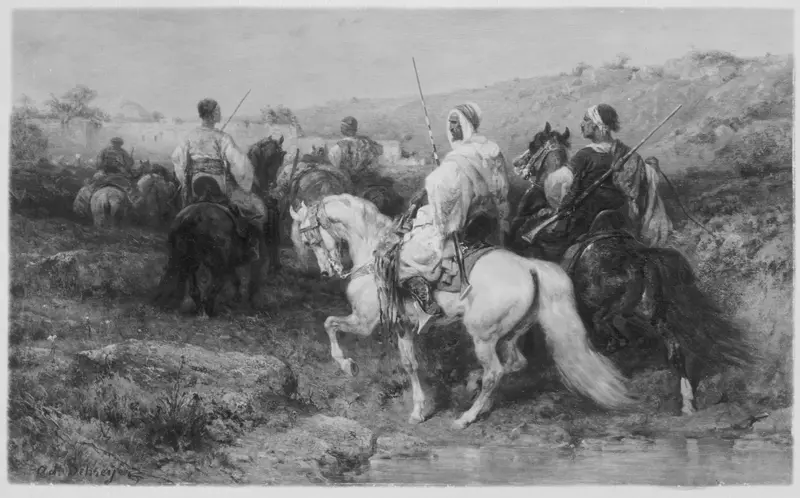
Arabs on the March
Adolf Schreyer
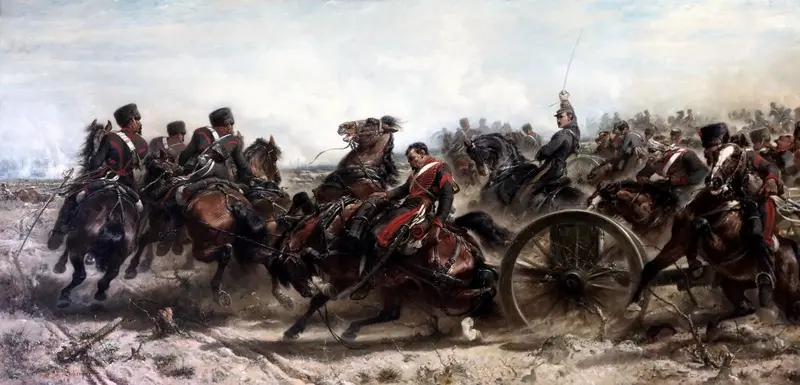
Charge de l'artillerie de la Garde Impériale à Traktir Orsay RF 440
Adolf Schreyer
More Landscape Art

The Starry Night
Vincent van Gogh

View of Delft
Johannes Vermeer

Water Lilies
Claude Monet

The Grand Canal, Venice, looking north-west from the Ca' Corner to the Ca' Contarini degli Scrigni, with the campanile of Santa Maria della Carità
Canaletto

Windsor Castle
Canaletto

The Grand Canal looking North-East from the Palazzo Dolfin-Manin to the Rialto Bridge
Canaletto