
The Pond in the Tuileries — History & Facts
What first catches the eye in The Pond in the Tuileries is the sweep of autumnal trees arching above a crowd of Parisians, their silhouettes animated against the pale, luminous sky. Auguste Lepère draws us into a world where the city’s pulse is measured not by monuments, but by the quiet rituals of leisure: children launch toy sailboats on the pond, while elegantly dressed adults stroll or pause in conversation. The artist’s deft use of line and wash creates a gentle haze, softening the scene and inviting the viewer to linger over each figure—every gesture, every hat and cloak, a note in this orchestration of daily life.
The low horizon and generous sky give the park an almost theatrical stage, while the trees, restless in their curving forms, seem to echo the movement of the people below. Created in 1898, this work belongs to a moment when artists and printmakers were captivated by the changing face of Paris and the democratization of public spaces. The Tuileries Garden, once the preserve of royalty, had become a stage for modern life, a subject beloved by Impressionists and their contemporaries. Lepère, known for his sensitive observation of urban scenes, brings a documentary eye and a lyrical hand to this view, capturing not only the fashions and pastimes of the Belle Époque but also the fleeting quality of light and atmosphere.
Now housed in the National Gallery of Art through an open access initiative, The Pond in the Tuileries stands as both a record and a reverie—an invitation to step into the Paris of another century, and to look again at the quiet drama unfolding in the park.
More Artworks by Auguste Lepère

Le Pont-Neuf (Paris)
Auguste Lepère
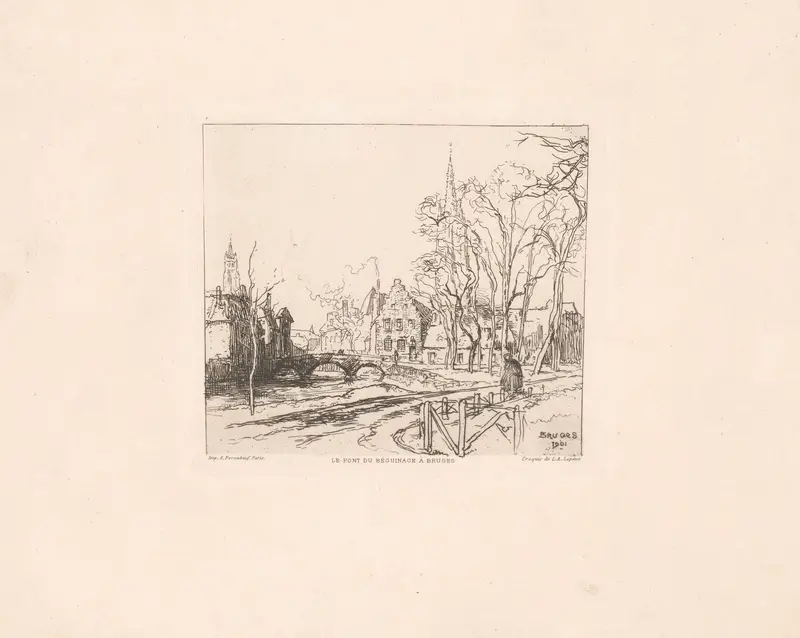
Le pont du Beguinage à Bruges
Auguste Lepère
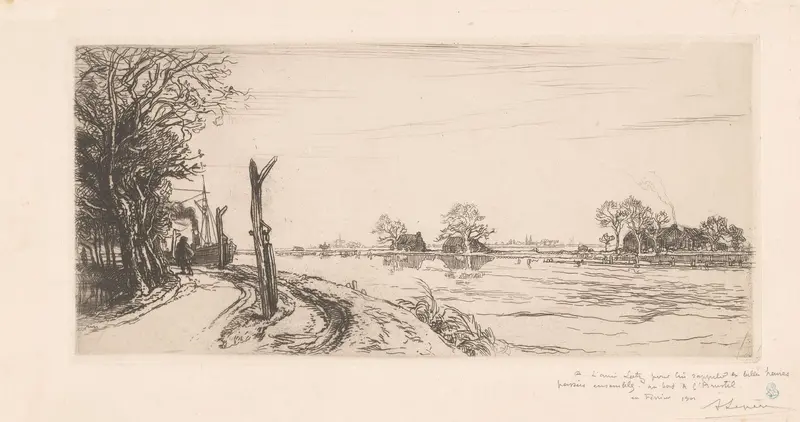
Au bord de l’Amstel
Auguste Lepère
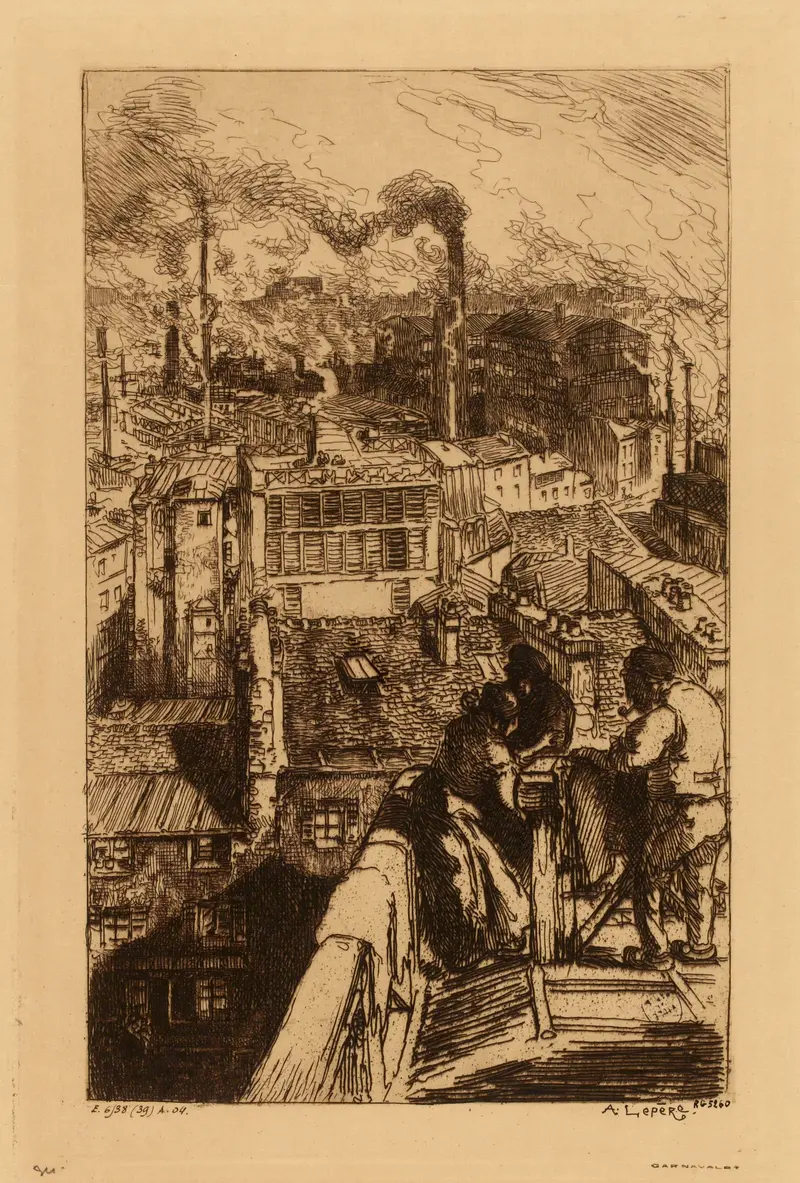
Le quartier des Gobelins
Auguste Lepère
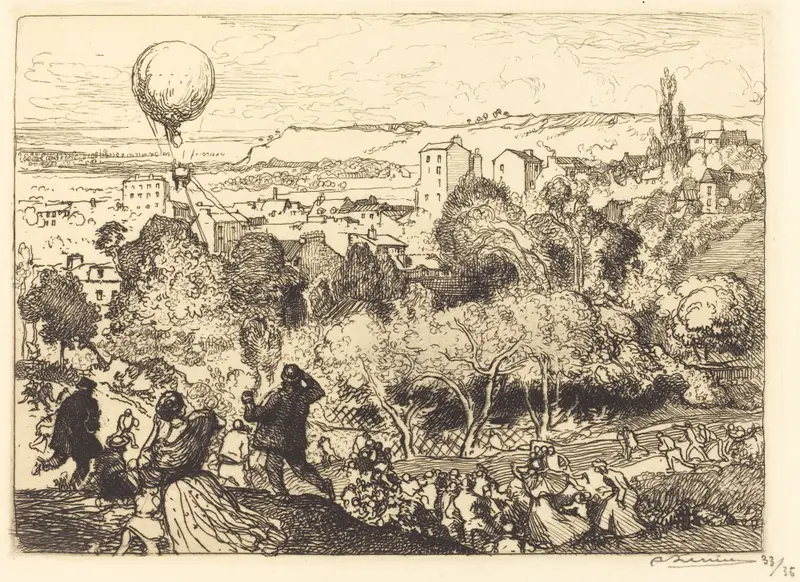
The Falling Balloon, in Pre-Saint-Gervais (Lebaloon qui tombe, au Pre-Saint-Gervais)
Auguste Lepère
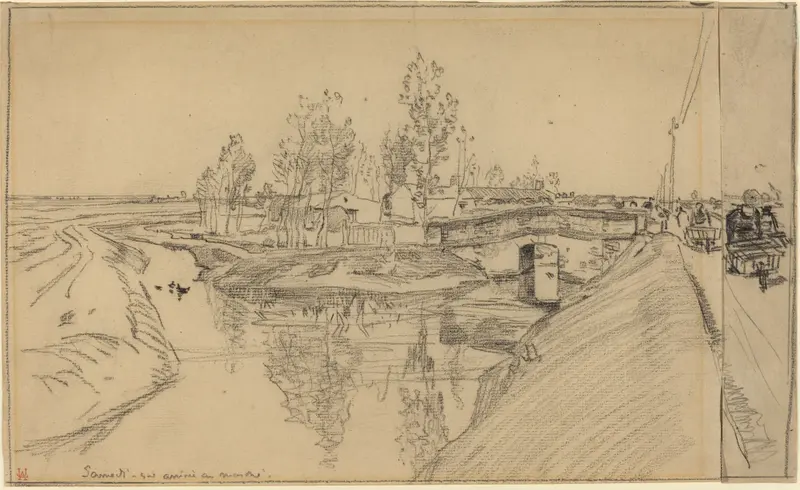
Arrivee au Marche
Auguste Lepère
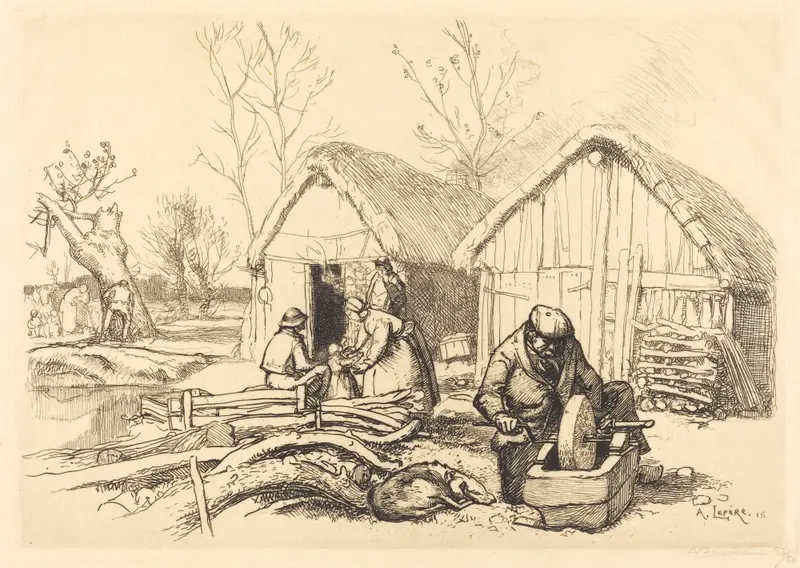
The House of the Woodcutter, Vendee (La maison du bucheron, Vendee)
Auguste Lepère
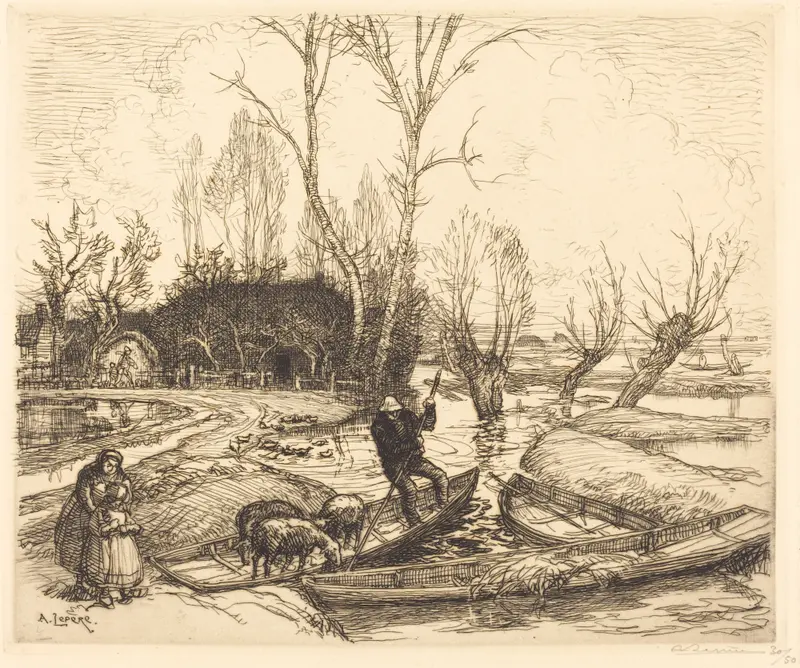
In the Deluged Marsh - The Shepherd (Au marais inonde - Le berger)
Auguste Lepère
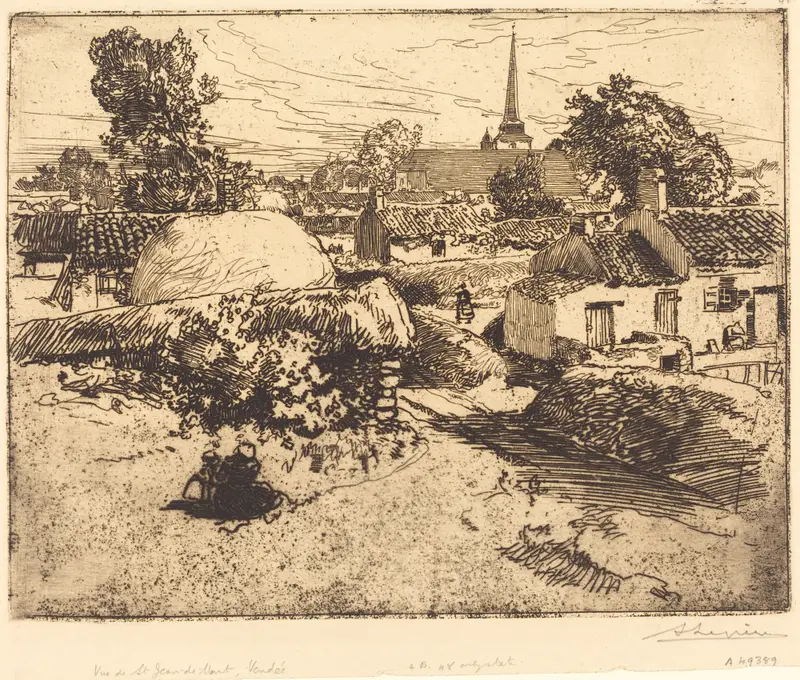
View of St.-Jean-de-Mont, Vendee (Vue de St.-Jean-de-Mont, Vendee)
Auguste Lepère
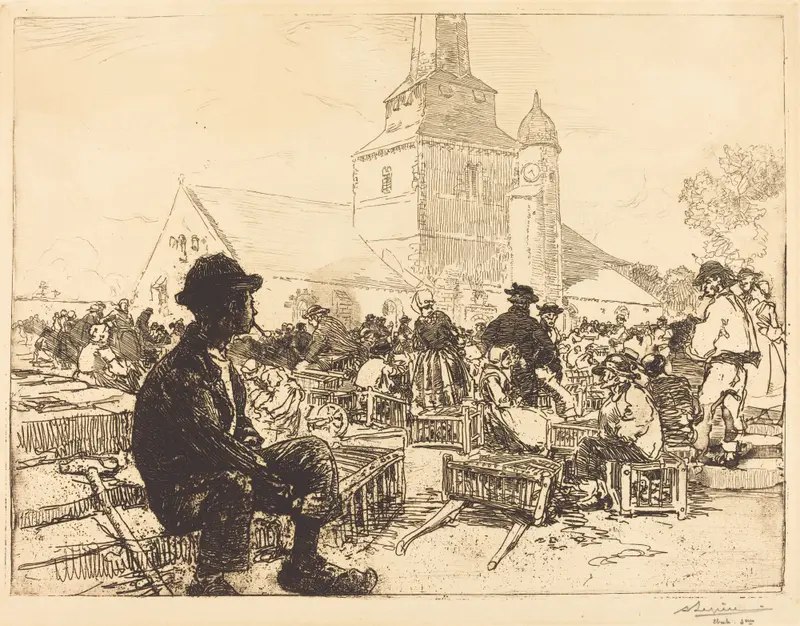
Poultry Market at St.-Jean-de-Mont (Marche a la volaille, a St.-Jean-de-Mont)
Auguste Lepère
More Landscape Art

The Starry Night
Vincent van Gogh

View of Delft
Johannes Vermeer

Water Lilies
Claude Monet

The Grand Canal, Venice, looking north-west from the Ca' Corner to the Ca' Contarini degli Scrigni, with the campanile of Santa Maria della Carità
Canaletto

Windsor Castle
Canaletto

The Grand Canal looking North-East from the Palazzo Dolfin-Manin to the Rialto Bridge
Canaletto