
The Porte du Rivage in Brussels — History & Facts
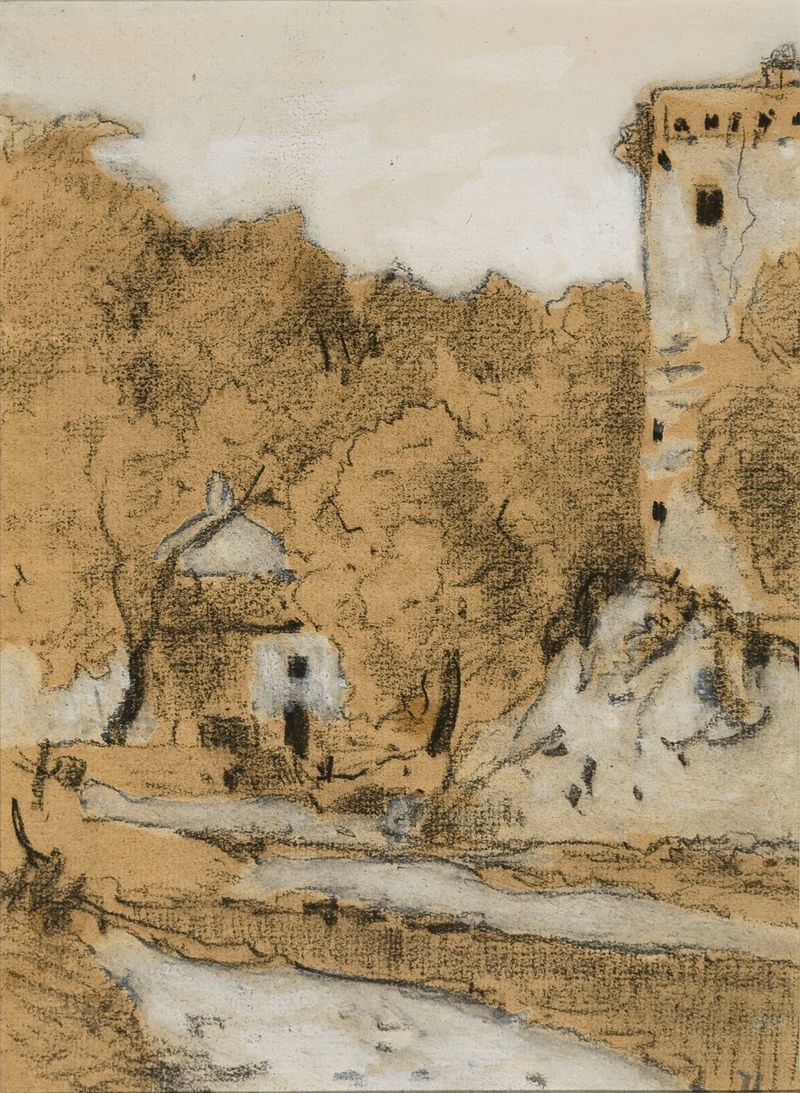
What if beauty was never meant to be finished? The concept of serenity may lie in the gentle embrace of nature, where time moves at its own pace and the heart finds solace in the quiet. Look to the center of the canvas, where the tranquil river flows seamlessly under the arched bridge, its waters mirroring the soft hues of the sky. The delicate strokes depict lush greenery framing the scene, while the pastel palette imbues it with a calming warmth. Notice how the light filters through the trees, casting dappled shadows on the path, inviting the viewer to walk alongside the lush banks.
This composition creates a delicate balance between structures and nature, each element harmonizing in a serene melody. Beyond the picturesque landscape, the painting subtly contrasts human craftsmanship with the untouched beauty of the natural world. The bridge stands as a testament to civilization, yet it remains enveloped in the embrace of nature, suggesting a dialogue between the man-made and the organic. The stillness of the water hints at deep reflections, both literal and metaphorical, where the viewer is invited to contemplate the passage of time and the persistent allure of beauty that exists in both fleeting moments and enduring landscapes. In 1877, Alphonse Asselbergs was establishing himself within the Belgian landscape painting tradition, capturing the serene beauty of his homeland.
Working amid a burgeoning art scene that celebrated realism and impressionism, he sought to evoke emotional responses through the interplay of light and nature. This painting emerged during a time of personal exploration for the artist, as he sought to blend meticulous technique with a sense of tranquility, mirroring the calmness that he found in his environment.
More Artworks by Alphonse Asselbergs
Browse all →
The Heath
Alphonse Asselbergs
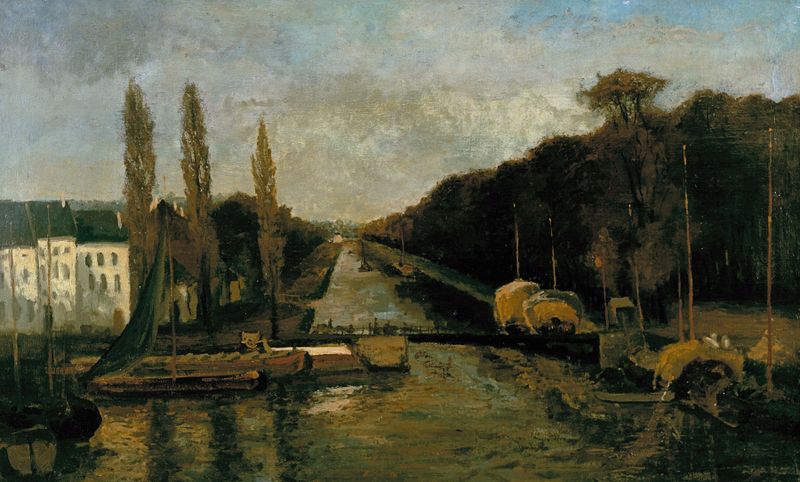
De Oeverpoort in Brussel
Alphonse Asselbergs
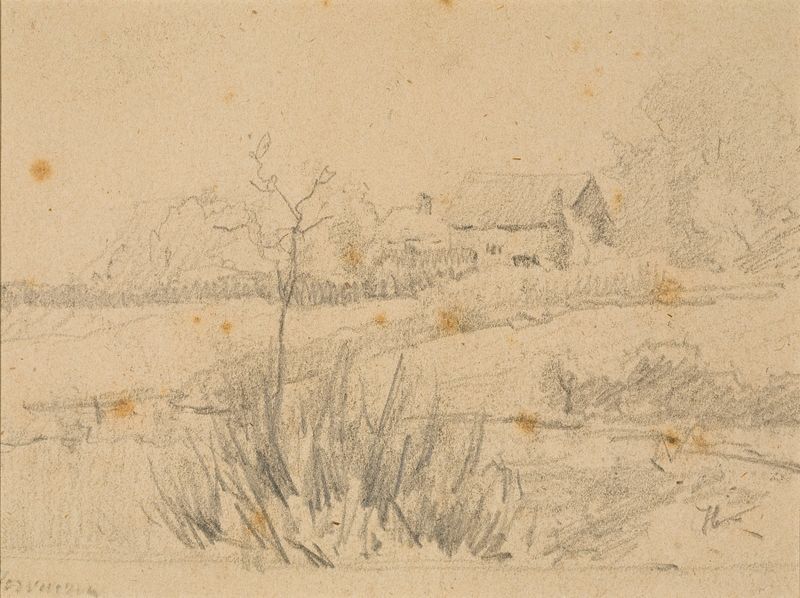
Farmhouse at Tervueren
Alphonse Asselbergs

Village-view
Alphonse Asselbergs

Fen in the Kempen
Alphonse Asselbergs
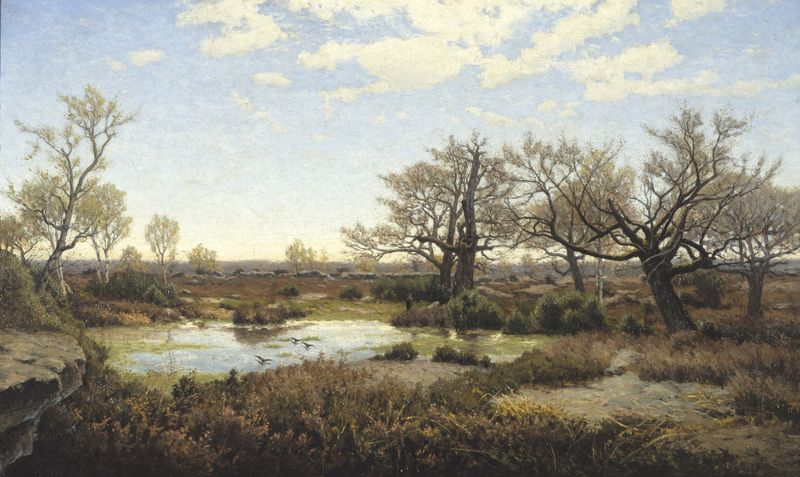
‘La Mare aux Fées’ at Fontainebleau
Alphonse Asselbergs
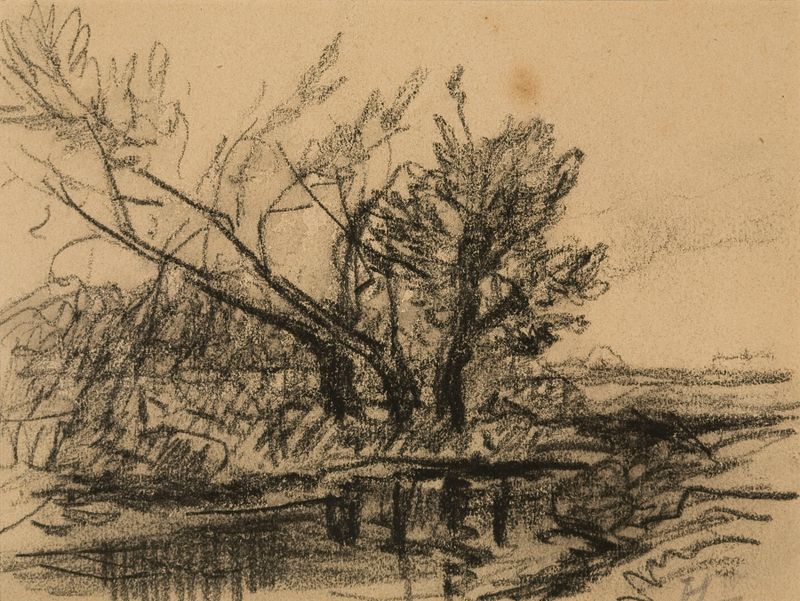
Trees near a Pond
Alphonse Asselbergs
Tower and Ruins in Italy
Alphonse Asselbergs





