The Poulterer, Vendee (Le Poulailler, Vendee) — History & Facts
A heavy, almost comic weariness hangs in the air as a man slumps against the rough-hewn doorframe, one arm draped over the latch, his back turned to us. The very posture of his body—bent, resigned—tells us as much about the world he inhabits as the scattering of chickens at his feet. A young girl stands nearby, hands on hips, her gaze fixed on the unruly flock.
The thatched roof and timbered walls press in, making the scene feel both intimate and faintly claustrophobic, while the sharp lines and deep shadows carved by Auguste Lepère’s hand lend the moment a sense of lived-in reality. Every detail, from the straw roof to the restless poultry, draws the viewer into a day’s work paused, a breath caught between chores. Created in 1908, The Poulterer, Vendee belongs to a moment when French artists were turning their eyes to rural labor and everyday life, capturing the rhythms and hardships of the countryside with new honesty. Works like this, often produced as prints for a growing middle-class audience, documented a world on the brink of change—mechanization and urbanization were beginning to reshape the landscape Lepère records here.
The National Gallery of Art now preserves this piece, a testament to both the endurance of rural tradition and the artist’s keen observation. Look again at the man’s slumped shoulders and the girl’s stance: in their gestures, the whole story of a vanished rural France comes quietly to life.
More Artworks by Auguste Lepère

Le Pont-Neuf (Paris)
Auguste Lepère
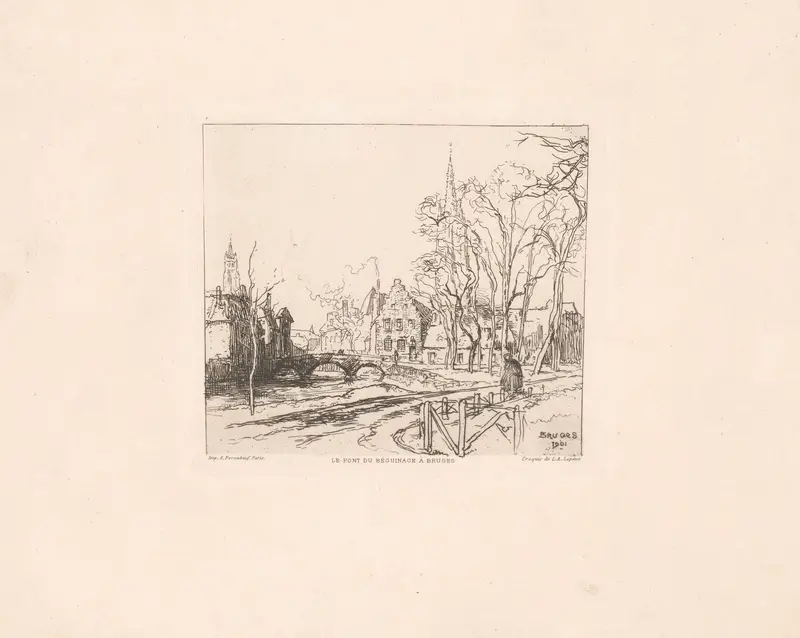
Le pont du Beguinage à Bruges
Auguste Lepère
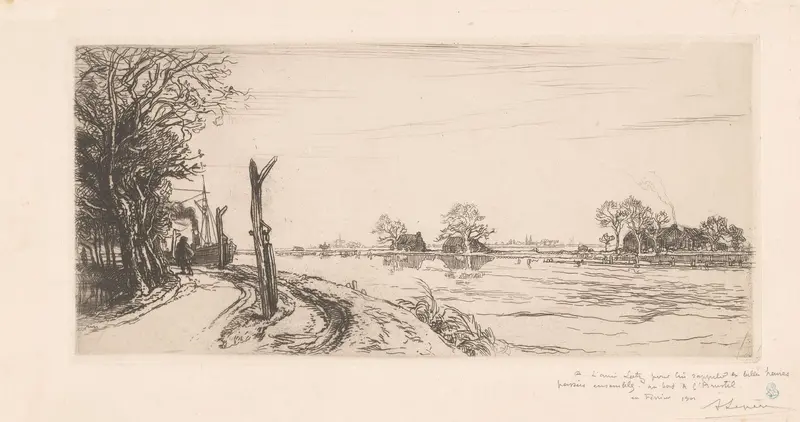
Au bord de l’Amstel
Auguste Lepère
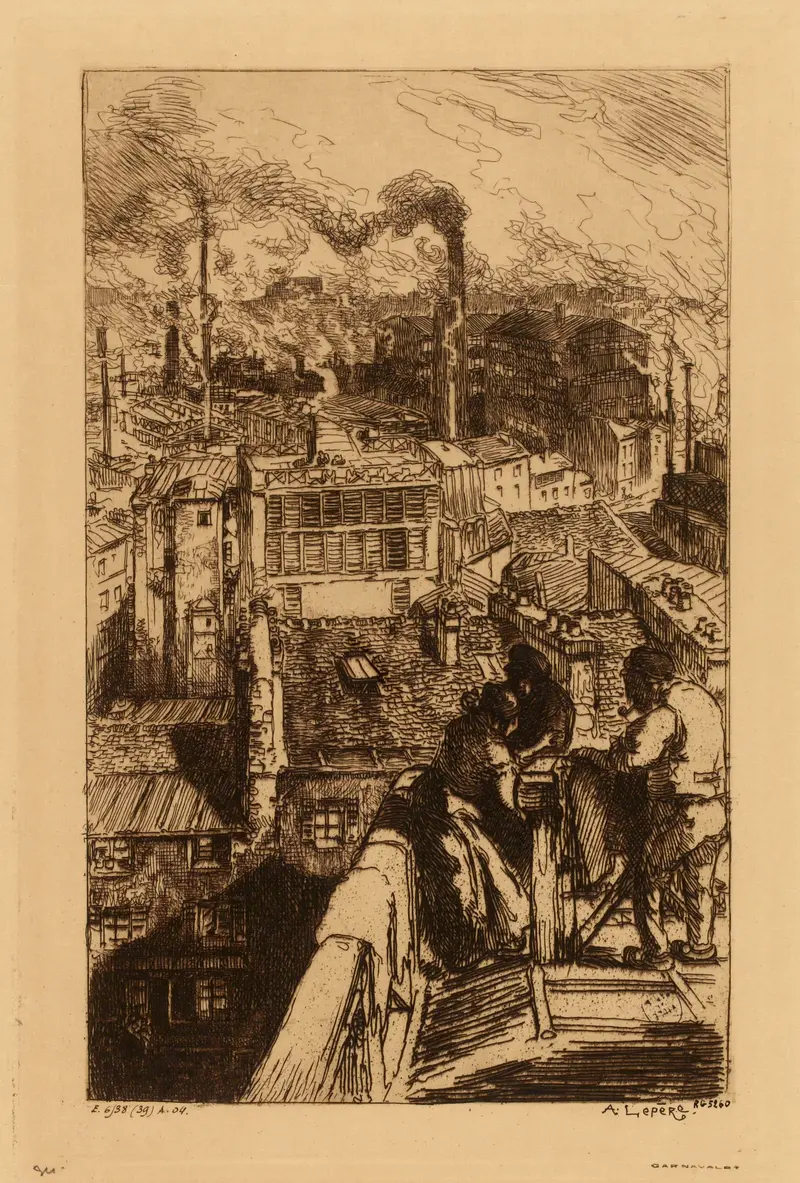
Le quartier des Gobelins
Auguste Lepère
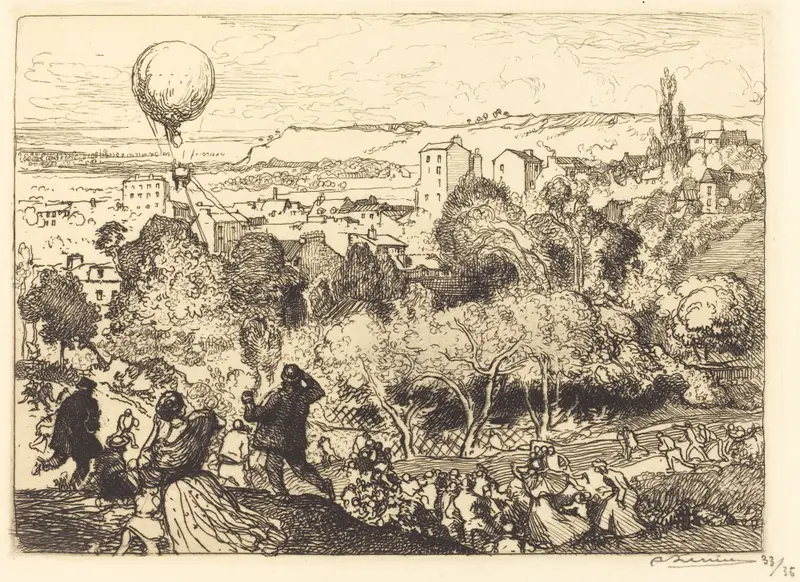
The Falling Balloon, in Pre-Saint-Gervais (Lebaloon qui tombe, au Pre-Saint-Gervais)
Auguste Lepère
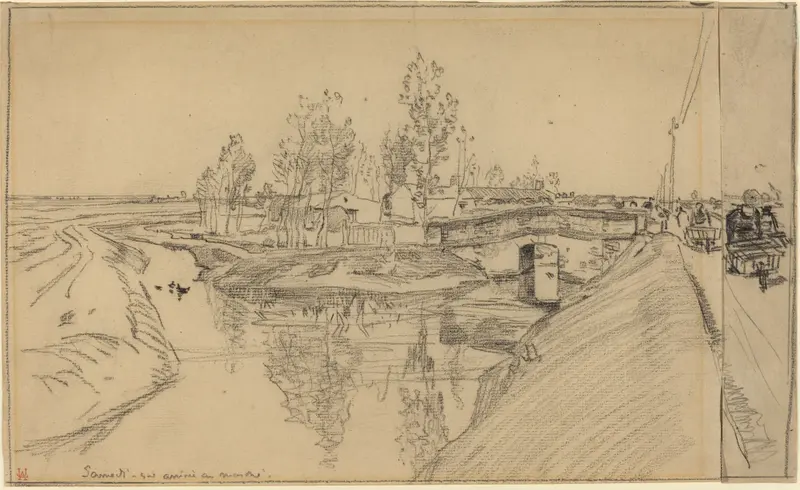
Arrivee au Marche
Auguste Lepère
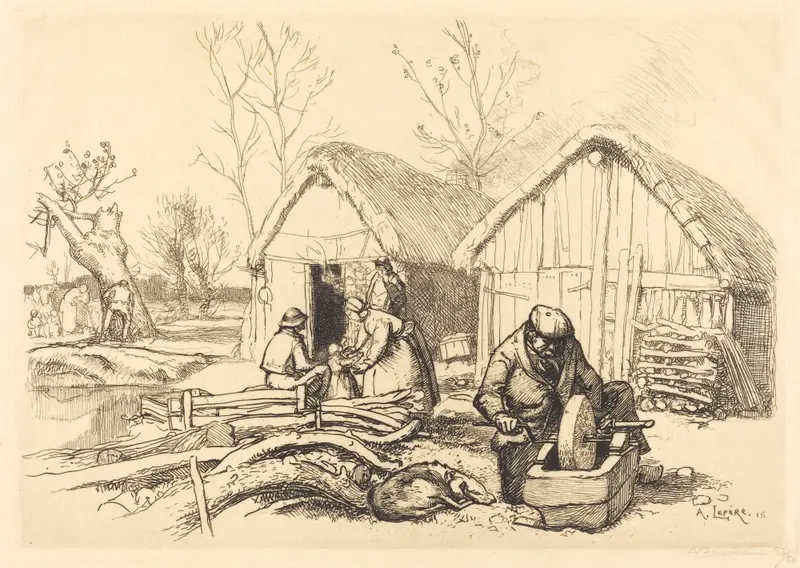
The House of the Woodcutter, Vendee (La maison du bucheron, Vendee)
Auguste Lepère
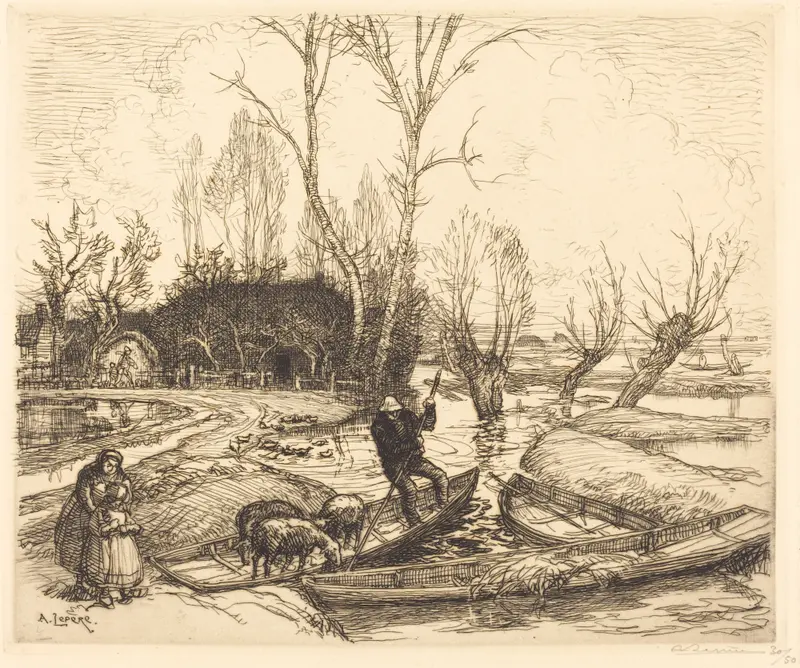
In the Deluged Marsh - The Shepherd (Au marais inonde - Le berger)
Auguste Lepère
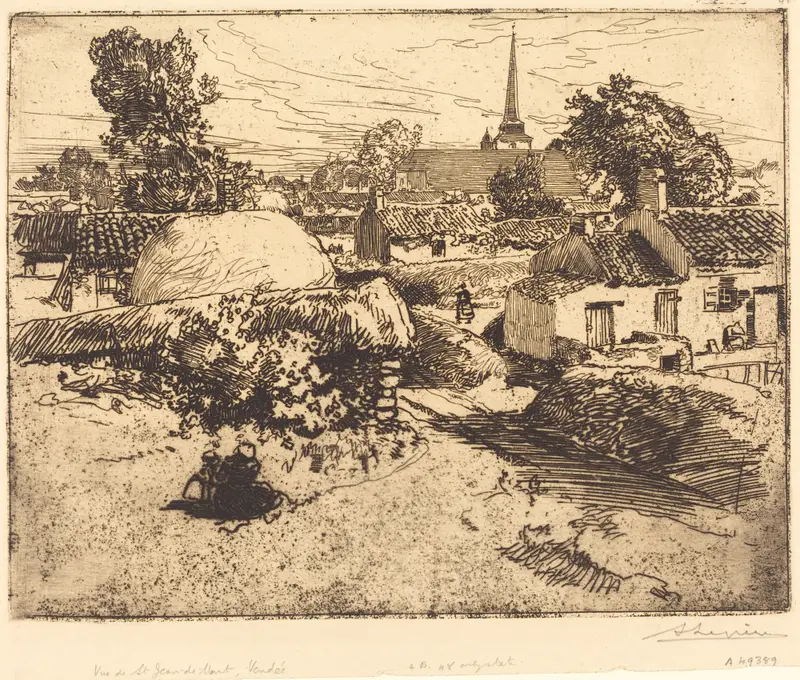
View of St.-Jean-de-Mont, Vendee (Vue de St.-Jean-de-Mont, Vendee)
Auguste Lepère
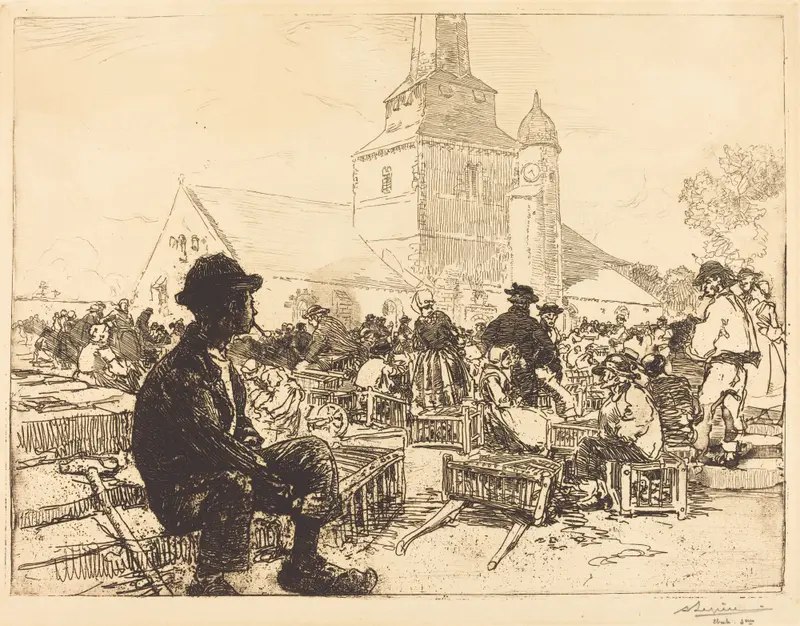
Poultry Market at St.-Jean-de-Mont (Marche a la volaille, a St.-Jean-de-Mont)
Auguste Lepère