
The Rhine at Duisburg — History & Facts
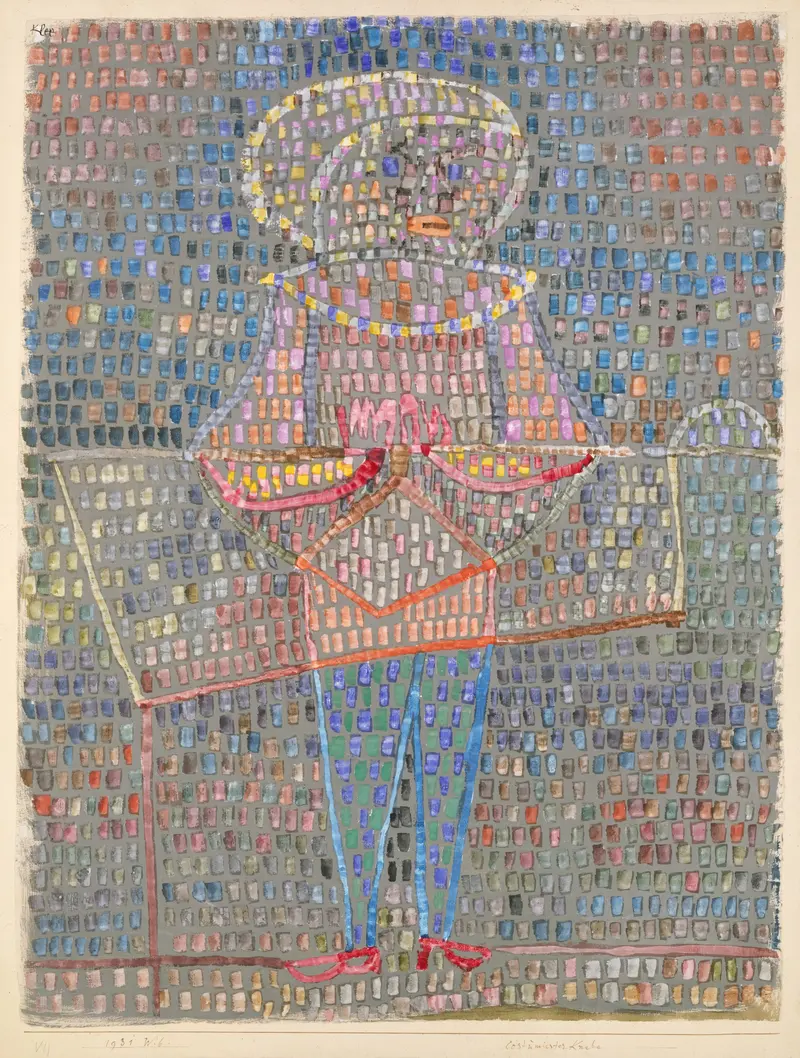
The Rhine at Duisburg by Paul Klee features a vibrant landscape filled with swirling colors. The painting captures the essence of the Rhine River, with bold strokes and a dynamic composition. Klee employs a palette of blues, greens, and yellows, creating a lively atmosphere.
The river flows through a stylized landscape, suggesting movement and energy. This artwork showcases Klee's unique approach to color and form, typical of the Modernism movement. The use of simplified shapes and abstract elements allows the viewer to engage with the painting on multiple levels. Klee's technique often involves layering colors to create depth and texture, which is evident in this piece.
The dimensions are approximately 50 x 70 cm, making it a manageable size for display. Paul Klee was a Swiss artist known for his innovative style that blends abstraction with figuration. The Rhine at Duisburg reflects Klee's fascination with nature and his ability to transform it into a visual language. An interesting fact about this work is that it was created during a period when Klee was exploring the relationship between color and emotion.
This painting exemplifies his belief that art should express the artist's inner feelings.
More Artworks by Paul Klee

More Landscape Art

The Starry Night
Vincent van Gogh

View of Delft
Johannes Vermeer

Water Lilies
Claude Monet

The Grand Canal, Venice, looking north-west from the Ca' Corner to the Ca' Contarini degli Scrigni, with the campanile of Santa Maria della Carità
Canaletto

Windsor Castle
Canaletto

The Grand Canal looking North-East from the Palazzo Dolfin-Manin to the Rialto Bridge
Canaletto