
The Rhone from the Path to Salvari (Switzerland) — History & Facts
Did the painter know this moment would outlive them? In The Rhone from the Path to Salvari, George Elbert Burr captures a fleeting tableau of nature's serenity, inviting us into a world that breathes with wonder and timelessness. Focus on the left side of the canvas, where the vibrant azure of the Rhone River stretches onward, converging with soft greens of the surrounding flora. The delicate interplay of light illuminates the water's surface, creating a shimmering effect that dances with life. Notice how the artist employs gentle brush strokes, allowing the colors to blend seamlessly, evoking a sense of harmony and tranquility inherent in the landscape. As you explore the work further, pay attention to the juxtaposition between the calm river and the rugged mountains in the distance.
This contrast serves as a metaphor for the duality of nature: both nurturing and formidable. The few figures dotting the path add a sense of scale, emphasizing the awe-inspiring expanse of the scene and hinting at the solitary journey of the human spirit against the vast backdrop of the natural world. Created in 1898, this painting emerged during Burr's time in Switzerland, where he was deeply influenced by the sublime beauty of the Alpine landscapes. At this juncture, the art world was shifting towards Impressionism, yet Burr maintained a unique realism in his work, striving to encapsulate not just the visual, but the emotional resonance of the landscapes he loved.
This piece reflects his commitment to preserving the fleeting beauty of a moment, transcending time and inviting viewers to linger in its splendor.
More Artworks by George Elbert Burr
Browse all →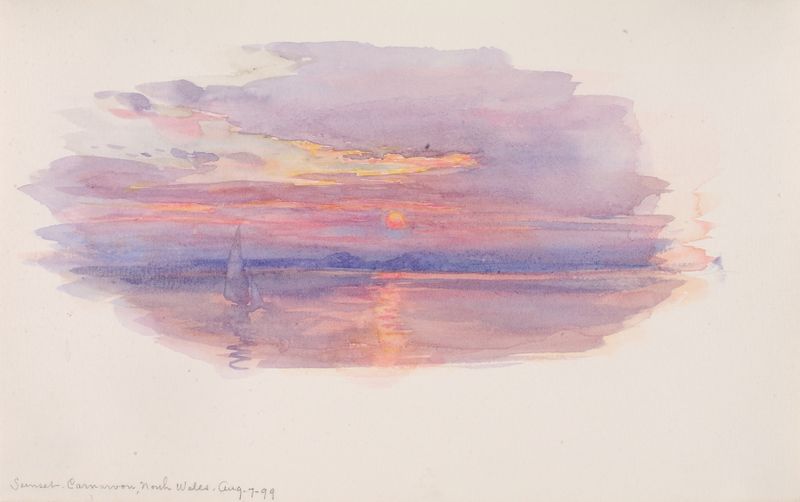
Sunset, Caernarvon, North Wales
George Elbert Burr
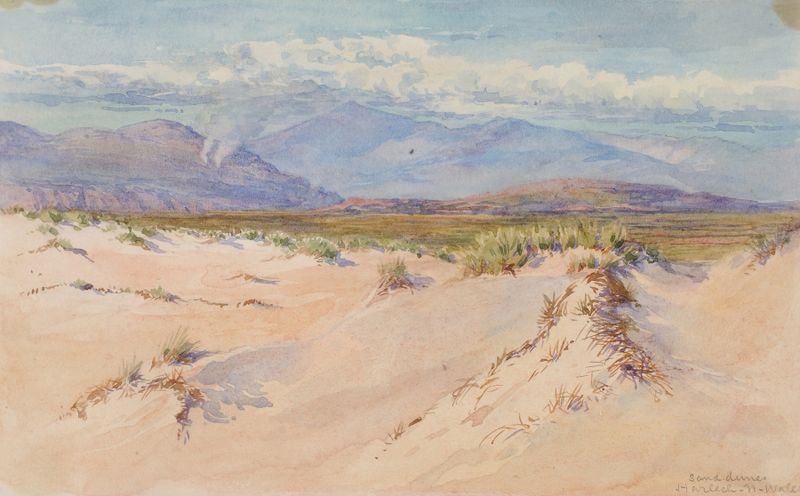
Sand Dunes, Harlech, North Wales
George Elbert Burr

From Pincio, Rome
George Elbert Burr

The Wye near Ross
George Elbert Burr

Venice
George Elbert Burr
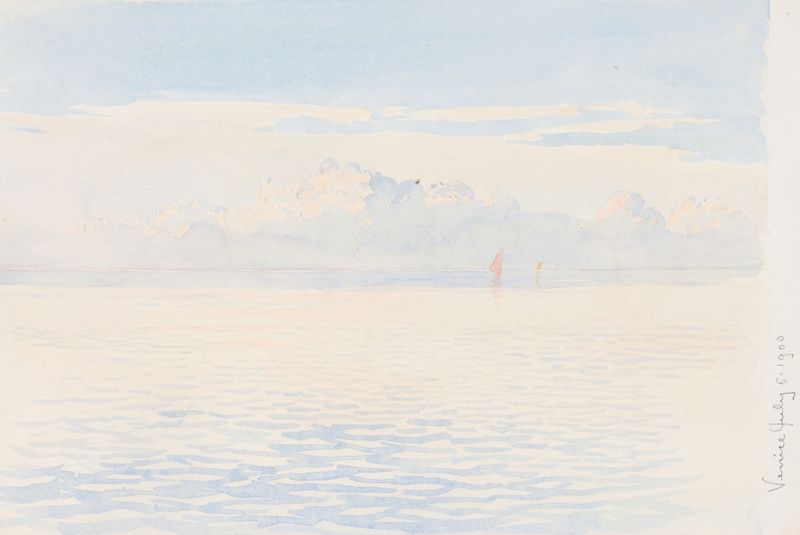
Venice II
George Elbert Burr

Shore at Pwllheli, N. Wales
George Elbert Burr

The Wye at Wilton Castle (Wales)
George Elbert Burr

Venice
George Elbert Burr

Criccieth, N. Wales II
George Elbert Burr





