
The Rocks — History & Facts
In each stroke lies a whisper of the past, a longing for the moments that slip through our fingers like sand. Van Gogh's work stirs a nostalgia that invites us to linger, to reflect, and to revel in the beauty of ephemeral landscapes. Look to the center of the canvas, where rugged formations rise against a backdrop of swirling skies. Notice how the bold strokes of cobalt and emerald embrace the earthy tones, creating a striking contrast that captivates the eye.
The textured surface, achieved with impasto technique, draws you in, inviting tactile exploration as the colors vibrate with life, echoing the intensity of the artist’s emotions. The interplay of light and shadow heightens the sense of depth, evoking the passage of time and the cycle of nature. Each crevice and contour speaks to the resilience of the rocks, yet they are softened by the gentleness of the sky’s embrace. This tension between permanence and transience encapsulates a yearning for connection with the natural world, pointing to life’s fleeting beauty and fragility. Van Gogh painted this evocative landscape during a turbulent period in his life, around the 1880s, while he was in the South of France.
It was a time of creative fervor and personal struggle, marked by his deepening appreciation for color and form. Amid the artistic movements of Impressionism and Post-Impressionism, he sought to transcend mere representation, aiming instead to capture the essence of emotion through his vibrant depictions of nature.
More Artworks by Vincent van Gogh
Browse all →
Starry Night
Vincent van Gogh
The Bedroom
Vincent van Gogh
Irises
Vincent van Gogh
Wheatfield with Crows
Vincent van Gogh
Starry Night over the Rhone
Vincent van Gogh

The yellow house
Vincent van Gogh
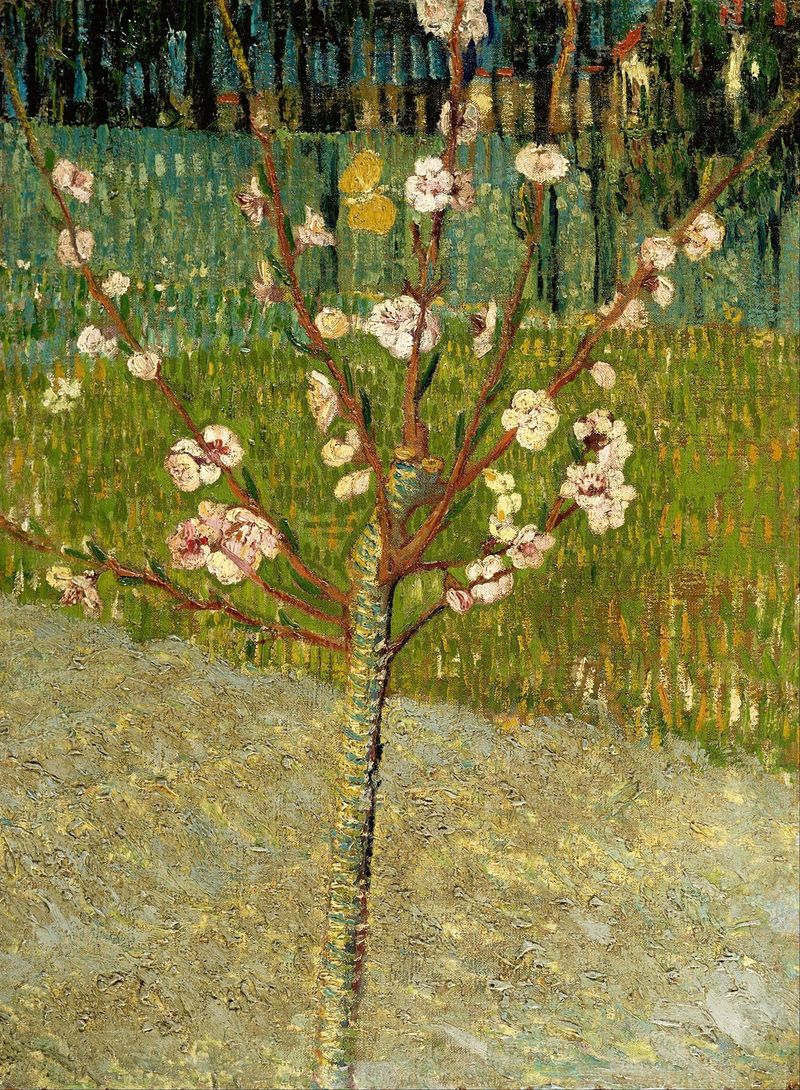
Almond tree in blossom
Vincent van Gogh

Portrait of Dr Gachet
Vincent van Gogh

The Church in Auvers-sur-Oise, View from the Chevet
Vincent van Gogh

Self-Portrait
Vincent van Gogh





