
The Rokin with the Stock Exchange of Hendrick de Keijser — History & Facts
What first catches the eye in The Rokin with the Stock Exchange of Hendrick de Keijser is the calm choreography of city life unfolding along the water’s edge. The painter, Abraham Storck, draws the viewer into the heart of Amsterdam’s bustling Rokin, where the grand silhouette of the Nieuwezijds Kapel rises on the left, its Gothic windows catching the last of the daylight. Across the canal, the stately Beurs van De Keyser stands in quiet authority, its classical façade a testament to the city’s mercantile ambitions.
Boats glide between these landmarks, their sails furled, while figures on the quay and in small craft seem absorbed in the rhythms of commerce and conversation. The low horizon and expansive sky invite the eye upward, giving the clouds a gentle, almost theatrical presence that softens the city’s sharp outlines. This painting belongs to a world in which cityscapes were both celebration and record, commissioned by merchants and burghers eager to display their pride in a rapidly changing Amsterdam. In the late seventeenth century, scenes like this were prized for their accuracy and their ability to capture the pulse of urban life—each building, each vessel, a marker of civic achievement and economic might.
Abraham Storck was among those who specialized in such views, blending architectural precision with a keen sense for atmosphere. The work’s date, between 1670 and 1699, places it at the height of the Dutch Republic’s prosperity, when the city’s canals and exchanges were the arteries of a global trading empire. Few traces remain of the everyday bustle Storck records, but his painting invites us to linger, to imagine the sounds and ambitions behind each brushstroke.
More Artworks by Abraham Storck

The Muscovite legation visiting Amsterdam, 29 August 1697
Abraham Storck
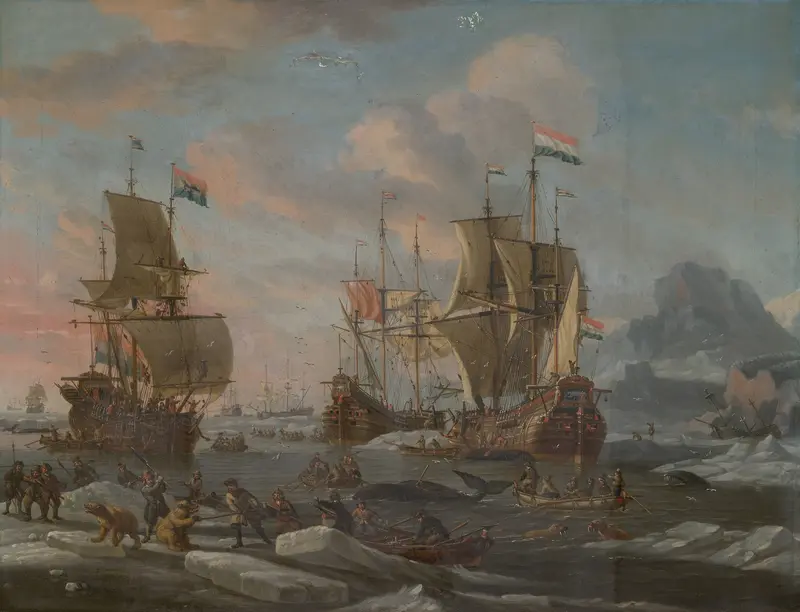
The Dutch Whaling Fleet
Abraham Storck
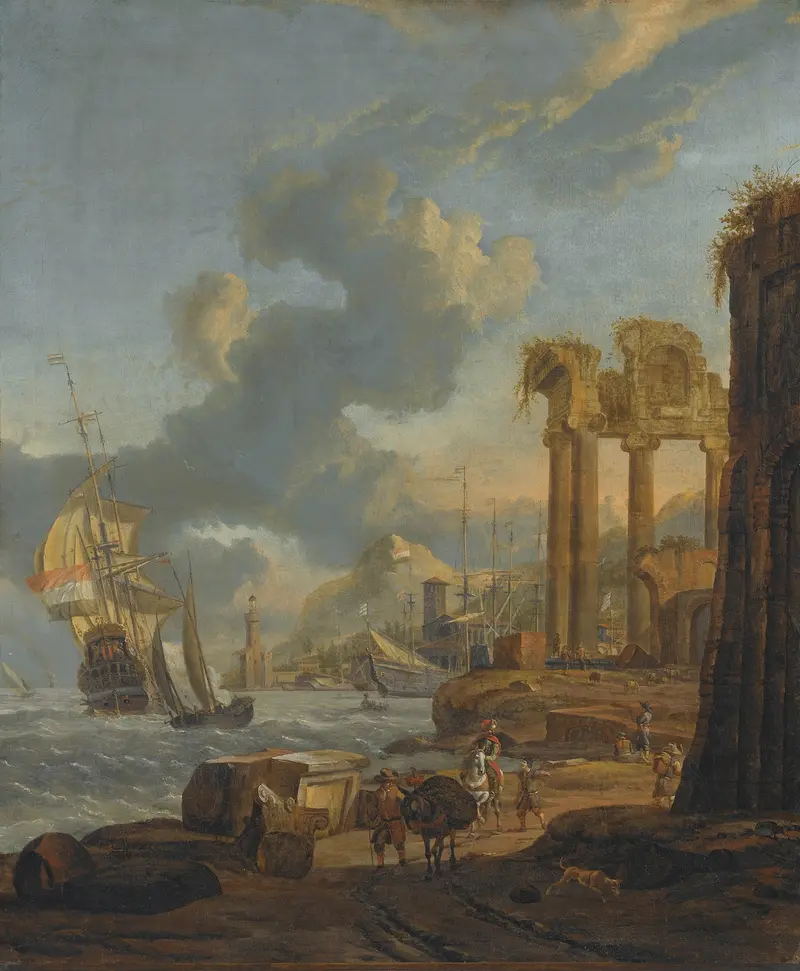
A Mediterranean Harbour Scene With Travellers On The Shore, A Dutch Man-Of-War On The Left
Abraham Storck
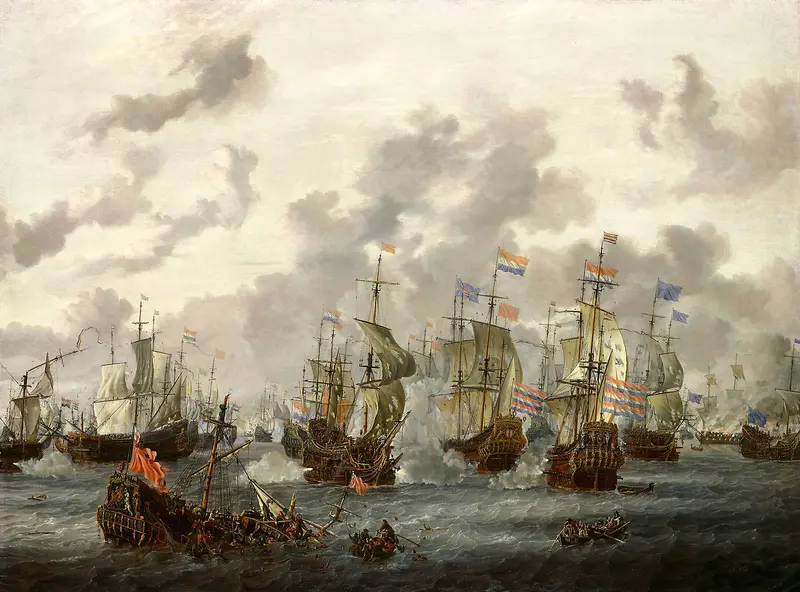
The Four Days’ Battle
Abraham Storck
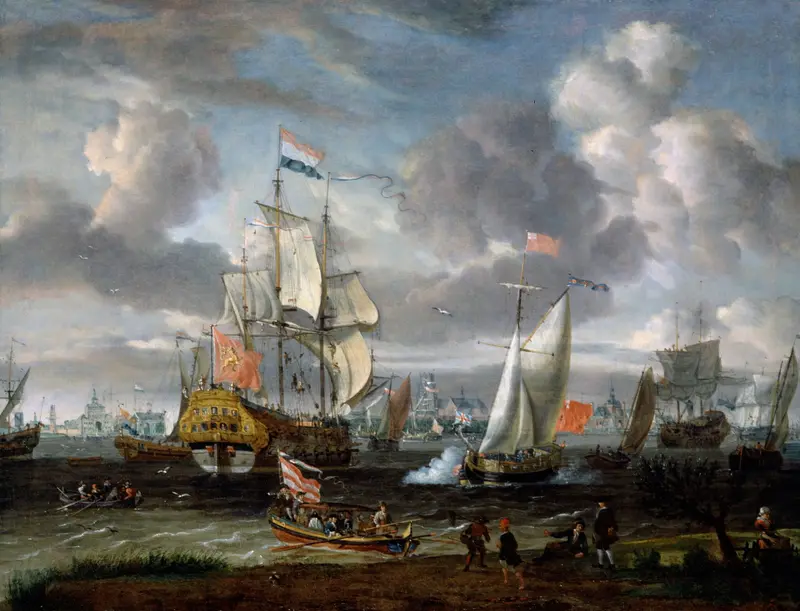
An English Yacht saluting a Dutch Man-of-War in the port of Rotterdam
Abraham Storck
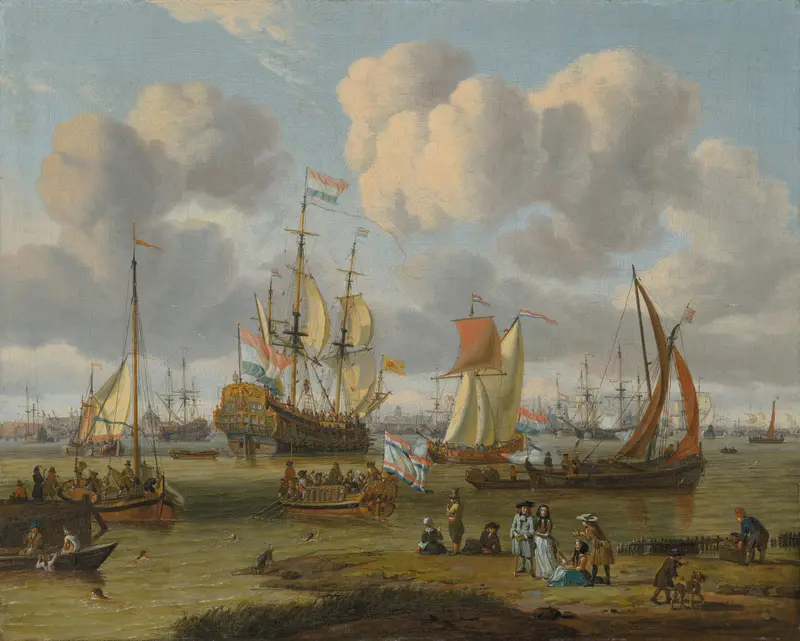
Shipping off Amsterdam with figures on a quay
Abraham Storck
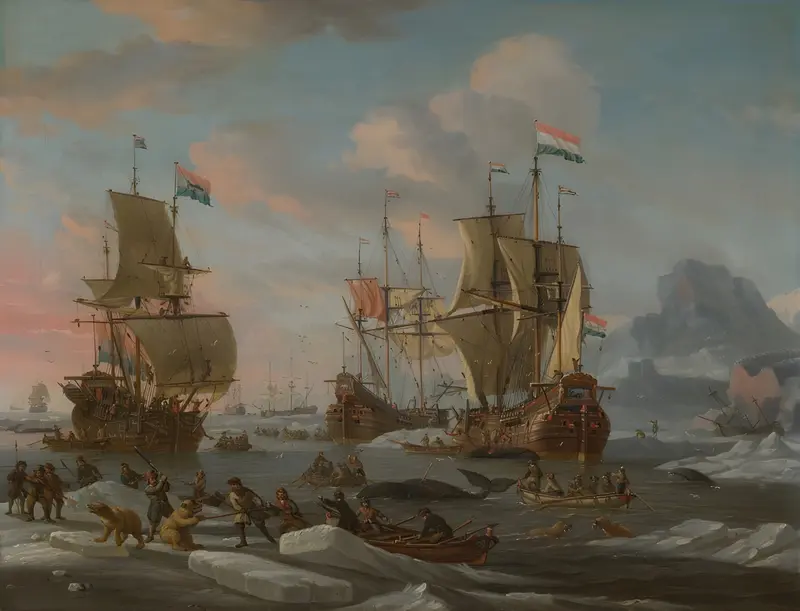
The Dutch Whaling Fleet
Abraham Storck
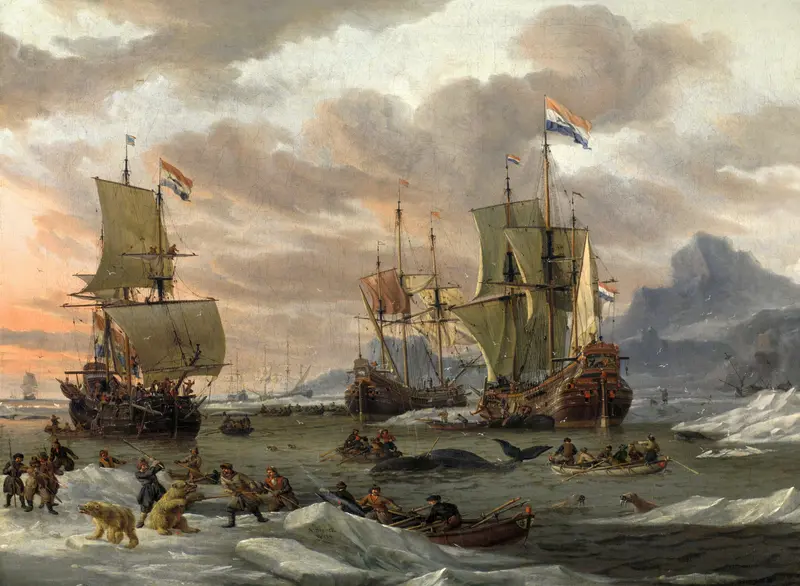
Whaling Grounds in the Arctic Ocean
Abraham Storck
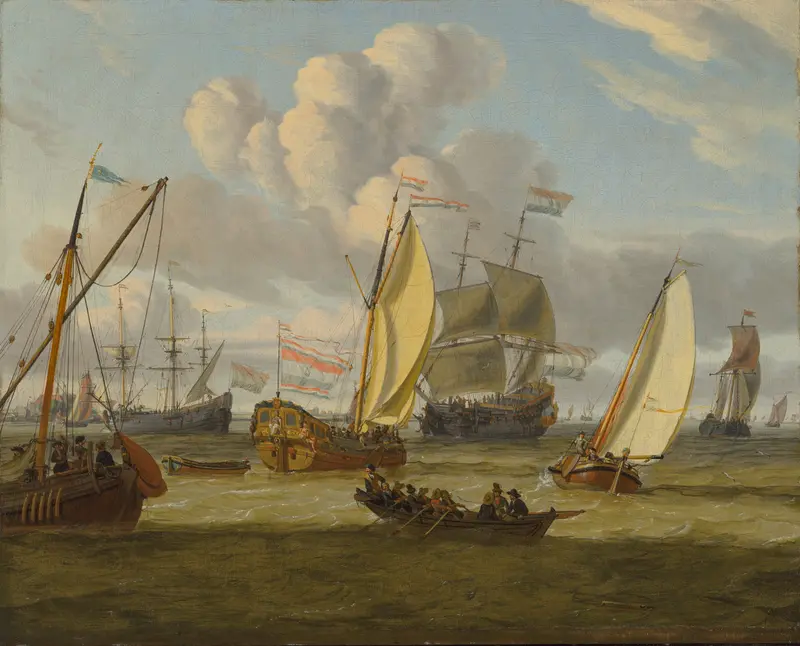
Shipping in an estuary
Abraham Storck
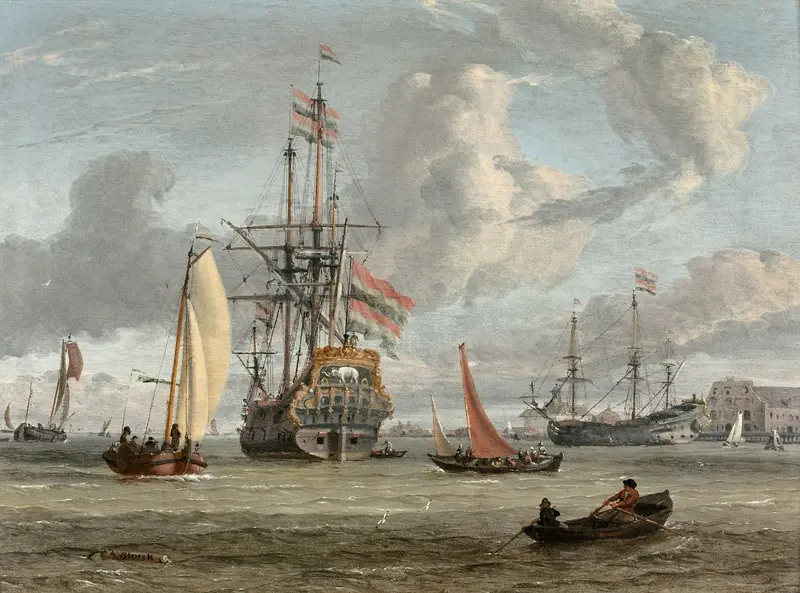
Grand navire de la couronne du Danemark près d’un littoral
Abraham Storck
More Landscape Art

The Starry Night
Vincent van Gogh

View of Delft
Johannes Vermeer

Water Lilies
Claude Monet

The Grand Canal, Venice, looking north-west from the Ca' Corner to the Ca' Contarini degli Scrigni, with the campanile of Santa Maria della Carità
Canaletto

Windsor Castle
Canaletto

The Grand Canal looking North-East from the Palazzo Dolfin-Manin to the Rialto Bridge
Canaletto