
The Seine near the Austerlitz Bridge — History & Facts
What first seizes the eye in The Seine near the Austerlitz Bridge is the sense of movement—of a city and its river caught mid-breath. The artist draws you in with the curve of a woman’s back as she descends a steep embankment, her dress gathered against the muddy ground, while a crowd of figures, carts, and riverboats animate every corner of the scene. The composition pulls you forward, from the bustling market at the lower left, past the workers and strollers lining the quay, to the smoke-streaked horizon where barges and factories blur into the Parisian skyline.
Light glances off the water, guiding the gaze across the bridges and distant buildings, while the dense crosshatching overhead suggests a sky heavy with the promise of rain or industry. Created in 1888, this work belongs to the world of late nineteenth-century Paris, when the city’s riverbanks were both arteries of commerce and stages for everyday drama. Artists like Auguste Lepère found inspiration in these liminal spaces, where urban life pressed up against the natural flow of the Seine. Such scenes were popular among collectors eager to celebrate the modern city, and prints like this—now held by the National Gallery of Art—offered an affordable window onto the spectacle of urban transformation.
History has kept few traces of this specific sheet’s journey, but its restless energy and acute observation remain, inviting us to linger over every figure and shadow, and to imagine the stories unfolding along the water’s edge.
More Artworks by Auguste Lepère

Le Pont-Neuf (Paris)
Auguste Lepère
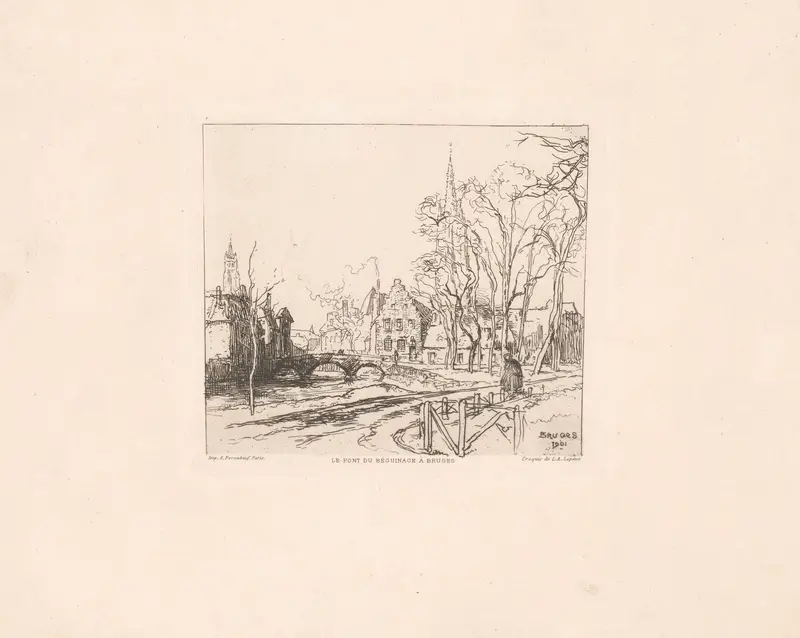
Le pont du Beguinage à Bruges
Auguste Lepère
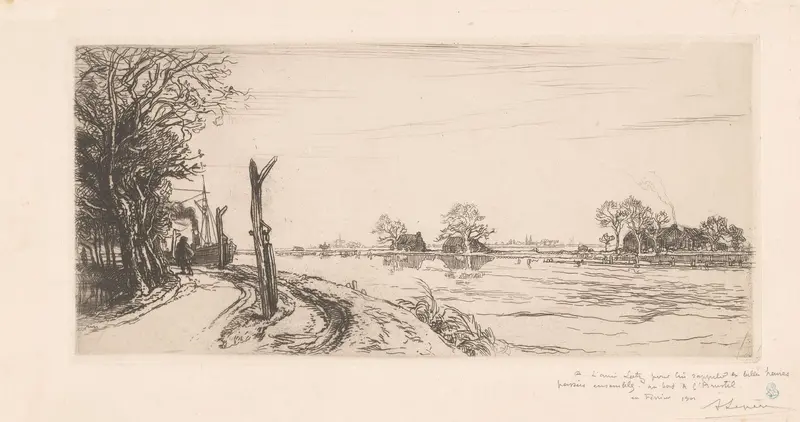
Au bord de l’Amstel
Auguste Lepère
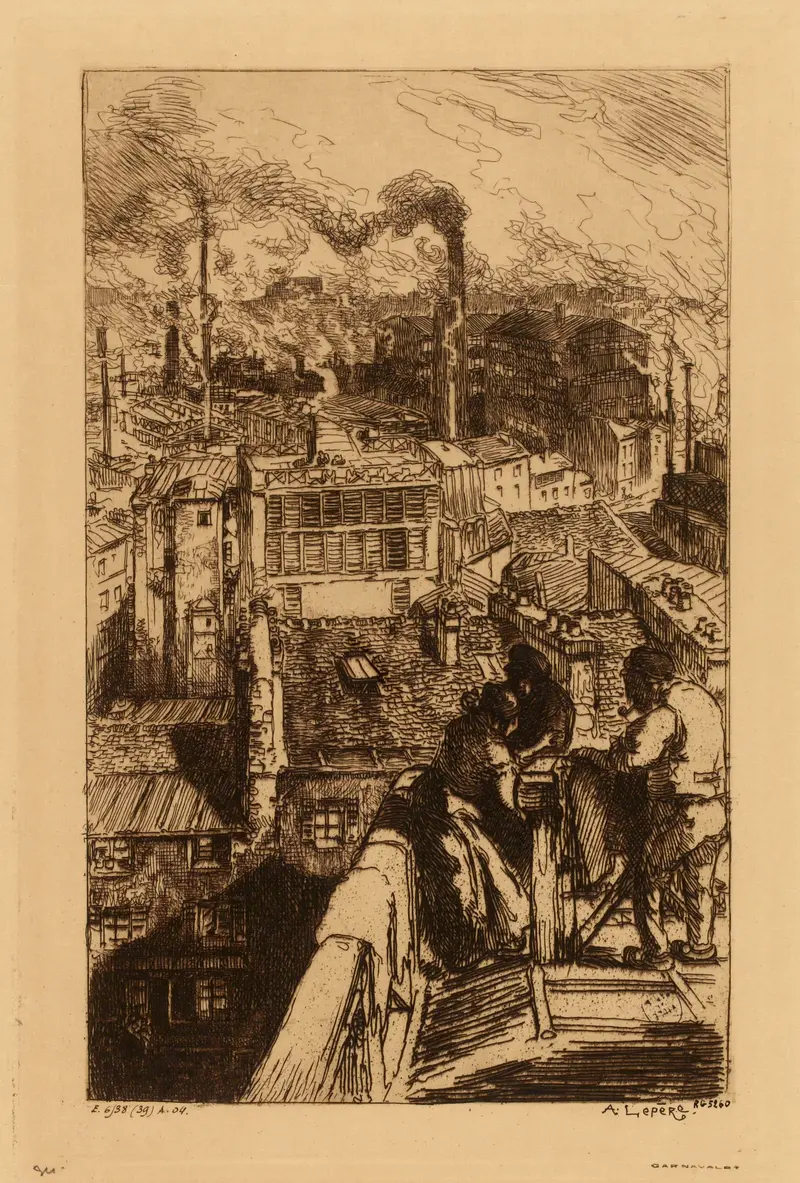
Le quartier des Gobelins
Auguste Lepère
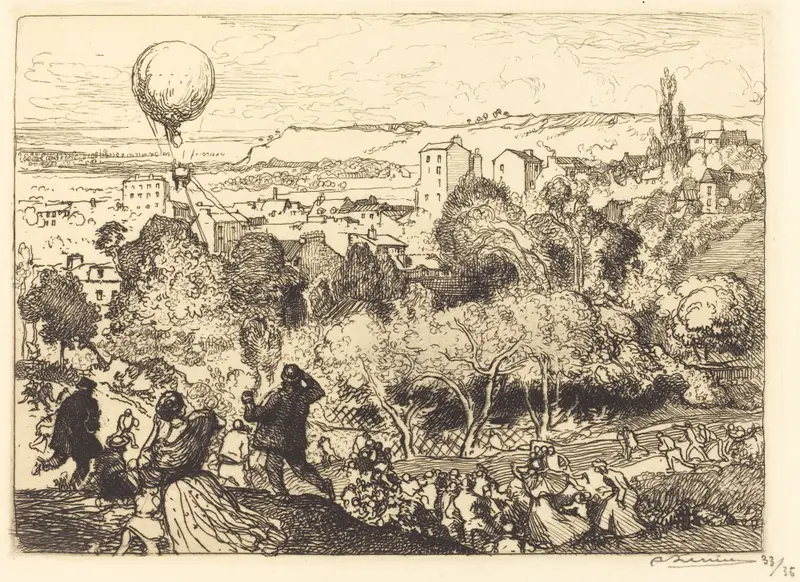
The Falling Balloon, in Pre-Saint-Gervais (Lebaloon qui tombe, au Pre-Saint-Gervais)
Auguste Lepère
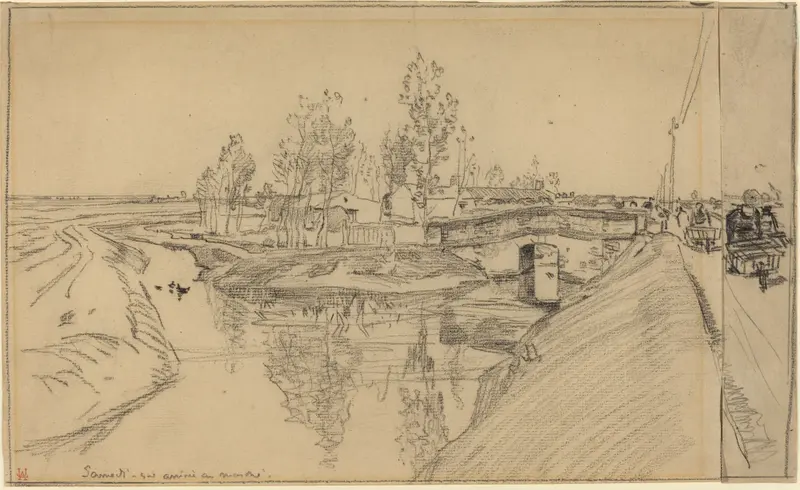
Arrivee au Marche
Auguste Lepère
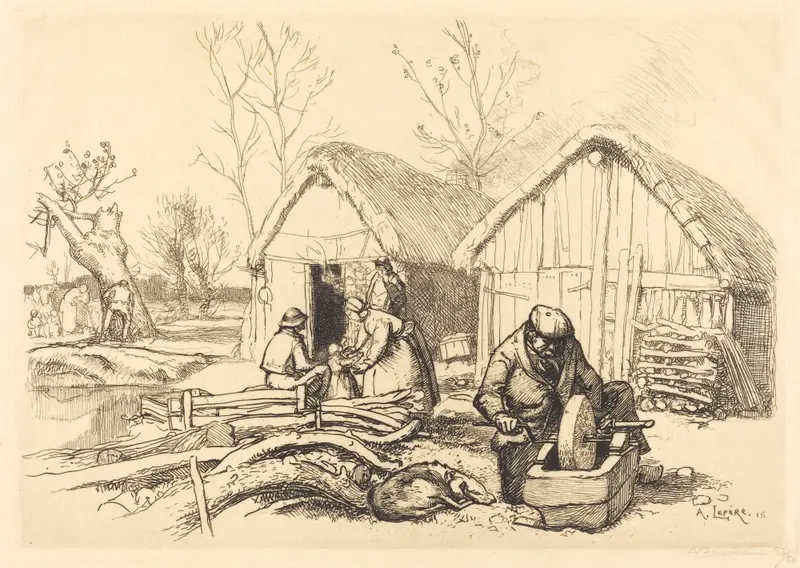
The House of the Woodcutter, Vendee (La maison du bucheron, Vendee)
Auguste Lepère
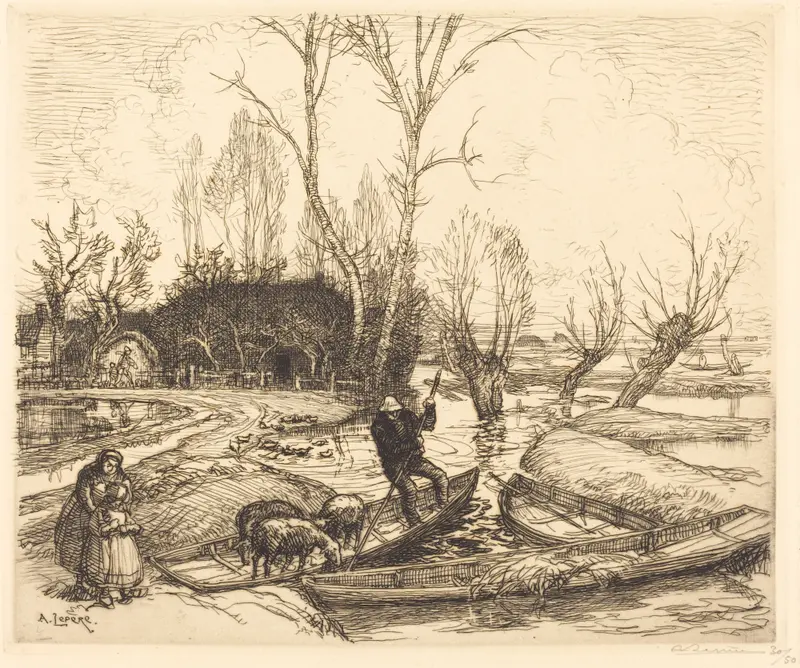
In the Deluged Marsh - The Shepherd (Au marais inonde - Le berger)
Auguste Lepère
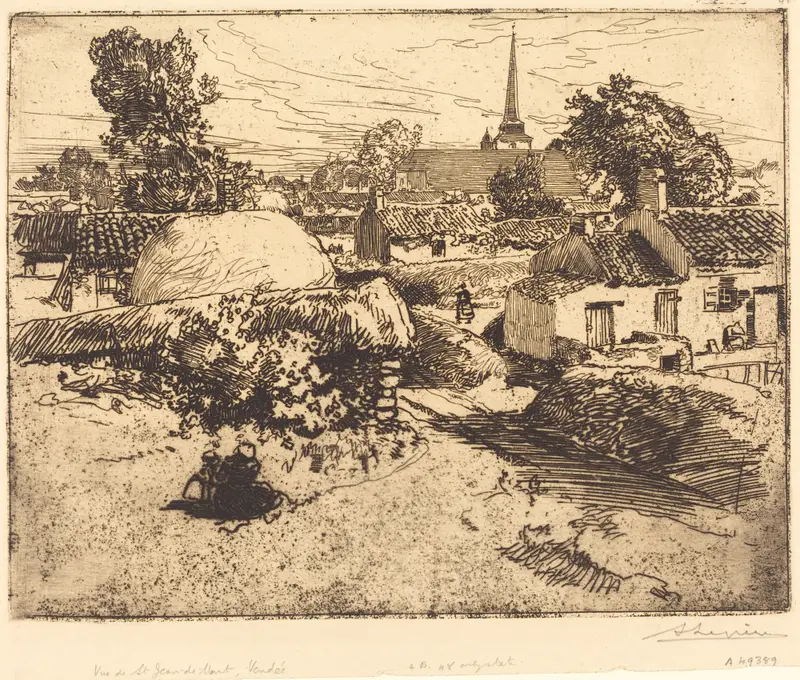
View of St.-Jean-de-Mont, Vendee (Vue de St.-Jean-de-Mont, Vendee)
Auguste Lepère
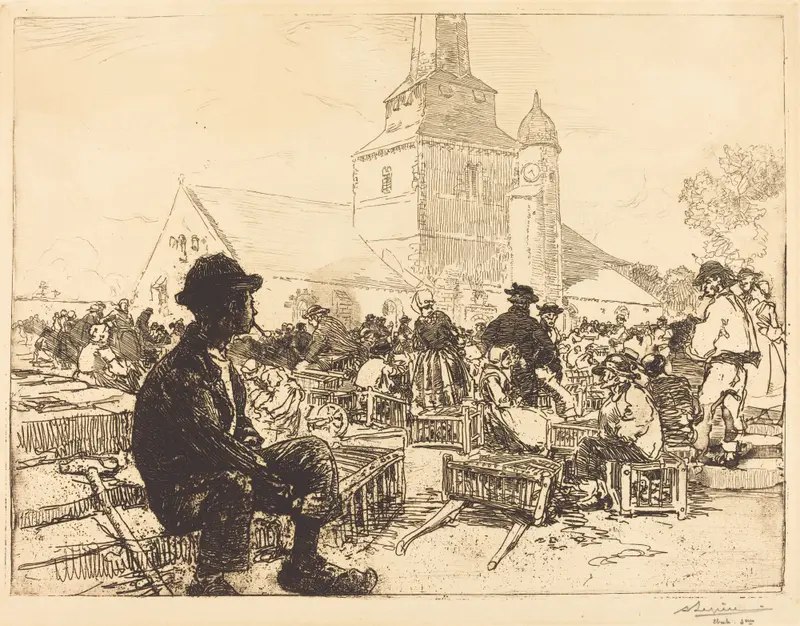
Poultry Market at St.-Jean-de-Mont (Marche a la volaille, a St.-Jean-de-Mont)
Auguste Lepère
More Landscape Art

The Starry Night
Vincent van Gogh

View of Delft
Johannes Vermeer

Water Lilies
Claude Monet

The Grand Canal, Venice, looking north-west from the Ca' Corner to the Ca' Contarini degli Scrigni, with the campanile of Santa Maria della Carità
Canaletto

Windsor Castle
Canaletto

The Grand Canal looking North-East from the Palazzo Dolfin-Manin to the Rialto Bridge
Canaletto