
The Stone Bridge — History & Facts
When did color learn to lie? The illusion of reality often dances perilously close to deception, as seen in the intricacies of the natural world rendered in paint. Look to the center of the composition, where the stone bridge arches gracefully over a calm river. Notice how the gentle ripples capture the sky’s soft hues, reflecting the delicate interplay of light and shadow. The meticulous detail in the stones, each with its distinct texture, invites you to trace the lines of nature’s design, while the cool greens and muted earth tones ground the scene in a tranquil realism, drawing your eye deeper into the landscape. Hidden within the brushwork is a subtle commentary on the passage of time.
The bridge, sturdy yet inviting decay, contrasts with the ethereal quality of the water beneath, suggesting transience in both nature and human constructs. Trees stand sentinel on either bank, their reflections a reminder of duality, the seen and the unseen. This gentle tension between permanence and impermanence resonates throughout the piece, evoking contemplation of life’s fleeting moments against enduring structures. During the period when this work was created, the artist was immersed in a burgeoning Dutch landscape tradition, where meticulous detail and a serene palette were celebrated.
Working in Amsterdam between 1660 and 1672, he was part of a cultural milieu that placed great emphasis on realism and the beauty of the everyday. Amidst the thriving art market, his ability to capture light and atmosphere was particularly influential, earning him recognition as a master of landscape painting.
More Artworks by Jan van der Heyden
Browse all →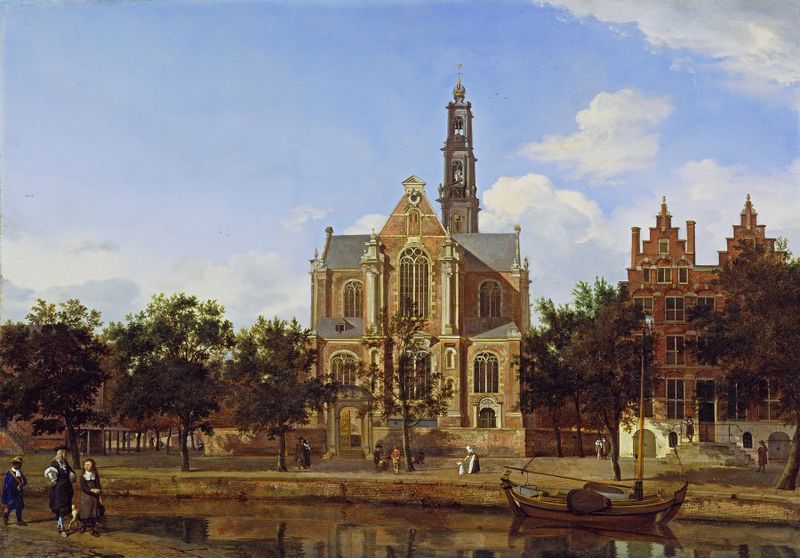
View of the Westerkerk, Amsterdam
Jan van der Heyden
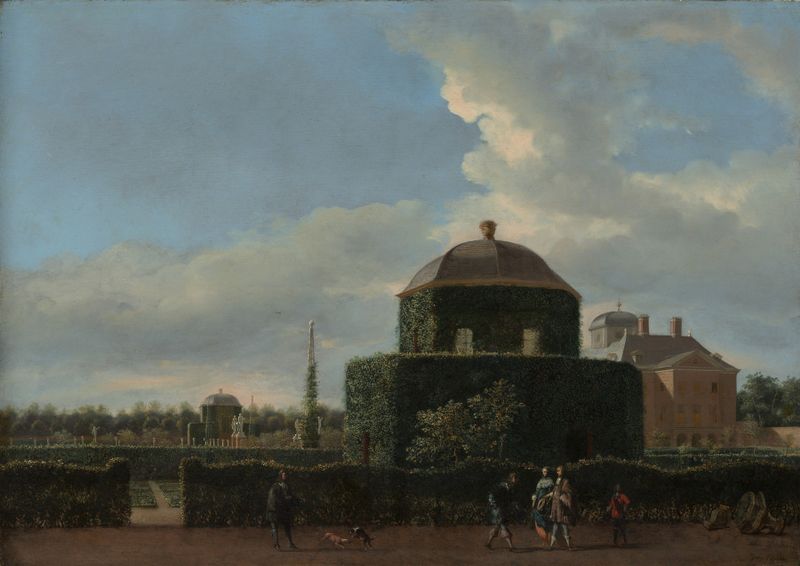
The Huis ten Bosch at The Hague and Its Formal Garden (View from the East)
Jan van der Heyden

The Dam in Amsterdam towards the Townhall and Nieuwe Kerk
Jan van der Heyden
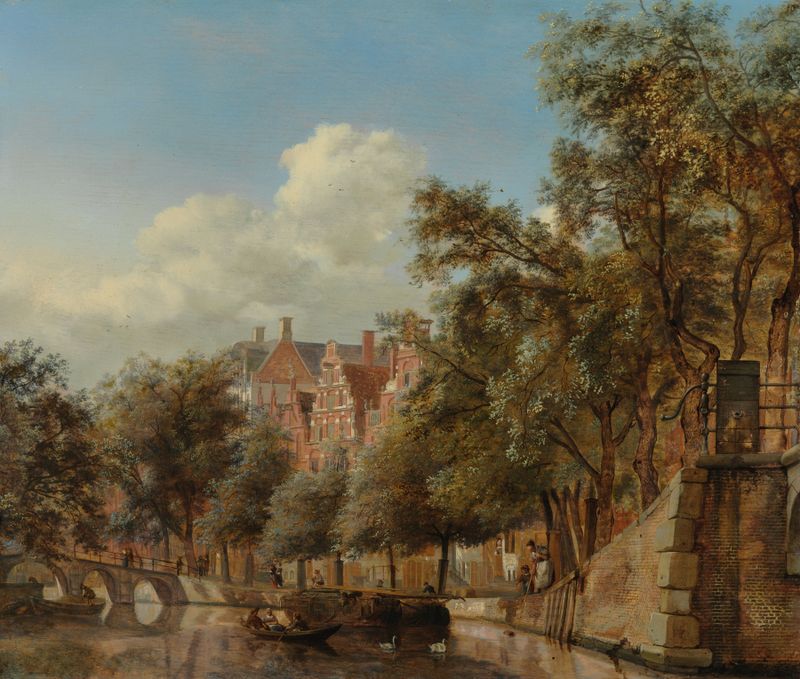
The Herengracht, Amsterdam, Viewed from the Leliegracht
Jan van der Heyden

Amsterdam City View with Houses on the Herengracht and the old Haarlemmersluis
Jan van der Heyden

View of the Oude Delft Canal, Delft
Jan van der Heyden
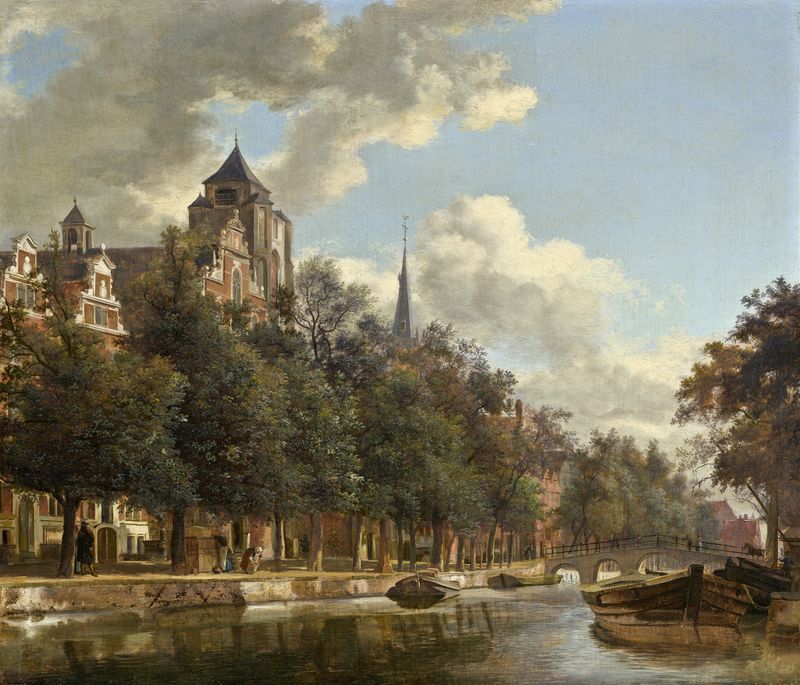
View Down a Dutch Canal
Jan van der Heyden
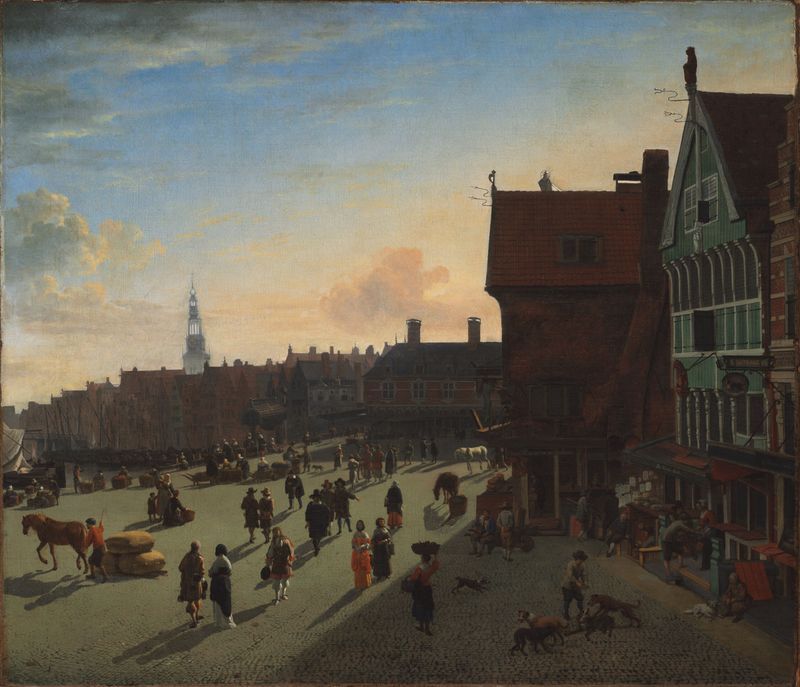
The Dam and Damrak, Amsterdam
Jan van der Heyden

View of Oudezijds Voorburgwal with the Oude Kerk in Amsterdam
Jan van der Heyden

The Herengracht, Amsterdam, Viewed from the Leliegracht
Jan van der Heyden





