
The Travelers — History & Facts
Could beauty survive in a century of chaos? In The Travelers, Meindert Hobbema captures a serene moment that defies the tumult of his time. Look to the left at the two figures, poised on a winding path beneath a canopy of vibrant foliage. The meticulous detailing of the leaves creates an interplay of sunlight and shadow, guiding your gaze deeper into the landscape. The warm earth tones enhance a sense of tranquility, inviting contemplation while the distant water reflects the sky’s soft blues.
Hobbema's choice of an elongated composition draws you into the scene, making you feel like part of the journey. As you explore the painting further, subtle contrasts emerge. The rich, green vegetation symbolizes renewal, while the travelers, perhaps weary from their journey, hint at the personal struggles that coexist with nature's beauty. The gentle curves of the path suggest both guidance and uncertainty, capturing the essence of life's journey.
This duality reflects a universal truth: within beauty lies the complexity of existence, a delicate balance of hope and hardship. In 1662, Hobbema painted this scene during a period marked by political upheaval and uncertainty in the Netherlands. As a member of the Dutch Golden Age, he was part of a flourishing art movement that sought to capture not only landscapes but also the human experience within them. The harmony between nature and humanity in his work offers a momentary escape from the chaos surrounding him, showcasing his belief in the enduring power of beauty.
More Artworks by Meindert Hobbema
Browse all →
The Water Mill (The Trevor Landscape)
Meindert Hobbema

Bewaldete Flusslandschaft mit Figuren auf einem Weg
Meindert Hobbema
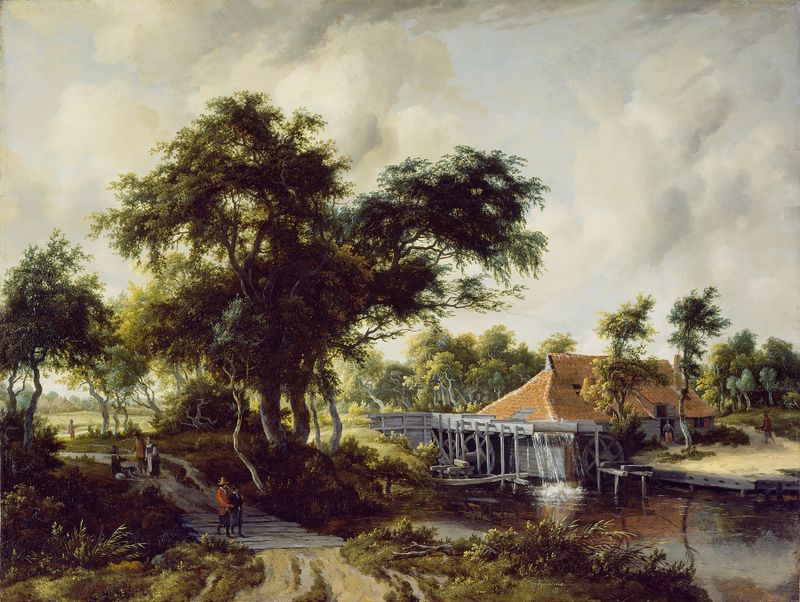
A Watermill
Meindert Hobbema
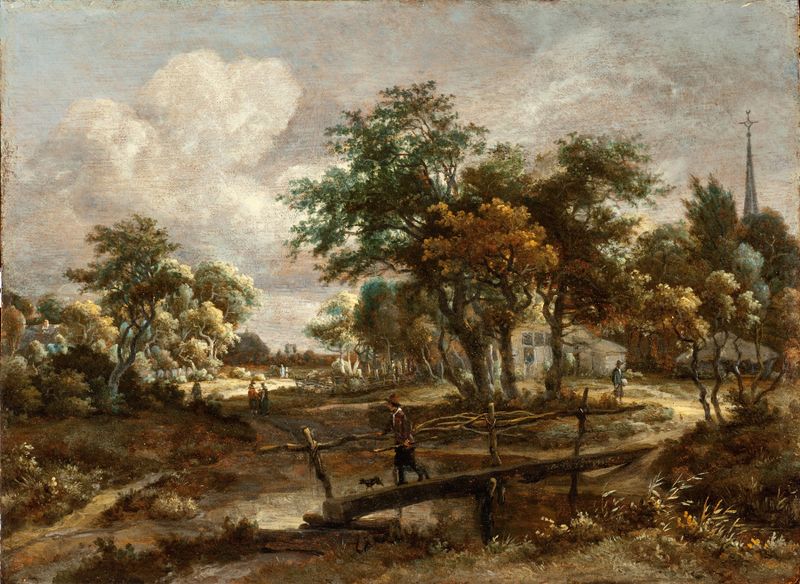
Landscape with a Footbridge
Meindert Hobbema

A Watermill
Meindert Hobbema
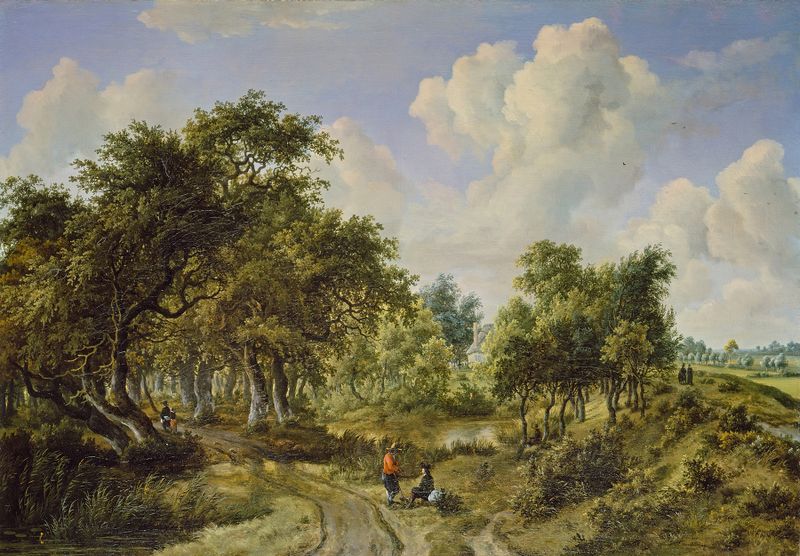
A Wooded Landscape
Meindert Hobbema

A Wooded Landscape
Meindert Hobbema
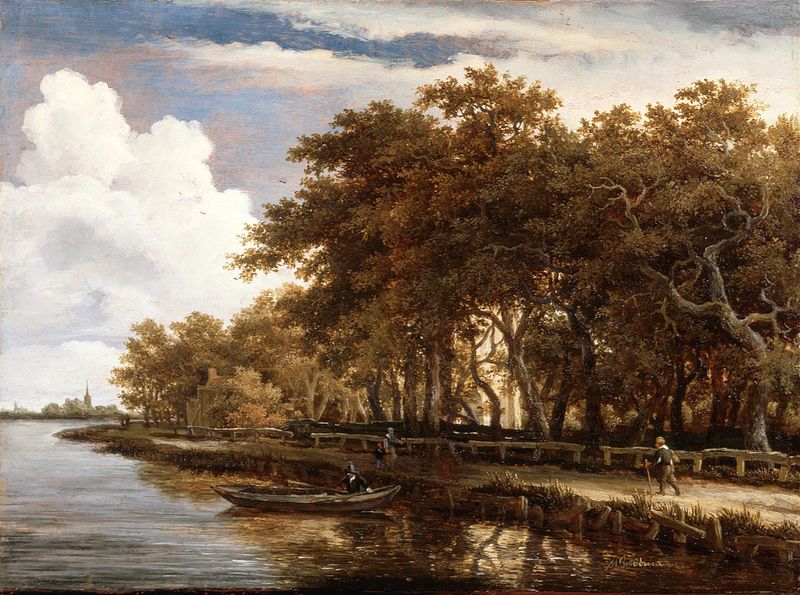
View Along the Amstel
Meindert Hobbema

The Watermill with the Great Red Roof
Meindert Hobbema

Water Mill
Meindert Hobbema





