
The Triumph of Bacchus — History & Facts
In 1635, Nicolas Poussin was at the height of his powers in Rome, and his mythological scenes were in high demand among the city’s intellectual elite. The Triumph of Bacchus stands out as one of his most exuberant celebrations of ancient myth, painted for a private patron whose identity remains uncertain, but who likely belonged to the circle of Cardinal Francesco Barberini. The work is sometimes confused with Poussin’s more famous Bacchanal before a Statue of Pan, but it has its own distinct iconography and mood.
What makes this painting especially fascinating is the way it captures a moment of wild revelry—rare for an artist known for his restraint. The scene unfolds at the height of Bacchic celebration: Bacchus, the god of wine, rides in triumph on a chariot drawn by leopards, surrounded by a swirling retinue of satyrs, maenads, and drunken followers. Poussin chooses the instant when order teeters on the edge of chaos—wine spills, garlands tumble, and bodies twist in dance. The thyrsus staff, a pine-cone-tipped wand, signals Bacchus’s divine power, while the laurel wreaths and grape clusters evoke both intoxication and fertility.
The crisp, classical lines and measured composition recall Titian’s Venetian bacchanals, but Poussin’s figures are more sculptural, their movements orchestrated with the precision of a frieze. Light carves out each form, lending clarity to the mythic tumult. The exact journey of The Triumph of Bacchus after its creation is not fully documented, but it is typical of Poussin’s Roman period, when he produced mythological canvases for discerning collectors. The painting’s medium is uncertain today, though oil on canvas is likely.
Works of this type were prized by French and Italian patrons alike, and many traveled across Europe through inheritance and sale. The Triumph of Bacchus reflects Poussin’s lifelong engagement with antiquity, and his ability to blend learned references with sensual delight—a hallmark of the Baroque in Rome. Today, it remains a vivid testament to the artist’s reputation as the “philosopher painter,” able to bring ancient stories to life with both intellect and energy.
More Artworks by Nicolas Poussin

Spring
Nicolas Poussin
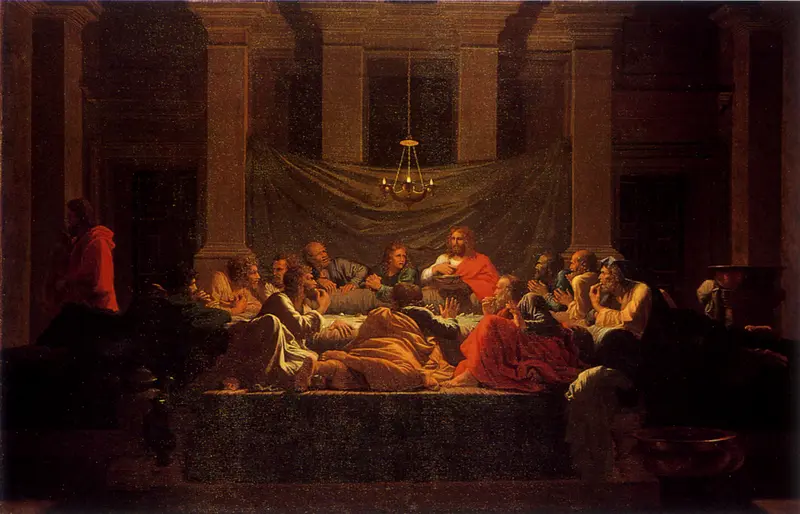
The Sacrament of the Holy Eucharist
Nicolas Poussin
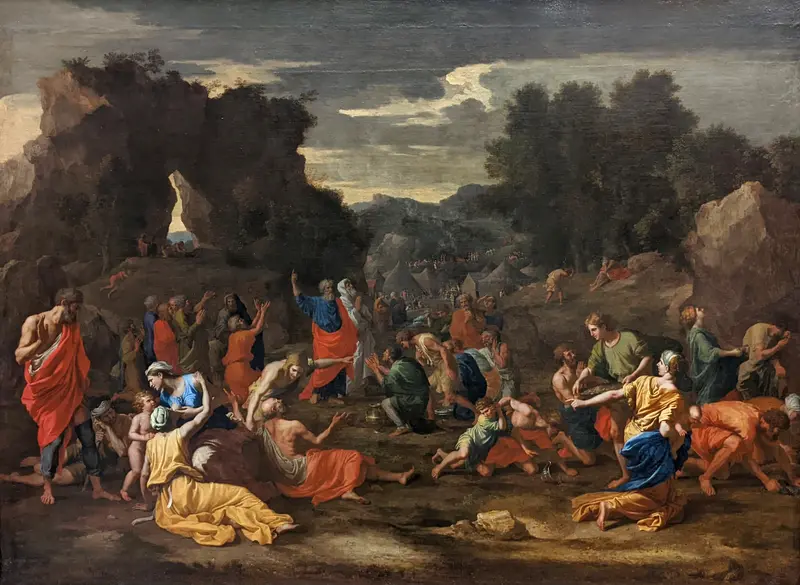
The Israelites gathering Manna in the Desert
Nicolas Poussin
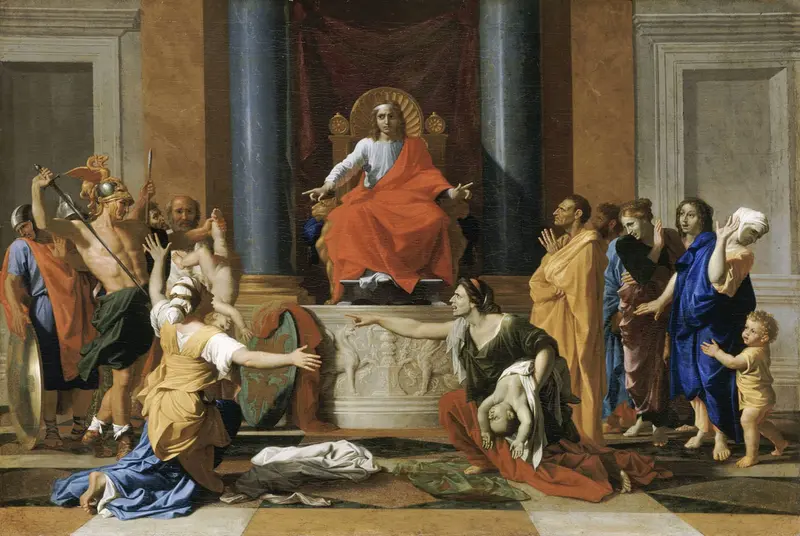
The Judgment of Solomon
Nicolas Poussin
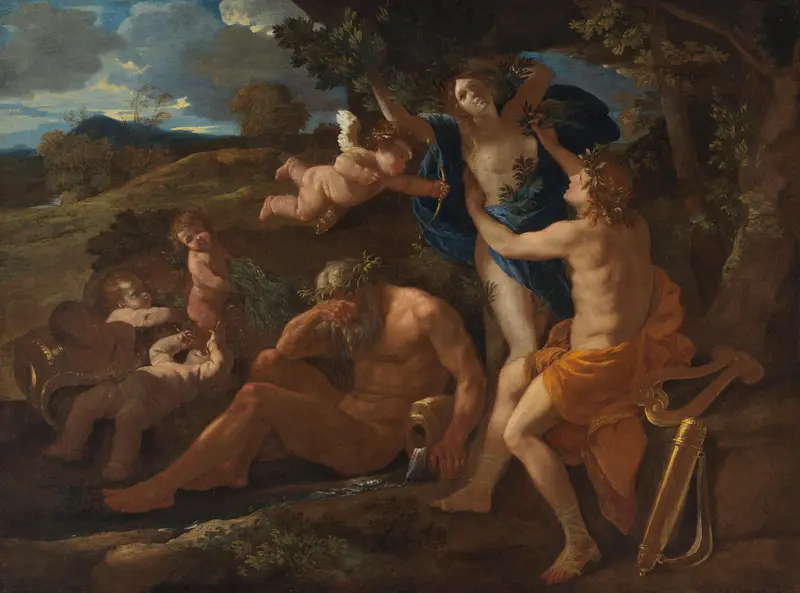
Apollo and Daphne
Nicolas Poussin

The Nurture of Jupiter
Nicolas Poussin

Ordination
Nicolas Poussin
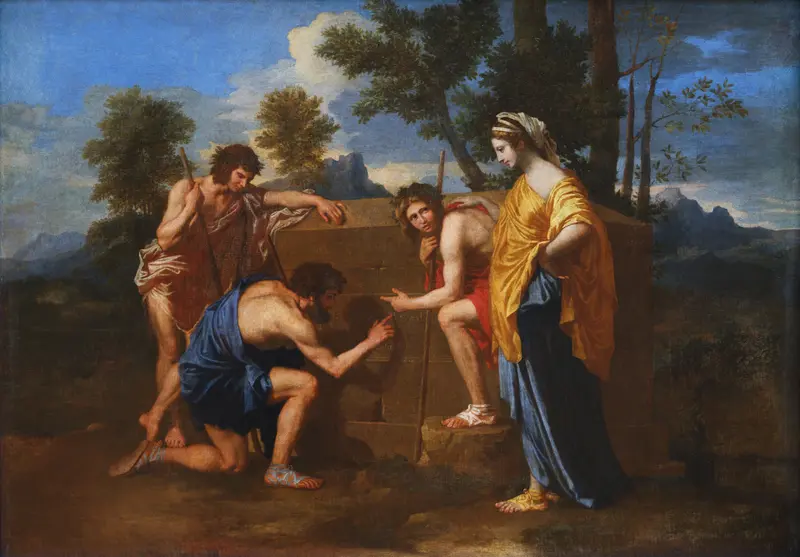
Et in Arcadia ego
Nicolas Poussin
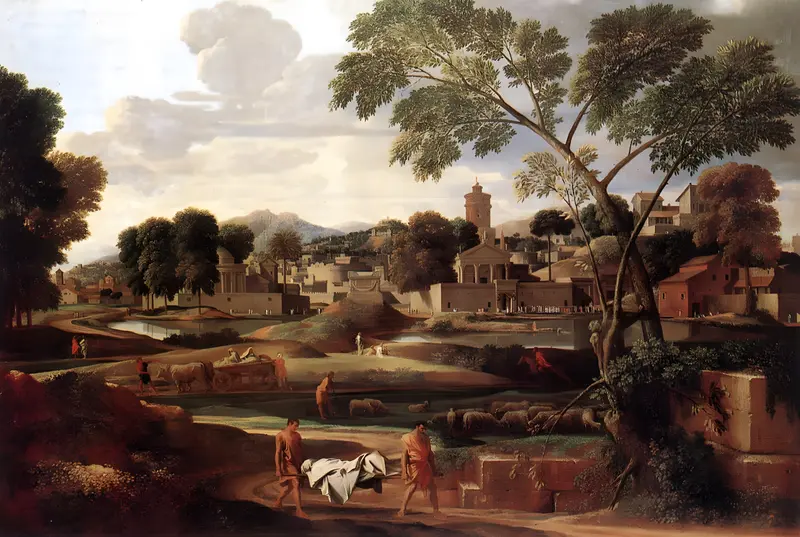
The Funeral of Phocion
Nicolas Poussin
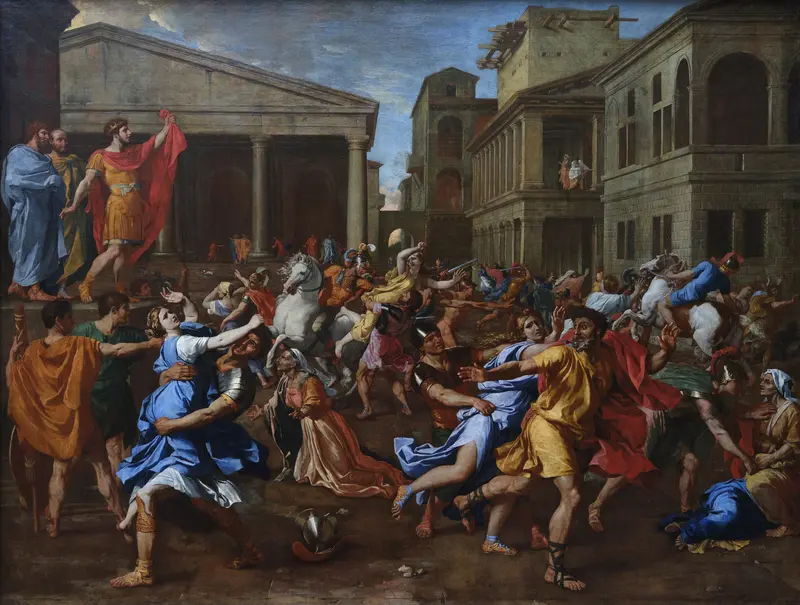
The Rape of the Sabine Women
Nicolas Poussin





