
The Twa Corbies (Some British Ballads) — History & Facts
The eye is first caught by the hunched forms of two ravens, their beaks parted as if deep in conversation, perched on the twisted branches of a wind-bent tree. Below them, almost hidden in the tangled grass, lies a fallen knight—his ornate blue tunic and golden hair at odds with the wild, indifferent landscape. The palette is muted, with blue-greys and olive greens setting a somber, uneasy mood, while the delicate ink lines give the scene a sense of both delicacy and decay.
Every detail draws the viewer into the uneasy stillness: the ravens’ watchful postures, the knight’s limp hand, the way the branches seem to clutch at the air. The light is diffuse, draining color from the world and focusing attention on the silent exchange between bird and corpse, as if the land itself has gone quiet to listen. Created around 1919 for Some British Ballads, this work by Arthur Rackham belongs to a tradition of early twentieth-century book illustration that brought the dark undercurrents of folk tales to life. Illustrators like Rackham were celebrated for their ability to blend fantasy and realism, and their images often accompanied collections of ancient songs and stories that had long circulated in oral tradition.
The ballad of “The Twa Corbies” is one of the grimmer British folk songs, and Rackham’s vision—published in the wake of the First World War—captures its bleakness with a modern eye for psychological tension. While history has kept few traces of this specific illustration’s journey, its place in Some British Ballads marks it as part of a movement that saw artists and publishers reviving and reimagining the medieval past for a new, uncertain age. Even now, the ravens’ gaze seems to invite us to linger, to search the grass for what remains untold.
More Artworks by Arthur Rackham
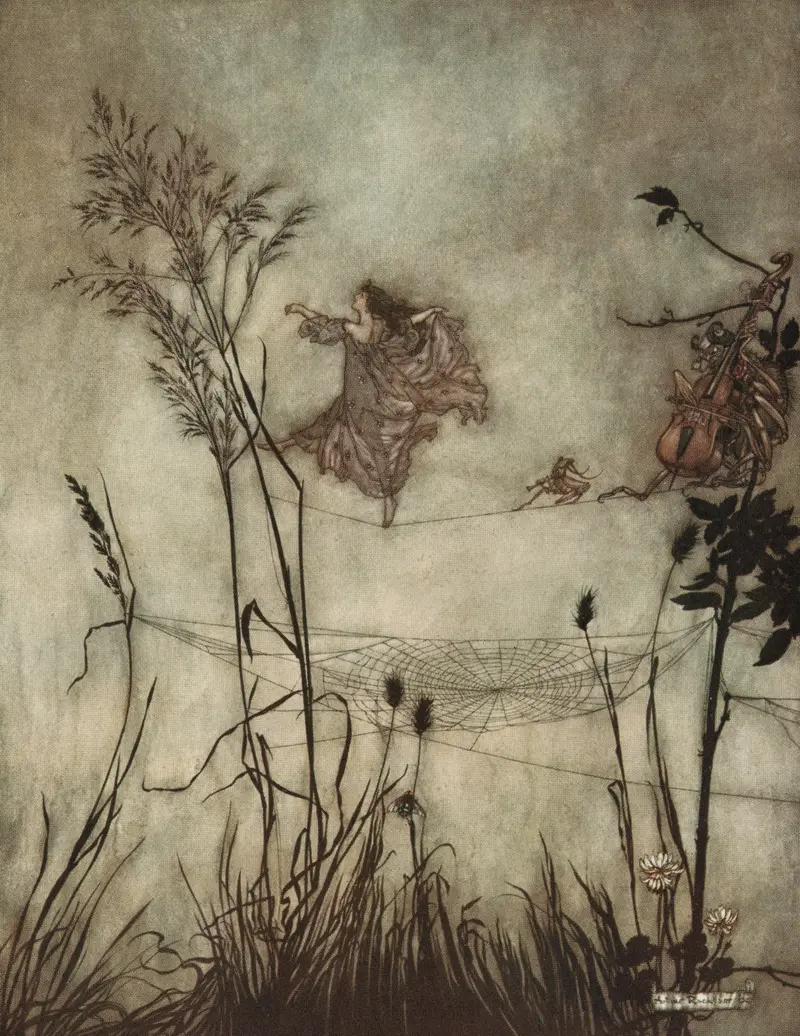
The Fairies Are Exquisite Dancers
Arthur Rackham
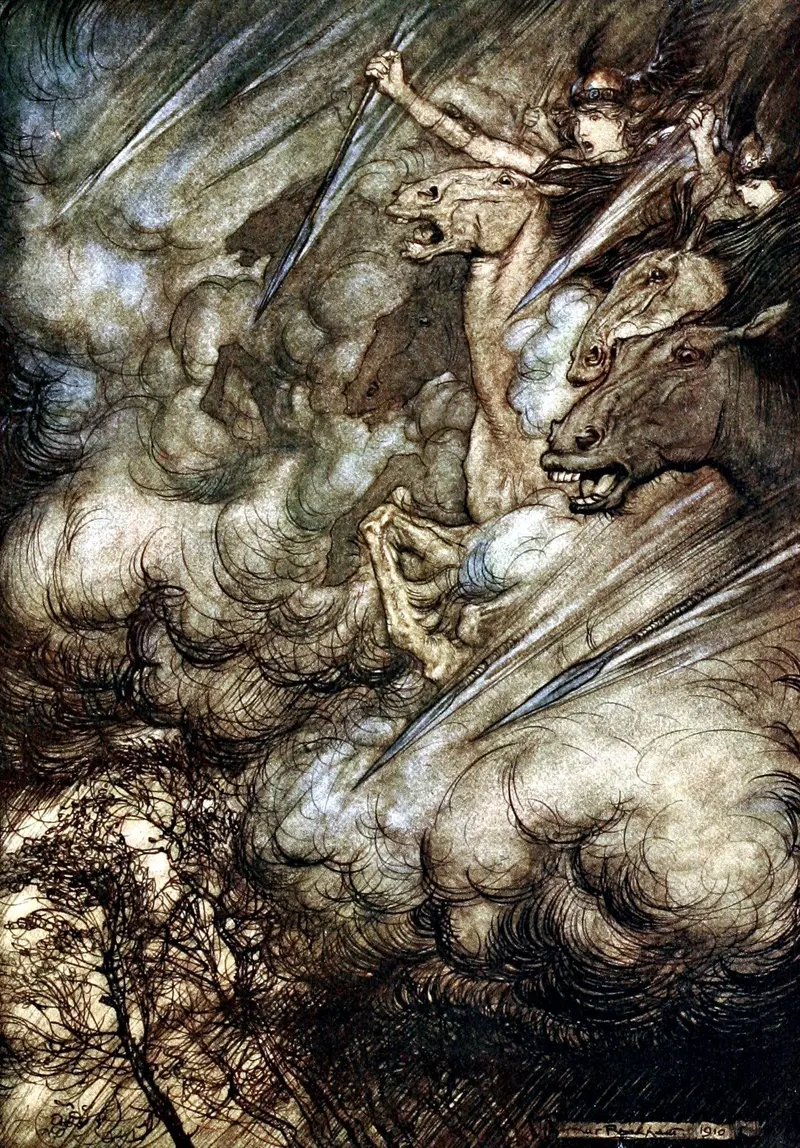
The Ride of the Valkyries
Arthur Rackham

Arthur Rackham ('A Transpontine Cockney')
Arthur Rackham
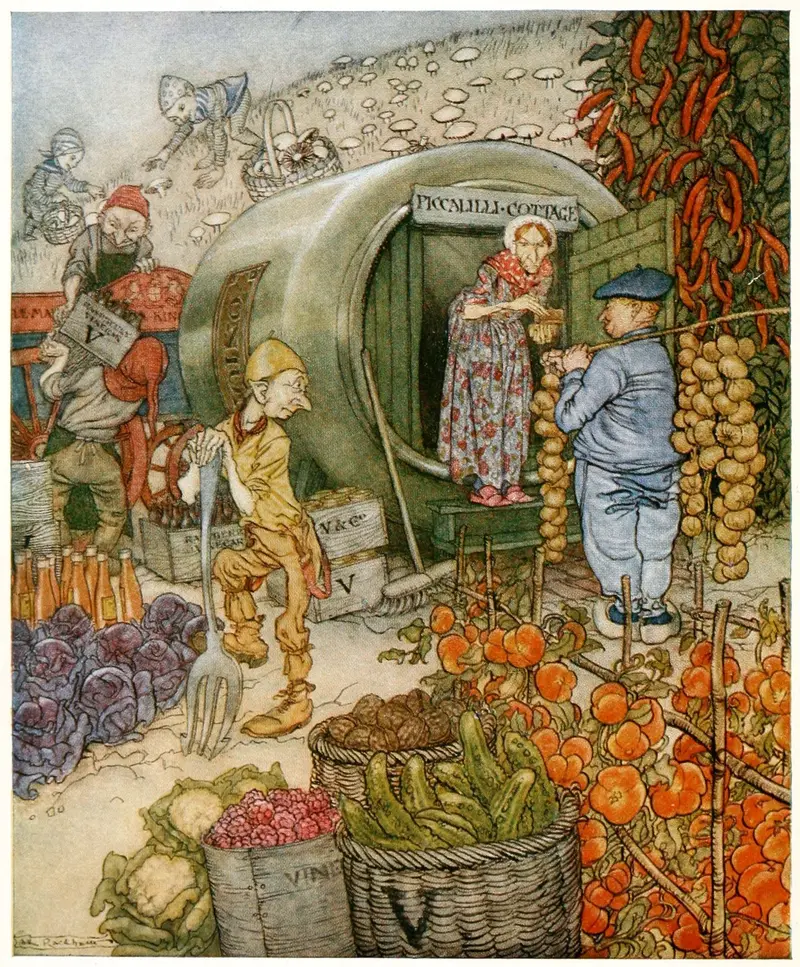
English Fairy Tales (Frontispiece)
Arthur Rackham
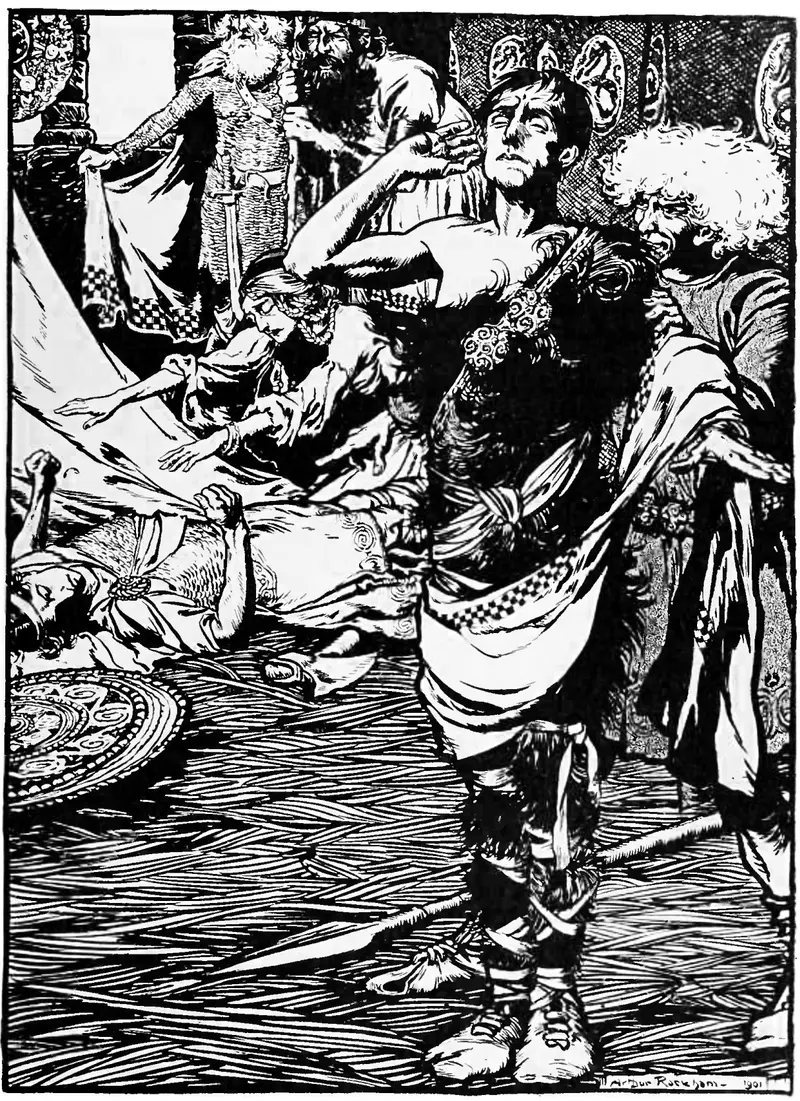
There Broke Forth a Wailing and a Lamentation
Arthur Rackham
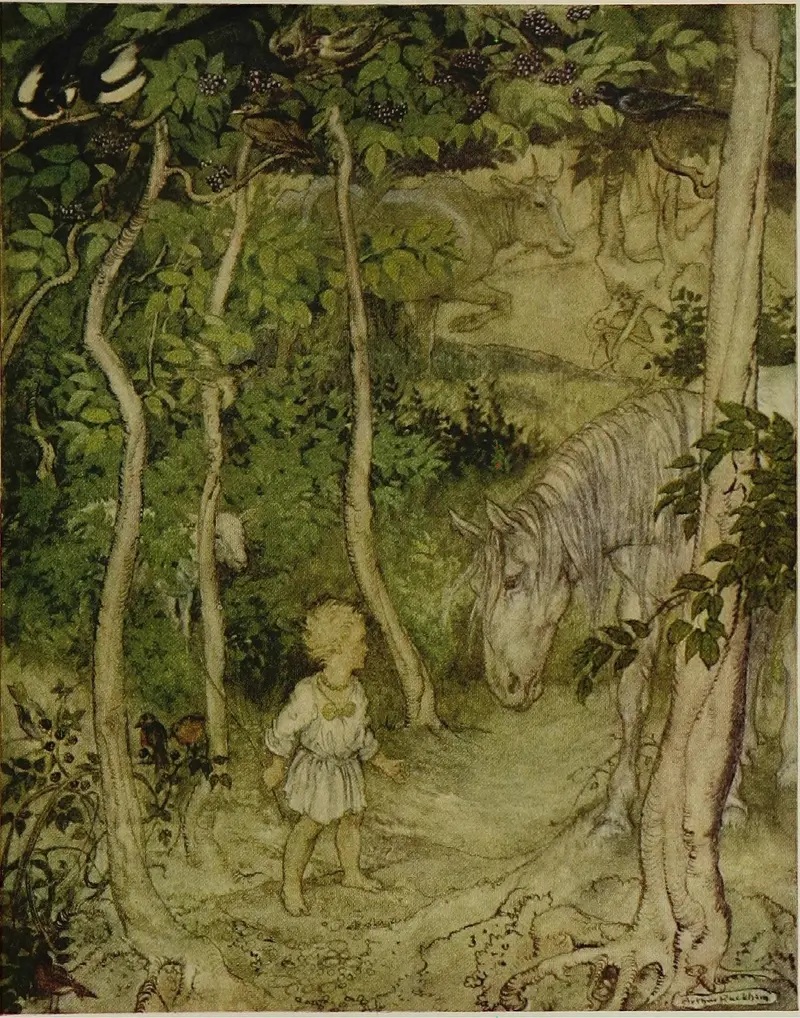
Irish Fairy Tales
Arthur Rackham
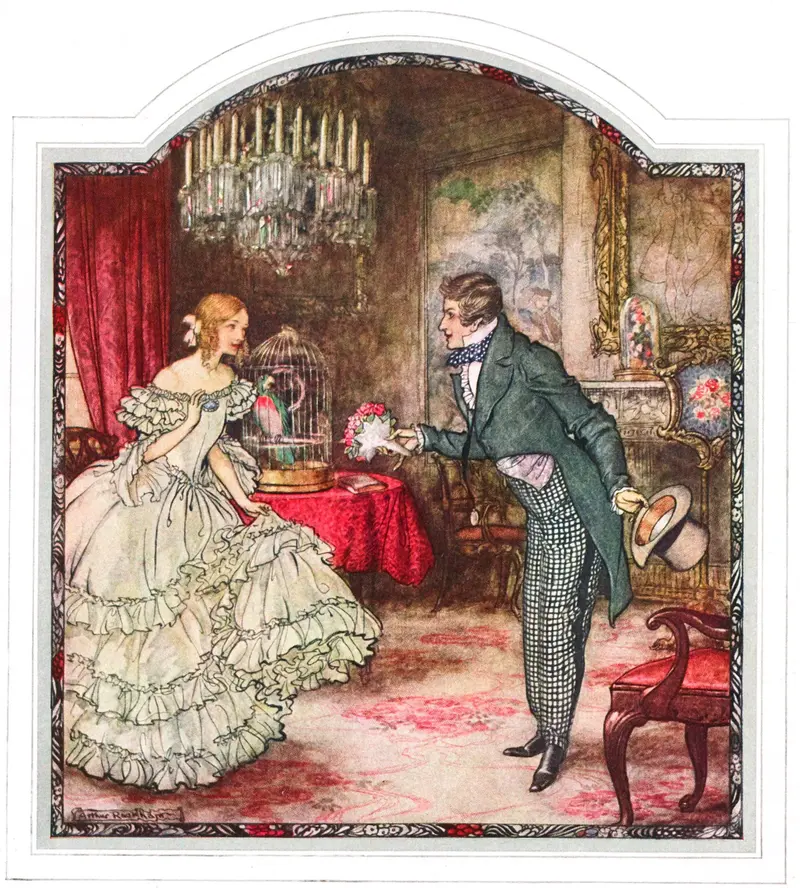
The Bouquet
Arthur Rackham

Mother Goose: The Old Nursery Rhymes
Arthur Rackham
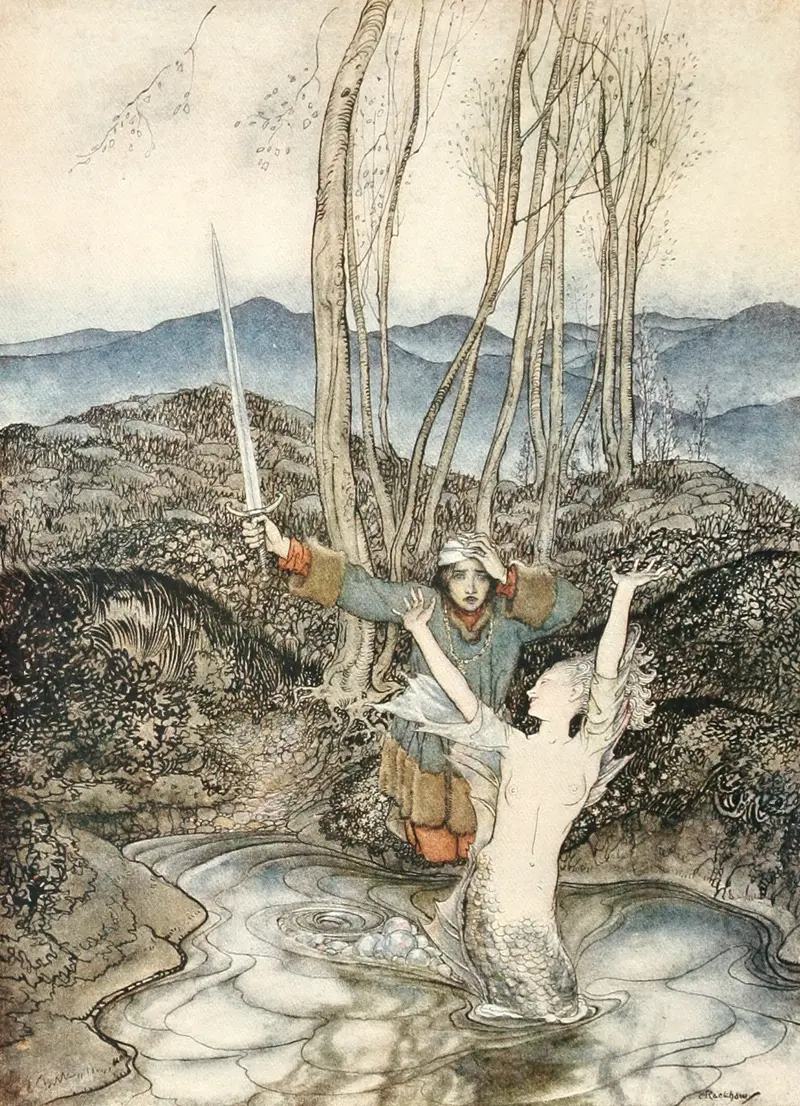
Clerk Colvill and the Mermaid
Arthur Rackham
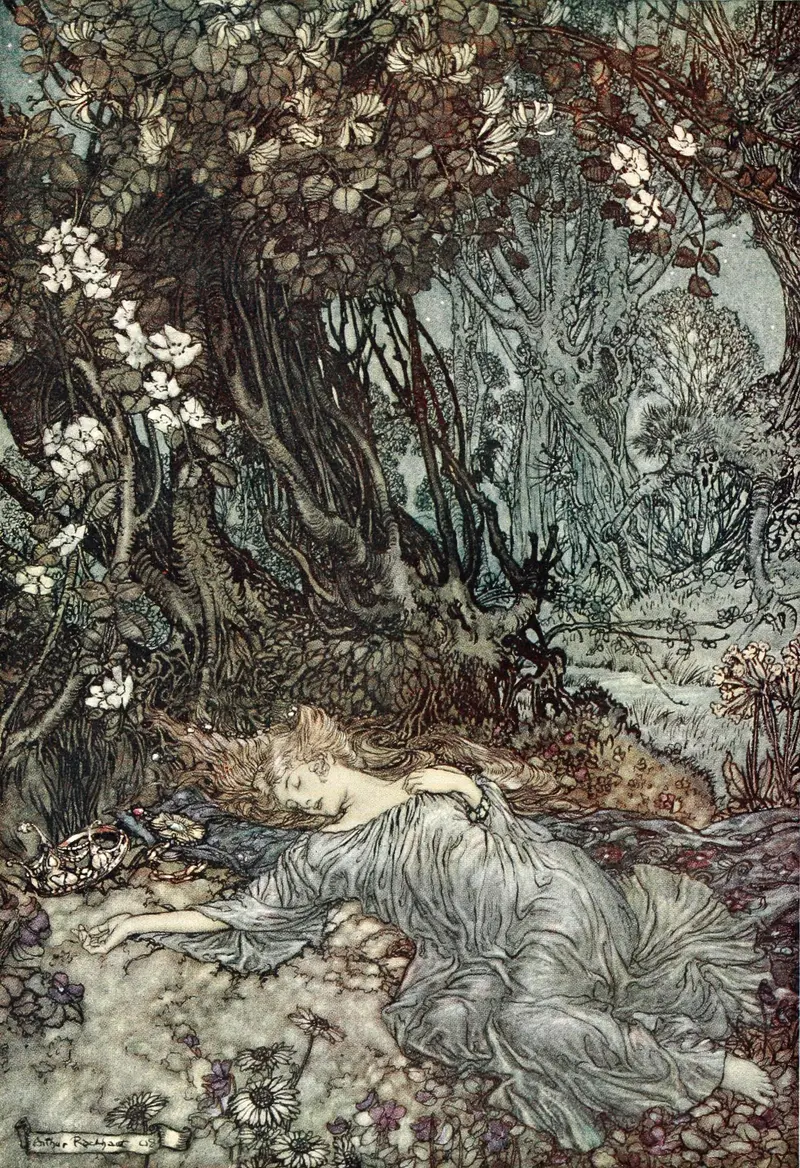
Titania Lying Asleep (A Midsummer Night's Dream)
Arthur Rackham





