
The Virgin, Flanked by Music Making Angels — History & Facts
No one knows for certain for whom or what purpose The Virgin, Flanked by Music Making Angels was painted, but its composition—an enthroned Madonna serenaded by angels—suggests it once adorned a private chapel or a monastic cell, much like Fra Angelico’s celebrated frescoes in San Marco, Florence. The absence of a documented commission or date has left scholars debating its original setting, yet the painting’s intimate scale and devotional tone point to a context of personal prayer rather than grand public display. This air of mystery is heightened by the fact that Fra Angelico returned to this subject again and again, each time with subtle variations in the arrangement of angels and the Virgin’s expression. At the heart of the scene, the Virgin Mary sits serenely, her gaze lowered in humility, as a host of angels on either side play lutes, harps, and other medieval instruments.
Their music, though silent to us, is meant to evoke the celestial harmonies believed to surround the Queen of Heaven. The gold leaf that likely once shimmered behind the figures would have caught candlelight, transforming the painted space into a vision of paradise. Fra Angelico’s angels, with their delicate faces and richly patterned robes, invite comparison with those in The Annunciation by the same artist, yet here, the focus is less on narrative drama than on the quiet, continuous praise offered to Mary.
Every gesture—the careful placement of hands on strings, the upward tilt of a face—reinforces the sense of reverence and perpetual song. The physical journey of The Virgin, Flanked by Music Making Angels remains largely undocumented, a fate not uncommon for works produced in early 15th-century Florence. Its style and devotional character mark it as a product of the early Renaissance, when artists like Fra Angelico sought to blend the spiritual clarity of medieval art with the new naturalism of their own day. Today, the painting is valued as a touchstone of Angelico’s meditative approach, standing alongside his more famous altarpieces and frescoes.
Its quiet beauty and uncertain origins continue to draw viewers into the world of early Renaissance devotion, where art was both prayer and praise.
More Artworks by Fra Angelico

Condemnation of St Lawrence by the Emperor Valerian
Fra Angelico
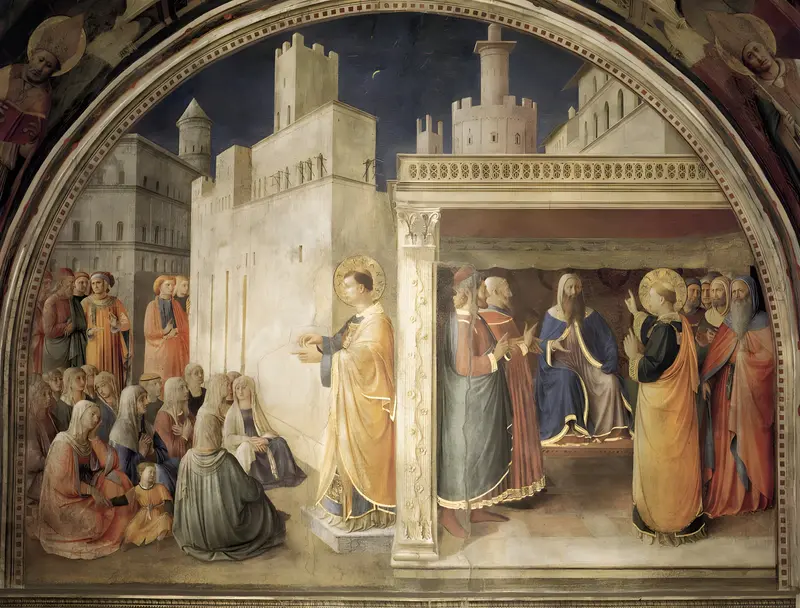
Lunette of the north wall
Fra Angelico
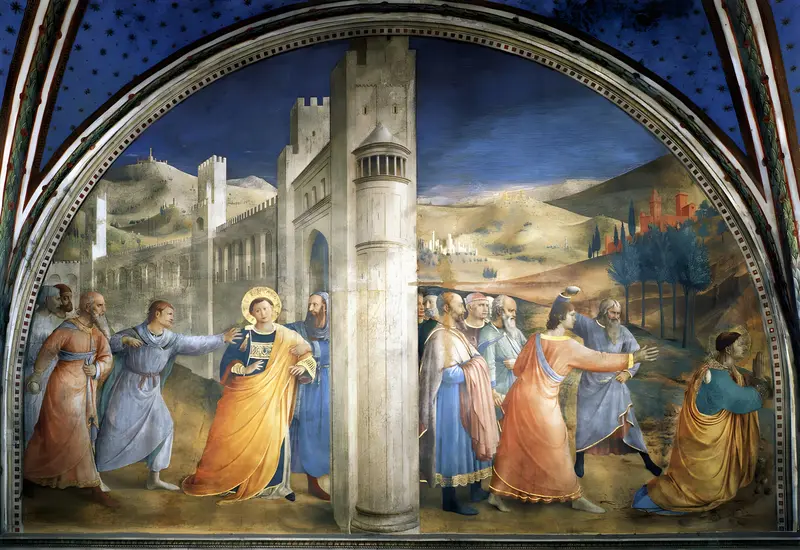
Lunette of the east wall in Niccoline Chapel
Fra Angelico
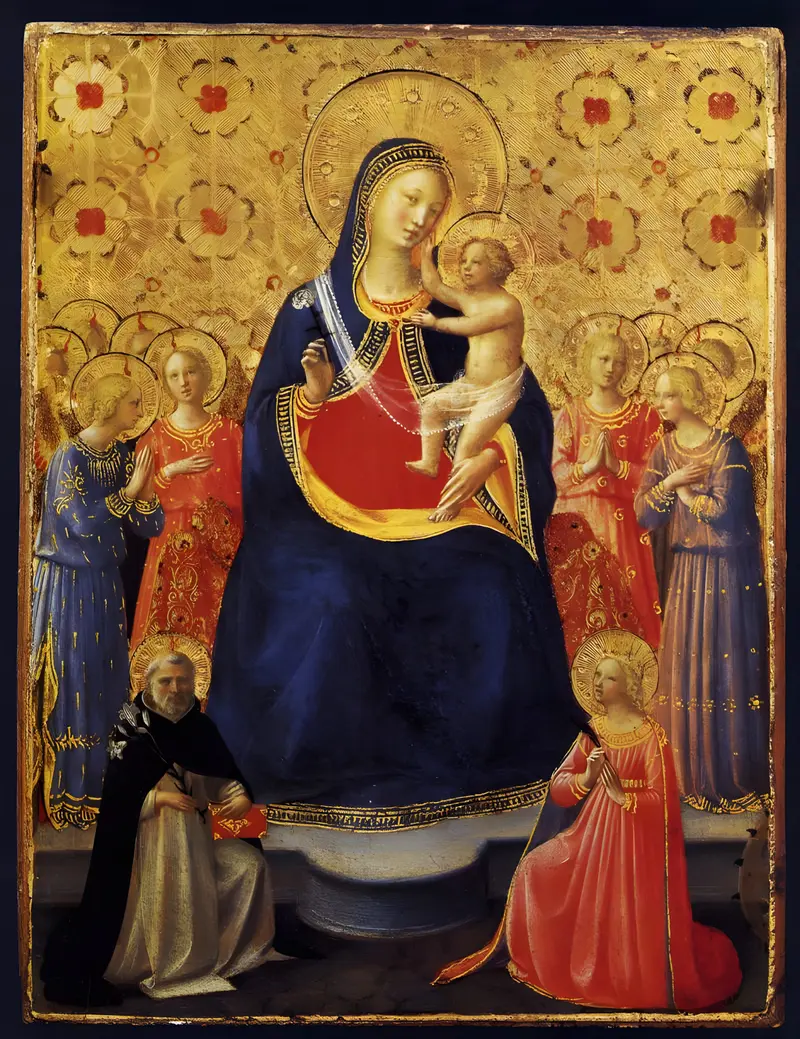
Madonna and Child Enthroned with Nine Angels and Saints Dominic and Catherine of Alexandria
Fra Angelico
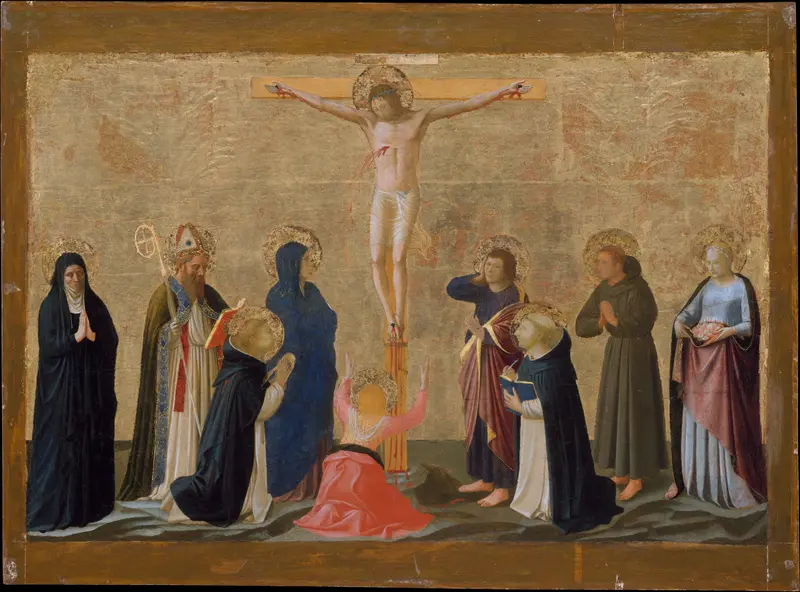
The Crucifixion
Fra Angelico
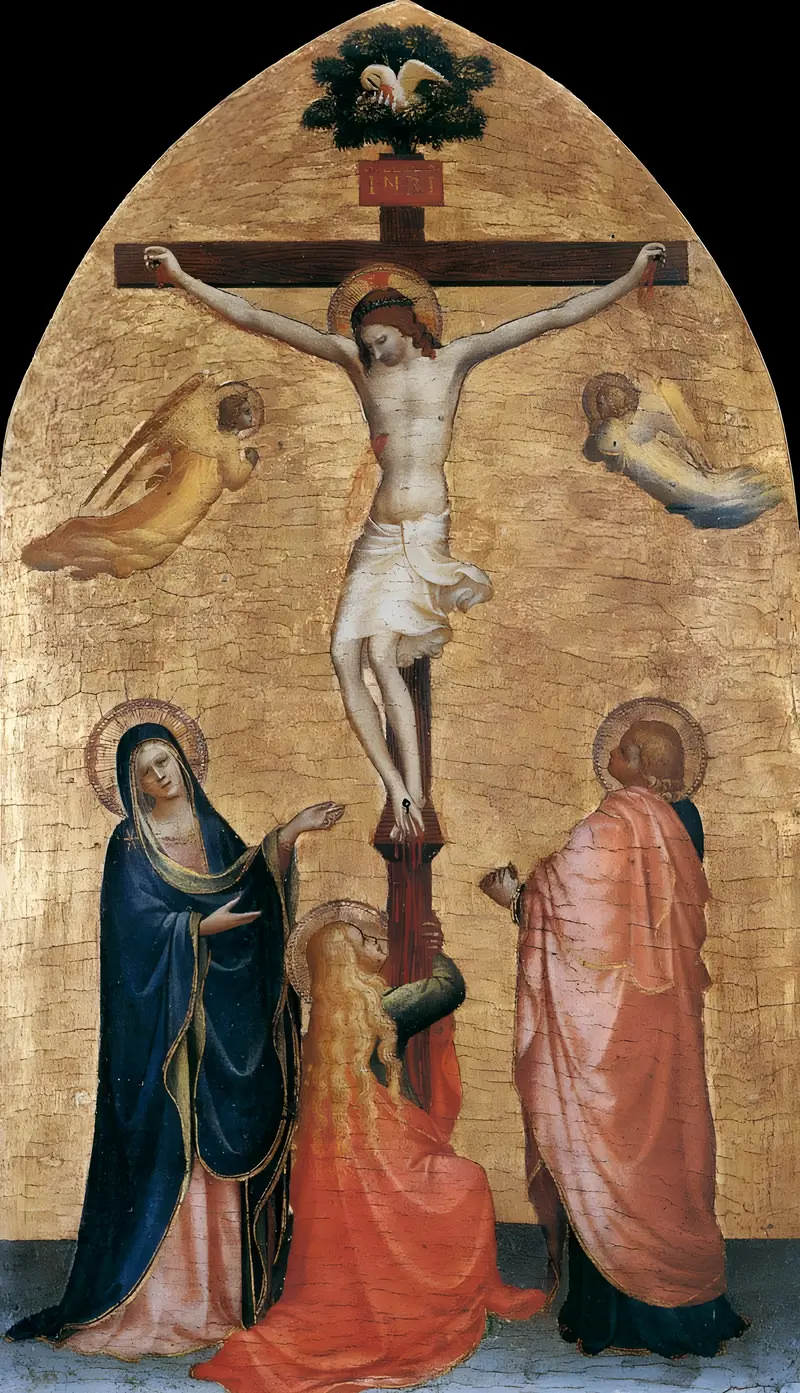
Crucifixion with the Virgin, John the Evangelist, and Mary Magdelene
Fra Angelico
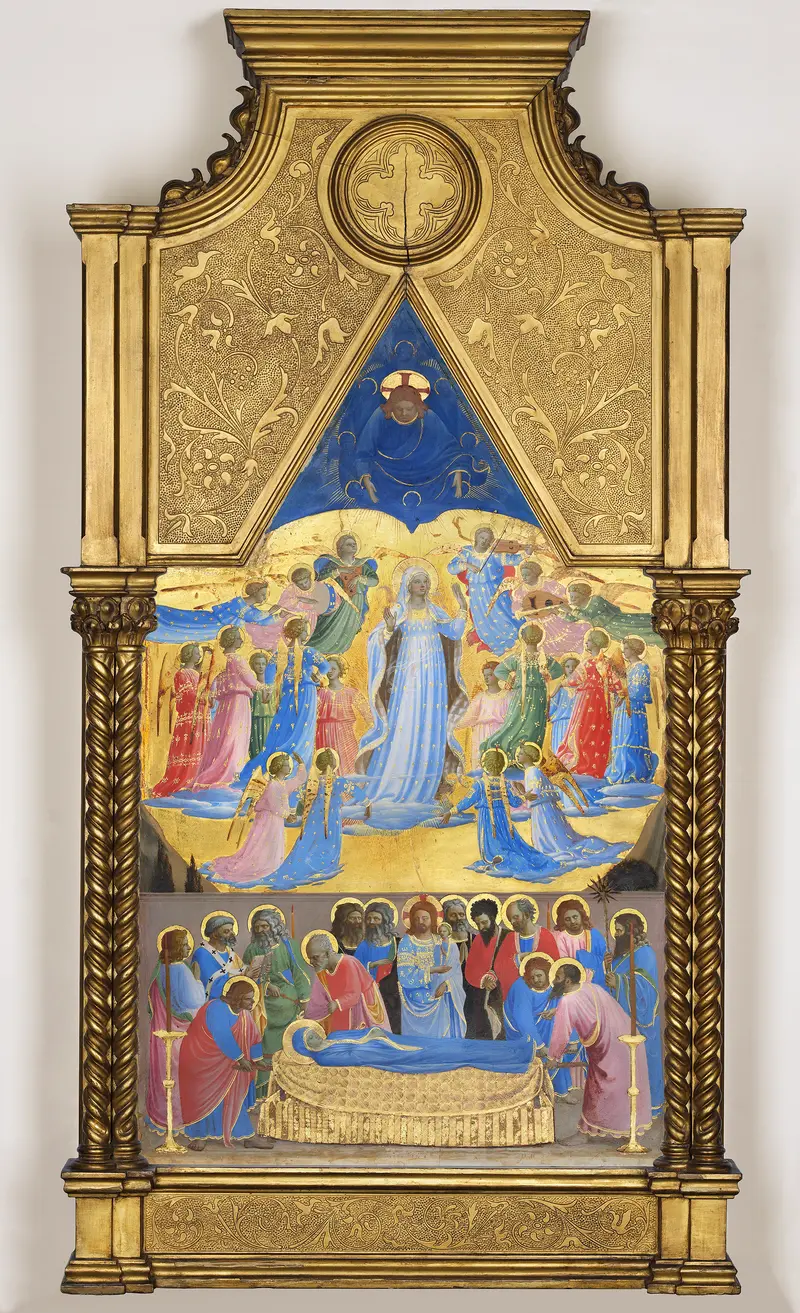
Dormition and Assumption of the Virgin
Fra Angelico
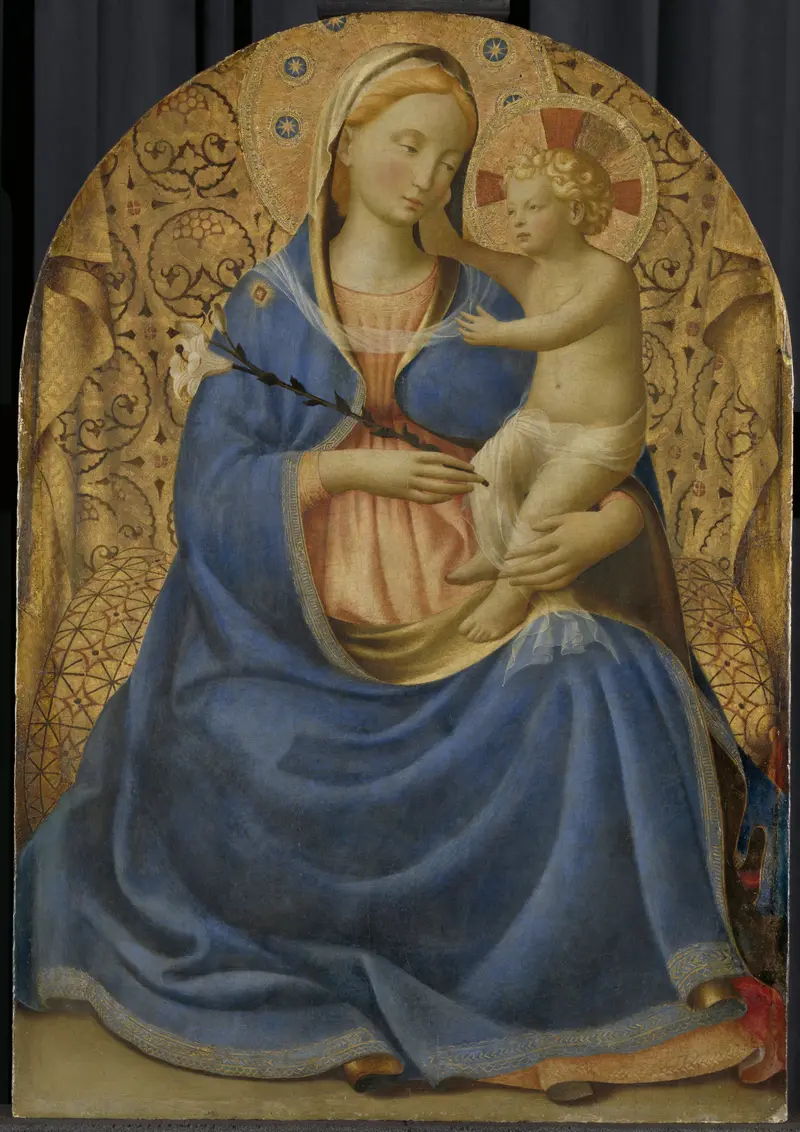
Madonna of Humility
Fra Angelico
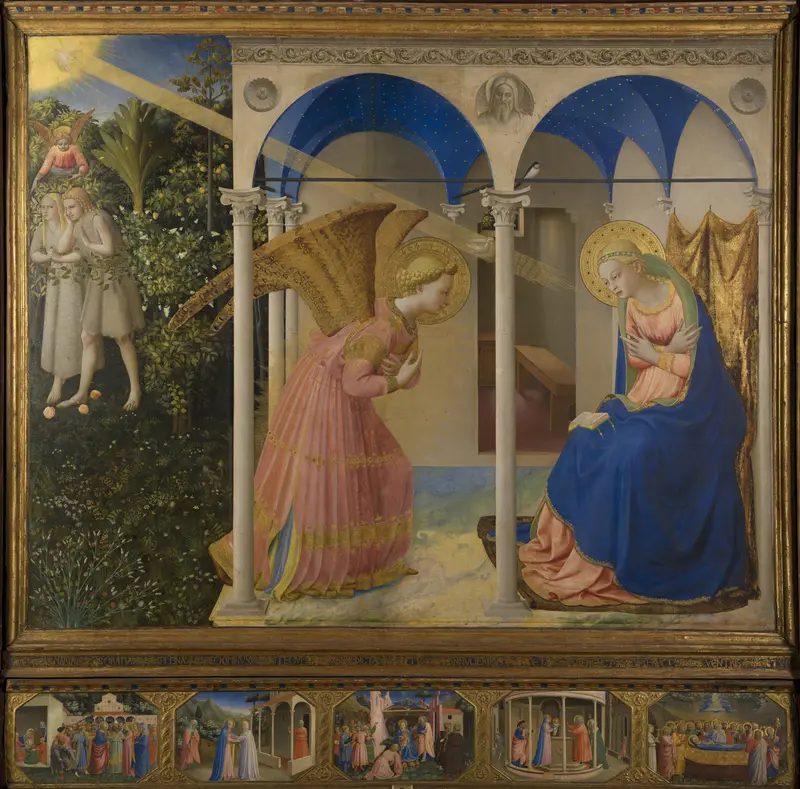
The Annunciation
Fra Angelico

Saint Anthony Abbot
Fra Angelico





